Robbie Thain
Founder, CEO

Brands struggling with unexpected field marketing costs can build a predictable student ambassador budget by accounting for operational permits and management logistics.
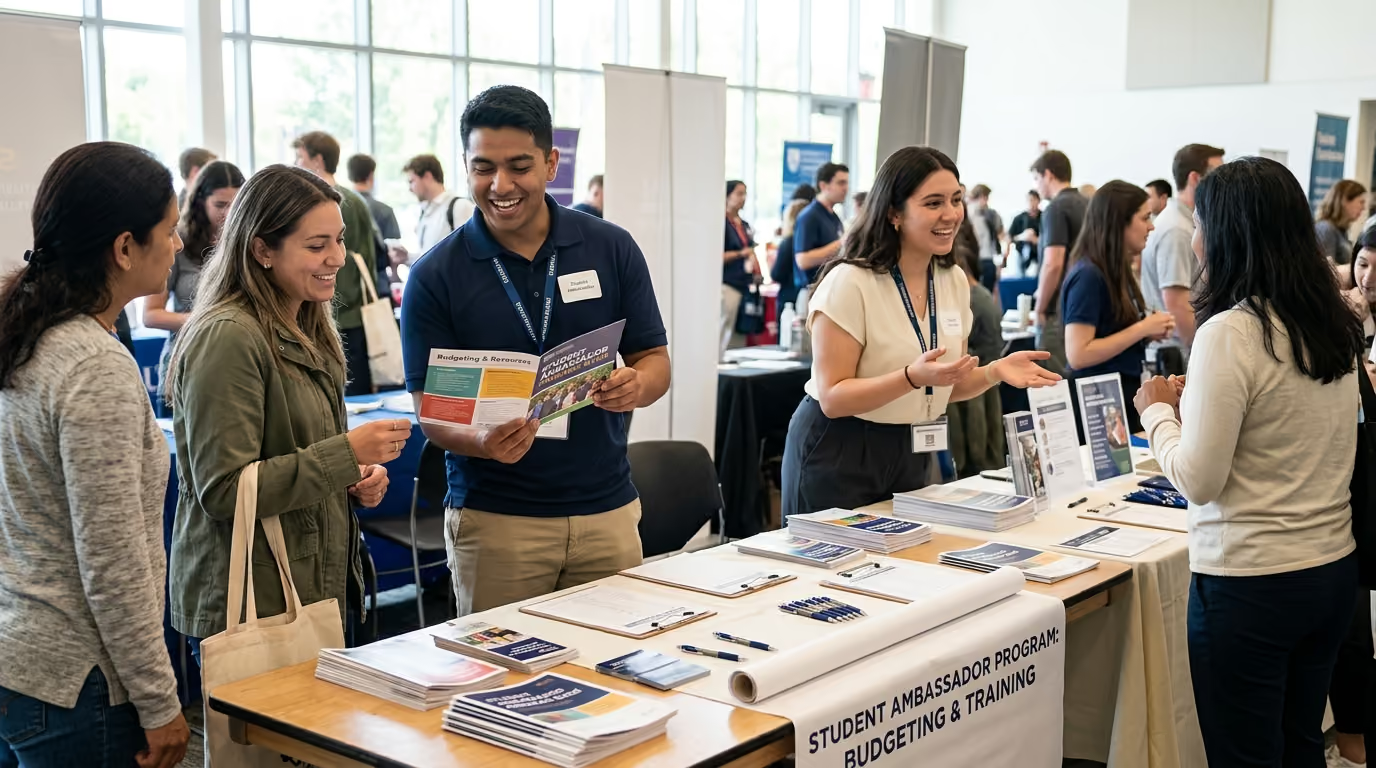
A student brand ambassador program requires a detailed financial model that accounts for operational, legal, logistical, and managerial costs beyond direct student pay. Marketing leaders who build an activity-based budget will protect their margins, secure predictable field execution, and generate measurable Return on Investment (ROI) across every targeted campus.
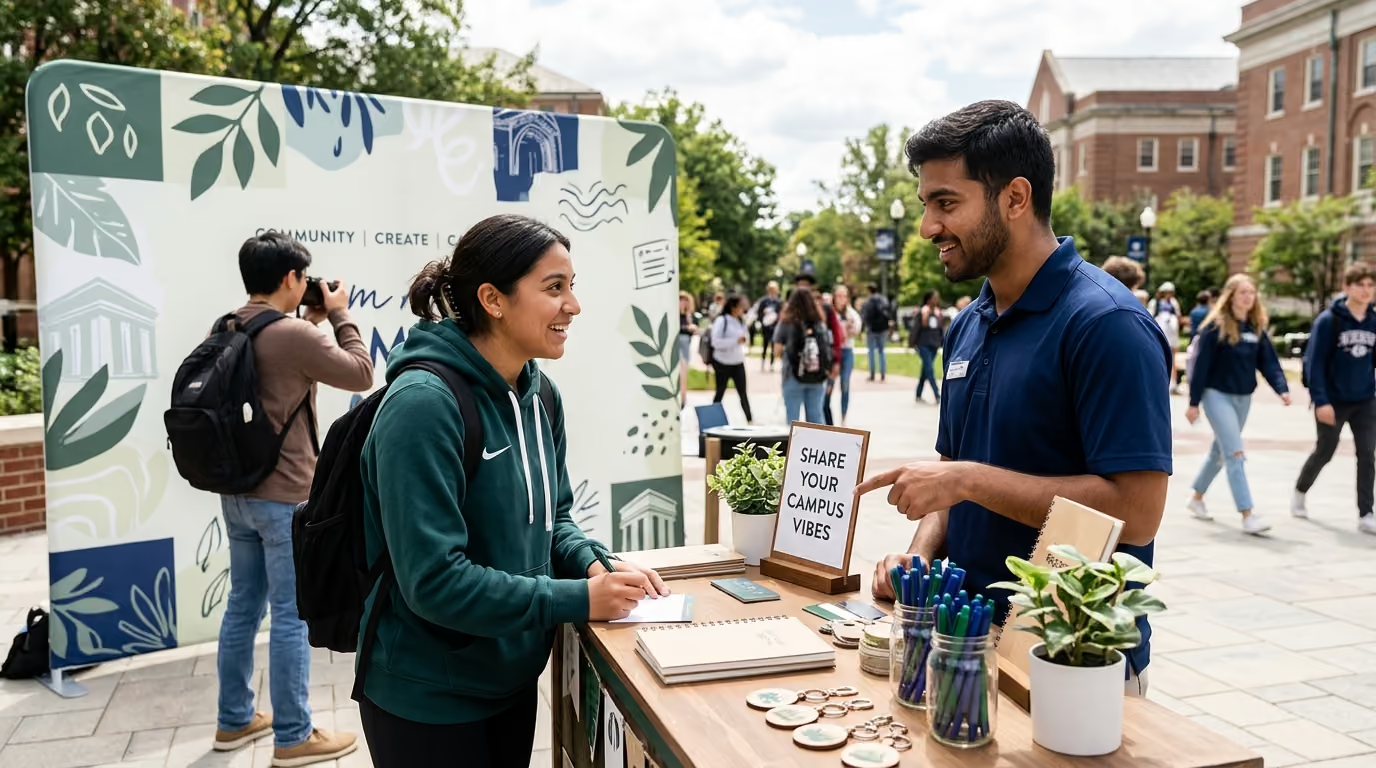
On a warm Tuesday morning at a major state university, a brand activation unravels. Two student ambassadors set up a folding table outside the student union without an approved campus facility permit. Campus security arrives within twenty minutes, confiscating unchilled beverage inventory and issuing an administrative violation. Meanwhile, the third ambassador fails to show up due to midterm exams, leaving boxes of collateral sitting on the sidewalk. Back at corporate headquarters, the brand team wonders why their low-cost campus campaign has stalled.
This operational breakdown happens when teams treat campus marketing as a casual side project. Leaders mistakenly allocate a flat stipend to students and assume the work will manage itself. A student ambassador program is not an informal social media campaign. It is a live field marketing operation that demands rigorous planning, compliance safeguards, and clear unit economics.
The addressable college audience in the United States represents massive commercial scale. The National Student Clearinghouse reported over 19.4 million postsecondary enrollments in fall 2025. This figure includes 16.2 million undergraduate students and 3.2 million graduate students. Data from the National Center for Education Statistics indicates a 39 percent college enrollment rate among 18- to 24-year-olds.
Reaching this audience requires understanding the financial mechanics of campus environments. The most common budgeting mistake is viewing ambassador pay as the only expense. When brands fund student stipends without supporting infrastructure, programs fail to produce verified commercial outcomes.
Brands often enter the collegiate space assuming student enthusiasm can replace professional field infrastructure. They believe paying an ambassador a few hundred dollars a month will yield high-volume product trial.
In practice, unsupported students encounter immediate operational obstacles. They lack the resources to secure campus permits, transport heavy event assets, or maintain product quality. Without structured supervision and clear compensation agreements, student engagement drops within six weeks.
When ambassadors stop posting content or executing sampling activations, internal staff must step in to save the campaign. Marketing managers spend unexpected hours troubleshooting logistics, rewriting schedules, and replacing inactive students. The initial financial savings disappear into unbudgeted internal labor costs.
A dependable budget separates fixed foundational expenses from variable campus costs. Fixed costs are established during the initial setup phase. These line items remain relatively constant whether a brand activates on five campuses or twenty campuses.
Fixed program expenses typically include:
Variable costs fluctuate directly with program scale. As a brand expands its footprint, these expenses multiply based on headcount and activation frequency.
Variable program expenses typically include:
Treating variable expenses as fixed allowances leads to severe budget shortfalls. If sampling volume doubles, fulfillment and local logistics costs increase proportionally. Modeling these costs separately allows marketing leaders to scale their programs predictably.
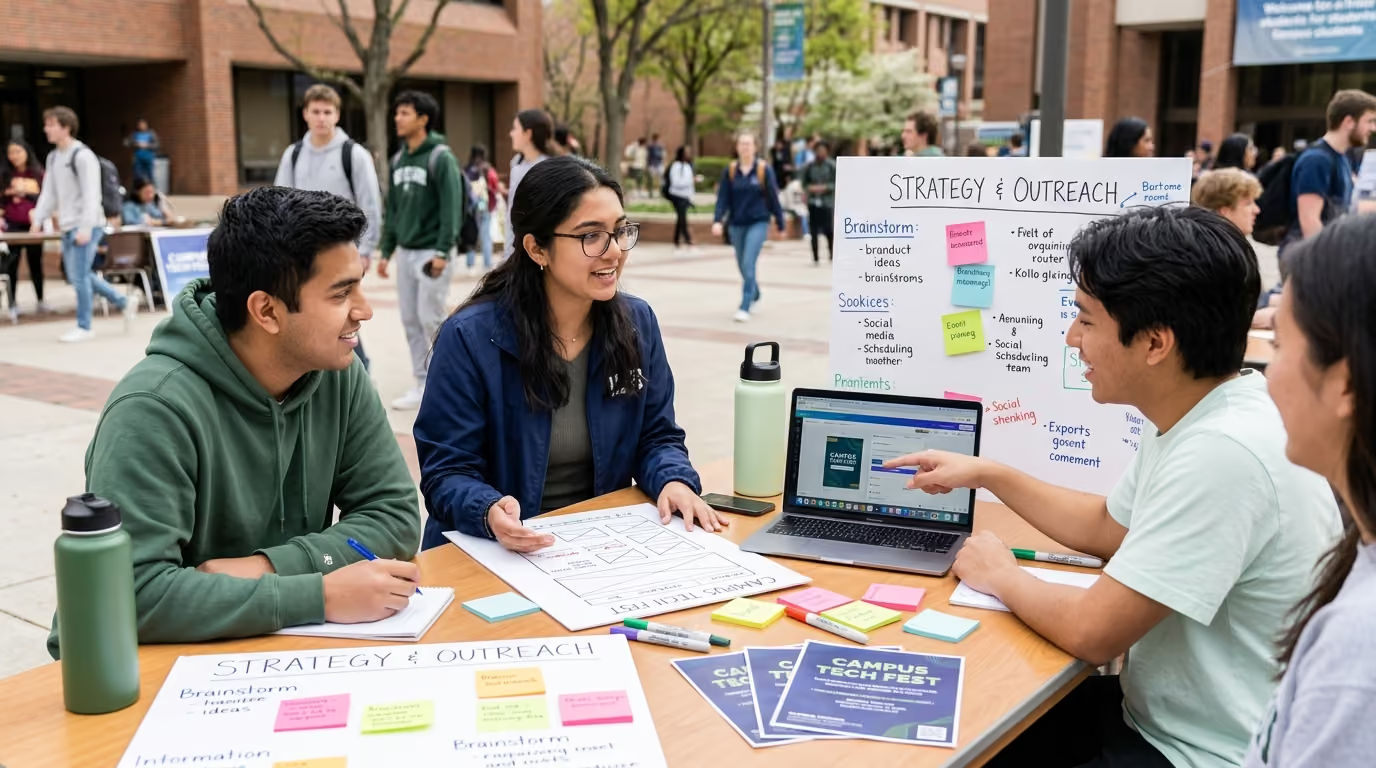
Building a dependable financial model requires an activity-based framework. Rather than dividing a top-line budget across arbitrary categories, operators calculate costs from ground-level actions. Every physical activation, digital post, and product sample carries distinct direct and indirect expenses.
A qualified action must be defined before establishing the budget. Depending on business goals, a qualified action may represent a verified product trial, a coupon redemption, a mobile application install, or an email capture. Measuring raw foot traffic or unverified social views obscures real acquisition costs.
To allocate capital effectively, marketing teams should structure campus operations across three operational layers. Each layer requires dedicated budget lines and distinct measurement protocols.
The reach layer encompasses top-of-funnel touchpoints designed to introduce the brand to the student body. Activities include high-traffic quad tabling, promotional flyer placement, student organization sponsorships, and campus-wide sampling events.
Costs in this tier include display hardware, print production, branded apparel, and baseline ambassador shift pay. Primary metrics track total student interactions, gross sample distribution, and campus foot traffic volume.
The engagement layer captures deeper, two-way interactions between ambassadors and their peers. Operations include live product demonstrations, interactive dorm workshops, Greek life presentations, and structured feedback surveys.
Capital allocation shifts toward higher-value product kits, demonstration equipment, survey software licenses, and micro-incentives. Primary metrics focus on active conversation length, contact capture rates, demonstration completion rates, and immediate digital opt-ins.
The conversion layer drives measurable commercial actions and long-term brand preference. This layer includes tracked discount redemptions, campus bookstore sales lift, grocery retail sell-through, peer referrals, and authentic user-generated content.
Budgets must fund referral software, affiliate tracking infrastructure, performance-based student bonuses, and retail demonstration support. Key metrics include customer acquisition cost, incremental revenue, coupon redemption velocity, and user-generated content volume. Integrating these efforts with an operationally disciplined campus ambassador framework ensures marketing spend directly advances commercial goals.
A comprehensive financial model distributes capital across nine operational pillars. Budgeting each category prevents surprise overages during live execution.
Recruitment establishes the talent foundation for the entire program. Sourcing reliable student leaders requires active outreach across university job boards, campus organizations, and local networks.
The hiring process follows a strict attrition funnel. Securing twenty active, high-performing ambassadors often requires screening one hundred initial applicants.
Student availability shifts rapidly due to academic demands, graduation, and internships. Programs running across a full academic year typically experience student turnover rates between twenty and thirty percent. Budgets must include capital for mid-year recruitment cycles to replace departing ambassadors without interrupting campus operations.
Student compensation represents the largest direct variable investment. Marketing leaders must evaluate multiple compensation models to match their operational needs and legal requirements.
The hourly structure pays students for exact time spent on specific tasks. It is ideal for scheduled tabling events, mandatory training sessions, and supervised retail demonstrations. It provides strict managerial control over student schedules and work deliverables.
A stipend structure provides a predictable monthly payment for ongoing responsibilities. It works well for baseline availability, regular peer networking, and periodic content creation. Expectations must be defined in writing to ensure ambassadors maintain consistent operational output.
A hybrid framework pairs a base hourly rate or stipend with performance incentives. Students earn bonuses for verified referral conversions, retail sales milestones, or completed campus activations.
Incentive structures must be tied directly to validated business outcomes. Compensating students for vanity metrics like raw social impressions encourages low-quality engagement. Incentivizing verified retail trial drives tangible business velocity.
Budgeting gross student pay without accounting for labor burden leads to serious compliance deficits. Depending on employment classification, domestic location, and payroll administration, additional costs apply.
Additional labor costs include:
Thorough training transforms enthusiastic students into disciplined brand representatives. Budgeting must account for curriculum development, learning platforms, and compensated training hours.
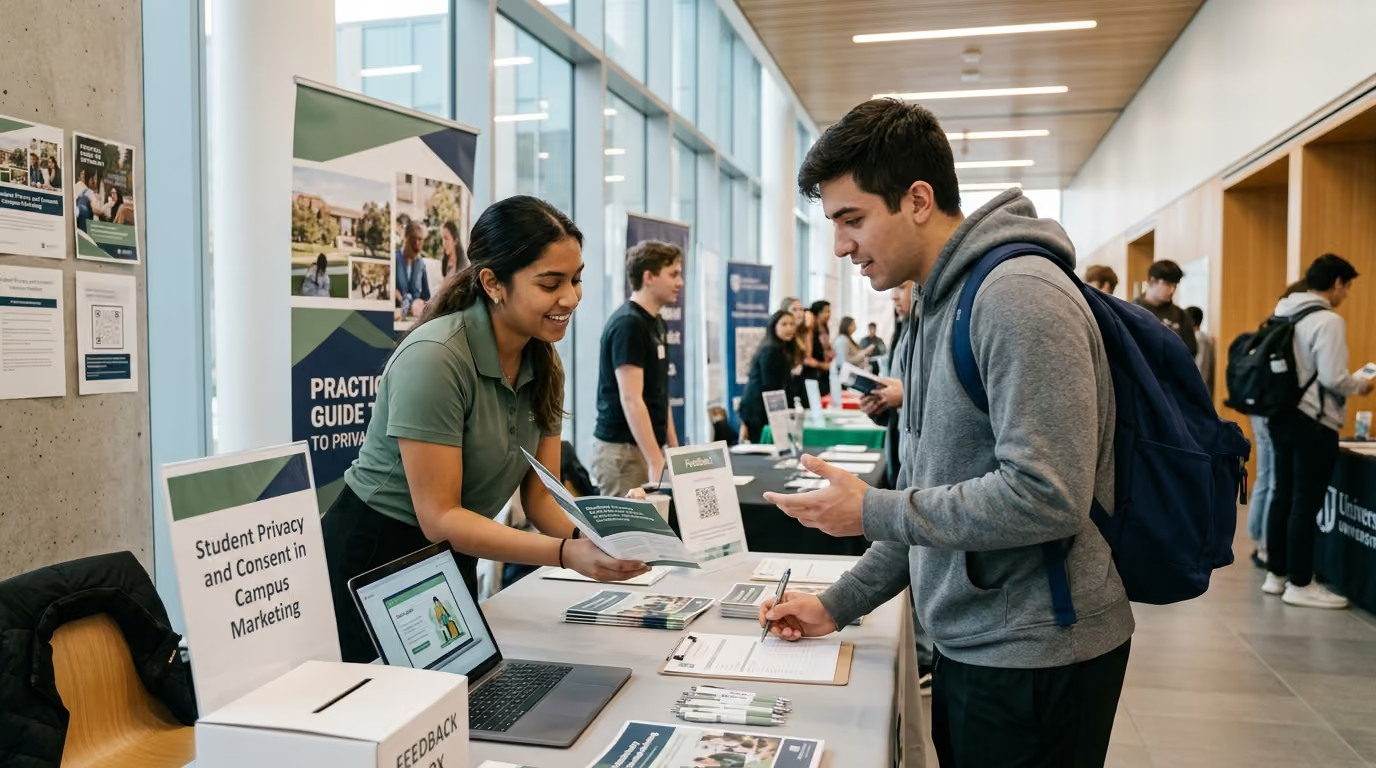
Orientation covers brand messaging, approved product claims, event safety, and customer escalation pathways. Students must complete practical operational modules before handling live sampling or public interactions. Investing in FTC-compliant brand ambassador training protects the parent brand from regulatory penalties and reputational risk.
Training is an ongoing operational requirement. Multi-semester programs should budget for quarterly refresher workshops. These sessions reinforce operational standards, introduce new product lines, and address procedural errors observed during field audits.
Campus ambassadors generate authentic content that resonates with demographic peers. Producing and utilizing these creative assets requires specific budgetary allowances.
Creative production line items include:
Budgeting must address intellectual property usage rights. A casual post published on an ambassador's personal profile carries different legal parameters than paid advertising assets.
If the brand intends to whitelist student profiles or utilize content in paid digital campaigns, licensing fees must be budgeted upfront. Clear contractual terms prevent costly intellectual property disputes after assets are produced.
Activating on collegiate real estate requires strict adherence to institutional regulations. University grounds are private property governed by unique facility use policies.
Securing space on campus involves multiple administrative costs:
Institutional permits require formal risk documentation. Most universities demand a customized Certificate of Insurance naming the institution as an additional insured party.
Major activations with large physical footprints or structural builds require higher liability limits. Off-campus commercial venues also require standard certificate processing fees and liability endorsements.
Product sampling operations generate extensive supply chain requirements. Sourcing and delivering product to individual campus ambassadors involves multiple operational touchpoints.
Direct inventory line items include:
Inventory models must account for transit spoilage, extreme weather damage, and field buffer stock. Product allocations should separate inventory intended for student consumption from stock reserved for campus activations. When brands leverage the complete guide to retail product sampling programs, they establish tight inventory controls that prevent stockouts and eliminate product waste.
Logistics tracking must reconcile every dispatched box against verified field distribution logs. Unaccounted inventory represents direct financial leakage.
Geographic layout dictates program travel and logistical support costs. Activating ambassadors across dispersed national markets requires dedicated transportation budgeting.
Travel expenses include:
Grouping target institutions into geographic clusters significantly reduces travel overhead. A single regional field lead can support five schools within driving distance, minimizing airline and hotel expenses.
Operating a distributed campus workforce requires a centralized technology stack. Software platforms streamline daily communication, task validation, payment processing, and commercial attribution.
Essential software line items include:
Software pricing scales based on active user counts, administrative seats, and tracked data volume. Selecting platforms that integrate directly with existing corporate CRM systems eliminates manual data entry and reduces administrative labor.
Program management represents the backbone of successful field execution. Managing dozens of student workers requires continuous administrative and operational leadership.
Ongoing managerial responsibilities include:
Underestimating managerial overhead is a frequent operational mistake. Programs that underfund supervision experience high student drop-off rates and inconsistent field execution. Dedicated management maintains operational momentum throughout the academic calendar.
Operating within collegiate environments introduces distinct regulatory and contractual risks. Brands must fund legal compliance safeguards prior to launching field activations.
The Federal Trade Commission enforces clear guidelines regarding commercial endorsements. When student ambassadors promote products, their material connection to the brand must be explicitly disclosed.
FTC compliance requirements include:
Ambassadors must understand that receiving free product creates a legal disclosure obligation. Providing clear compliance playbooks protects the organization from regulatory scrutiny and costly enforcement actions.
Classifying campus ambassadors requires strict legal analysis. The Fair Labor Standards Act, state labor codes, and local wage ordinances govern worker classification.
Key classification factors include:
Misclassifying hourly workers as independent contractors exposes organizations to back taxes, overtime penalties, and legal liability. Brands should consult employment counsel to establish compliant contractor agreements or formal W-2 payroll structures.
Campuses maintain strict policies regarding commercial solicitation on institutional property. Violating campus rules leads to immediate event cancellation, asset confiscation, and institutional bans.
Administrative compliance measures include:
Navigating institutional approvals requires advance planning and administrative funding. Building compliance allowances into the initial budget prevents operational delays during critical activation windows.
Constructing an accurate financial model requires a structured sequence. Following a step-by-step process ensures all operational dependencies are fully funded.
Evaluating program performance requires tracking distinct input, output, and commercial outcome metrics. Measuring performance across every stage enables marketing leaders to calculate clear Return on Investment figures.
Input metrics measure the baseline resources committed to the campaign:
Output metrics measure the immediate field activities generated by ambassadors:
Outcome metrics track validated commercial actions that advance business growth. Reviewing the complete guide to field marketing measurement plans helps operators link ground activities to corporate pipeline metrics.
Key commercial efficiency indicators include:
Attributing sales to field marketing requires structured measurement methodology. Simply tracking vanity coupon codes often underreports total brand impact.
Robust measurement models compare retail velocity in target campus zones against matched control markets without ambassador presence. Evaluating baseline sales against post-activation lift isolates the incremental revenue generated by field operations. Measuring geographic retail velocity provides definitive proof of campaign effectiveness.
Reviewing published industry case studies illustrates how distinct brands structure field marketing investments to achieve specific commercial goals.
In the apparel sector, retail brand Express executed a national collegiate program generating 103.2 million reported impressions and 53,000 unique content pieces. The campaign drove $2.2 million in direct sales via custom student coupon tracking.
In athletic apparel, Under Armour deployed ambassadors across collegiate markets, generating 1.8 million social impressions, 209,000 digital interactions, and 350 physical activations over a 15-week period.
Beauty and personal care brands also utilize campus networks to drive field trial. Skincare brand La Roche-Posay executed a campus initiative delivering over 17,500 physical samples, 19,500 student PR mailers, an 18 percent average engagement rate, and $85,000 in direct attributed retail sales.
Haircare brand Not Your Mother's activated across five target campuses, distributing 8,500 product samples, generating 530 pieces of organic student content, and logging 7,400 direct peer interactions.
Premium haircare brand OUAI deployed a targeted network of 15 student ambassadors to execute 45 sampling activations across 70 student organizations, distributing 9,610 product samples and logging 4,770 direct peer interactions.
Food brand Nissin Foods engaged 11 major university campuses, reaching over 200,000 students, distributing 16,000 physical samples, and generating 115,000 social media impressions.
These case studies highlight the operational scale of successful campus programs. When brands connect ground activations with retail availability, they drive immediate trial and accelerate retail velocity through student networks at grocery and big-box accounts.
The following financial scenario outlines the complete operational investment for a four-month collegiate pilot. The program model features twenty active ambassadors operating across ten target universities, executing two high-impact events per campus and distributing 10,000 total product samples.
This financial structure establishes predictable operational unit costs:
Allocating the entire program investment against sample units illustrates total program investment. However, this investment simultaneously funds live campus events, digital content generation, market research data, and direct consumer relationships.
We create experiential marketing programs built to connect emotion with action. In our experience, structuring a budget with total visibility across logistics, compliance, and field management is what separates high-performing brand campaigns from operational failures.
Campus marketing involves distinct operational variables that standard corporate budgets often overlook. Addressing these edge cases during initial planning prevents costly field disruptions.
Large public commuter institutions lack dense residential campus housing. Student populations travel to campus exclusively for scheduled classes and depart immediately afterward.
Traditional dormitory outreach and evening Greek life activations fail in commuter environments. Budgets must allocate additional funds for high-traffic transit center tabling, morning parking structure sampling, and commuter student lounge partnerships. Ambassadors may require travel stipends to support coordinated transit and off-campus activations.
Collegiate operational schedules differ sharply from standard corporate quarters. A typical academic semester contains only ten to twelve weeks of viable marketing time.
Campus activities shut down completely during:
Attempting to execute heavy field activations during final exams leads to missed shifts and wasted inventory. Budgets must concentrate capital into high-density operational windows, such as back-to-school orientation and major athletic homecoming weeks.
Marketing food, beverages, dietary supplements, financial services, or age-restricted products introduces complex regulatory hurdles. University administrators enforce strict policies regarding regulated product distribution on campus grounds.
Regulated categories demand dedicated budget allowances:
Failing to budget for specialized compliance procedures leads to administrative violations and rapid program shutdowns. Securing necessary municipal and university health permits before launching protects brand reputation and ensures continuous field operations.
Revisit this budgeting guide when preparing annual experiential marketing allocations, entering new collegiate territories, or shifting from agency-managed staffing to an internal ambassador framework.
Building an activity-based financial model ensures every campus marketing dollar translates into disciplined field execution, validated product trial, and measurable commercial growth.

30 Years Experiential & Retail Activation Partner for CPG & Beverage Brands | Multi-Market Demos, Roadshows & Costco/Club Programs That Actually Sell