Robbie Thain
Founder, CEO

Retail product sampling activations demand rigorous food safety protocols, allergen management systems, temperature controls.
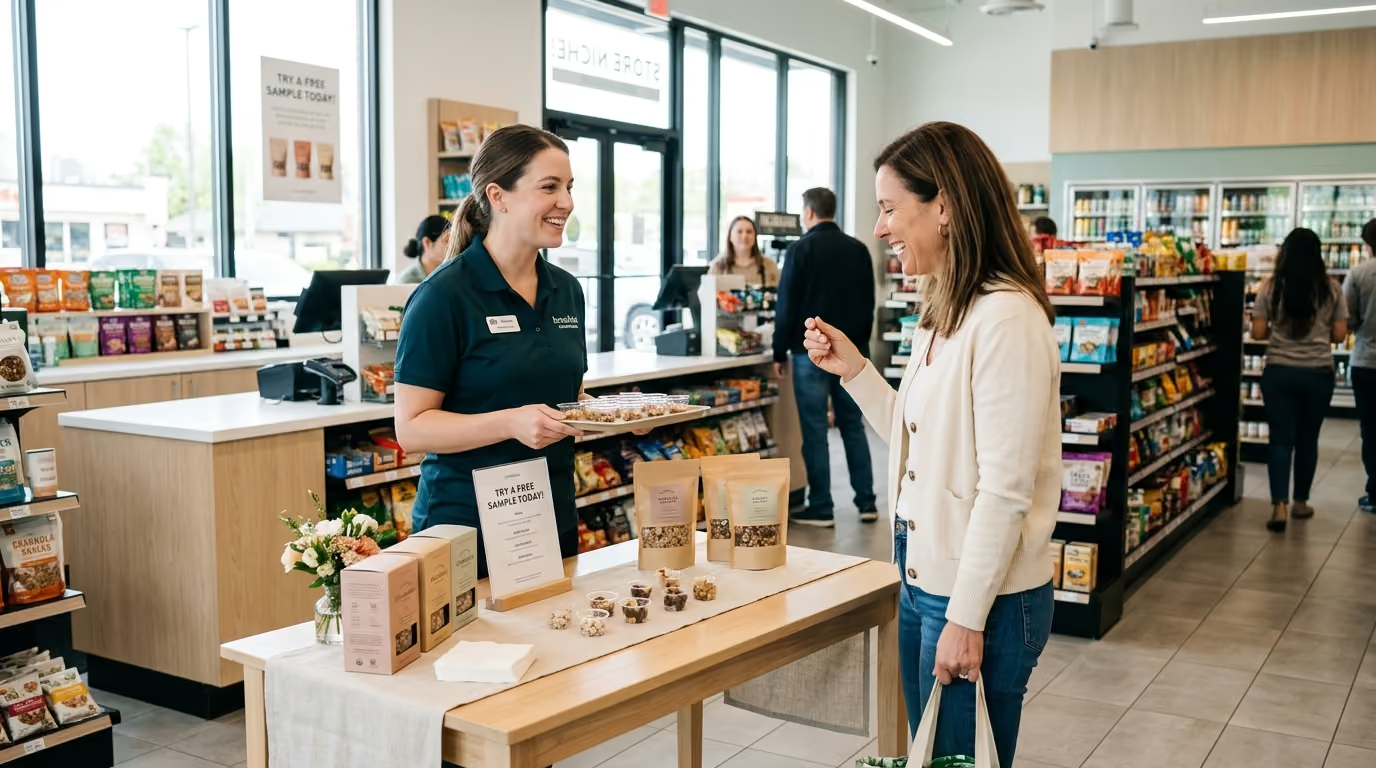
Most consumer packaged goods teams view retail product sampling purely as an engine for customer acquisition and retail velocity. In physical retail environments, an active demonstration table functions as an exposed commercial food prep line that carries genuine public health responsibilities.
Executing safe in-store activations requires treating temporary tasting stations with the same operational rigor as permanent culinary facilities. This guide establishes the operational protocols, regulatory standards, hazard controls, and incident management systems necessary to protect consumers and brand equity during retail sampling.
A busy supermarket on a Saturday afternoon presents a chaotic environment for food service. Shoppers crowd narrow grocery aisles with carts bumping into display tables. Children reach directly toward exposed sample trays. Temporary field staff often struggle with melting ice packs, crowded shared breakroom sinks, and complex store floor layouts.
According to estimates from the Centers for Disease Control and Prevention, roughly 48 million Americans contract foodborne illnesses each year. These illnesses account for 128,000 hospitalizations and 3,000 deaths annually across the broader food system. While these statistics span commercial supply chains, a retail demonstration introduces identical pathogen exposure pathways on a localized level.
Food allergies present an equally urgent operational risk. CDC data indicates that approximately 15 million Americans have diagnosed food allergies. These conditions trigger an estimated 30,000 emergency room visits and up to 200 deaths each year. A single mislabeled sample or shared set of prep tongs can turn a simple retail trial into a severe medical emergency.
Operational compliance remains a persistent challenge in grocery environments. The Food and Drug Administration retail deli risk-factor study revealed that improper holding temperatures and poor personal hygiene represent the most frequent compliance failures. The FDA observed that 61.7% of surveyed delis had employees who failed to wash hands at required times. Furthermore, 48.7% had workers who washed their hands improperly. Brand managers must recognize these vulnerabilities before deploying field staff to retail floors.
An in-store sampling table is not a passive marketing display. It is a temporary food establishment that receives, unboxes, cuts, heats, holds, and dispenses ready-to-eat food directly to the public. Regulatory authorities view sampling through the lens of the FDA Food Code. The 2022 FDA Food Code represents the primary national model for retail food protection, enforced through local health departments.
Every compliant sampling activation operates across five distinct layers of defense:
Understanding food safety starts with precise terminology. Ready-to-eat food requires no further cooking or pathogen reduction steps before consumption. Items like artisan cheese, dips, sliced fruit, cooked meats, baked goods, and functional beverages fall into this category. Time/temperature control for safety foods require strict thermal boundaries to prevent rapid microbial growth or toxin production.
Cross-contamination involves the transfer of harmful microorganisms between foods, surfaces, clothing, or equipment. Allergen cross-contact occurs when an allergenic protein unintentionally transfers to an allergen-free food. Cleaning removes visible dirt, oil, and food debris from physical surfaces. Sanitizing uses approved chemical treatments or heat to reduce remaining pathogens to safe levels.
A dedicated person in charge must lead every sampling shift. This individual holds full operational authority to verify controls, monitor staff health, and discard unsafe product. We have been connecting brands with people through live experiences, retail programs, and national activations since 1995. Over three decades, we have built a track record of creating meaningful brand moments across the country by embedding strict compliance into field execution.
Reviewing retail sampling formats compared for strategic deployment helps marketing teams understand how station complexity changes local permitting requirements.
Food safety failures rarely stem from bad intentions. They happen when brands fail to trace the physical path of a product from delivery to the shopper's mouth. Teams must analyze every stage of the on-site sampling lifecycle to uncover hidden vulnerabilities.
The hazard analysis begins at inventory receiving. Staff must inspect outer master cases for crushed corners, broken tamper seals, or biological leakage. Chilled or frozen products must arrive within verified temperature ranges before being accepted into store staging areas. Storing products inside shared backroom coolers requires clear separation from raw proteins, unwashed produce, or retailer inventory.
Transporting inventory from backroom storage to the retail floor introduces additional thermal and physical hazards. Product transported through dirty back hallways risks exposure to dust, chemical cleaners, and pests. Field teams must use dedicated, sanitized rolling carts and sealed transport tubs rather than balancing exposed boxes in hand.
Preparation and portioning represent the highest risk window for biological cross-contamination and allergen cross-contact. Slicing fruit, cooking plant-based proteins, or portioning dips on a portable table exposes ready-to-eat product to airborne particles and surface contamination. Thermal holding, portion staging, and customer hand-off complete the chain. Each stage demands verified critical limits rather than guesswork.
Building an effective hazard matrix requires answering six core operational questions:
Allergen management requires absolute precision. The 2022 FDA Food Code recognizes nine major food allergens: milk, eggs, peanuts, tree nuts, wheat, soy, fish, crustacean shellfish, and sesame. Sesame was formally added under the Food Allergy Safety, Treatment, Education, and Research Act.
Allergen cross-contact differs fundamentally from microbiological cross-contamination. Pathogens can be destroyed by proper cooking or sanitizing chemicals. Allergen proteins are heat-stable and chemically resilient. Sanitizing a cutting board with a quat solution kills bacteria but leaves microscopic nut proteins intact. Physical removal through thorough scrubbing with hot water and detergent remains the only reliable method to eliminate allergen residues.
Managing allergen safety requires a systematic five-step framework:
Field teams must maintain approved, current ingredient specification sheets for every sampled stock keeping unit. These sheets must detail direct ingredients, sub-ingredients, and manufacturing facility warnings. Never rely on marketing slide decks, consumer packaging mock-ups, or employee memory.
Every activation must display a completed matrix identifying which allergens exist in each product component. This matrix must account for secondary items including serving crackers, cooking oils, dipping sauces, garnishes, and drink mix-ins.
Maintain dedicated, color-coded cutting boards, knives, and prep utensils for allergen-containing items. Store allergen-containing inventory on bottom shelves below non-allergen products to prevent accidental spills from above. Never place open containers of allergen-heavy toppings over open tasting trays.
Schedule the preparation of allergen-free items before opening or preparing allergen-containing items. If an activation features both gluten-free and conventional crackers, portion all gluten-free items first. Seal and protect those portions before opening the conventional product packages.
Train field brand ambassadors never to answer allergen inquiries from memory. Staff must point directly to the physical ingredient panel on retail packaging. When shoppers ask whether a product is safe for a specific allergy, staff must state: "I cannot confirm that from memory, but you can inspect our ingredient panel directly."
When brands scale multi-city retail roadshows, operational missteps multiply quickly. Analyzing why retail demos fail during field execution highlights the critical importance of standardized allergen training across third-party teams.
Field staff represent the primary vector for pathogen transmission in retail sampling. Temporary workers frequently manage multiple tasks including driving, unloading vehicles, building physical displays, handling cash or coupons, and preparing food. Without disciplined personal hygiene, pathogens transfer rapidly to ready-to-eat samples.
The FDA Employee Health and Personal Hygiene Handbook outlines mandatory employee health policies. Workers exhibiting vomiting, diarrhea, jaundice, sore throat with fever, or exposed infected skin lesions must report symptoms immediately to the designated person in charge. Symptomatic workers must be excluded from the activation site.
Food employees excluded due to vomiting or diarrhea cannot return to food handling until they have been completely symptom-free for at least 24 hours. The person in charge must use the FDA Employee Health Policy Tool to determine formal exclusion or restriction requirements for diagnosed foodborne pathogens like Norovirus, Hepatitis A, Shigella, or Salmonella.
Proper handwashing forms the cornerstone of on-site hygiene. The 2022 FDA Food Code adjusted the minimum water temperature requirement for handwashing sinks from 100°F down to 85°F. This change emphasizes thorough mechanical friction over hot water alone.
Staff must execute a strict handwashing procedure:
Field staff must wash hands before touching food equipment, before putting on single-use gloves, after using the restroom, and after touching body parts. Handwashing is mandatory after handling phones, waste containers, shipping cartons, or cleaning chemicals.
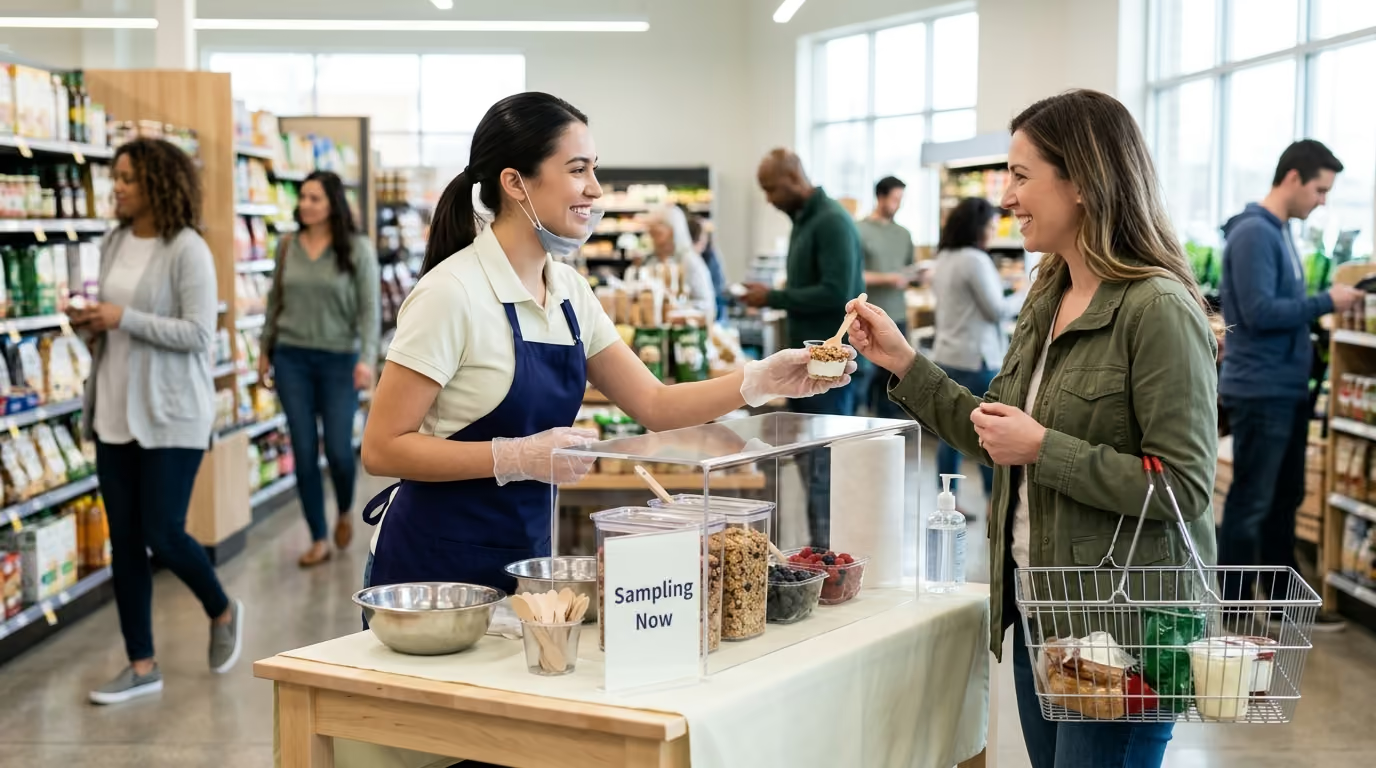
Single-use gloves never replace handwashing. Staff must wash their hands thoroughly before donning a fresh pair of gloves. Workers must change gloves immediately whenever they touch non-food surfaces, become torn, or switch between handling different products. Bare-hand contact with exposed ready-to-eat food is strictly prohibited under the FDA Food Code. Staff must handle all ready-to-eat samples using single-use gloves, tongs, scoops, or clean deli tissue.
Bacterial pathogens replicate rapidly in perishable foods held within the temperature danger zone between 41°F and 135°F. Sampling programs that serve dairy, plant milks, meats, poultry, cut melons, cut leafy greens, or prepared dips must manage cold and hot chains with absolute discipline.
Maintaining proper cold holding requires maintaining food at 41°F or below throughout storage, transport, prep, and display. Field staff must pre-chill all coolers and insulated cambros using commercial ice packs or mechanical refrigeration before loading product. Never load ambient temperature product into a cooler and expect it to reach safe cold-holding thresholds quickly.
Staff must measure internal food temperatures directly using calibrated digital probe thermometers. Never rely on the ambient air temperature gauge built into a portable cooler or the retailer's commercial display case. Position ice packs along the sides, bottoms, and tops of insulated transport bins to maintain uniform internal cooling.
Hot foods require hot holding at 135°F or above following thorough cooking or reheating. Any cooked food intended for hot sampling must be heated rapidly to its required internal cooking temperature before transfer to hot holding wells. Portable slow cookers, chafing dishes, and warming trays are designed to maintain hot temperatures, not to cook raw foods or reheat cold leftovers safely.
When active refrigeration or hot holding equipment is impractical on the retail floor, programs may utilize Time as a Public Health Control under the FDA Food Code. Time-based control replaces continuous temperature monitoring with strict time boundaries and documented disposal.
Under standard four-hour Time as a Public Health Control protocols:
Under the 2022 Food Code, hermetically sealed foods or freshly cut fruits starting at ambient temperatures of 70°F or below may use time control. These items must not exceed 70°F during a maximum four-hour exposure window. If food temperatures exceed 70°F, staff must discard the product immediately.
Managing cold chains across complex field programs requires specialized planning. Reviewing our complete guide to cold chain and food safety for mobile sampling programs provides technical specifications for active thermal monitoring.
Sanitation at a temporary sampling table must match the discipline of a commercial kitchen. Cleaning and sanitizing are two separate operational tasks that must occur in a precise, uninterrupted sequence.
The mandatory four-step sanitation process requires:
Common sanitizers include quat ammonium compounds and sodium hypochlorite chlorine solutions. Sanitizer solutions degrade when exposed to organic soils, warm air, and light. Field teams must test chemical concentrations every two hours using product-specific chemical test paper strips.
Quat solutions generally require concentrations between 200 and 400 parts per million, while chlorine solutions require 50 to 100 parts per million. If test strips show low concentration, staff must dump the bucket and mix fresh solution immediately. Wiping surfaces with dry towels or non-approved general disinfectant wipes leaves chemical residues that contaminate food and violate the Food Code.
Complex equipment requires extra care during field teardown:
Commercial blenders used for smoothie or sauce sampling must be fully disassembled after each shift. Blades, rubber sealing gaskets, and locking rings must be detached, cleaned, and sanitized separately. Food residue trapped behind blender gaskets creates a breeding ground for bacterial colonies.
Insulated beverage dispensers and mechanical dispensing valves must be flushed with hot soapy water, rinsed, and cleared with sanitizer solution daily. Disassemble dispensing spigots entirely to scrub interior valve channels using specialized tube brushes.
Polyethylene cutting boards that develop deep knife grooves must be retired from service. Deep cuts trap bacteria and food proteins that resist standard washing. Field staff must carry multiple color-coded boards to allow continuous rotation when cleaning facilities are distant.
Digital thermometer stems must be wiped clean with single-use alcohol prep pads or sanitized with fresh chemical solution between every temperature measurement. Measuring raw, heated, and chilled foods with an un-sanitized probe transfers contaminants across batches.
Teams seeking to balance operational cleanliness with environmental goals should consult our guide on how to build more sustainable retail sampling programs for waste reduction strategies.
Station architecture dictates customer behavior and physical contamination risks. A poorly designed sampling footprint invites consumer hands into exposed food bowls and causes cross-contact hazards.
Brand managers must design physical barriers between the customer and active food preparation zones. The preparation area must sit behind the demonstration table, out of direct customer reach. When space allows, transparent acrylic sneeze guards must cover active staging trays.
Eliminate communal sampling trays entirely. Open platters filled with uncovered cheese cubes or snack chips invite shoppers, including small children, to touch multiple pieces before selecting one. A shopper with unwashed hands who touches three samples before picking one contaminates the remaining portions.
Implement disciplined, single-serve portioning models:
Clear physical separation between marketing materials and food preparation surfaces is essential. Keep promotional flyers, coupon pads, branded banners, and personal items completely off the food cutting and staging tables. Phones, tablets, and clipboards harbor heavy bacterial loads and must never sit on active food-contact cutting boards.
For a broader operational overview of field activations, explore the complete guide to retail product sampling programs.
Field execution requires an actionable, chronological checklist that guides staff through every phase of the retail shift.
CPG brands running multi-store programs should reference our tactical field guide for retail sampling and demonstration programs to align staffing workflows with retailer expectations.
When a food safety control breaches tolerances, field staff must execute immediate corrective actions without waiting for executive approval. Empowering frontline ambassadors to halt service protects public health and limits brand liability.
Every retail sampling program must maintain defined response protocols for critical floor emergencies:
If a consumer reports an allergic reaction or medical distress after trying a sample, staff must prioritize emergency care immediately:
If an employee or customer experiences a vomiting or diarrheal incident near the sampling station, staff must isolate the zone under FDA guidelines:
If a transport cooler fails or product measures above 41°F without a verified time-control record:
Measuring safety performance requires tracking operational inputs alongside end-of-shift outcomes. Managing food safety protects Return on Investment by eliminating catastrophic product liability claims, retailer de-listings, and regulatory fines.
Field marketing directors must track both leading and lagging metrics across every retail territory:
Examining operational challenges across specific retail categories illustrates how safety principles apply on the floor.
A premium organic yogurt brand launched an eight-week retail demo tour across national club stores, distributing 1,200 samples per store daily. Club stores feature wide aisles and high foot traffic, but cold-holding space in backroom coolers is strictly limited.
The field team faced an immediate hazard: yogurt left on display tables rose from 38°F to 48°F within 90 minutes due to warm store lighting. This breached the 41°F cold-holding threshold.
The team restructured the station architecture:
A snack food company activated an in-store campaign demonstrating four distinct nut butter dips paired with wheat and gluten-free pretzel crisps. The product line featured peanut butter, almond butter, sunflower seed butter, and tahini containing sesame.
Serving four distinct allergen profiles from a single four-foot table created extreme allergen cross-contact risks. A single dipping knife moved between containers could cause severe cross-contact for nut-allergic shoppers.
The brand implemented a separated zone protocol:
Operational excellence and consumer safety must always serve as the foundation for physical retail brand experiences.

30 Years Experiential & Retail Activation Partner for CPG & Beverage Brands | Multi-Market Demos, Roadshows & Costco/Club Programs That Actually Sell