Robbie Thain
Founder, CEO

Measurable campus marketing ROI becomes achievable by structuring student ambassador programs around local network nodes, proven frameworks.
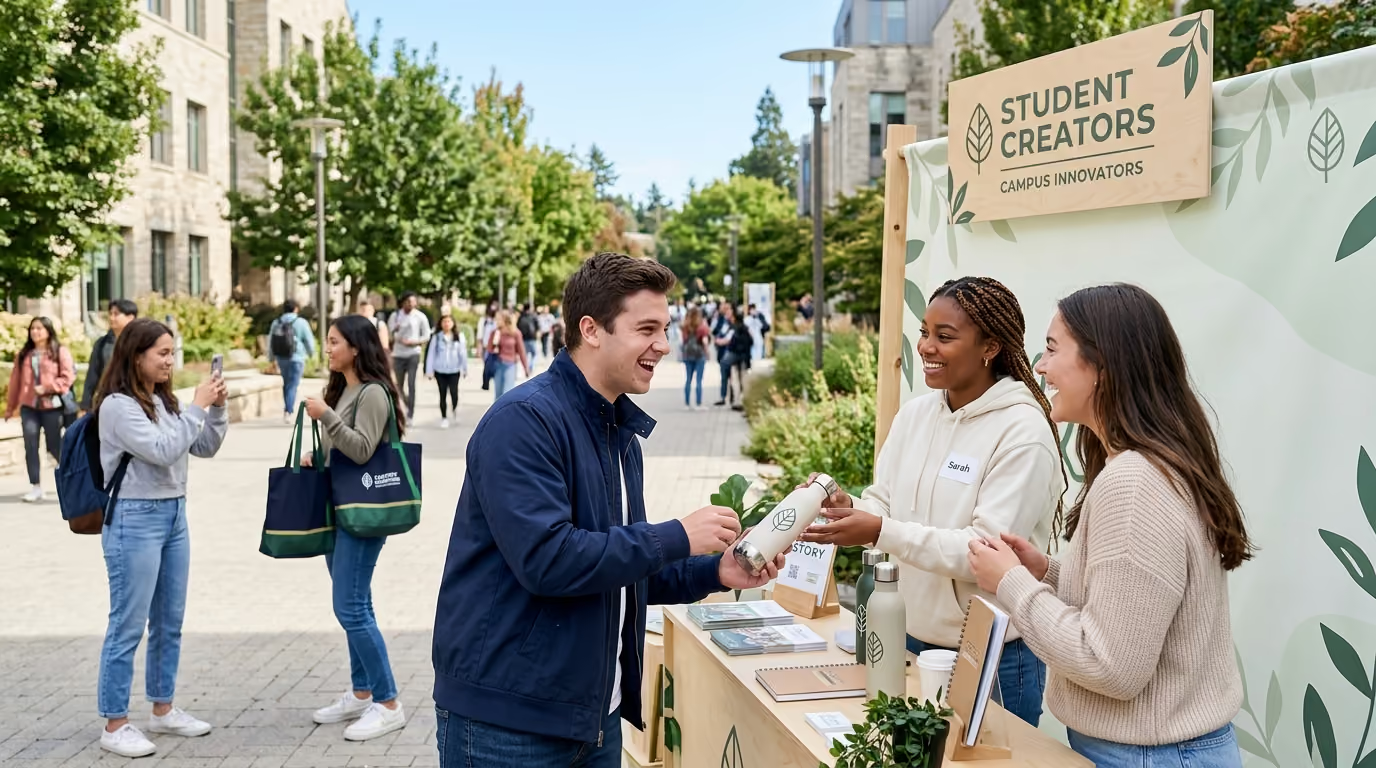
A structured campus creator program transforms student ambassadors into credible community connectors who drive authentic trial, retail sales, and brand equity. This guide provides the operational framework for recruiting, managing, and measuring student creators without relying on vanity follower counts or unmanaged social posting.
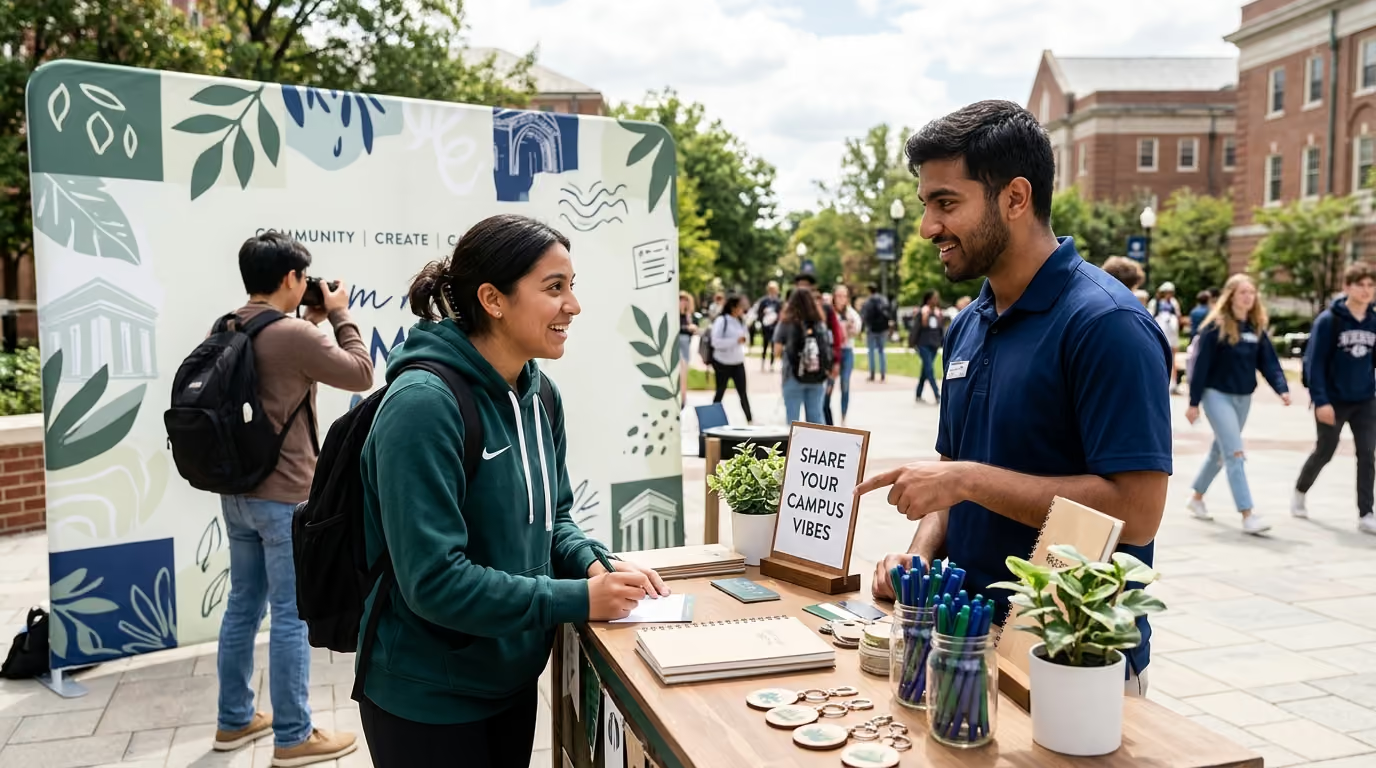
Every brand marketer has experienced the frustration of a disorganized live event. You ship thousands of product samples, custom branded tents, and promotional banners to a major university campus or regional trade expo. When you arrive on site, the reality falls far short of the strategic plan. Student workers sit behind folding tables staring at their smartphones while pallets of inventory sit unboxed in the heat.
Passersby grab free swag without learning a single product benefit. No one scans the registration QR code. The event finishes with empty boxes, exhausted staff, and zero qualified leads or measurable retail lift.
This breakdown happens when brands treat campus marketing as a superficial checklist instead of a disciplined field operation. Handing a student a corporate t-shirt and telling them to post online does not create an ambassador. Without clear mission briefs, local community access, and structured accountability, campus programs generate noise rather than pipeline.
Fixing this problem requires shifting from unmanaged social promotion to an integrated campus creator model. When you equip student ambassadors to act as creators, connectors, and local interpreters, every physical interaction connects directly to measurable business outcomes.
A modern student ambassador program functions as a distributed community network. It must not operate as an unmanaged roster of online influencers. The most effective programs combine three distinct functions into a unified field strategy.
First, ambassadors serve as creators who produce useful, native media grounded in real academic routines. Second, they act as connectors who introduce your product to student organizations, Greek chapters, athletic teams, and residence halls. Third, they work as interpreters who translate your brand value into campus-specific language, daily rituals, and budget realities.
This distinction explains why raw follower counts fail as a selection metric. A student with fifty thousand followers may broadcast content to an audience scattered across the globe. That audience offers zero local density on a specific target campus.
Conversely, a student with eight hundred followers who serves as a club treasurer or residence advisor holds deep interpersonal trust. When that student demonstrates a product, peers pay attention and take action.
Platforms like Instagram and TikTok reach a massive share of young adults. Pew Research Center reports that 78 percent of United States adults aged 18 to 29 use Instagram, while 62 percent use TikTok. Subsequent research from Pew Research Center shows that 80 percent of adults in this age bracket use Instagram, with roughly half accessing TikTok daily.
However, high platform usage does not automatically create brand trust. SocialLadder reports that 82 percent of college students trust recommendations from friends, while only 52 percent trust traditional influencers.
A 2025 study on influencer credibility published in the Journal of Marketing Communications found that 91 percent of surveyed students follow influencers, yet 82 percent report that a lack of trust directly limits their purchase decisions.
To bridge this trust gap, brands must build distributed trust. Distributed trust relies on repeated, credible touchpoints across physical spaces and digital channels. You can learn more about structuring these programs in our guide to campus brand ambassador operations.
To deploy ambassadors effectively, you must treat the university campus as a complex ecosystem. A campus is not a homogeneous demographic block. It is a dense network of distinct micro-communities with unique physical patterns, schedules, and social rules.
Formal nodes represent established university organizations with recognized leadership structures. These groups control meeting spaces, manage internal communication channels, and host regular gatherings.
Partnering with formal nodes provides immediate scale. When an ambassador secures a sponsorship slot at a weekly chapter meeting, your brand gains focused access to fifty to one hundred highly engaged students.
Informal nodes are organic social hubs that lack official university charters. These networks often command higher engagement and daily loyalty than formal clubs.
Reaching informal nodes requires ambassadors who possess organic social access. A residence advisor or campus barista can introduce products into daily routines without feeling invasive or commercial.
Physical campus geography dictates where and when brand interactions can happen naturally. Successful campaigns align their field footprint with the rhythm of the academic day.
Mapping these physical zones allows your field team to meet students at logical transition points. Capturing attention during a natural break creates better engagement than interrupting a student rushing to class.
Executing a campus creator program requires an operational system that balances brand standards with student autonomy. We organize our field marketing methodology around the six-stage C.A.M.P.U.S. framework.
Never launch a campus campaign with the vague goal of raising awareness. Define the exact behavioral change you need to generate on each campus.
Determine whether the primary objective is driving retail velocity at local grocery stores, generating app downloads, or distributing physical product trials. Clarify the core community barriers preventing adoption, such as price perception or lack of category understanding. Establish specific lead and lag key performance indicators before recruiting a single student.
Every campus environment features unique commercial regulations, student demographics, and geographic layouts. An urban commuter school operates very differently from a rural residential campus.
Audit the university policies regarding commercial solicitation, distribution permits, and student organization sponsorships. Map out where your target consumers live, study, eat, and socialize. Identify the local retail stockists within a two-mile radius where students buy groceries and personal goods.
Connecting campus activations directly to store shelves is critical for consumer packaged goods brands. Review our analysis on connecting campus ambassadors to retail sell-through to align your geographic planning with retail inventory.
Do not hire a homogeneous group of social media personalities. A high-performing campus team requires a portfolio of distinct student archetypes.
Assign specific responsibilities based on individual strengths, social access, and technical skills. Pair high-energy event hosts with organized club connectors and talented digital storytellers. Matching the right student to the right mission prevents burnout and ensures complete campus coverage.
Student creators need clear operational boundaries rather than rigid, word-for-word corporate scripts. Provide an operating manual that outlines approved product claims, prohibited language, visual brand assets, and legal disclosure rules.
Equip your field team with structured content briefs, digital reporting tools, and pre-packaged event activation kits. When students understand the brand boundaries, they can produce authentic local content without creating regulatory risk.
A purely digital campus campaign gets lost in algorithmic noise. A purely physical sampling table reaches only the students who walk past that exact sidewalk.
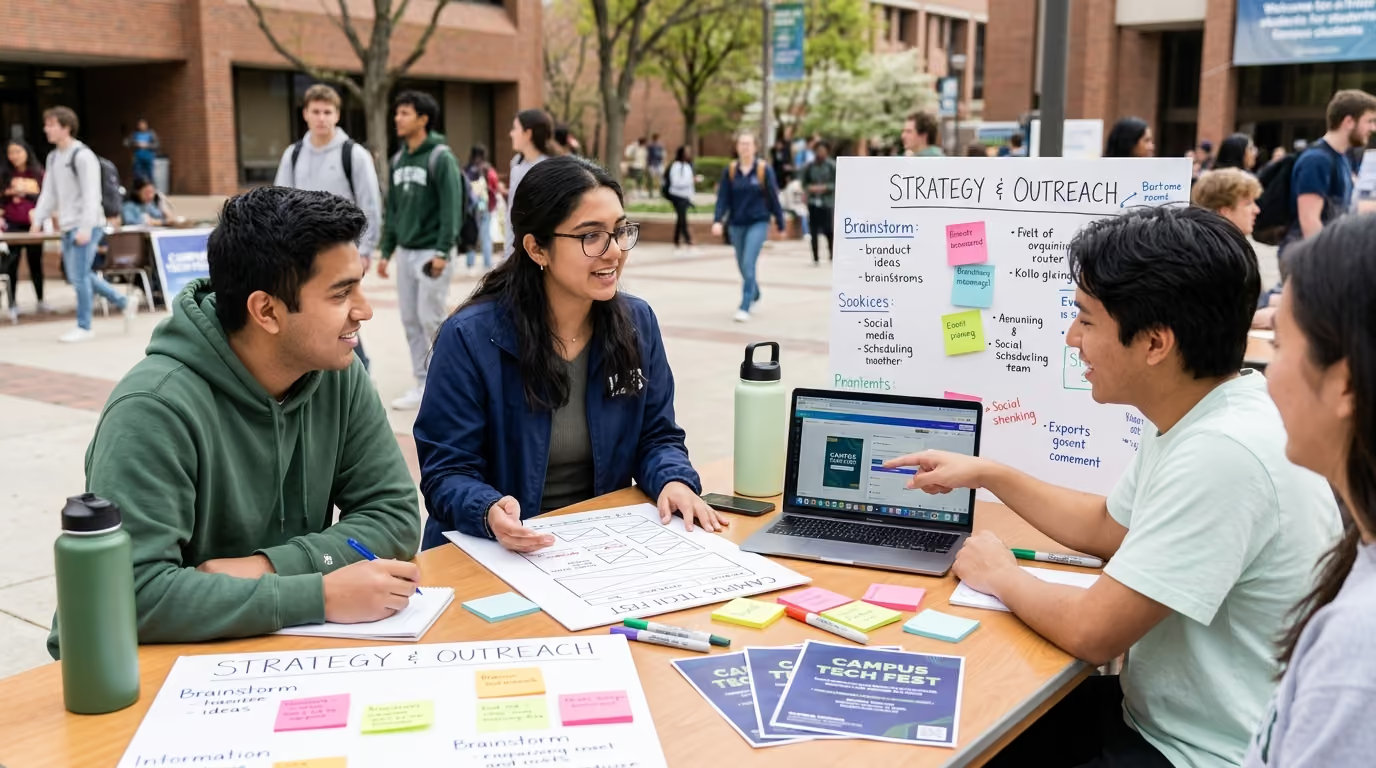
Integrate social storytelling with physical activations. Have your creators document behind-the-scenes event preparation, host live demonstrations, and publish recaps that address real student questions. Connect every physical sample to a trackable digital action, such as a QR code offering a local retail discount.
Evaluate your campus program using commercial business metrics alongside engagement data. Calculate your true Return on Investment by measuring verified product trials, retail sales lift, digital redemptions, and qualitative customer feedback.
Collect the competitive intelligence gathered by your ambassadors during their field conversations. Treat student insights as a vital strategic asset for your product and marketing teams.
Building an effective campus roster requires deliberate talent selection. You must screen candidates for specific community access and communication skills rather than public vanity metrics.
Avoid recruiting students solely through open online forms that ask for social media handles. Use a behavioral screening process that evaluates practical execution skills.
Ask candidates to describe a specific campus event they organized from scratch. Request an unedited sixty-second video explaining a product they currently use and love. Inquire about their direct involvement in student organizations and their weekly academic schedule.
Screening for reliability, communication clarity, and genuine enthusiasm produces far better field results than selecting high-follower candidates who lack operational discipline. To refine your talent selection, review our field guide on training brand ambassadors for consumer conversations.
A campus creator program is a professional business partnership. Treating student labor casually creates legal exposure, poor retention, and low-quality campaign execution.
Never compensate student ambassadors solely with free product or vague promises of career exposure. Unpaid programs lead to high turnover, operational unreliability, and socioeconomic exclusion.
Avoid commission-only models. Commission-only compensation encourages aggressive, spam-like sales tactics that alienate peers and damage brand reputation.
Ambassador contracts must clearly define intellectual property rights and media usage terms. Specify whether the brand receives full ownership of created assets or a licensed right for digital repurposing.
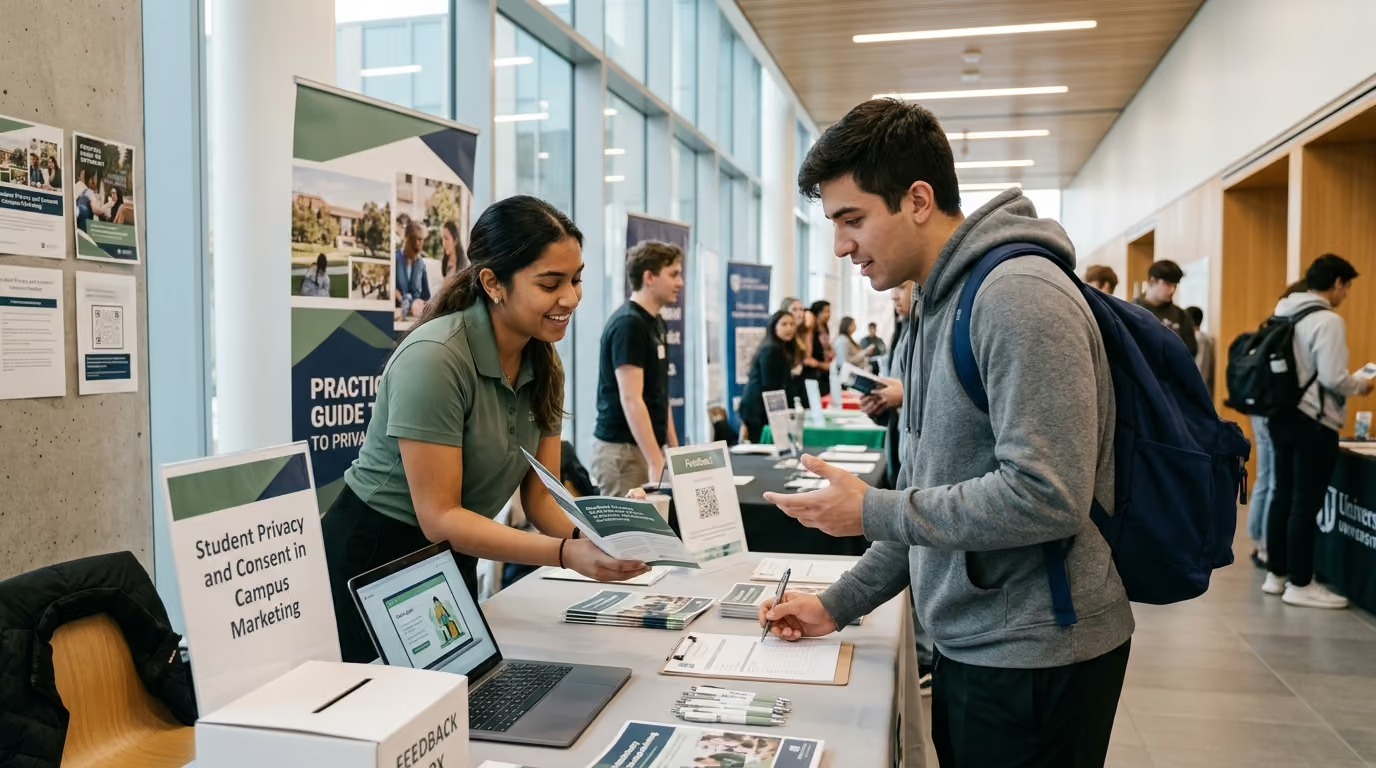
Define the exact duration of the content license and whether your brand can use the student's likeness in paid digital advertising. Establish clear parameters regarding competitive exclusivity during the academic term. Protect student privacy by implementing clear operational rules, which you can review in our guide to student privacy and consent in campus marketing.
Ambassadors must comply with Federal Trade Commission regulations governing commercial endorsements and testimonials. The Federal Trade Commission requires clear, conspicuous disclosures whenever a material connection exists between an endorser and a brand.
A material connection includes monetary payment, free product, event travel, or company perks. Disclosures must be immediately noticeable and easy to understand.
A disclosure hidden behind a "more" link or buried inside a cluster of hashtags violates regulatory standards. For video content, the disclosure must be superimposed on the video itself and spoken aloud if the endorsement is verbal.
The Federal Trade Commission states that endorsers cannot talk about personal product experiences if they have not used the item. Furthermore, ambassadors cannot make objective performance or health claims that require scientific proof the brand does not possess.
Provide your ambassadors with pre-approved disclosure templates, such as "Paid partnership with [Brand]" or "Sponsored by [Brand]." Monitor ambassador posts regularly to enforce strict compliance.
Executing an integrated campus campaign requires disciplined scheduling and precise coordination between physical field teams and digital channels.
A successful campus creator program must prove its financial return. Relying solely on impressions or video views obscures whether an activation generated real commercial value.
In our experience managing high-volume field programs across the country, clear reporting on reach, trials, leads, and sales is essential to guide campaign optimization. Our measurement approach tracks awareness, engagement, and conversion, turning brand moments into actionable data that demonstrates business impact.
Evaluating campus programs as an ongoing revenue driver rather than an isolated promotional expense is critical. For an advanced framework on calculating these metrics, review our strategic guide on measuring student ambassadors as a growth channel.
To evaluate program health holistically, we balance operational metrics across a simple equation:
$$\text{Program Value} = \text{Reach} \times \text{Relevance} \times \text{Trust} \times \text{Actionability} \times \text{Repeatability}$$
A campaign with massive reach produces zero value if relevance or trust is absent. Focusing on this complete chain ensures your field investments deliver verified commercial returns.
Examining documented campaign patterns demonstrates how combining physical sampling, creator content, and student organizations drives measurable business outcomes.
A leading hair care brand launched a focused campus initiative designed to drive trial and brand loyalty among female college students. Rather than relying on standard display ads, the brand deployed fifteen student ambassadors across target campuses.
The ambassadors organized forty-five targeted activations, partnering directly with more than seventy campus organizations. They distributed over 9,600 premium product samples and engaged in more than 4,770 direct peer-to-peer conversations.
The brand collected 730 completed post-campaign survey responses to measure commercial intent. Sixty-one percent of surveyed students stated they planned to continue purchasing the brand, while seventy-nine percent confirmed they were highly likely to recommend the product to a peer.
A youth-focused digital platform executed a multi-campus ambassador initiative managed by The Campus Agency to drive application adoption. The campaign combined on-campus events with student creator storytelling.
The field team executed 239 campus activations, reaching 13,800 students directly through peer conversations. Simultaneously, student creators published 345 in-feed social posts that generated 436,381 reach and 825,573 total impressions.
The campaign generated 15,130 tracked link clicks and 2,361 verified app downloads attributed directly to ambassador referral links. This case demonstrates how combining physical event presence with creator distribution creates clear, attributable conversion pipelines.
Operating on college campuses introduces specific legal, operational, and reputational risks. Marketing leaders must build clear protocols to navigate campus bureaucracy and protect brand equity.
Colleges and universities maintain strict rules regarding commercial solicitation, product sampling, and physical space usage. Violating these policies can lead to campus bans, confiscated inventory, and negative public relations.
Always secure written permission from the appropriate campus authority, such as the student union board, student affairs office, or campus commercial relations director. Understand the specific boundaries of public sidewalks versus private university property. When working with Greek chapters or student clubs, verify that their bylaws allow corporate co-sponsorship of meetings and events.
Residence halls, dining spaces, and locker rooms represent private living environments. Never instruct ambassadors to conduct uninvited door-to-door sampling or unapproved filming in residential buildings.
All photo and video content must respect student privacy rights. Ambassadors must obtain verbal consent before recording individuals, and written appearance releases for featured video subjects. Establishing clear rules around private spaces protects your brand from privacy complaints and administrative backlash.
Brands in the beverage, wellness, financial services, and dietary supplement spaces face elevated compliance scrutiny. College campuses frequently include both legal adults and minors under the age of eighteen.
Field activations can face unexpected disruptions, ranging from severe weather to campus protests or product quality complaints. Equip every ambassador with a clear crisis escalation chain.
Establish clear rules stating that ambassadors must never comment on controversial campus events or corporate controversies on behalf of the brand. Provide a direct contact number for a dedicated brand operations manager who can resolve logistical, safety, or legal issues immediately.
To transition your student marketing from disconnected social posting into an integrated creator network, execute these operational steps over the next thirty days:

30 Years Experiential & Retail Activation Partner for CPG & Beverage Brands | Multi-Market Demos, Roadshows & Costco/Club Programs That Actually Sell