Robbie Thain
Founder, CEO

Crowded exhibition halls overwhelm qualified buyers, making structured sensory architecture and cognitive frameworks essential for driving meaningful.
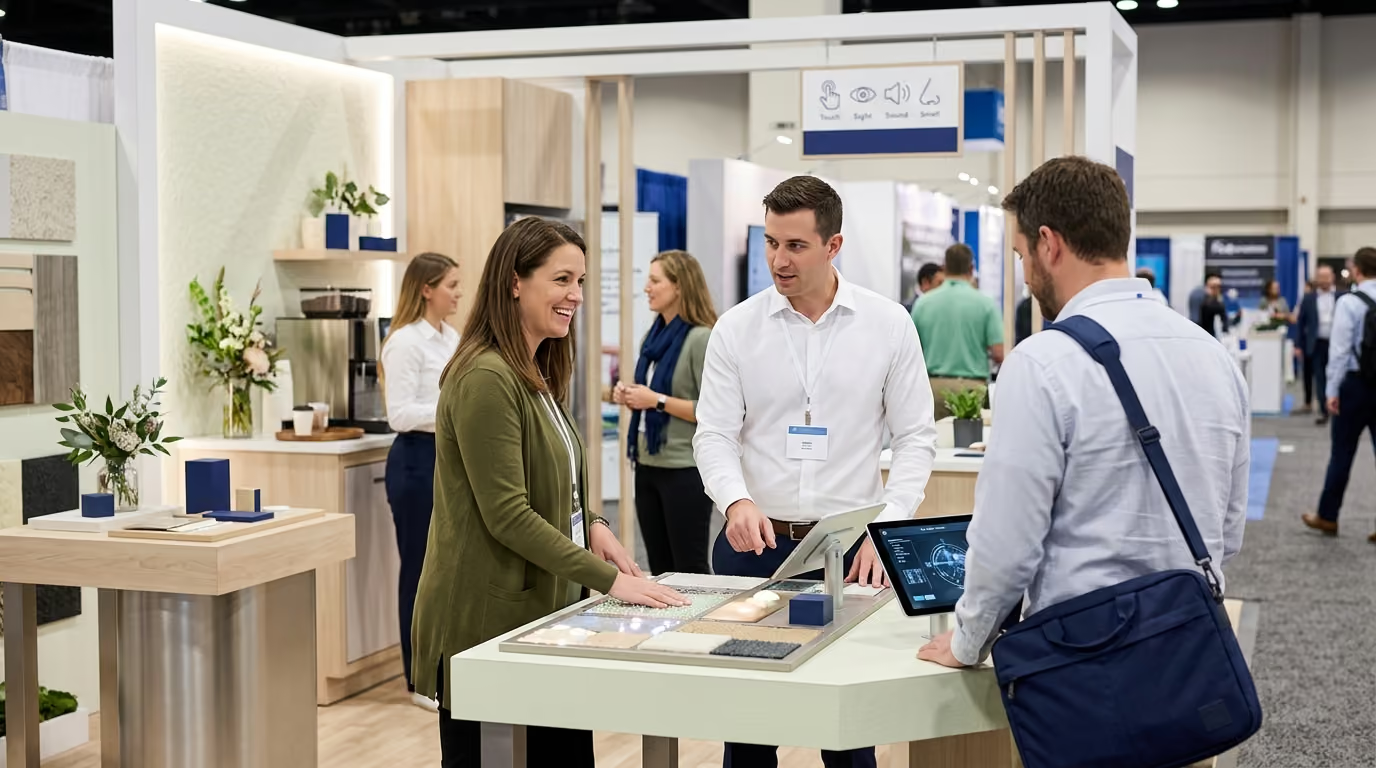
Most trade show exhibitors believe that adding more sensory stimulation will naturally attract larger crowds. In practice, piling flashing video walls, blaring audio tracks, and aggressive aromas onto a convention floor repels qualified buyers. Sensory experience design is not the pursuit of sensory overload. It is the disciplined alignment of physical cues to prove a product claim, establish brand memory, and convert booth traffic into measurable pipeline.
Sensory experience design coordinates sight, sound, touch, taste, smell, spatial flow, and narrative to direct how trade show visitors evaluate a commercial offering. When marketing teams ground sensory triggers in functional product truths, they create immersive environments that validate buyer trust and generate sustained Return on Investment (ROI).
Exhibition halls are hostile sensory environments. Overhead industrial lighting glares across crowded aisles while competing exhibitors blast contradictory audio loops. Exhausted attendees walk miles across concrete floors, dodging promotional staff and collecting unwanted branded trinkets. Under these conditions, the human brain filters out generic marketing messages to prevent cognitive exhaustion.
Marketing teams often respond to this chaos by introducing their own noise. They commission massive LED video arrays, distribute generic sweet snacks, and pipe loud music into the aisle. These tactics generate artificial foot traffic, but they fail to produce commercial results. Visitors stop to look at the spectacle, grab free items, and leave without understanding what the business sells.
When attendees cannot quickly grasp what a company does, dwell time becomes wasted overhead. Brand representatives spend valuable hours talking to unqualified badge holders who were merely lured by bright lights. Meanwhile, high-value retail buyers and enterprise decision-makers keep walking because the booth offers no clear value proposition.
Trade shows demand an operational shift from theatrical decoration to structured sensory architecture. Exhibitors must treat physical presence as an empirical testing ground where every physical touchpoint clarifies the product value. When you build booths designed for product trials and retail buyer meetings, sensory elements guide the visitor from curiosity directly into qualified commercial conversations.
Sensory marketing uses physical stimuli to affect consumer judgment, perception, and long-term memory. Academic research shows that multisensory strategies work best in physical environments where consumers can interact with materials directly. While digital campaigns rely on screens, live event spaces engage physical human perception.
A functional booth relies on multisensory congruence. Congruence occurs when every sensory cue communicates the exact same brand message. If a sustainable packaging brand uses heavy synthetic plastics in its booth construction, the physical cue contradicts the environmental message. The human brain detects this mismatch immediately, eroding buyer trust.
Brand experience operates across five distinct psychological dimensions:
The sensory dimension governs what the visitor physically perceives through their eyes, ears, skin, nose, and palate. These inputs form the initial foundation of brand perception.
The affective dimension governs the emotional state induced by the physical environment. A calm, well-lit space creates feelings of clarity and confidence.
The intellectual dimension engages critical thinking and problem-solving. This occurs when an attendee evaluates a live product demonstration against their existing operational problems.
The behavioral dimension involves physical actions taken within the space. Visitors touch materials, push buttons, sample formulations, and navigate structured walkways.
The relational dimension connects the individual experience to a wider social or business context. The visitor connects the demonstration to their team, their retail customers, or their brand identity.
Research from Freeman shows that 80 percent of event attendees view in-person events as the most trusted marketing channel. That same study noted that 87 percent of attendees attend events specifically to find new products, solutions, and commercial partners. Furthermore, EventTrack research demonstrates that 61 percent of consumers show higher inclination to purchase after a live brand experience. Product trial, functional understanding, and authentic brand connection represent the top three drivers of post-event buying decisions.
Sensory booth design requires an engineering mindset rather than an aesthetic whim. The SENSE-ACT model provides a step-by-step methodology to structure sensory investments around verifiable business outcomes.
Every activation must start with a single, clear takeaway. Define exactly what an attendee must believe, feel, and explain after leaving your space. Avoid broad slogans like "we provide innovative solutions." Choose precise claims such as "this beverage packaging reduces cold-chain shipping costs by thirty percent."
Identify the observable proof required to validate your strategic promise. If your product claims superior durability, do not just display a chart. Build a physical rig that drops heavy weights on the material in real time. Sensory interaction must validate the core product claim, turning abstract features into tangible facts.
Structure the visitor journey as a cohesive story sequence. Guide the attendee through an intentional progression: Notice, Orient, Participate, Understand, Personalize, and Act. Each sensory modality must advance the visitor to the next phase of this narrative.
Select the precise physical modalities that support the demonstration while removing conflicting signals. Balance ambient lighting with focused spotlights to direct visitor attention. Ensure sound levels facilitate effortless speech and keep aromas strictly contained to designated trial areas.
Design physical interactions that require active participation rather than passive observation. Let attendees assemble components, test software workflows, or conduct side-by-side material comparisons. Make sure the interaction yields a tangible result, such as a customized specification sheet or performance score.
Ensure every attendee can participate regardless of physical or cognitive differences. Provide seated and standing interaction points, clear visual labeling, and noise-reduced zones. When you design for diverse sensory thresholds, you create a comfortable environment for every commercial buyer.
Connect every sensory touchpoint to a commercial next step. Position lead capture technology at the natural conclusion of each product demonstration. Train field staff to transition engaged participants directly into private meeting rooms or qualification workflows.
Audit your sensory systems before the show floor opens. Test acoustic levels during peak hall hours and verify lighting contrast from sixty feet away. Measure lead flow, product comprehension, and pipeline velocity to validate your trade show Return on Investment.
Executing sensory design requires mastering individual sensory channels. Each modality plays a specific operational role within the overall booth architecture.
Visual cues establish the initial connection with visitors moving down the aisle. A booth must answer who you are, what you offer, and why the visitor should stop within three seconds.
Avoid visual clutter. Stacking multiple display screens and overlapping graphic claims creates visual exhaustion. Establish a strict visual hierarchy that guides the human eye:
Lighting should sculpt the physical environment rather than flood it. Use directional lighting to make product textures stand out and draw eyes to demonstration tables. Follow Web Content Accessibility Guidelines by avoiding reliance on color alone to convey technical data.
Convention centers are notoriously loud, often reaching ambient sound levels above eighty decibels. Adding louder music to this environment forces visitors and staff to shout, accelerating physical fatigue.
Deploy targeted audio solutions instead of ambient noise. Directional overhead dome speakers project clear sound directly to an individual standing at a demonstration kiosk. Visitors outside the focal zone hear almost nothing, keeping the booth perimeter quiet.
Incorporate auditory confirmation for physical interactions. A clean acoustic chime when a visitor clicks a component into place signals precision engineering. For spoken presentations, always provide closed captions on accompanying screens to support attendees with hearing impairments.
Tactile engagement creates immediate psychological ownership of a product. When a buyer physically handles a tool, packaging material, or manufactured component, they assess quality through weight, temperature, and texture.
Create structured touch comparisons. Position your material directly alongside standard market alternatives on a neutral testing surface. Ask the visitor a direct evaluative question: "What do you notice about the rigidity of sample A versus sample B?"
Maintain strict operational hygiene for all tactile installations. Provide hand sanitation stations and instruct staff to wipe down handling samples between interactions. If using digital touchscreens, ensure alternative physical controls exist for visitors who prefer not to touch shared displays.
Taste creates intense memory retention, making it a critical tool for food, beverage, and consumer packaged goods brands. However, indiscriminate food distribution attracts non-buying attendees and clogs traffic lanes.
Structure tasting as an educational masterclass. First, brief the buyer on the unique processing method or ingredient sourcing. Next, provide a controlled sample at the optimal consumption temperature. Finally, explain the commercial margin implications while the buyer experiences the product profile.
Manage food safety and allergen risks meticulously. Clearly label all ingredients, gluten profiles, and common allergens on visible table signage. Maintain separate preparation areas to prevent cross-contamination and train staff on local health department regulations.
The olfactory system links directly to the emotional centers of the brain. When deployed correctly, scent evokes powerful brand associations. When mismanaged, it triggers migraines, respiratory irritation, and immediate avoidance behavior.
Never disperse artificial ambient scents across an open trade show aisle. Use scent only when it represents an intrinsic product attribute, such as freshly ground coffee beans or natural botanical skincare extracts. Confine aromatic experiences to sealed sensory domes or localized testing chambers.
Ensure your team maintains fragrance-free zones within private meeting spaces. Following guidelines from the Autistic Self Advocacy Network, provide sensory-neutral consultation areas for attendees with chemical or environmental sensitivities.
Static displays struggle to communicate complex workflows. Movement catches the human eye and explains mechanical or procedural changes quickly.
Use kinetic elements to show transformation. A robotic arm performing a repetitive assembly task proves speed and durability. A synchronized physical display showing liquid flowing through a filtration system validates technical claims.
Ensure movement serves an educational purpose rather than acting as a visual gimmick. If a physical element moves, it must demonstrate a functional feature, a time-saving benefit, or an internal mechanism that cannot be seen otherwise.
Physical architecture only sets the stage; well-trained brand ambassadors and technical experts secure commercial agreements. Human interaction represents the bridge between sensory curiosity and business conversion.
Train booth staff to observe visitor body language before approaching. When an attendee pauses to examine a physical sample, staff should open with an observation rather than a pitch: "Notice how that joint flexes under pressure." This frames the conversation around collaborative product evaluation.
Maintain strict staff positioning zones. Keep entry perimeters clear so visitors do not feel ambushed by sales representatives. Position staff inside demonstration areas to guide visitors through hands-on interactions.
Narrative ties every sensory input into a logical journey. Without a clear narrative, sensory cues feel like random, disconnected novelties.
Structure the booth narrative around a classic operational progression: problem, tension, intervention, proof, and resolution. An industrial safety brand might design a path where visitors first feel the impact force of dropped objects, see the structural failure of standard helmets, and then test the energy absorption of advanced polymer gear.
Each sensory touchpoint acts as a chapter in this physical story. By the time the visitor reaches the conversion station, they have lived through the problem and verified the solution.
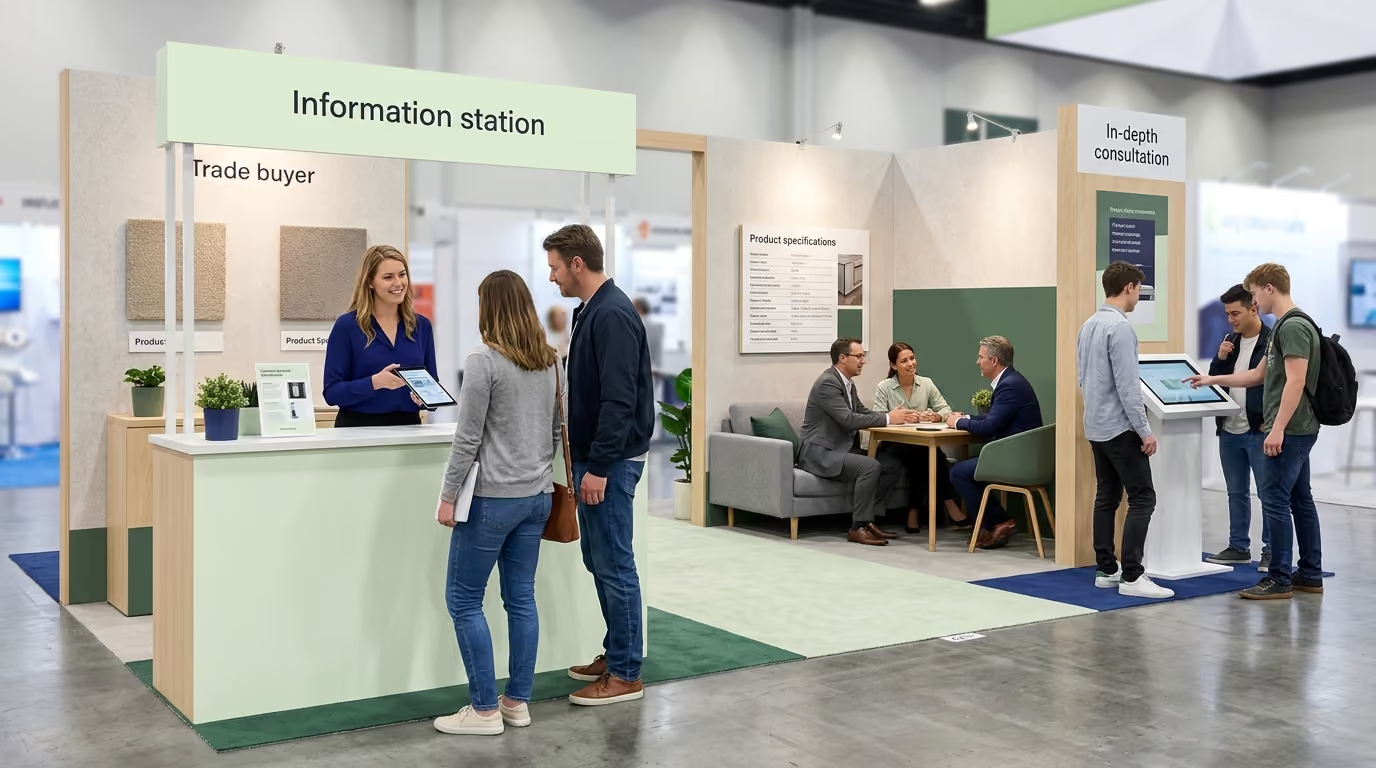
Not every attendee has the time or intent for a ten-minute consultation. High-performing exhibition spaces organize physical square footage to accommodate different engagement levels simultaneously.
Aisles carry high volumes of hurried attendees. The five-second layer uses high-contrast visual cues and concise headlines to communicate core value instantly. This layer ensures that even passersby who do not stop register your brand category and primary differentiator.
Visitors who slow down need immediate clarity. The thirty-second layer provides an accessible entry point, such as a quick tactile demonstration or a self-guided digital comparison. Staff offer a concise verbal summary of the company value proposition.
Engaged prospects step fully into the booth footprint. The two-minute layer provides structured product trials, live machinery demonstrations, or ingredient tastings. Staff qualify the buyer, assessing fleet size, retail store count, or software deployment scale.
Qualified decision-makers require focused consultation. The ten-minute layer includes comfortable seating, reduced noise levels, and private meeting rooms. Here, technical specialists review detailed client specifications, discuss wholesale pricing, and formalize implementation timelines.
Executing sensory booth design requires rigorous onsite discipline. Creative concepts fall apart when hardware fails, tasting supplies run dry, or queues block entry paths. Use this playbook to manage operations systematically.
To refine your broader event architecture, review our guide on how to build a booth experience that converts.
Sensory activations carry substantial risks when executed without strategic discipline. Teams must avoid critical operational and conceptual errors that undermine campaign success.
Keeping a visitor in your booth for eight minutes is meaningless if they spend that time playing an unrelated arcade game. Unfocused dwell time increases staffing costs while crowding out qualified buyers. Pair dwell time metrics with qualification data to measure true commercial value.
Diffusing synthetic fragrances across open exhibit halls alienates attendees with asthma, allergies, or sensory sensitivities. Uncontrolled scent damages brand reputation and violates venue regulations. Use scent only when essential to the product, and isolate it inside localized testing units.
Exhibitors often raise speaker volumes to compete with neighboring displays. This creates an unbearable acoustic environment that drives away decision-makers looking for serious business conversations. Prioritize acoustic clarity, localized directional speakers, and sound-dampening architectural materials.
Gamification that lacks a direct connection to product truths wastes marketing budget. If attendees remember the digital trivia game but cannot name your primary product feature, the activation failed. Design physical challenges that showcase product durability, speed, or performance metrics.
Forcing attendees to submit contact information before touching a sample creates friction. Let visitors evaluate the physical product and understand its value first. Request contact information only when offering personalized data sheets, sample kits, or formal price quotes.
Booths that look pristine on morning one often look worn by afternoon two. Materials scuff, interactive buttons stick, and tasting supplies run low. Select durable architectural finishes and build robust supply chains to ensure the experience remains flawless through the final hour.
For a deeper dive into high-impact strategies, explore our analysis of demo-centric booth design strategies.
Sensory marketing must justify its budget through clear commercial performance. Exhibitors must track both real-time operational indicators and long-term financial outcomes to measure genuine business impact.
Lead metrics provide real-time visibility into how effectively the sensory architecture engages the target audience:
Lag metrics measure downstream commercial value generated after the show floor closes:
To learn more about downstream commercial attribution, read our analysis on measuring event Return on Investment through retail sell-through.
Applying sensory frameworks across different commercial sectors requires distinct architectural approaches. These blueprints illustrate how sensory systems solve specific marketing challenges.
In our experience, executing this level of sensory discipline transforms brand perception. A Director of Brand Strategy in the CPG snack division shared: "The Makai team turned our product launch into a sensory event that shoppers still talk about. From creative storytelling to flawless in-store execution, they made snack time unforgettable. We couldn't have asked for a stronger partner." Our team created an in-store experience that left a lasting impression on consumers and became a memorable brand moment.
When organizations commit to operator-grade execution, they turn trade shows into reliable pipeline engines. For end-to-end management support, explore our specialized trade show experiences that drive real business.
Sensory experience design turns the physical trade show booth into an empirical proof engine that validates buyer trust and drives predictable business growth.

30 Years Experiential & Retail Activation Partner for CPG & Beverage Brands | Multi-Market Demos, Roadshows & Costco/Club Programs That Actually Sell