Robbie Thain
Founder, CEO

Mobile sampling campaigns drive verified retail velocity by combining strategic route planning, targeted consumer education, controlled field operations.
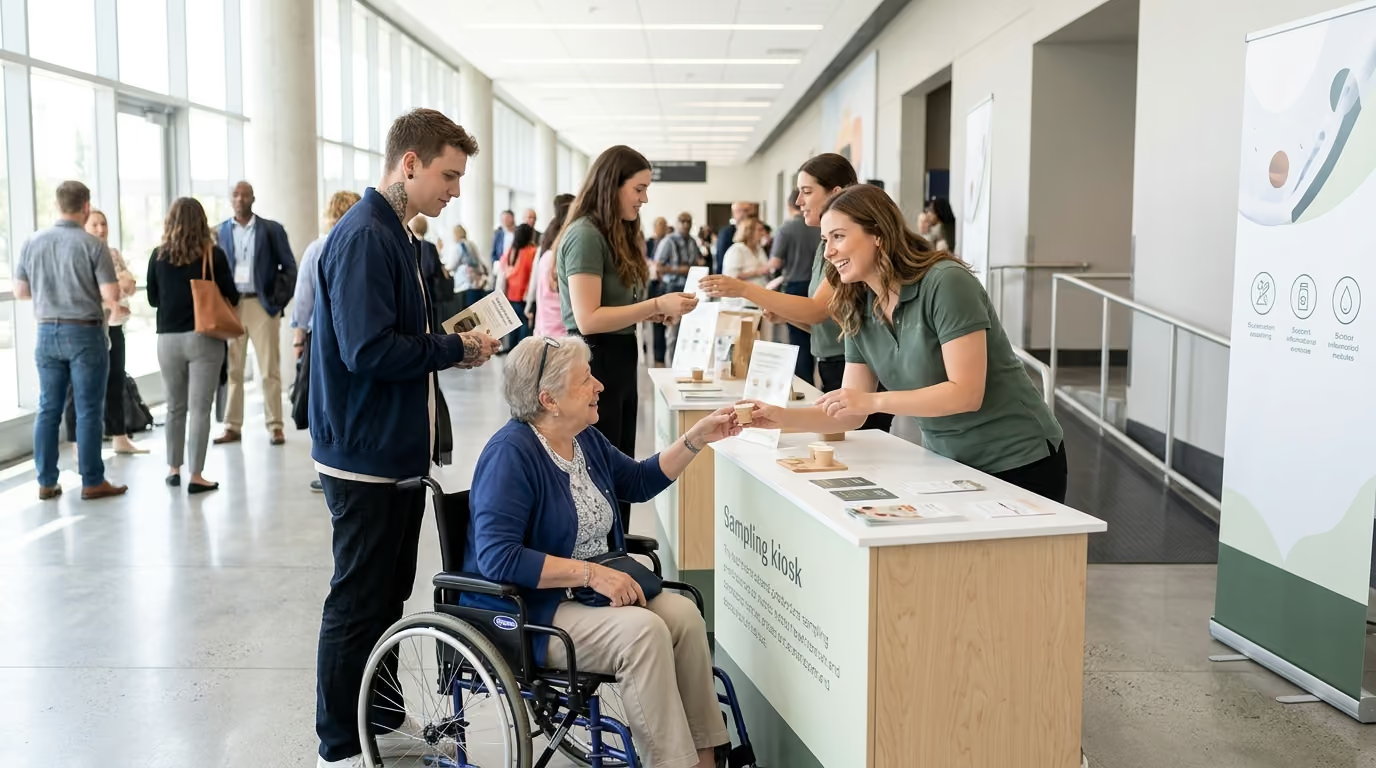
Many brand managers search for how to turn physical product sampling into verified retail velocity without wasting budget on untracked giveaways. This guide provides a definitive operational blueprint for using mobile sampling tours to validate product demand, educate consumers, and drive measurable retail sell-through during a new product launch.
Mobile sampling serves as a dedicated market entry system that converts fleeting trial into verified consumer demand across targeted retail territories. When executed with operational discipline, a mobile launch tour bridges the gap between field brand discovery and immediate shelf conversion for emerging consumer packaged goods brands.
Launching a consumer product in physical retail is notoriously unpredictable. Brand leaders often face crowded aisles, skeptical category buyers, and digital advertising costs that continue to climb. Placing inventory on retail shelves does not guarantee that shoppers will pick it up, especially when the item features unfamiliar ingredients or novel taste profiles.
On the ground, field marketing activations frequently slide into operational disarray. Street teams hand out product to anyone walking past without qualifying the recipient or communicating the core brand value. Samples melt in poorly insulated coolers, ambient drinks are served warm, and promotional staff fail to direct interested shoppers to the grocery store two blocks away. Marketing executives receive end of week reports showing thousands of units distributed, yet local store registers show zero incremental lift.
This disconnect happens when product sampling is treated as a generic giveaway rather than a coordinated demand generation engine. A successful launch tour requires total alignment between logistics, field education, geofenced marketing, and regional retail inventory. Without this operational discipline, brands burn launch capital on high sample counts that generate zero measurable commercial return.
A high-performing mobile sampling campaign operates as a structured conversion funnel on wheels. It does not exist merely to distribute free inventory. Instead, it systematically moves a prospective buyer through eight distinct behavioral stages: reach, stop, explain, try, respond, locate, purchase, and repeat. Each phase of this sequence requires dedicated staffing protocols and clear performance metrics.
Research published in Decision Support Systems indicates that receiving a product sample can increase the likelihood of purchase by approximately 300 percent. However, academic research in the Journal of International Food and Agribusiness Marketing demonstrates that high trial rates do not automatically produce commercial conversion. The study revealed that purchase rates remain low unless recipients actually consume the product and match the brand's target buyer profile.
To bridge this gap, field teams must differentiate between raw distributed samples and qualified product experiences. A raw sample is an untracked handoff to a random pedestrian. A qualified trial occurs when a targeted consumer receives an accurate brand explanation, consumes the product at the correct temperature, and completes a digital or behavioral action.
Our team approaches field execution through a systematic operational lens developed over three decades of live brand activations. By focusing on qualified consumer interactions rather than vanity metrics, brand operators can transform mobile tours into reliable revenue drivers. When designing an experiential campaign, teams should focus on designing an experiential product launch that converts through disciplined staff training and clear retail calls to action.
Selecting target markets requires balancing consumer demographics, local event ecosystems, and retail distribution readiness. Activating a market where your product lacks shelf distribution wastes consumer interest. Conversely, running field activations only after retail distribution settles can leave initial inventory sitting stagnant on store shelves.
A structured launch tour synchronizes field arrival with retail delivery schedules. Brands should prioritize regions where target consumer density overlaps with verified store inventory. The selection process evaluates five primary variables:
Timing within individual markets is equally critical. Daypart scheduling must reflect when consumers naturally consume your category. A functional morning beverage brand gains maximum traction near commuter hubs and fitness facilities between 6:00 AM and 10:00 AM. A premium snack brand will capture higher engagement near office complexes, public parks, and afternoon community gatherings.
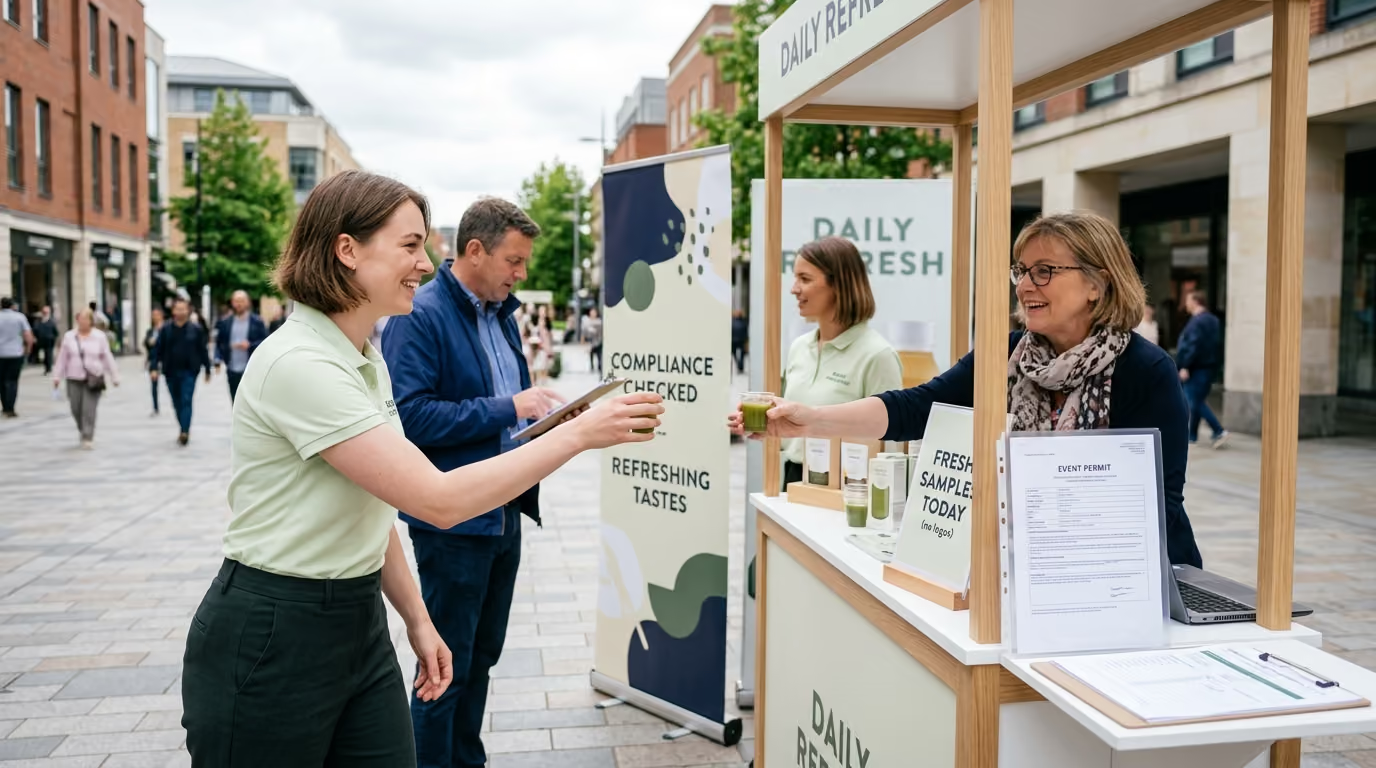
Brands can master logistics and territory management by streamlining route planning and event permitting early in the tour design process. Securing municipal clearances, health permits, and private property rights well in advance prevents costly route cancellations and unexpected downtime.
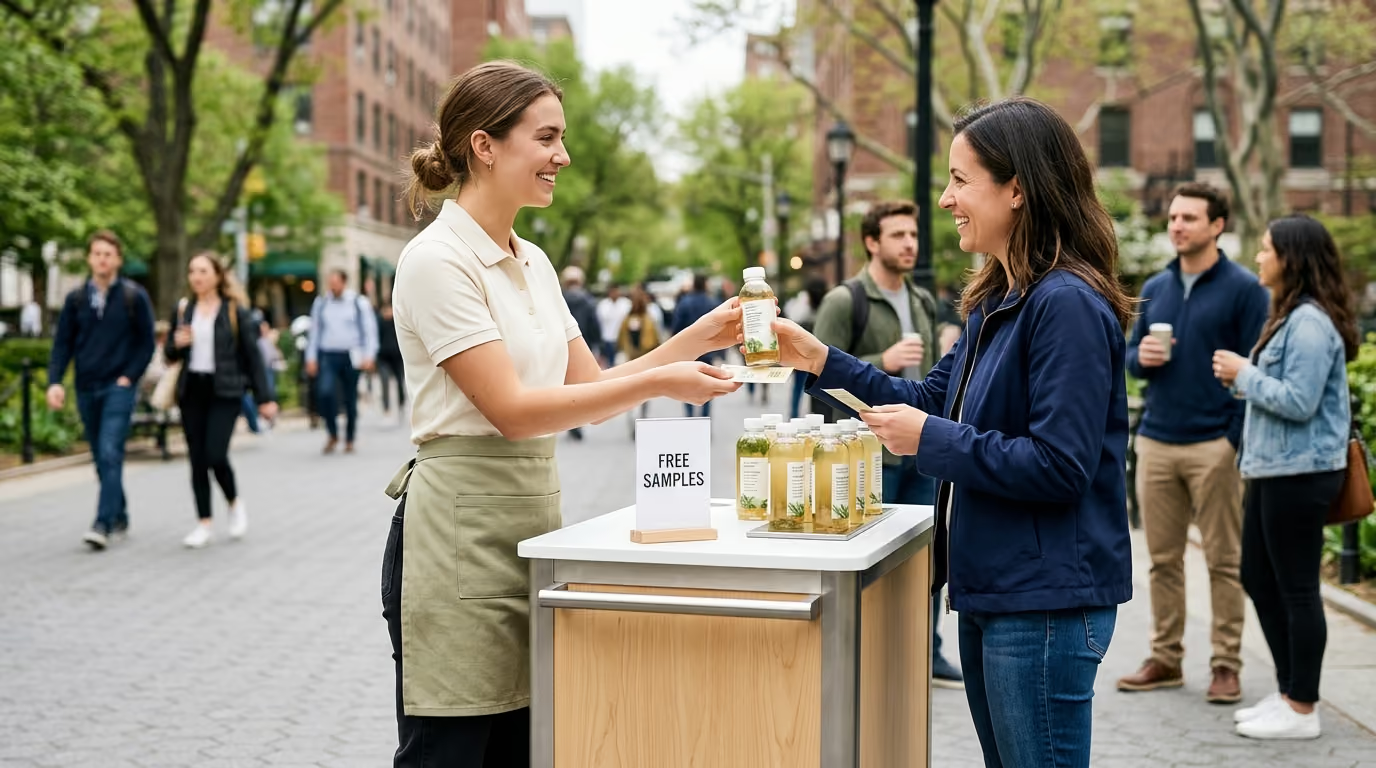
The physical sampling footprint must immediately communicate what the product is, why it matters, and where to buy it. Field teams have less than ten seconds to capture attention in high-traffic environments. Visual assets, vehicle signage, and ambassador positioning must work together to lower the barrier to consumer trial.
Every on-site activation should follow a five-part operational sequence:
Use clear vehicle graphics, clean structural footprints, and professional staging to create visual credibility. Overhead banners must state the primary product benefit in five words or fewer. Avoid confusing artistic abstractions that conceal what the product actually is.
Brand ambassadors must deliver a concise introductory line within three seconds of consumer engagement. The message must define the product category and its primary differentiator immediately. For example, staff might state: "This is a cold-pressed plant recovery drink with zero added sugar."
Show the product in its ideal state. For functional beverages, this means dispensing perfectly chilled liquid from branded tap systems or clear display pitchers. For food items, prepare uniform bite-sized portions that highlight fresh texture and premium ingredients.
Serve the sample in clean, branded, sustainable packaging that complies with local food handling regulations. Maintain strict portion control to manage inventory costs while providing enough product for genuine sensory evaluation.
Every consumer who completes a trial must receive an immediate path to purchase. Staff should present a digital coupon, direct the shopper to a grocery store within walking distance, or prompt a quick QR code scan for an exclusive retail rebate.
Brand messaging must remain concise and uniform across all field staff. Ambassadors need a strict communication hierarchy: Category, Benefit, Proof, Occasion, and Purchase Location. When field staff maintain message discipline, consumers remember exactly why the product fits their lifestyle and where they can purchase it that afternoon.
Executing a multi-city mobile launch tour requires operational precision across logistics, food safety, staffing, and retail coordination. The following phased checklist outlines the necessary operational steps to take a product launch from concept to live execution.
When managing complex multi-market operations, many organizations find substantial efficiency in running multi-city mobile sampling tours with a dedicated execution partner. Professional field management eliminates operational variance and protects brand integrity across diverse municipal environments.
Mobile sampling provides an exceptional real-time laboratory for consumer research. Unlike static focus groups, mobile tours allow brands to observe authentic consumer behavior across hundreds of individuals daily. Launch teams can validate packaging clarity, sensory appeal, pricing tolerance, and core messaging before committing major capital to national retail rollouts.
Field data collection must capture both behavioral reactions and structured feedback. Brand ambassadors should observe non-verbal cues: Did the consumer finish the entire sample portion? Did they ask for a second flavor? Did they inspect the ingredient panel on the packaging display? These physical actions provide honest indications of true product acceptance.
Structured feedback collection must remain rapid to prevent foot-traffic bottlenecks. Field teams should use tablet-based intercept surveys limited to three core diagnostic questions:
Brands must also account for sampling bias in field data. Individuals attending weekend outdoor festivals may have different price sensitivities than standard supermarket shoppers. Launch teams should segment consumer responses by venue type, daypart, and market to identify true commercial trends rather than localized anomalies.
Proving campaign Return on Investment (ROI) requires moving beyond estimated impression models. Traditional outdoor advertising metrics that multiply vehicle drive-by traffic by arbitrary visibility factors do not demonstrate commercial traction. Launch executives require hard commercial data connecting field trial directly to retail cash registers.
An effective measurement framework tracks performance across leading, operational, and lagging indicators:
To establish true causality, brands should use matched-market testing methodologies. Compare retail scan data in markets receiving mobile tour support against demographically similar control markets that received only digital advertising. The American National Advertisers association emphasizes that reliable marketing measurement requires representative control groups to isolate genuine incremental lift.
By tracking precise store-level velocity changes, marketing directors can quantify the exact sales lift generated by field activations. Teams looking to establish clear reporting models can review tracking sales lift from mobile roadshows to structure their retail attribution pipelines.
Different product categories face unique operational challenges during a mobile product launch. Examining how distinct brands structure their sampling programs illustrates how operational strategy adapts to specific category requirements.
In our experience managing national field programs, sensory execution makes or breaks emerging food activations. A Director of Brand Strategy in the CPG snack division shared: "The Makai team turned our product launch into a sensory event that shoppers still talk about. From creative storytelling to flawless in-store execution, they made snack time unforgettable. We couldn't have asked for a stronger partner." Our team created an in-store experience that left a lasting impression on consumers and became a memorable brand moment.
Category-specific execution requires precise adjustments across vehicle buildout, sanitation, and consumer education:
Snack products require rapid throughput and strict portion management. Food items that require heating or specific assembly must be prepared in health-code-compliant mobile kitchens. Field teams must display clear allergen notifications regarding nuts, dairy, soy, and gluten to maintain consumer safety and regulatory compliance.
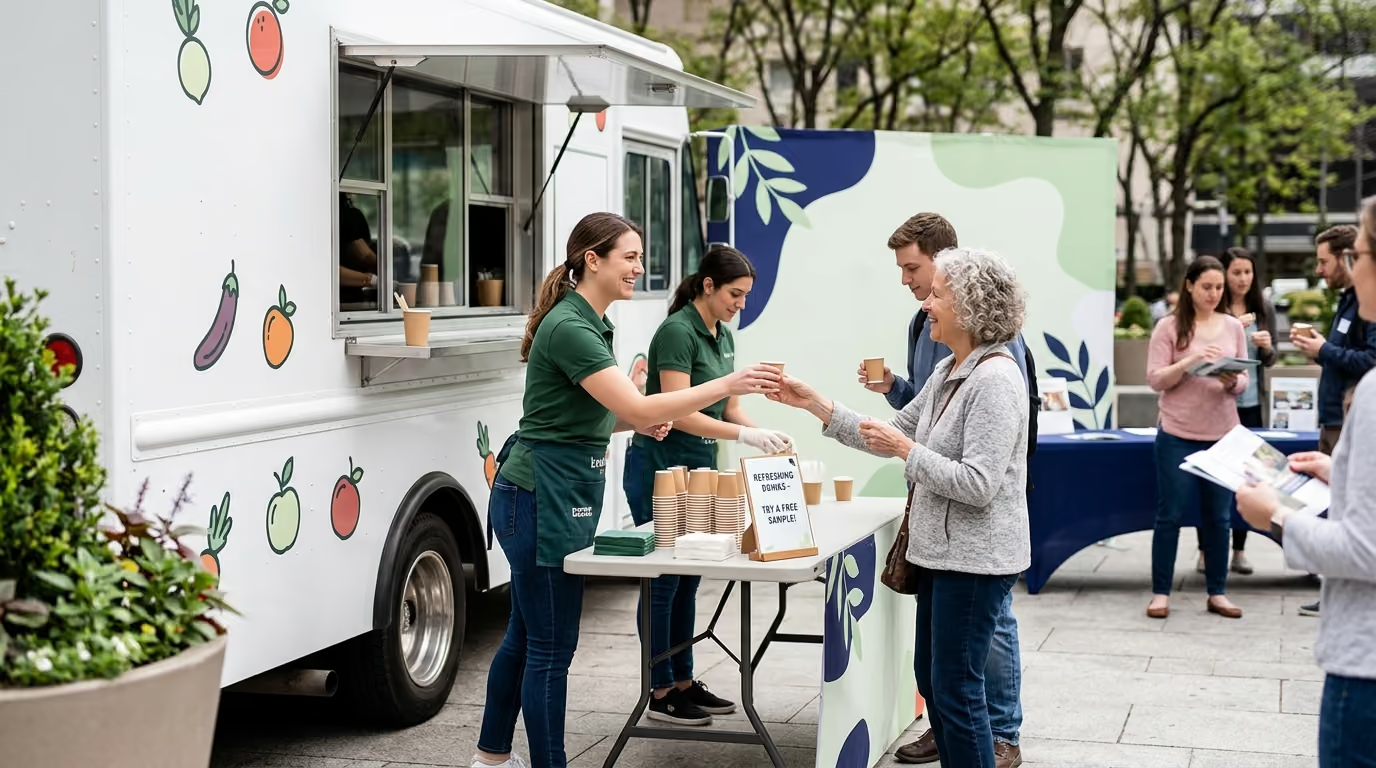
Unfamiliar food alternatives require heavy emphasis on taste education. When food-technology company NotCo deployed mobile sampling units across nine key metropolitan markets, ambassadors used coffee pairings to demonstrate how plant-based milk functioned in everyday morning routines. By connecting product trial to a digital rewards system, the campaign captured nearly 9,000 verified loyalty registrations.
Beverage activations depend entirely on serving temperature control and rapid dispensing systems. Oatly utilized a custom soft-serve truck across the United Kingdom, distributing more than 20,000 samples over four weeks to introduce non-dairy dessert formats. The distinct visual presentation turned trial into widespread social sharing while driving local retail demand.
Wellness items require strict claim discipline. Ambassadors must never offer unapproved health advice or make unauthorized medical claims. Instead, teams should distribute pre-portioned single-use sachets alongside clear usage directions and encourage consumers to integrate the product into their daily regimens.
Mobile sampling campaigns involve complex physical operations across shifting public environments. Avoiding common execution errors protects brand capital and ensures that field investments translate into lasting retail distribution.
Distributing thousands of units to unqualified audiences creates impressive weekly reports but fails to drive retail sales. Handing energy drinks to children or luxury organic snacks to non-grocery shoppers wastes inventory. Field staff must actively qualify consumers through brief conversational filters before handing over product.
Launching a mobile tour in a market where retail distribution is incomplete frustrates consumers. When shoppers enjoy a sample but find empty shelves at their local supermarket, the brand loses the purchase and wastes marketing spend. Always verify that target stores have received inventory before dispatching mobile units to that trade area.
Operating a mobile sampling footprint without proper municipal permits risks immediate shutdown by local law enforcement or health inspectors. United States Food and Drug Administration food codes and local health district rules govern commercial food distribution. Chester County Health Department sampling guidelines require pre-approved temperature monitoring, strict handwashing stations, and rigid sample size limits:
If field staff deliver unapproved or inconsistent product claims, the campaign fails to establish clear brand positioning. Standardize the brand script into three core bullet points and conduct daily roleplay testing with field ambassadors before every shift.
Executing an effective mobile sampling tour requires structured preparation. Brand teams preparing for an upcoming retail launch should complete this operational checklist to establish campaign readiness this week:

30 Years Experiential & Retail Activation Partner for CPG & Beverage Brands | Multi-Market Demos, Roadshows & Costco/Club Programs That Actually Sell