Robbie Thain
Founder, CEO

Learn how to design a physical product launch that builds awareness, drives retail conversions, and connects field foot traffic to measurable sales pipelines.
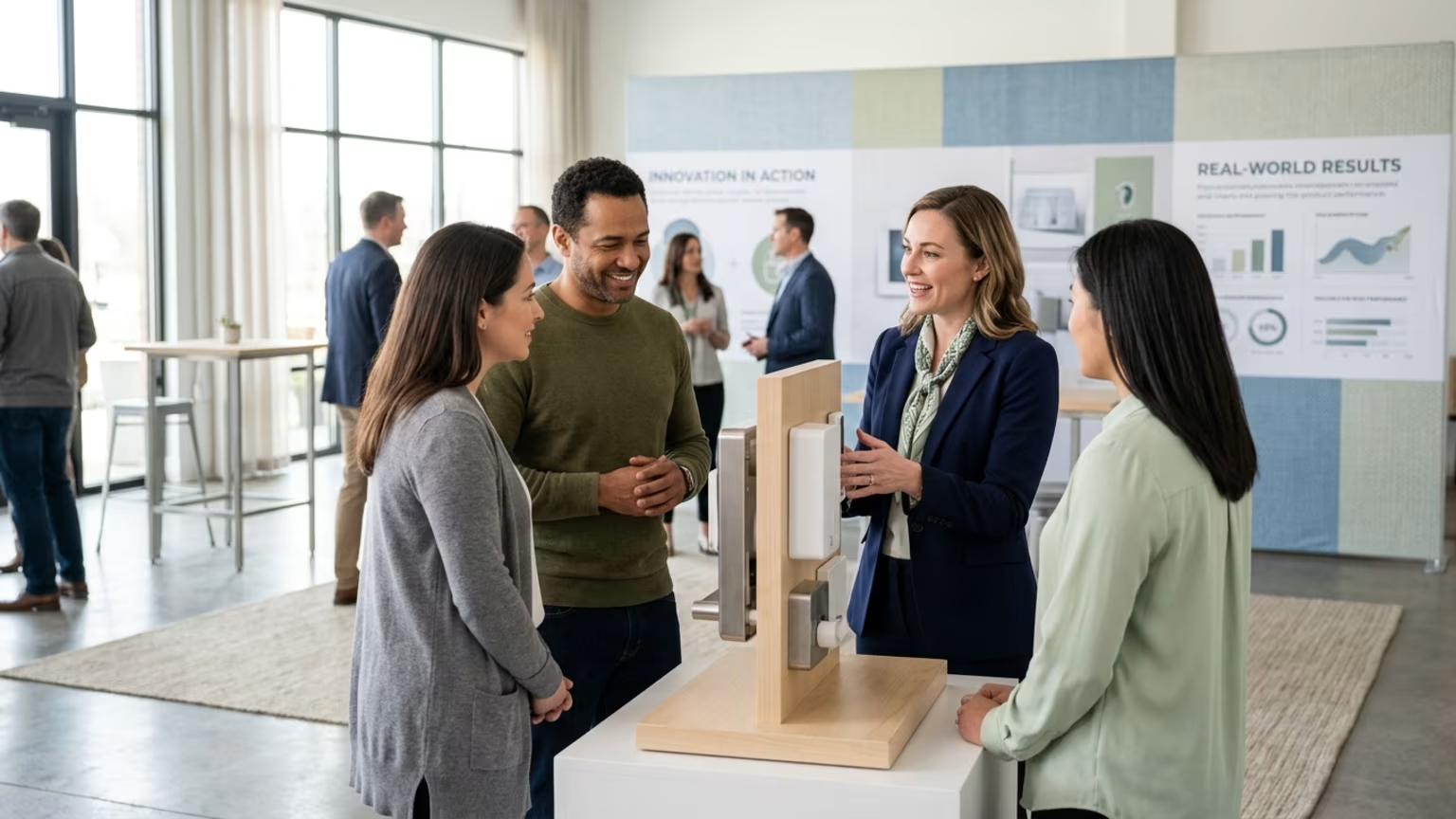
A physical product launch gets judged on the volume of samples distributed, not on incremental pipeline. Hundreds of attendees grab free product and immediately disappear into the crowd. Marketing teams spend six months preparing for these massive activation moments. Yet the commercial team often has no idea if anyone will actually buy the product later.
How do you design an experiential product launch that actually converts? Physical experiences are particularly useful when consumers need to taste, touch, test, or gain confidence before buying. Their value increases drastically when the activation connects to a measurable purchase path. Recent data points to strong potential for physical events.
AnyRoad reports that 85 percent of consumers in one festival activation said they intended to purchase the featured mezcal brand after the event. A separate industry roundup cites purchase-likelihood figures ranging from 74 percent to 85 percent. Converting foot traffic requires a repeatable system. You need to map the product barrier directly to a physical demonstration.
A product launch needs a massive runway before the doors ever open. Securing venue approvals, local health permits, and retailer agreements takes serious lead time. Industry guidance often recommends a 10 to 16 week lead time for a physical and digital hybrid pop-up. You must prototype the consumer journey long before you build the physical display.
The commercial objective needs to be clear to every stakeholder on the ground. Marketing leaders face intense pressure to prove that activations lead to sales lift and conversion. They worry about fragmented execution and events that look busy but produce fog instead of evidence. For U.S. brand teams, the most defensible strategic argument is that physical experiences matter most when consumers need to verify a product claim.
We always advise teams to finalize their measurement plan well in advance. Recommended practices include setting KPI targets in the brief, establishing a pre-event brand baseline, and documenting the attribution window early. You should also tag your digital touchpoints carefully. If you need special permits for sampling, map each activation location to a specific store.
Doing so allows you to compare participating locations with nonparticipating locations. This is how you run effective product launch roadshows. Between six and ten weeks out from your event, you should focus strictly on creative and production. This is the window to confirm footprint dimensions and finalize traffic flow.
It is also the exact time to build the display, prepare demo equipment, and finalize the storage plan. Rehearse the full journey under realistic timing to load-test data capture and connectivity. A strong physical journey should have visible stages that attract, qualify, and prove the product benefit. The purchase step must be physically obvious.
Do not make the consumer remember the brand, search for the retailer, or reconstruct the offer later.
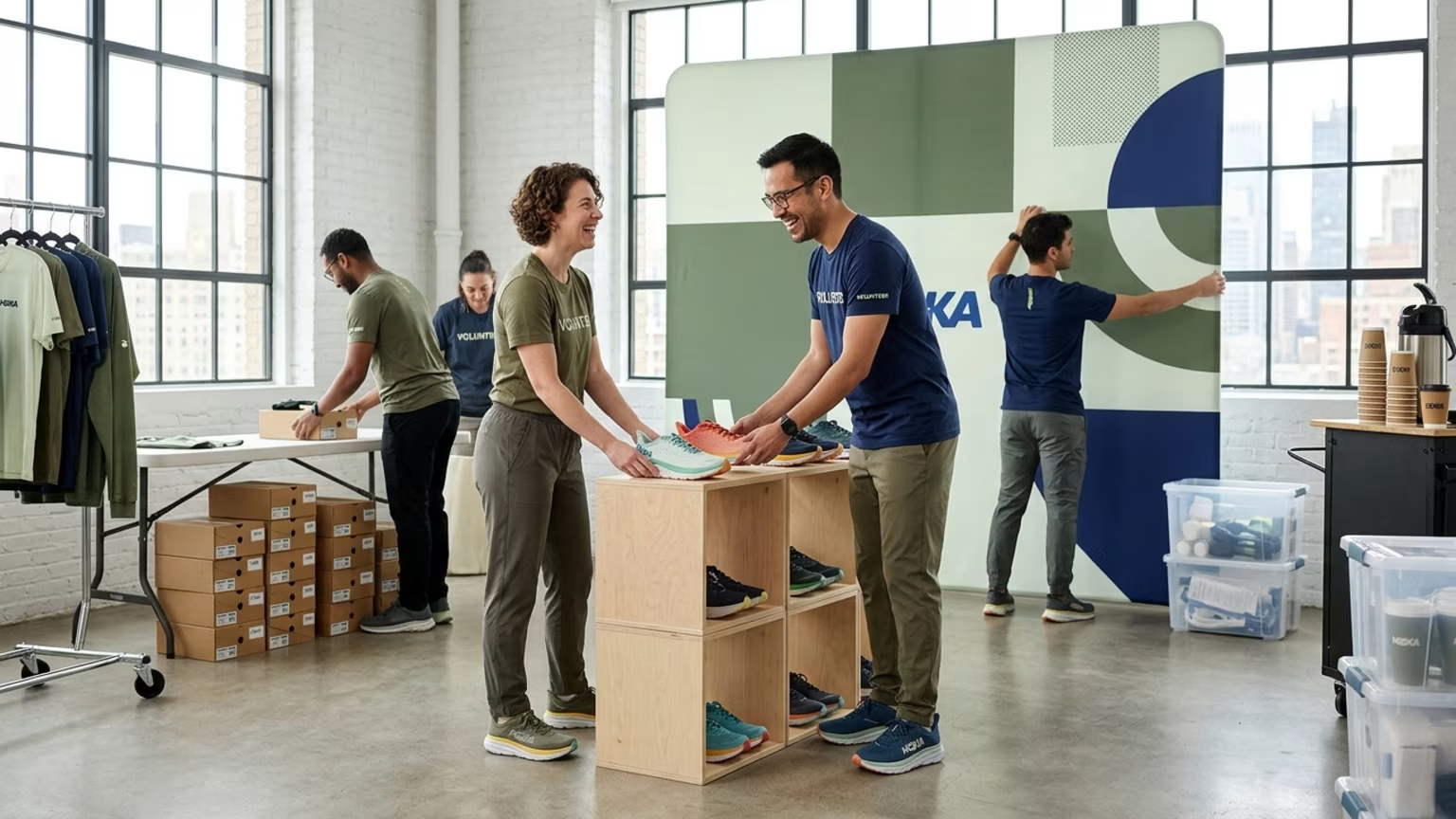
A beautiful booth is completely useless without a skilled team capable of running it. Real conversions happen through structured conversations. Your staff needs to know how to sell the product truthfully, handle objections, and explain technical specifications. They also need strict protocols for sanitation, product storage, and inventory management.
We design mobile activations and roadshows that accelerate consumer trial, build trust, and boost retail velocity during 90-day product launch windows. Our structured approach transforms initial product trial into sustained consumer confidence and retail performance. We treat every visitor with our signature aloha methodology. This approach blends warm hospitality with absolute operational discipline.
To scale this connection, create a highly staffable script. Give your team one qualifying question, one product explanation, and one clear purchase prompt. The goal is not maximum theatricality. The goal is a short sequence that moves a person from attention to understanding and purchase.
Industry guidance recommends moving people from an entry point into a focused engagement zone. You must invest heavily in retail staffing solutions to make this work.
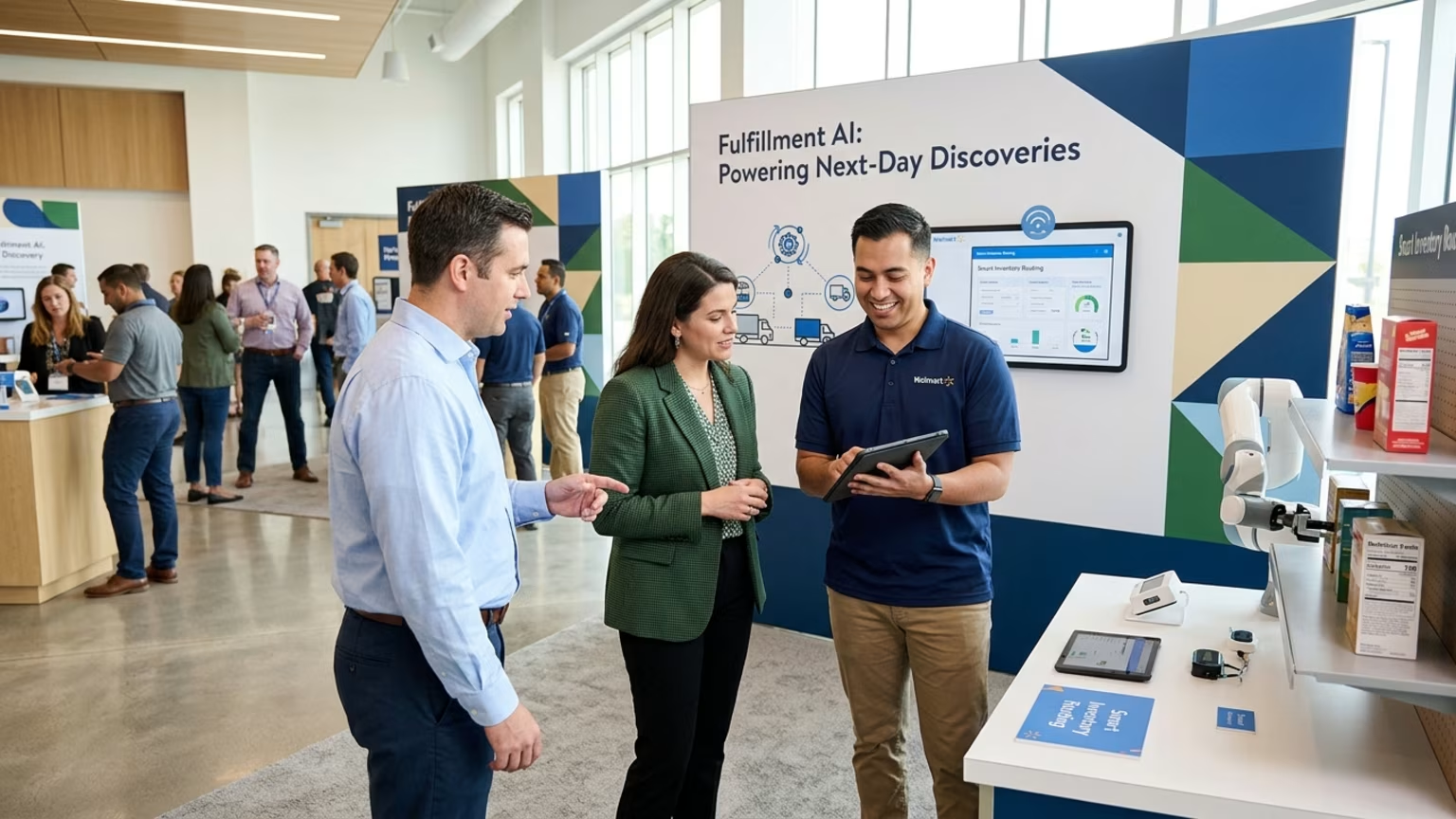
You cannot optimize a program if you only track raw attendance. Industry commentary increasingly emphasizes closed-loop measurement for live events. This approach combines foot traffic with interaction data and surveys. It also links first-party data directly to point of sale outcomes.
Measurement guidance recommends separating reach, engagement, affinity, and pipeline measures into distinct layers. Recommended measures include dwell time, participation rate, opt-ins, and retail sales lift. Do not optimize your launch purely for sample volume. A Return on Investment model can include direct sales, post-experience conversions, and referral-generated value.
Those components should be reported separately when attribution confidence differs. It is critical to connect physical interactions to long term data strategies. One academic study found that brand experience affected willingness to pay indirectly rather than directly. An experience should not be assumed to support a premium unless it also strengthens perceived value.
Integrating a sound retail data playbook ensures you capture this value accurately.
The launch phase will always test your operational limits. A large crowd with low trial completion indicates poor flow or a confusing mechanic. You must monitor the gap between people reached and people who actually complete the proof step. If attendees abandon the queue, change the line design immediately.
Use daily optimization to keep the floor moving efficiently. Reallocate staff during peak periods to avoid bottlenecks. Move signage if consumers cannot easily find the purchase point. Shorten the explanation if dwell time is too high without increased completion.
Flawless product launch execution requires constant monitoring. Every activation needs contingency plans for weather, venue changes, technical failure, or stockouts. You have to escalate recurring objections to the brand team quickly. The launch should function as a live test.
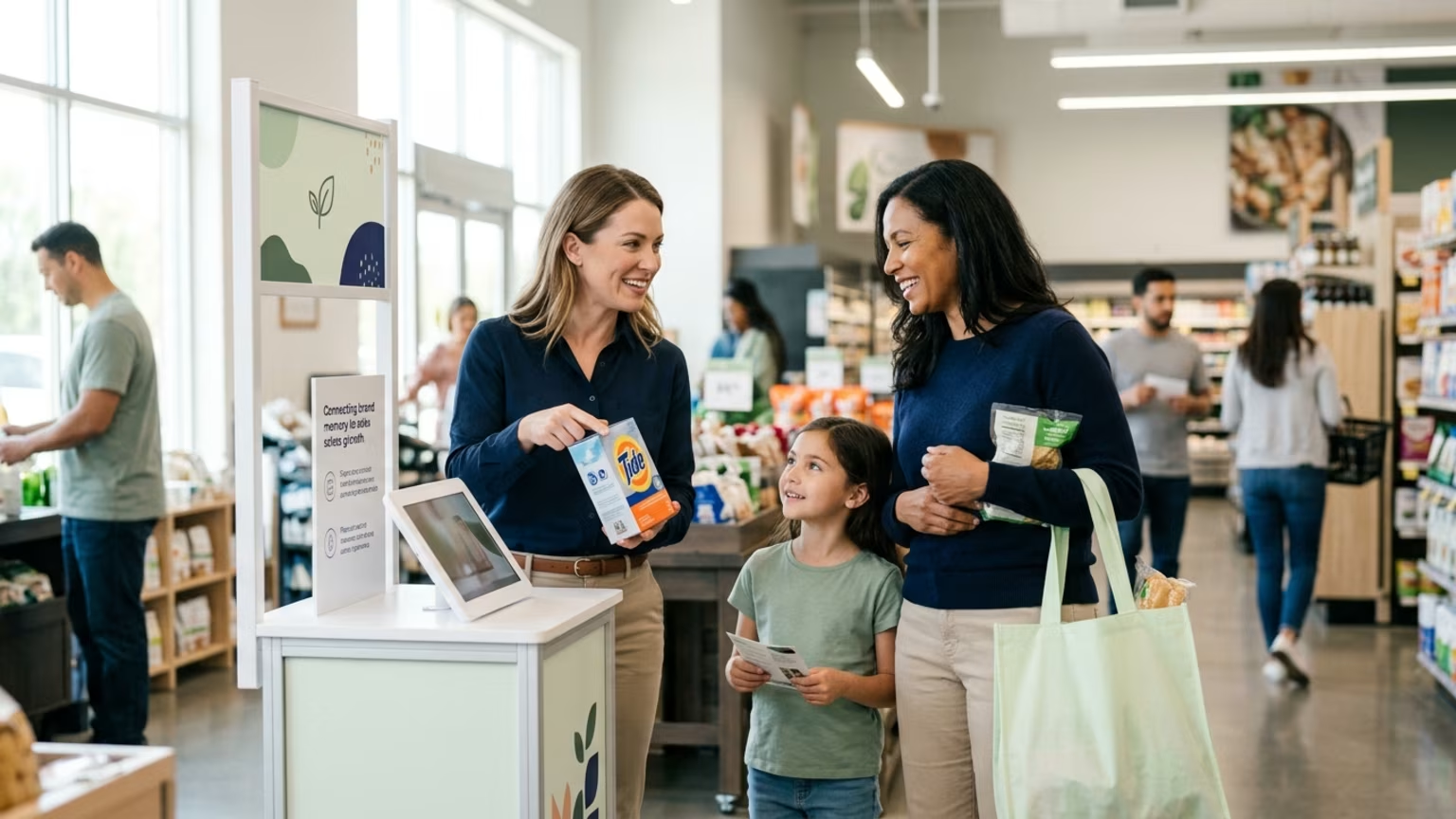
A launch event should never be disconnected from the retail shelf. Extend the physical experience into retail through in-store sampling, retailer-specific offers, and secondary displays. The retail version should preserve the core conversion logic even if the physical footprint shrinks. Post-launch work should answer whether the experience changed perception and created measurable purchase behavior.
Track trial-to-purchase-intent conversion, offer redemption, and retail sales velocity diligently. Take the data gathered from your field teams to refine your next store expansion. Compare your participating stores against your baseline metrics carefully. Then plan your next target market with hard evidence in hand.
Precision on the ground turns initial curiosity into lasting retail success. Your live brand experience should always operate as the ultimate growth engine.
Mapping a conversion path for a new product launch requires rigorous operational discipline, and that is where Makai takes over your execution. We solve the burden of navigating complex event logistics, permits, and staffing for your field team. Through our flagship Experiential Marketing services, we create hands on brand moments that connect emotionally and turn customers into ambassadors. Request a proposal

30 Years Experiential & Retail Activation Partner for CPG & Beverage Brands | Multi-Market Demos, Roadshows & Costco/Club Programs That Actually Sell