Robbie Thain
Founder, CEO

Unconventional guerrilla activations often seem chaotic, yet high-impact campaigns succeed through rigorous permitting, rapid visual engagement.

Most marketers believe guerrilla campaigns require reckless bravado, unpermitted chaos, and shocking spectacles to break through media noise. In our experience, the most profitable activations achieve maximum creative surprise while maintaining absolute operational discipline, strict legal compliance, and total brand safety.
Stepping onto a city sidewalk during an unpermitted street activation reveals how quickly creative concepts collapse under real-world pressure. A crowd of three hundred people suddenly swarms a pop-up sampling truck on a narrow municipal corner. Pedestrian walkways choke, blocking access to adjacent storefronts and angering local retail owners who call municipal code enforcement. Without clear barricades or dedicated queuing lanes, excited participants push forward, spilling directly into active bike paths and vehicle lanes.
The field staff quickly loses control. Two junior brand ambassadors struggle with an uncalibrated commercial generator that spews acrid exhaust into the crowd while the product refrigeration fails. Local police arrive within fifteen minutes, threatening immediate citations, equipment impoundment, and public closure. Onlookers capture video of the confrontation, broadcasting footage of uniformed officers shutting down the activation before a single qualified consumer interacts with the product.
Meanwhile, digital creators hired to cover the stunt broadcast chaotic livestreams without proper Federal Trade Commission disclosures. Online comments shift rapidly from product curiosity to accusations of corporate arrogance, public endangerment, and littering. What began as an ambitious attempt to bypass traditional media spend becomes an expensive public relations cleanup that burns corporate credibility. This operational breakdown happens when marketing teams confuse surprise with a lack of preparation.
Turning unconventional public experiences into predictable commercial returns requires a structured operational model. We specialize in creating retail demos, product sampling programs, and roadshows that bring brands face to face with their audiences. Every successful street activation must balance four distinct pillars: Attention, Permission, Value, and Preparedness.
Attention cannot rely on confusion. The physical activation must communicate its central proposition instantly without requiring explanatory brochures or defensive apologies. Attention stems from scale, physical contrast, and direct demonstration of product performance. If a passerby cannot understand what is happening within three seconds, the activation creates cognitive friction rather than brand resonance.
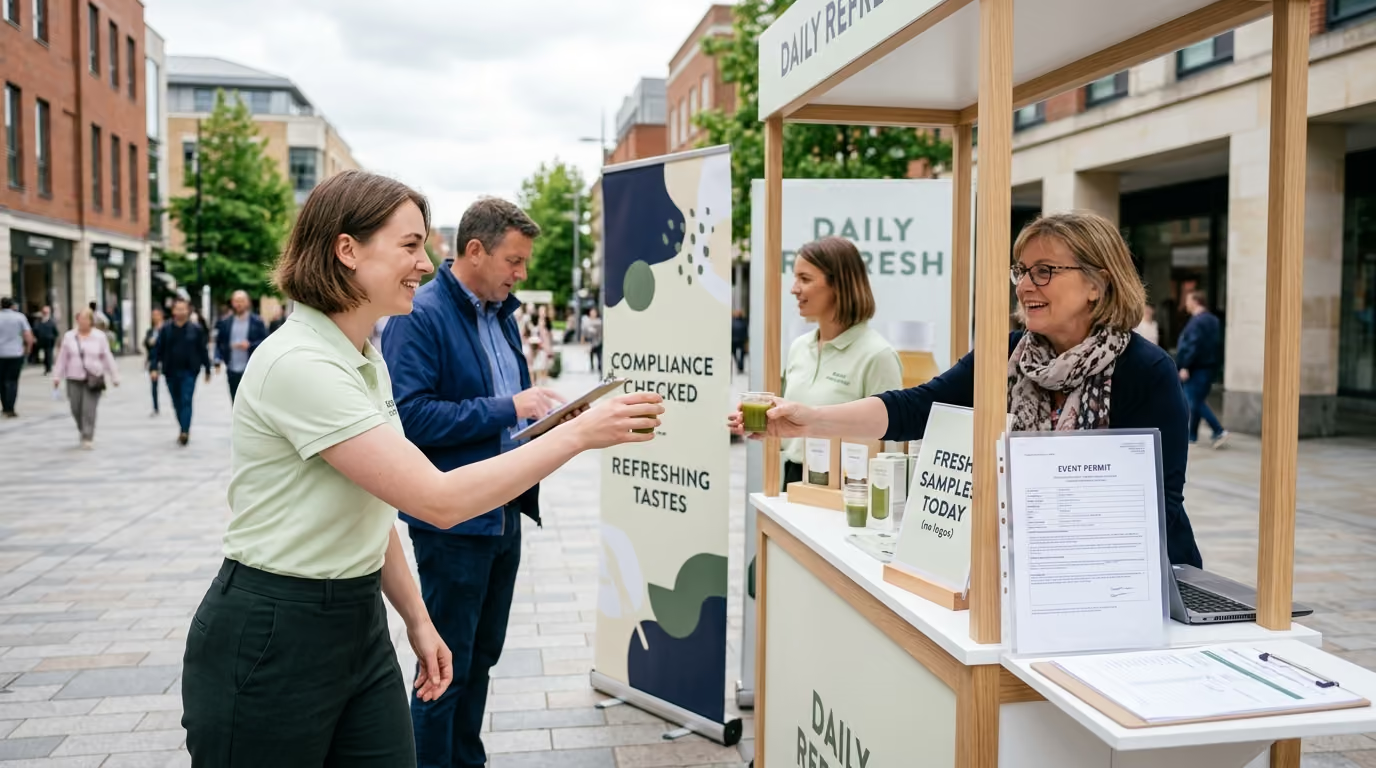
Permission extends beyond municipal permits. It encompasses legal authority, venue rights, participant consent, and public legitimacy. Operating legitimately means securing necessary sidewalk occupancy approvals, health department clearances, and fire marshal sign-offs before placing equipment on the pavement. Applying centralized permit and compliance workflows ensures your field team avoids fines, shutdowns, and public conflicts.
A successful activation provides immediate utility to the surrounding public space. It must offer practical, emotional, or civic value rather than acting as a spatial intrusion. Practical value includes high-quality product sampling, shaded seating, hydration, or functional device charging. When the public receives immediate utility, they welcome the brand presence instead of viewing it as invasive commercial clutter.
Operational readiness dictates how your team manages unexpected field friction. High-traffic environments introduce extreme variables including severe weather, sudden crowd surges, medical issues, and equipment breakdowns. Preparedness requires documented emergency action plans, trained crowd controllers, secure inventory management, and clear escalation protocols. Spontaneity belongs in the consumer experience, never in the operational management.
Earned media coverage depends on clear visual communication. Photojournalists, digital creators, and everyday consumers evaluate physical activations through camera viewfinders and smartphone screens. If the primary visual hook is cluttered, ambiguous, or visually unappealing, earned reach drops precipitously.
Every visual installation must satisfy the three-second visual rule. An observer viewing a video clip or photo must instantly identify four components:
High-impact visual mechanics utilize physical scale, dramatic transformation, or unexpected contrast within everyday environments. For example, placing an oversized, functioning product demonstration inside a sterile transit station instantly arrests foot traffic. Brands can use repeatable field activation frameworks to test these structural footprints in controlled settings before deploying them in major urban centers.
Avoid gimmicks that depend on panic, simulated danger, fake emergencies, or public confusion. Stunts that mimic crime scenes, abandoned packages, or municipal crises provoke immediate public backlash and regulatory intervention. Creative tension should stem from delightful absurdity, generous utility, or breathtaking craftsmanship, never from public anxiety.
Deploying physical assets into public spaces requires meticulous compliance management. Regulatory agencies, business improvement districts, and municipal departments possess the legal authority to shut down unpermitted campaigns instantly. Field marketing teams must manage compliance with the same rigor applied to creative design.
Sidewalk and street deployments often require multiple overlapping authorizations. A standard metropolitan activation may require a street activity permit, a sound amplification license, a structure placement permit, and property owner sign-offs. Lead times for municipal applications often range from thirty to ninety days. Begin the compliance process before finalizing physical fabrication to ensure spatial dimensions adhere to municipal fire lanes and pedestrian clearances.
Food and beverage brands face strict local public health oversight during public sampling tours. Municipal health departments require temporary food facility permits, certified food safety managers onsite, and precise temperature-holding equipment. Pima County health guidance recommends single-use serving containers, continuous sample monitoring, sneeze guards, and dedicated handwashing stations with running water. Adhering to these standards prevents foodborne contamination and guarantees seamless municipal inspections.
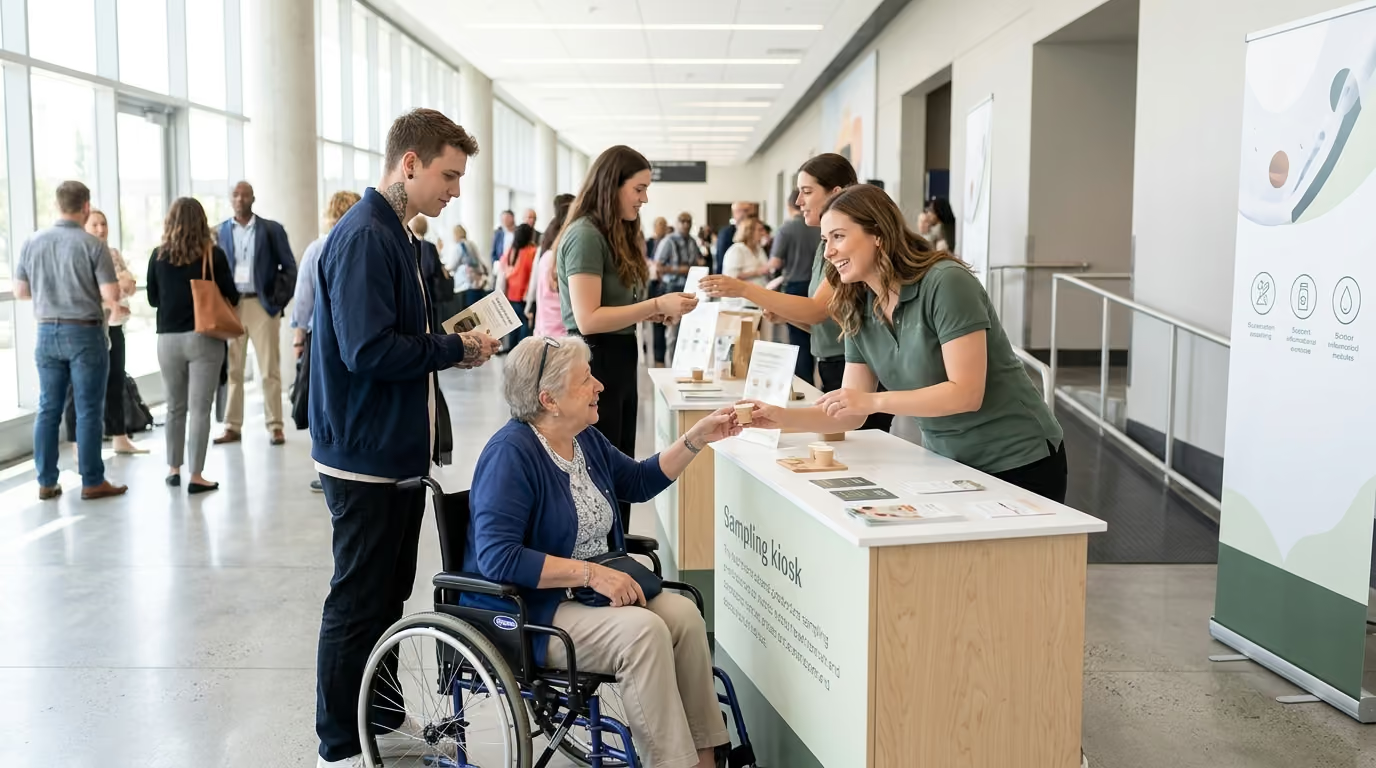
Accessibility must be integrated into initial structural schematics. Activations placed on public pathways must maintain clear American Disabilities Act pathways, providing at least thirty-six inches of unobstructed clearance for wheelchairs and mobility devices. Ramps must accompany all raised platforms, counter heights must accommodate seated guests, and sampling stations must offer accessible reach zones. Excluding individuals with physical limitations damages brand reputation and creates serious legal liability.
Documenting participant reactions provides the core fuel for digital amplification. However, capturing content in public domains involves strict privacy, consumer protection, and intellectual property boundaries. Brand operators must institute clear consent mechanisms before turning camera lenses toward the public.
General public foot traffic can be notified through prominent entrance signage stating that photography and filming are underway. However, when an individual is featured in close-up footage, delivers a verbal testimonial, or participates in a staged brand challenge, written consent is required. Municipal event guidance from the City of Greater Sudbury recommends conspicuous signage combined with written waivers for identifiable individuals, children, and vulnerable groups. Digital waiver kiosks or tablet-based signature forms allow field teams to capture enforceable legal releases quickly.
Collaborating with content creators requires total transparency regarding commercial relationships. The Federal Trade Commission explicitly requires creators to disclose any material connection, including monetary payment, free product samples, travel accommodations, or exclusive event access. Disclosures must be clearly visible, placed directly within the initial text or video overlay, and presented in the same language as the endorsement.
Executing a flawless guerrilla campaign requires precise sequencing across pre-deployment, live operations, and post-event teardown. Each phase demands defined responsibilities, rigid operational checks, and active crowd oversight.
Evaluating guerrilla activations solely through raw social impressions produces misleading performance data. A campaign that generates millions of online video views while triggering community backlash, retail partner complaints, and regulatory fines is a commercial failure. Brands must balance top-of-funnel reach with qualified engagement, conversion velocity, and Return on Investment (ROI).
Lead metrics indicate how efficiently the physical activation converts public foot traffic into active participants:
Lag metrics prove whether physical engagement translates into measurable revenue and brand equity:
When presenting results to executive leadership, separate verified business metrics from vanity metrics. Documenting verified retail scan data, footfall conversions, and positive sentiment scores justifies experiential budgets and proves that real-world engagements outperform digital advertising alone.
Studying successful experiential deployments highlights how leading organizations balance creative audacity with operational precision. Unconventional public activations succeed when the creative mechanism reinforces the underlying product benefit.
During the launch of FIFA 2023, Apple and EA Sports introduced the fictional AFC Richmond team from the television series Ted Lasso directly into the playable video game ecosystem. Rather than staging an unpermitted physical stunt that risked public annoyance, the teams placed fictional IP inside a functional consumer environment.
According to Cannes Lions case data, the campaign generated over two thousand editorial articles and campaign-reported figures of thirteen billion earned media impressions within thirty days. Furthermore, AFC Richmond became the seventeenth most-played team in the entire game. The lesson for brand leaders is clear: inserting branded experiences into environments where audiences already congregate creates massive engagement without operational friction.
At major industry gatherings like the Cannes Lions festival, Stagwell created Sport Beach, a branded physical environment that combined high-level business programming with open athletic courts and relaxation zones. Instead of relying on passive billboards or disruptive street teams, they constructed a fully permitted destination offering genuine physical and professional utility.
The Association of National Advertisers highlighted how the activation drew thousands of verified attendees and generated extensive earned media coverage. By providing authentic recreation, comfortable workspaces, and high-value networking, the brand became a welcoming destination rather than an intrusive interruption.
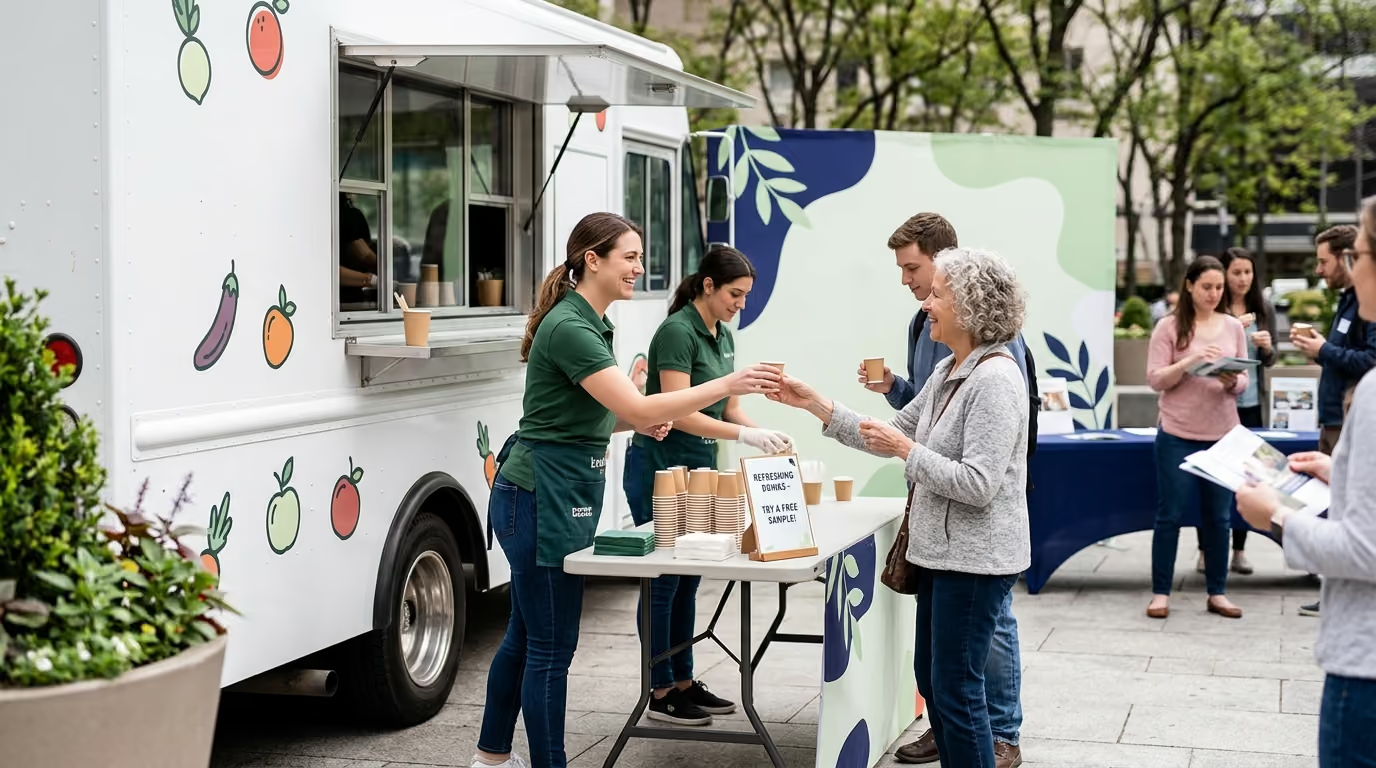
In our experience managing large-scale roadshows and field activations, mobile sampling tours achieve maximum conversion when they operate with tight logistics and localized retail coordination. Successful programs deploy customized, self-contained vehicles that function as mobile product showcases. By executing mobile activations designed for real-world conditions, brands can activate adjacent to high-traffic transit hubs or shopping districts, distribute thousands of chilled samples, and immediately direct consumers to nearby retailers stocking the product.
Deploying interactive brand activations that drive action allows consumer goods brands to convert street-level curiosity into verified retail velocity. When field teams maintain strict compliance standards, safety protocols, and transparent communications, guerrilla activations become an effective mechanism for driving scalable business growth.
True experiential mastery occurs when operational discipline matches creative imagination, allowing your brand to capture public attention safely and profitably.

30 Years Experiential & Retail Activation Partner for CPG & Beverage Brands | Multi-Market Demos, Roadshows & Costco/Club Programs That Actually Sell