Robbie Thain
Founder, CEO

Trade shows are redesigning schedules and booth experiences around attendee wellness. Learn how this operational shift affects field staffing and event traffic.
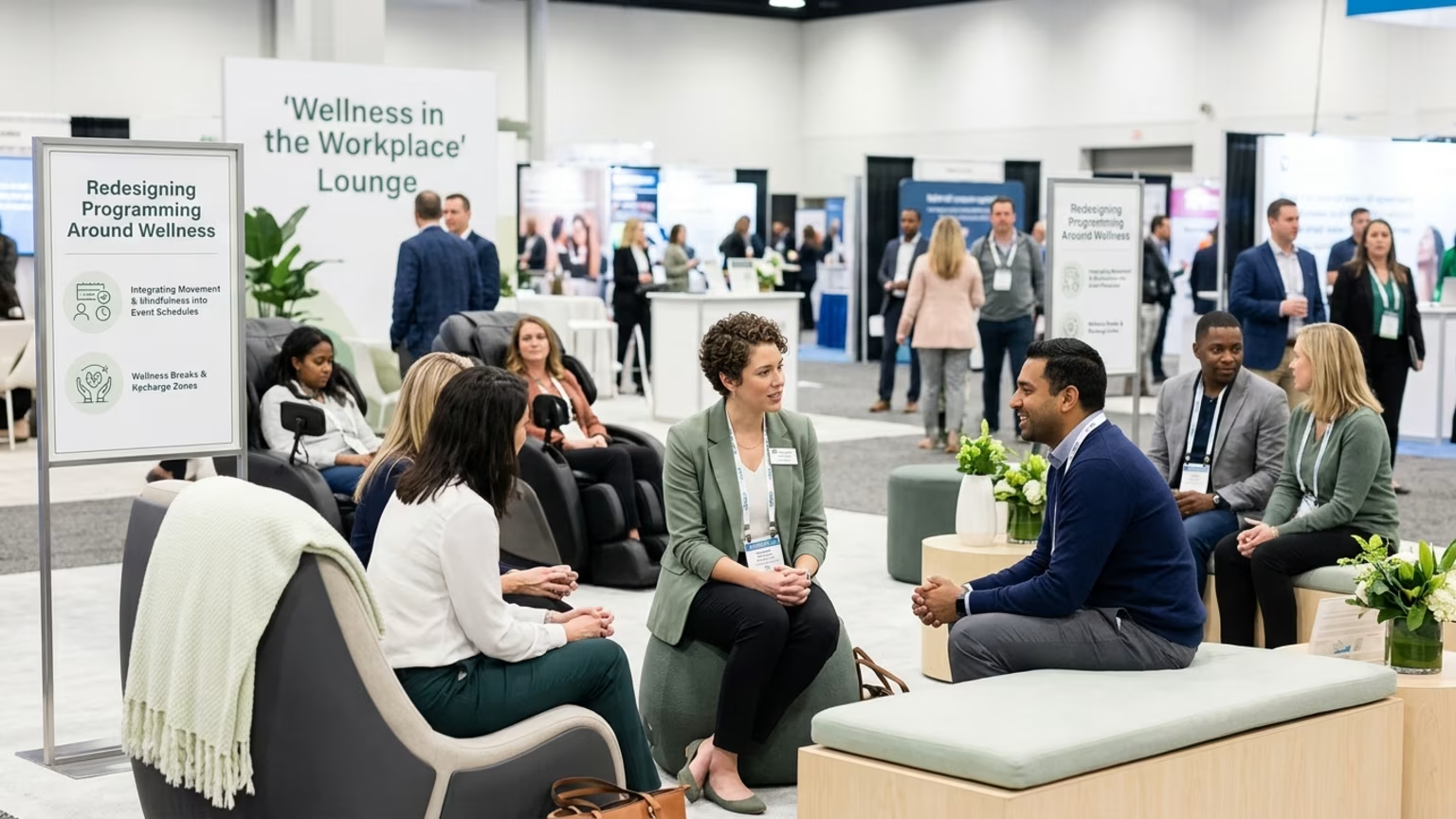
On September 18, 2026, Event Marketer published an analysis detailing how major trade shows are actively redesigning their official programming around attendee wellness. Event organizers are modifying their core infrastructure to prioritize explicit downtime and practical care. This shift goes beyond adding a temporary fitness class to a side room. It fundamentally changes how convention centers format their daily schedules and manage crowd energy.
The logistics of the show floor are evolving rapidly across technology, healthcare, retail, and veterinary environments. Event Marketer identifies five specific ways trade shows are incorporating wellness into the core attendee experience. Organizers are introducing more explicit downtime and brand-relevant sensory play to prevent burnout. They are also adding sleep-oriented services, practical self-care stations, and calm gathering spaces directly into the main exhibit halls.
At ASCO 2026, a Survival Station was deliberately positioned near registration so attendees could access basic supplies at a high-traffic point. At HIMSS 2026, Salesforce presented a Self-Care Station featuring trail mix, electrolytes, and custom foldable straws. Meeting Today also reports that IMEX America 2026 expanded its wellness footprint with Circadian Cove. That upgraded space included on-site expertise from two doctors.
Trade show food and beverage operations are following a similar operational shift toward attendee health. TSNN identifies zero-proof bars, cold-coffee lounges, and functional wellness shots among the top emerging beverage trends for business events. Another TSNN report highlights a move toward protein-focused food service. That report recommends providing at least one protein-rich option during every meal or break.
Our position is that attendee wellbeing should solve a logistical problem for the customer while reinforcing the brand promise. Across our history, we have delivered more than 1,000 campaigns in all 50 states for more than 200 brands. That range has given us experience across different products, audiences, retail settings, events, and market conditions rather than a single activation format. That extensive history has taught our team that forcing irrelevant experiences onto a tired audience rarely generates measurable pipeline.
David T. Stevens, co-founder of Olympian Meeting, correctly argues that the strongest tactics reinforce the brand message rather than acting as disconnected entertainment. This matters deeply for consumer packaged goods and beverage brands that rely on physical interactions to build trust. If you build a wellness activation that has no credible link to your product, you risk creating confusion instead of affinity. For example, Event Marketer notes that Wiz built a sleep bar at AWS re:Invent 2025 around the specific message that security teams sleep better.
That execution linked a tangible rest experience directly to a core software value proposition. Any wellness element on the show floor must clarify what your brand does and how it improves the user's life. Event Marketer notes that attendees are frequently opting out of late-evening programming to protect their sleep schedules. This behavior aligns with McKinsey’s 2025 wellness research, which found that better sleep ranks among the top two wellness priorities for millennials.
The publication also cites a study in Sleep and Science and Practice indicating that more than half of American adults experience sleep issues. For marketers under pressure to deliver a strict Return on Investment, these novelty concepts must translate into a qualified conversation. Event Marketer highlights sensory activities such as LEGO builds, bead bars, and slime as popular ways to create decompression points. Stevens uses a hypothetical invoicing brand to explain how this sensory play must map to product reality.
He notes that if the core message is that invoicing can be fun, incorporating slime could dramatize that exact idea. His broader warning is that any activation becomes fundamentally pointless if it fails to leave the participant meaningfully changed. The Event Council supports this broader operational view of attendee health. They describe event wellbeing as involving cognitive performance, focus, energy, and rest.
When event organizers restructure the master agenda to accommodate rest, the downstream effects on field staffing are immediate. According to Event Marketer's reporting on Hilton’s 2026 Why We Gather survey, 67% of attendees feel less engaged when events fail to provide enough downtime. The same survey notes that 55% of attendees will actively skip sessions to decompress when breaks are not officially built into the schedule. As organizers respond by programming explicit free time and later start times, the traditional expectation of constant booth traffic becomes obsolete.
Field directors must rebuild their staffing coverage around these new windows of high-value engagement. If an event opens two hours later, staffing a full booth of product experts at sunrise is a waste of payroll and energy. Organizers are treating rest as a primary factor in floor planning. Brands will need to coordinate with show organizers early to understand these scheduled lulls and peaks before finalizing their operational footprint.
An effective event prep timeline now requires mapping out when the target audience is actually available to engage. This reality requires marketing teams to begin designing the field experience around customer flow rather than rigid operational schedules. This also changes how exhibitors design their physical trade show environments to accommodate attendee behavior. Elanco’s Zen Garden at VMX 2025 used a stone path, greenery, and bean-bag chairs to create a calm space within the show floor.
At Shoptalk 2026, Cordial hosted a Reset Lounge where attendees could rest and connect with peers over coffee drinks and smoothies. Adapting to these behaviors requires shifting booth staff training strategies to prioritize flexible engagement rather than tightly timed presentations. Practical care stations also introduce new operational considerations for event field teams. Distributing pain relief products, trail mix, or hygiene supplies requires strict attention to basic venue compliance rules.
These services address real attendee friction during long convention center days. However, planners must clearly distinguish between providing a useful hospitality service and crossing into sensitive medical territory. The mandate for authenticity is becoming a strict operational filter for physical marketing teams. Kelly Helfman, founder of Girls Day LA, warns brands against adopting wellness trends blindly.
She explicitly states not to buy yoga mats if your customers are not yogis. Her advice serves as a critical audience-fit test for marketing operators determining where to allocate their trade show budgets. An activation format is only valuable if it matches the actual needs of the people walking the floor. Liz Lathan of Club Ichi starts events later when possible so attendees can work out, answer email, and eat breakfast.
Lathan suggests formally putting explicit free time on the agenda rather than viewing unprogrammed hours as a failure in event design. Planners must recognize that an over-programmed day actively reduces the audience's capacity to absorb new information. When we designed and managed a 40 by 20 foot trade show environment for Glanbia at Natural Products Expo West 2025, we had to account for how attendees physically navigated a massive convention center. Bringing think!, Isopure, Optimum Nutrition, and Amazing Grass into one coordinated space required mapping the attendee journey.
We handled the physical operations and distributed more than 14,000 recorded product samples across the activation stations. We structured the footprint so visitors could sample products without feeling rushed or crowded. This aligns perfectly with the principles outlined in the Freeman exhibitor playbook for attendee pathways. The right physical environment turns a chaotic show floor into a structured moment of connection.
A Director of Brand Strategy in the CPG snack division shared: "The Makai team turned our product launch into a sensory event that shoppers still talk about. From creative storytelling to flawless in-store execution, they made snack time unforgettable. We couldn't have asked for a stronger partner." Integrating these physical principles means going beyond the booth to ensure the logistics respect the attendee's physical capacity.
As organizers fundamentally alter their schedules and spaces to accommodate attendee wellbeing, are your field marketing operations agile enough to capture leads during these new, unprogrammed windows of opportunity?
When new wellness schedules and explicit downtime windows disrupt traditional floor traffic patterns, Makai adapts the physical booth strategy to maintain continuous engagement. To prevent inefficient post event follow up and CRM routing from squandering the connections made during these unstructured breaks, our Expo / Trade Shows capability plans and manages trade show spaces that attract attention, start conversations, and convert visitors into customers. Request a proposal

30 Years Experiential & Retail Activation Partner for CPG & Beverage Brands | Multi-Market Demos, Roadshows & Costco/Club Programs That Actually Sell


