Robbie Thain
Founder, CEO

Build a unified event staffing model that scales from trade shows to regional roadshows and campus ambassadors to drive consistent engagement and sales.

Scaling a brand presence from a massive trade show booth to regional roadshows requires a unified staffing model. This guide outlines how to build a flexible team infrastructure that delivers consistent consumer engagement across every physical touchpoint.
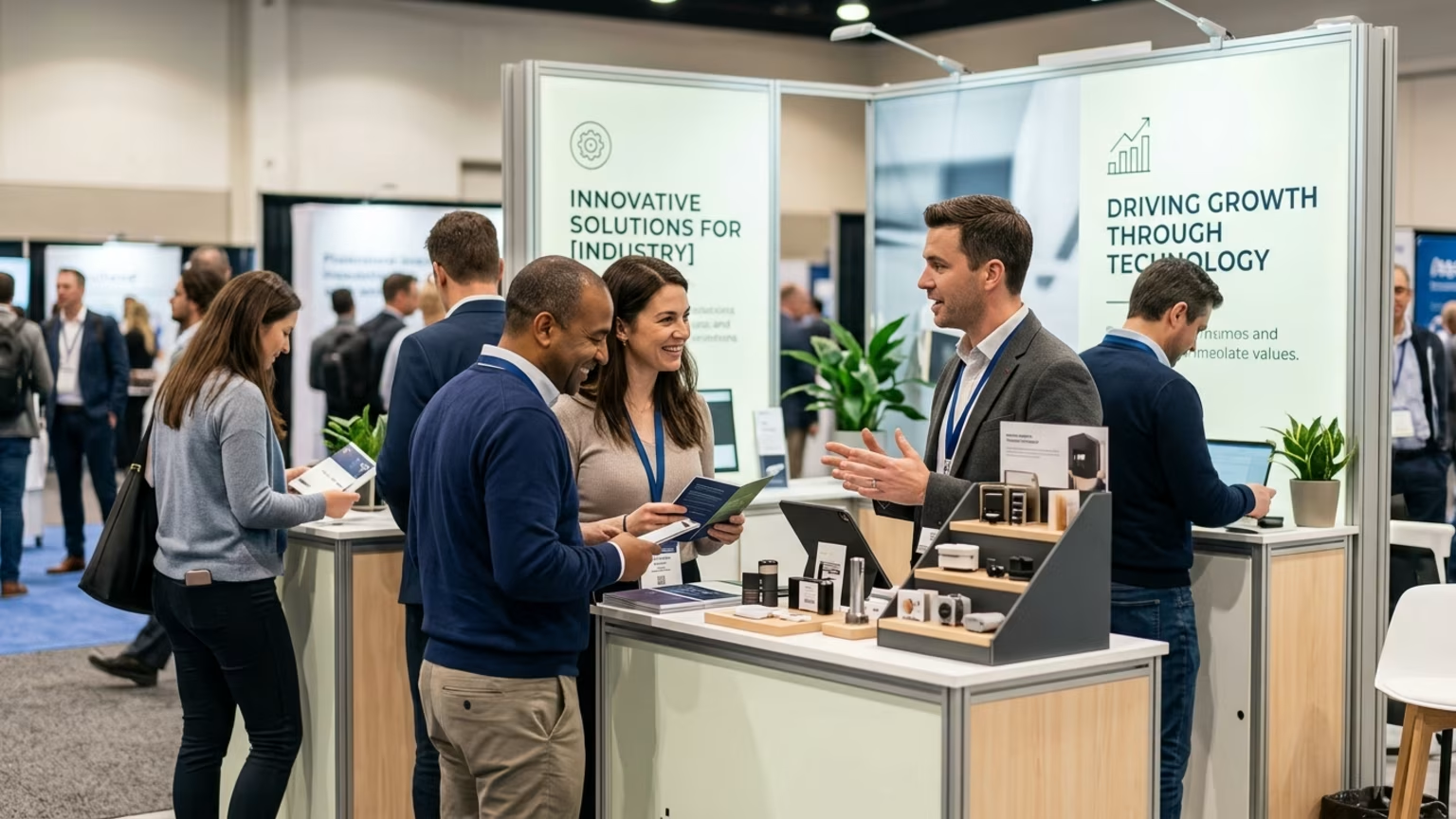
Event marketing analysts consistently report that fragmented field execution destroys brand trust at the point of physical contact. When your local street team delivers a completely different message than your trade show staff, potential pipeline simply vanishes. It is day two of a massive industry expo. Your internal sales executives are exhausted from non-stop conversations.
Half of the temporary event staff just learned your core product name five minutes before the doors opened. Visitors walk away confused about your actual value proposition. They received a sample but missed the entire brand story. This chaotic scenario plays out constantly when companies treat different event types as entirely separate operational silos.
The disconnect usually begins immediately after a major trade show ends. Brands spend months preparing their internal teams for a massive industry event. They polish every single talking point for the big week. Then the brand tries to take that same product on the road for consumer sampling.
The regional roadshows get outsourced to unvetted temporary workers or distant campus groups. The rigorous training standards disappear overnight. The premium brand experience degrades into a messy transaction. Fixing this problem requires a radically different approach to field human resources.
Building a scalable staffing infrastructure demands blending your internal talent with specialized external teams. Many brands rely heavily on core marketing staff for major industry shows. They then panic hire random freelancers for local retail demonstrations. This disjointed strategy ruins the consumer experience across different regional markets.
A truly unified model structurally integrates core company employees with trained agency partners. It then scales down to include dedicated student ambassador networks for grassroots coverage. Your internal team should focus entirely on high value retail buyer conversations. Experiential agency partners must manage the operational flow and high volume consumer interactions.
Campus ambassadors bring authentic peer energy to targeted demographic sampling events. We design mobile activations and roadshows that accelerate consumer trial, build trust, and boost retail velocity during 90-day product launch windows. Our structured approach transforms initial product trial into sustained consumer confidence and retail performance. Every person wearing your brand logo must share the exact same core narrative.
A retail buyer speaking to a sales director at an expo should hear a refined brand message. A college student getting a sample from a campus rep should hear the exact same core truth. Developing a dependable roster of brand representatives creates incredible operational stability. This stability allows marketing leaders to scale physical activations without losing sleep.
When brand representatives look bored or uninformed, consumers immediately project that apathy onto the product. Premium natural snacks lose their perceived value when handed out by an unenthusiastic temp worker. You spend thousands of dollars on beautiful custom booth graphics and premium event spaces. That entire investment burns up if the human being holding the product fails to connect.
Translating initial trade show momentum into regional sales requires intense operational discipline. You need a structured operational plan to deploy a versatile field marketing team across different environments. Leaving field execution to chance always results in wasted marketing budget. Here is the step by step process to standardize your entire event staffing model.
Treating your field team as an afterthought guarantees poor market penetration. Marketing leaders must build an infrastructure that supports human connection at scale. The best physical activations run on rigid operational frameworks that leave zero room for interpretation. Building this framework takes effort upfront but saves massive headaches during a live product launch.
Moving from a highly controlled convention center to an outdoor consumer environment brings unique logistical challenges. A campus sampling event lacks the structured layout of a formal trade show floor. Staff must proactively approach busy students rather than waiting for attendees to enter a booth. This shift in venue requires a much more aggressive engagement posture from your representatives.
You cannot effectively scale a staffing model without measuring the financial impact of your field teams. Every physical activation requires clearly defined lead and lag indicators. Lead metrics give you an immediate read on daily operational performance. These numbers tell you if the team is working hard or barely trying.
Your most important lead metrics include total samples distributed per hour. You must also track the volume of qualified conversations logged by the field team. Monitor your digital QR code scan rates at the primary sampling station. These early indicators show if your staff is actively engaging the crowd.
Never wait until a campaign ends to review your operational data. Reviewing daily lead metric reports allows marketing directors to spot execution failures early. If a specific college campus shows zero qualified conversations by lunch time, you can call the team immediately. Real time data gives you absolute control over the physical activation.
Lag metrics tell the complete final story of your overall Return on Investment (ROI). Focus heavily on regional retail sell-through rates following a local roadshow. Track the total pipeline velocity for any retail buyer accounts generated during the initial event. You need to prove that the live activation moved the needle.
Compare the sales lift in markets with active student ambassadors against regions without them. This specific data proves the true financial value of your physical marketing efforts. If the performance metrics look weak, recalibrate your training protocols before the next event. Data gives you the confidence to demand better execution from your field teams.
You should constantly evaluate the cost per engagement across different activation tiers. An interaction at a major trade show costs significantly more than a conversation on a college campus. Balancing these costs allows marketing directors to optimize their annual experiential budgets. Tracking post event social media mentions can also serve as a strong qualitative performance indicator.
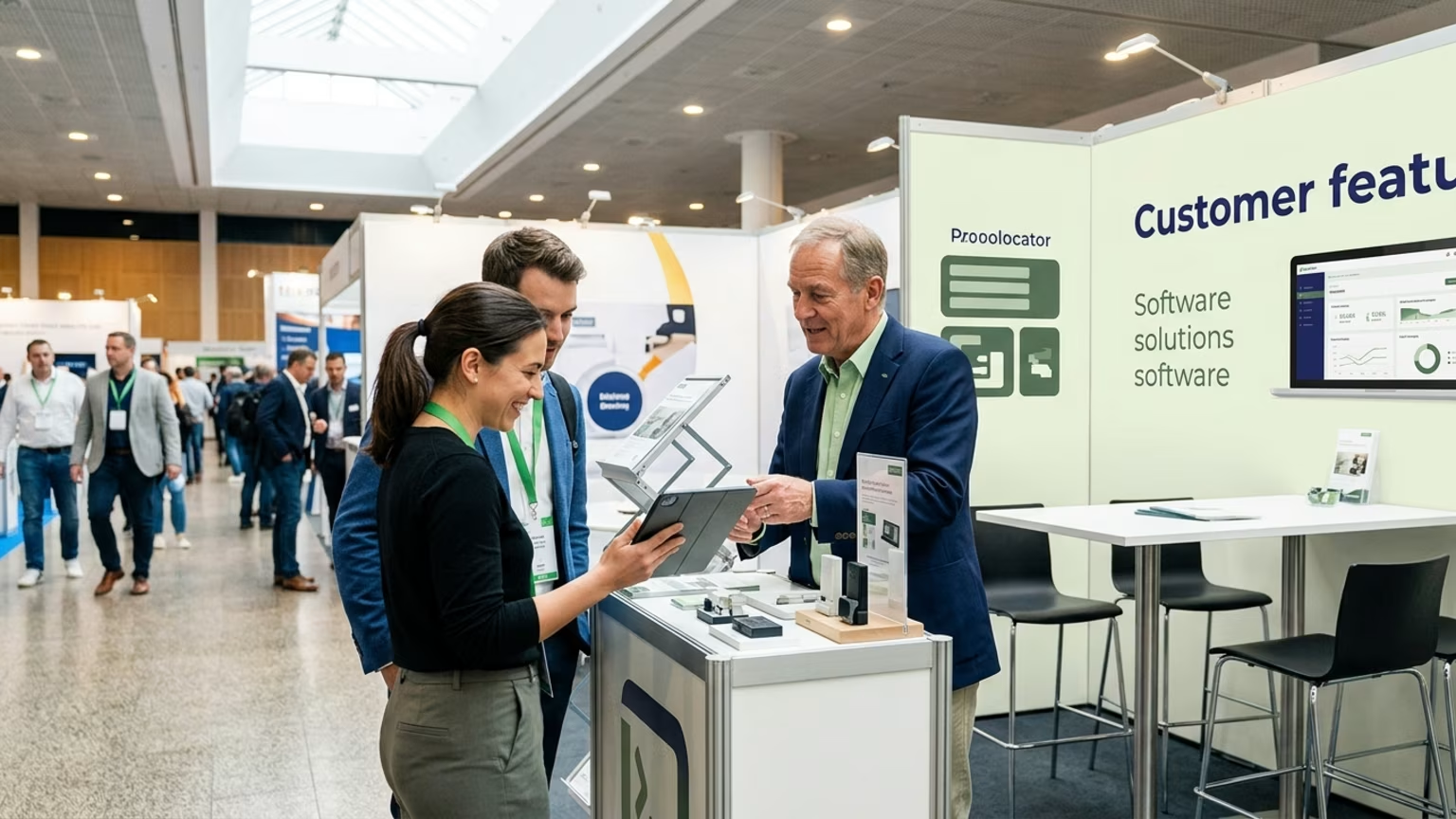
Consider a premium sparkling water company launching a new functional beverage line. The brand debuted the fresh flavor at a massive industry trade show using a hybrid staffing model. Internal executives managed private distributor meetings in a quiet closed booth area. Agency ambassadors handled rapid fire product sampling at the busy main aisle.
Following the successful trade show, the brand scaled this exact execution into regional parking lot roadshows. They hired local campus ambassadors to replicate the trade show sampling experience at nearby colleges. All field teams used the exact same three sentence script. They all utilized the same digital lead capture tools on identical tablets.
This consistent daily execution drove a massive spike in retail velocity at local grocery chains. Regional buyers noticed the localized consumer demand and increased their initial purchase orders. The brand maintained absolute control over the physical consumer experience across ten different states. The unified team structure made national expansion look incredibly easy.
Think back to that exhausted internal sales team on day two of the big expo. A unified staffing model replaces that absolute chaos with a highly energized field force. Your brand story stays perfectly intact from the largest convention center down to the smallest campus quad. If you are ready to build a scalable team for your next major launch, book a strategy call today.

30 Years Experiential & Retail Activation Partner for CPG & Beverage Brands | Multi-Market Demos, Roadshows & Costco/Club Programs That Actually Sell