Robbie Thain
Founder, CEO

Make the next step after a retail tasting clear with shelf directions, visible pricing, stock checks and measures that distinguish trial from purchase.

A line at the sample table is not a win. It tells you people were willing to stop for a taste. It doesn't tell you whether they could find the package, make sense of the price or see a reason to buy it. If the demo ends when the sample changes hands, you've designed a giveaway and left the purchase to chance.
A Journal of Retailing study summarized by SMU examined six scanner datasets across four snack categories. The researchers reported immediate and sustained sales effects from in-store sampling, with results varying by store size. That's a reason to take sampling seriously, not a forecast for every product or store. The study also doesn't tell you how much any individual shelf or staffing decision will contribute to sales.
The CMO who signs off on a large activation budget has a fair question: What did we get besides a crowd? The uncomfortable answer may be that the team can account for every sample but can't show what happened after the tasting. A polished recap doesn't resolve that problem. It just makes the activity easier to present.
The breakdown can be mundane. The ambassador serves the right product but points shoppers toward the wrong display. The shelf carries the brand but not the flavor being sampled. The demo sign draws attention to an offer but leaves the shopper guessing whether it applies to the package in their hand.
These are different failures, and lumping them together as weak demand points the team toward the wrong fix. A shopper who doesn't want the product is different from a shopper who wants it but can't find it. More samples won't put the missing flavor on the shelf or settle a price discrepancy.
Janice Greenwald, a fractional CMO quoted by FoodNavigator, advised brands to revisit price, merchandising, shelf placement and availability when promotions underperform. That's where we'd look before approving a bigger sign or another round of sampling. The question isn't just whether the shopper liked the taste. It's whether the store made it easy to act on that preference.
At Makai, we design retail demos, sampling programs and roadshows around face-to-face product trial. Our view is that the conversation should feel easy even when the work behind it is exacting. A shopper should be able to ask a real question and get a useful answer, not sit through a pitch while trying to remember where the product is stocked.
That combination is the point of the demo. The ambassador helps the shopper decide whether the product fits. The store setup gives the shopper a way to act on that decision without having to start over at the shelf.
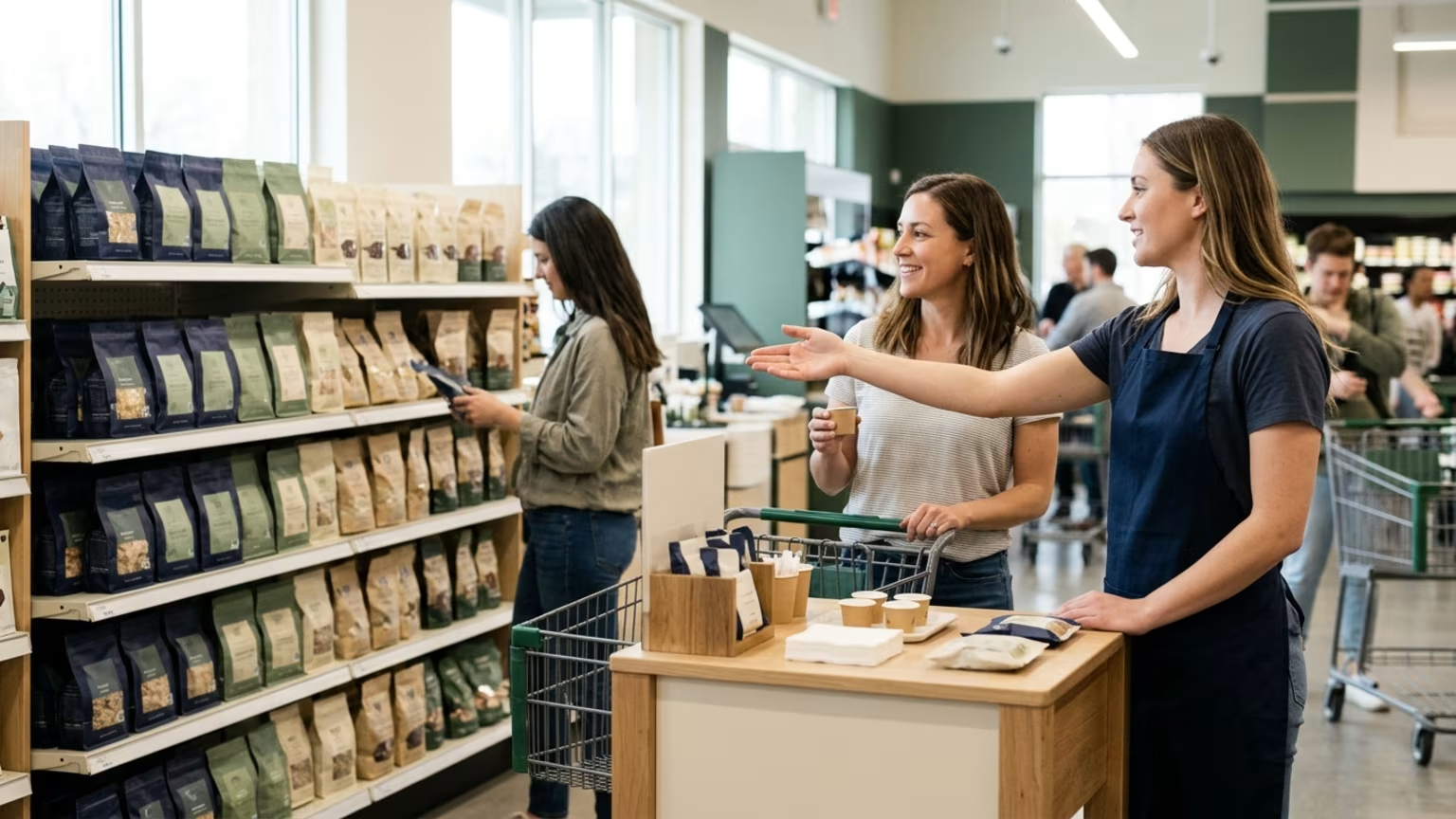
When the store layout allows it, put the tasting close to the product shoppers can buy. If the table and shelf need to be apart, give the ambassador directions that match the floor: an aisle or department, a recognizable landmark and the package to look for. “In the refrigerated case next to the dips” is more useful than “over there.”
The test is whether someone who just tasted the product could find the right package without asking another employee. That's the difference between giving a direction and actually connecting the tasting to nearby stock.
A demo doesn't need a discount to explain value. It does need the ambassador's answer about price to agree with what the shopper sees where they pick up the product. If an offer is part of the activation, the useful details are which item qualifies and what the shopper needs to do to get it.
Joe Broderick of Inmar Intelligence told FoodNavigator that offers should match the objective. An offer that lowers the barrier to a first purchase can support trial, while a multi-unit deal may suit a loyalty goal. That's a useful distinction when the person at the table is deciding whether to buy the product at all, not how many to take home.
Taste gives the shopper a reaction. A useful preparation idea or pairing gives them a reason to think about when they'd buy the product. The ambassador doesn't need to list every use. A relevant answer to the shopper's question is enough to help them decide whether the product belongs in this trip.
Food Trade News's holiday commentary gives the example of a Thanksgiving tasting with the relevant items merchandised nearby. It recommends making value visible and having a demonstrator who can explain preparation or pairings and direct shoppers to the product. That's an editorial example, not a measured sales result. The useful idea is to design around the shopper's purchase decision rather than treating the tasting as a standalone attraction.
Before the demo opens, the brand and store teams should agree on where the tasting will happen, where the sampled item is stocked and what price or offer shoppers will see. Walk the route from the table to the shelf and check that the version being served is available to buy. Agree on who the ambassador should tell if the shelf runs low or the display moves.
That's a practical way to apply the placement and availability advice. It also keeps ambassadors from having to smooth over a problem they can't fix. If the sampled product isn't available, flag it as an execution issue rather than asking the team to keep sending shoppers to an empty spot.
Impressions and sample counts describe activity. They don't answer whether the demo supported purchase. Even samples handed to intended buyers tell you about trial, not checkout. A trade show team might look at retail meetings booked to see whether a conversation went somewhere. On a grocery floor, the next action worth looking for is a purchase.
Start with what the activation was meant to accomplish. If the goal was trial, count samples distributed to the intended shoppers where you can identify them. If the goal was retail sell-through, look at units sold and check the store conditions alongside the result. A stock gap or an offer mismatch belongs in the review because it changes what the team should investigate before spending again.
FoodNavigator's coverage distinguishes acquisition from repeat purchase. Practitioners quoted there recommended looking at measures such as new buyers, repeat purchases, baseline sales after a promotion and cost per unit moved. You don't need to turn every measure into a target. Pick the ones that answer the decision in front of you, whether that's reaching new buyers, assessing cost or seeing what sales look like once the offer has ended.
Be clear about what the data represents. If you have store-level sales, report store-level sales rather than implying you tracked the people who took a sample through checkout. If you can measure repeat purchase, keep it separate from first purchase. That distinction makes the recap useful for deciding whether to invest beyond the first trial.
A good-looking setup can earn the pause. The work that supports purchase happens in the handoff: a human answer about why the product fits, a clear direction to the right package and a shelf with that package available at the expected price. Demand that level of execution before spending more on the setup. Then judge the demo by what shoppers did next, not by how busy the table looked.
Units sold give a retail tasting a business measure that a sample count alone cannot supply. Makai runs retail demonstrations with trained brand ambassadors. For CPG marketers and food and beverage brand managers, these demos pair in-store product trial with a face-to-face conversation about what shoppers are tasting.

30 Years Experiential & Retail Activation Partner for CPG & Beverage Brands | Multi-Market Demos, Roadshows & Costco/Club Programs That Actually Sell