Robbie Thain
Founder, CEO

Discover how Kroger uses retail data to shape media planning and how CPG brands can align their experiential marketing to drive measurable category growth.
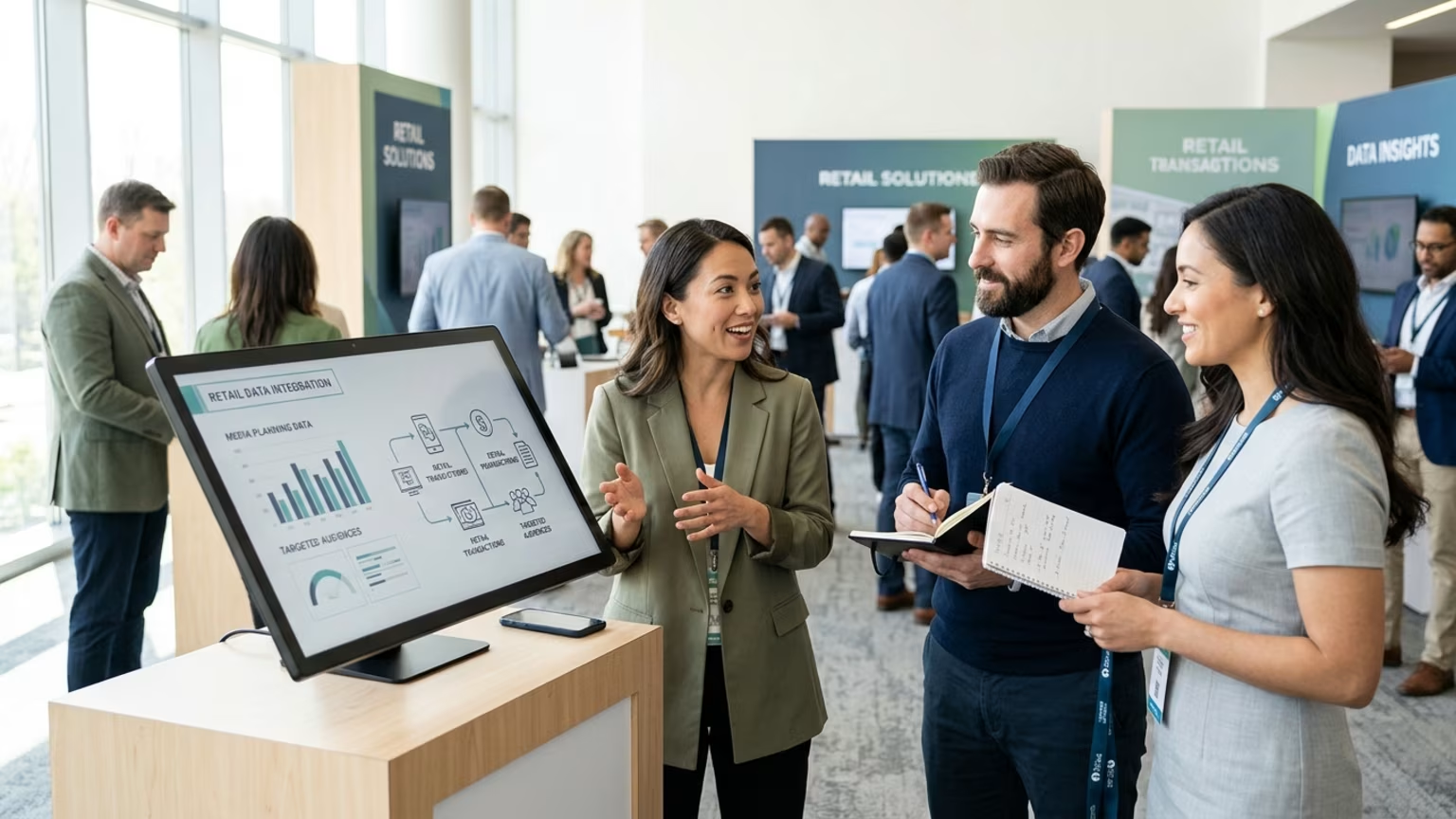
Retail demo programs usually get judged on cups poured rather than actual sales lift. That mismatch is exactly why the biggest players are tearing down the old rules of measurement. On July 7, 2026, The Drum reported that Kroger is aggressively putting first-party retail data at the center of its media planning. The grocery giant now expects brand partners to tie ad exposure and physical activation directly to category growth. Marketing leaders can no longer run isolated campaigns without proving actual basket lift.
Kroger operates nearly 2,800 stores across the U.S. and serves millions of households weekly. Through Kroger Precision Marketing, the retailer powers off-site campaigns and in-store media using actual purchase data. The company recently reported that its digital sales grew 19% year-over-year in fiscal Q1 2026. This rapid growth helped their digital business become profitable ahead of schedule.
To expand this footprint, Kroger Precision Marketing announced a collaboration with TikTok on June 19, 2026. Advertisers can now target Kroger shoppers directly within the TikTok platform using purchase-based audiences. The stated goal is to turn viral product discovery into real in-store purchases. A July 1, 2026 job posting for a Commercial Strategy Lead at 84.51° confirmed plans to rapidly expand physical media. The role manages a growing portfolio of in-store screens that must deliver compelling advertiser value and scalable revenue streams. Furthermore, Mars United Commerce published guidance on June 30, 2026, noting that Kroger expects brands to expand total category demand. Shifting market share without growing the basket is no longer acceptable.
For CPG leaders, this shift signals the end of unaccountable field marketing. Live engagements must now act as a measurable extension of the retail media network. Brands must align shopper marketing and trade funding into a single connected plan. You cannot just count the number of samples handed out at a booth and call it a success. Kroger demands proof of Return on Investment through actual sales data and SKU-level measurement.
We create experiential marketing programs built to connect emotion with action. Our process blends creativity, strategy, and data to ensure every brand interaction drives measurable results. We craft experiences that engage all five senses, helping people not just see brands, but feel them, turning moments into meaningful business outcomes. When a brand integrates first-party data into live retail events, the entire physical footprint becomes a high-converting sales channel.
Field execution must operate as a measurable data input for the retailer. Marketing directors cannot just deploy a field team to a busy parking lot and hope for the best. A mobile sampling truck targeting retail sales requires exact location planning based on 84.51° basket data. You must choose store clusters based on actual category growth potential rather than simple foot traffic. Every live touchpoint must point toward a clear transaction.
Kroger expects partners to personalize engagement with its most loyal shoppers using actual data. A successful campaign improves both the shopper experience and the overall value perception. The activation must reinforce the retailer's core promise to be fresh, affordable, and easy to shop. Brands that fail to meet these specific operational standards will lose floor space to competitors who do.
This data mandate fundamentally changes how field marketing operations are managed. Before booking a venue or pulling a municipal permit, field teams must study historical client data. Regional event managers must act like precision media buyers. They must know exactly which demographic profile is walking through the store doors. Planning physical logistics without consulting the retailer's data engine is a massive operational failure.
Store operations require total alignment between digital messaging and physical sampling. If a brand buys space on Kroger's in-store screens, the physical sampling booth must echo that exact message. Disconnected creative leads to wasted spend and confused shoppers in the aisles. The field ambassadors must understand what digital messages are running directly above their heads. This requires tight timing and massive logistical discipline from the agency partner.
Finding the right field talent is significantly harder under these new conditions. Brand ambassadors must know how to steer live conversations toward specific SKU purchases. They are no longer just handing out free snacks to passing families. They are executing a live component of a larger omnichannel strategy. The barrier to entry for staffing has moved from simple product knowledge to deep behavioral influence.
Post-event reporting can no longer rely on simple vanity metrics. Field teams must track their real-world impact against strict performance requirements. Experiential leaders must show how in-store experiential programs link to retail media outcomes. They must prove new shopper penetration and specific basket expansion.
A central part of the Mars United Commerce guidance is the focus on category leadership. Brands must show how their live activity will grow the overall category demand. Simply stealing a few percentage points of market share from a direct competitor is insufficient. Kroger expects suppliers to attract completely new shoppers to the aisles.
Experiential teams can solve this by building campaigns around specific real-world usage occasions. A multi-brand activation might bundle snacks and beverages together to increase the total basket value. When field marketers promote the entire occasion, they directly support the retailer's larger business goals. This approach turns a basic product demo into a comprehensive lifestyle solution for the shopper. It gives the retailer a concrete reason to approve the floor space.
Agencies are restructuring their internal teams to match this massive retailer demand. VML recently posted a role for a Media Director focusing entirely on commerce and retail media planning. This role builds strategies using complex research tools and historical client data. It proves that major agencies are treating retail channels with the same rigor as national television buys. The planning process happens long before a single piece of event equipment is loaded onto a truck.
On the client side, manufacturers are dedicating specific roles to retailer alignment. Mondelez International recently hired for an Omnichannel Activation Manager dedicated solely to Kroger. Large CPG companies view these retailers as strategic partners rather than simple distribution channels. They expect their field programs to operate within the retailer's complex data ecosystem.
The Drum captured the philosophy driving these operational changes perfectly in their recent reporting. "If you know the basket, you know the brain."
This observation highlights Kroger's belief that actual purchase data reveals true intent. Shoppers often behave very differently than their broad demographic profiles might suggest. Shopper marketers must use this exact purchase intelligence to guide their field and creator campaigns. They must study heavy buyers and map out cross-category affinities before building an event concept.
This deep data integration creates a clear path from product discovery to the cash register. When brands understand exactly what else is in the shopper's cart, they can design better physical activations. The live experience simply becomes the real-world manifestation of the underlying data. makai understands that the best activations combine this hard math with genuine human connection.
When a brand successfully merges first-party shopper data with physical retail events, the results speak for themselves. Sales conversations feel natural because the targeting is accurate from the start. Field teams waste less product because they are engaging the right people at the exact right moment. This is how modern brands win the aisle.
Are your experiential and retail media teams looking at the same purchase signals before a campaign begins, or are they operating in silos?
The path to the shelf is no longer built on guesses. It is built on proof.

30 Years Experiential & Retail Activation Partner for CPG & Beverage Brands | Multi-Market Demos, Roadshows & Costco/Club Programs That Actually Sell