Robbie Thain
Founder, CEO

New global exhibition data reveals 317.7 million visitors and $179B in direct spending. Learn why CPG brands must treat trade shows as transaction engines.
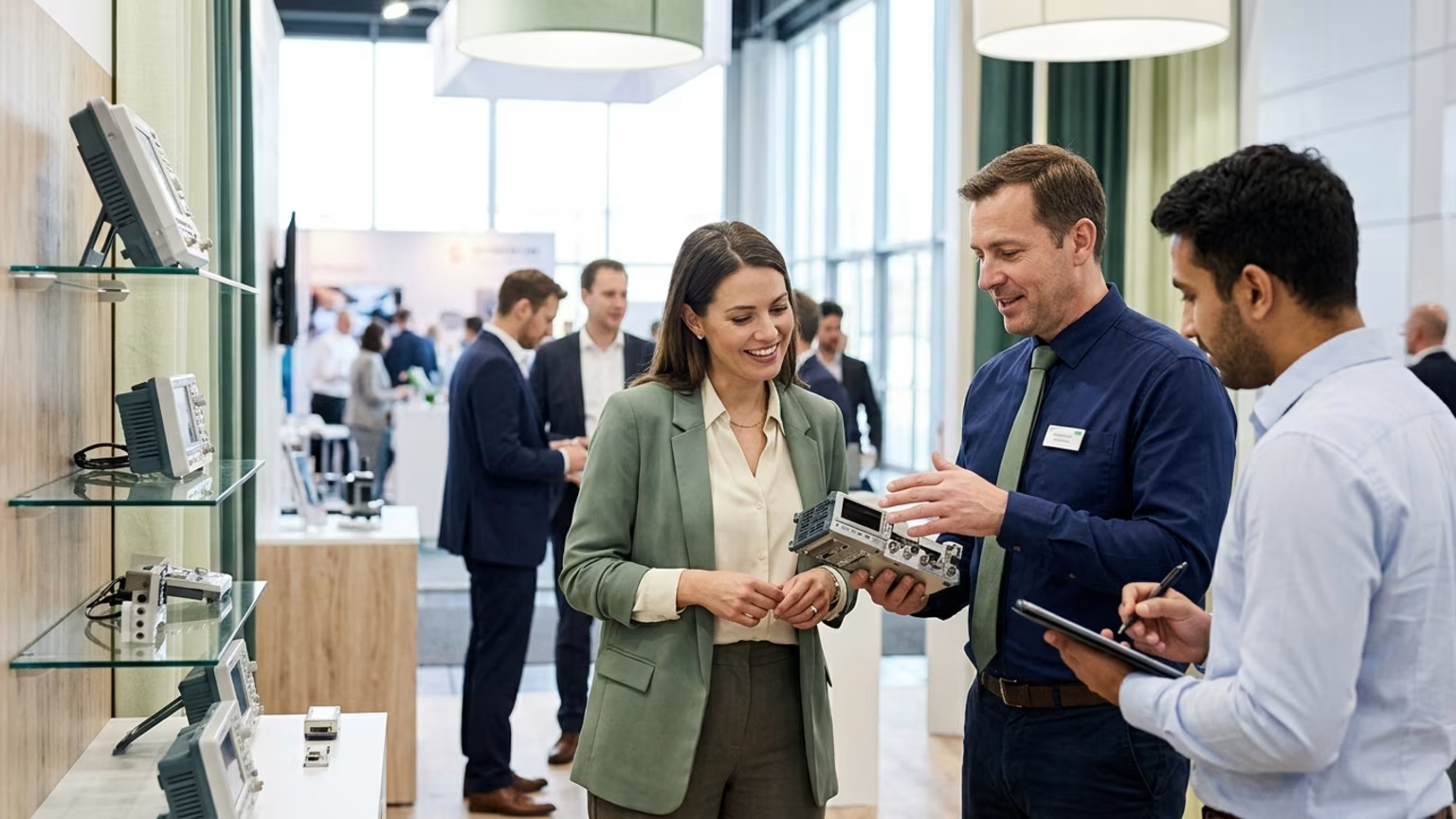
On September 16, 2026, the Global Association of the Exhibition Industry released its global exhibition-industry survey at the sixth Exhibition Industry Day ceremony in Seoul. As reported by Chosun, global exhibitions attracted 317.7 million visitors last year, and 4.7 million companies exhibited. The Seoul ceremony was jointly organized by the Korea Exhibition Industry Promotion Association and four major domestic exhibition associations. Approximately 200 people attended the announcement, including government representatives, UFI delegates and exhibition professionals.
The reported figures establish the physical event sector as a massive economic engine. The Chosun report noted that visitors and exhibitors generated $179 billion in direct spending on transportation, accommodation, food and related expenses. The wider economic impact of hosting exhibitions reached $444 billion globally. UFI CEO Chris Skees stated that exhibition-related industries supported an estimated 4.3 million direct and indirect jobs.
These macro figures translate into specific operational benchmarks for brands. Skees cited an average $95,000 sales-and-production effect associated with one exhibiting company. He also noted a $10,000 effect per square meter of indoor exhibition space. A separate 2024 UFI summary reported 32,000 exhibitions and 138 million square meters of rented space. That source reported a global direct output of €150 billion and a total economic output of €368 billion.
Regional data points further validate this massive scale. The Chosun report stated that Korea’s net exhibition area expanded from 960,000 square meters in 2024 to 1.04 million in 2025. The area is projected to reach 1.1 million square meters in 2026. The number of Korean exhibitions increased 49 percent over a decade. This steady growth brought the national total from 567 in 2015 to 847 in 2025.
The North American market demonstrates similar commercial weight. One 2026 business-events report stated that North America accounted for the largest regional spend in its dataset. The report identified $488 billion in direct business-event expenditure and 336 million annual participants. These figures confirm that large-scale physical events command immense capital and business attention.
These global figures confirm our core philosophy at Makai. Live events must function as measurable commercial transaction engines rather than simple visibility plays. A $10,000 effect per square meter means brands can no longer treat booth space as a passive branding surface. You have to treat the physical footprint as a strict commercial operating system. UFI’s September 2026 president’s letter described an industry balancing economic uncertainty, changing travel patterns and cost pressures.
In this environment, footfall is an input rather than a business outcome. Marketers frequently look at the 317.7 million global exhibition visitors and assume that sheer volume will naturally generate retail sell-through. That false assumption leads to bloated budgets and weak pipeline. We believe the true value of an exhibition lies in capturing intent and moving prospects into a defined sales funnel. This requires a focused strategy for experiential marketing ROI tracking at trade shows.
Across our history, we have delivered more than 1,000 campaigns in all 50 states for more than 200 brands. That range has given us experience across different products, audiences, retail settings and events. We have navigated various market conditions rather than relying on a single activation format. We have learned that an exhibition space only generates returns when the brand defines the transaction before designing the experience.
If your goal is distributor meetings or retail expansion, every physical touchpoint must support that specific metric. We provide clear reporting on reach, trials, leads and sales to guide next steps in campaign optimization. This measurement approach tracks awareness, engagement and conversion. It turns brand moments into actionable data that demonstrates real business impact. Companies treating trade shows as a growth channel in 2026 must integrate their physical presence with their sales infrastructure.
This shift toward transaction-based metrics creates immediate downstream effects on field staffing and booth flow. If a brand wants to capture the $95,000 average sales-and-production effect per exhibiting company, operations must change. Exposure Analytics states that its 2026 physical-engagement benchmark covers more than 3,000 events. The dataset tracks 43.8 million visitors across 18 countries and 18 sectors between 2020 and April 2026.
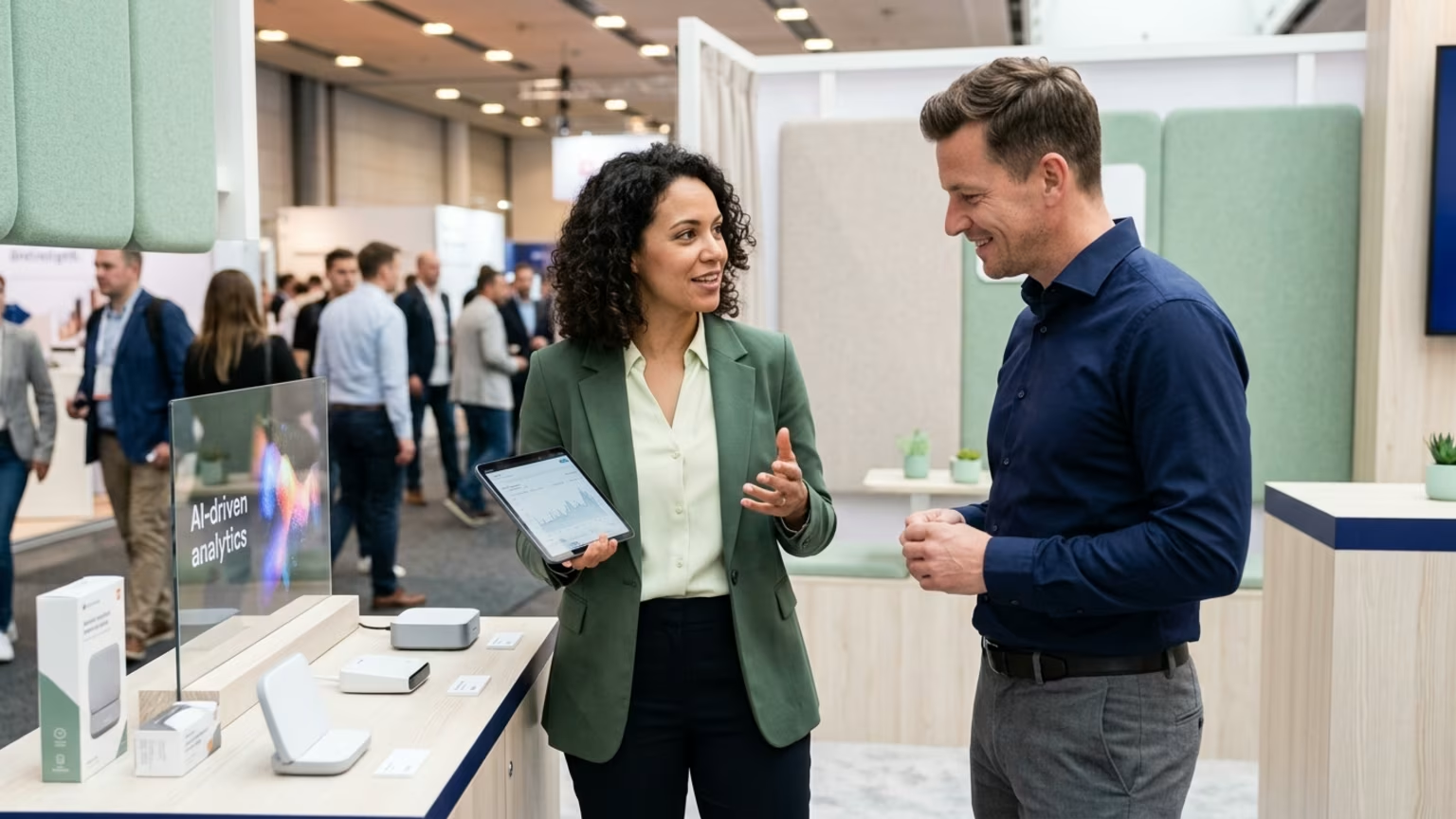
Exhibit City News reported that 9.6 million visitors were measured specifically in exhibition environments. The reported engagement rate was 39.7 percent for those measured attendees. Furthermore, engaged visitors stayed an average of 16 minutes and 54 seconds. An interaction lasting nearly 17 minutes requires an entirely different caliber of staff training. Brand ambassadors cannot simply hand out flyers or scan badges at the aisle edge.
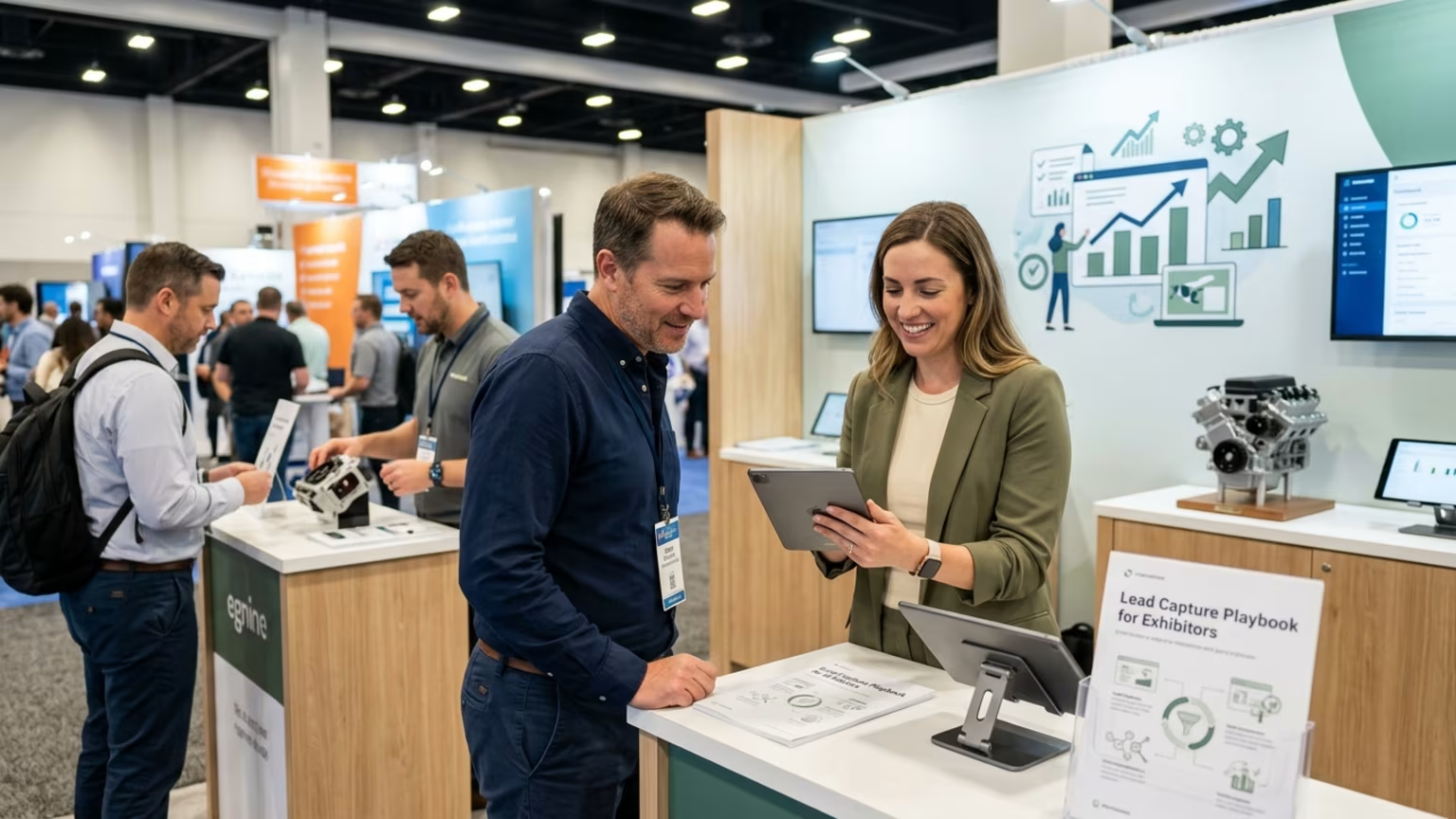
They must be trained to qualify intent, manage detailed product conversations and capture consented contact information. The operational focus shifts from moving bodies through the space to maximizing dwell time for qualified buyers. This requires careful integration of interactive lead capture systems directly into the physical footprint. Managing traffic flow effectively becomes a complex logistical hurdle when dwell times increase.
We saw this directly when we designed and managed a 40 by 20 foot trade show environment for Glanbia at Natural Products Expo West 2025. This project brought think!, Isopure, Optimum Nutrition and Amazing Grass into one coordinated space. Our team handled the concept, operations, staffing and breakdown for the entire activation. We recorded more than 14,000 distributed product samples across the activation stations.
Moving that volume of product while maintaining quality interactions requires strict zone management. We had to guide high-value retail buyers into deep conversations while serving passing attendees efficiently. Capturing detailed intent on the floor is useless without a rapid routing system. By 2009, our work covered event and sponsorship activation, mobile tours, sampling and event production at national scale. Makai was included in the 2009 PROMO 100 ranking published by PROMO and Chief Marketer.
This ranking reflected the breadth of the agency's promotional marketing work at that time. Routing thousands of leads from a massive trade show requires that exact same logistical discipline today. You need to plan follow-up workflows, reporting ownership and deadlines before the expo hall even opens. Successful teams build timelines that guarantee seamless transitions from trade shows to roadshows and retail floors. The exhibition is the starting line for the pipeline, not the finish line for the marketing team.
Industry leadership recognizes this necessary shift from passive display to active commerce. UFI CEO Chris Skees stated that exhibitions should not be understood as product-display events alone. He noted that they drive transactions between companies, local consumption and job creation. Skees also linked exhibition-industry growth to sectors in which Korea is highly competitive.
He specifically named semiconductors, automobiles and robotics. Cho Sang-hyun, head of the Korea Exhibition Industry Promotion Association, provided similar context. He stated that the essence and power of exhibitions have historically come from connections. He added that industry convergence, sophisticated business matching and data use are expanding the value of these connections.
Are your physical exhibition properties currently engineered to generate qualified sales pipeline, or are you still funding expensive real estate just to distribute unmeasured samples?
Building a trade show footprint that actually functions as a transaction environment requires absolute control over every physical detail. If navigating complex event logistics, permits, and staffing limits your commercial focus, Makai takes over the execution. Through our Expo / Trade Shows capability, we plan and manage trade show spaces that attract attention, start conversations, and convert visitors into customers.

30 Years Experiential & Retail Activation Partner for CPG & Beverage Brands | Multi-Market Demos, Roadshows & Costco/Club Programs That Actually Sell