Robbie Thain
Founder, CEO

SEMA issued new lead capture guidance for 2026 exhibitors, urging teams to replace handwritten notes with structured badge scanning and daily data reviews.
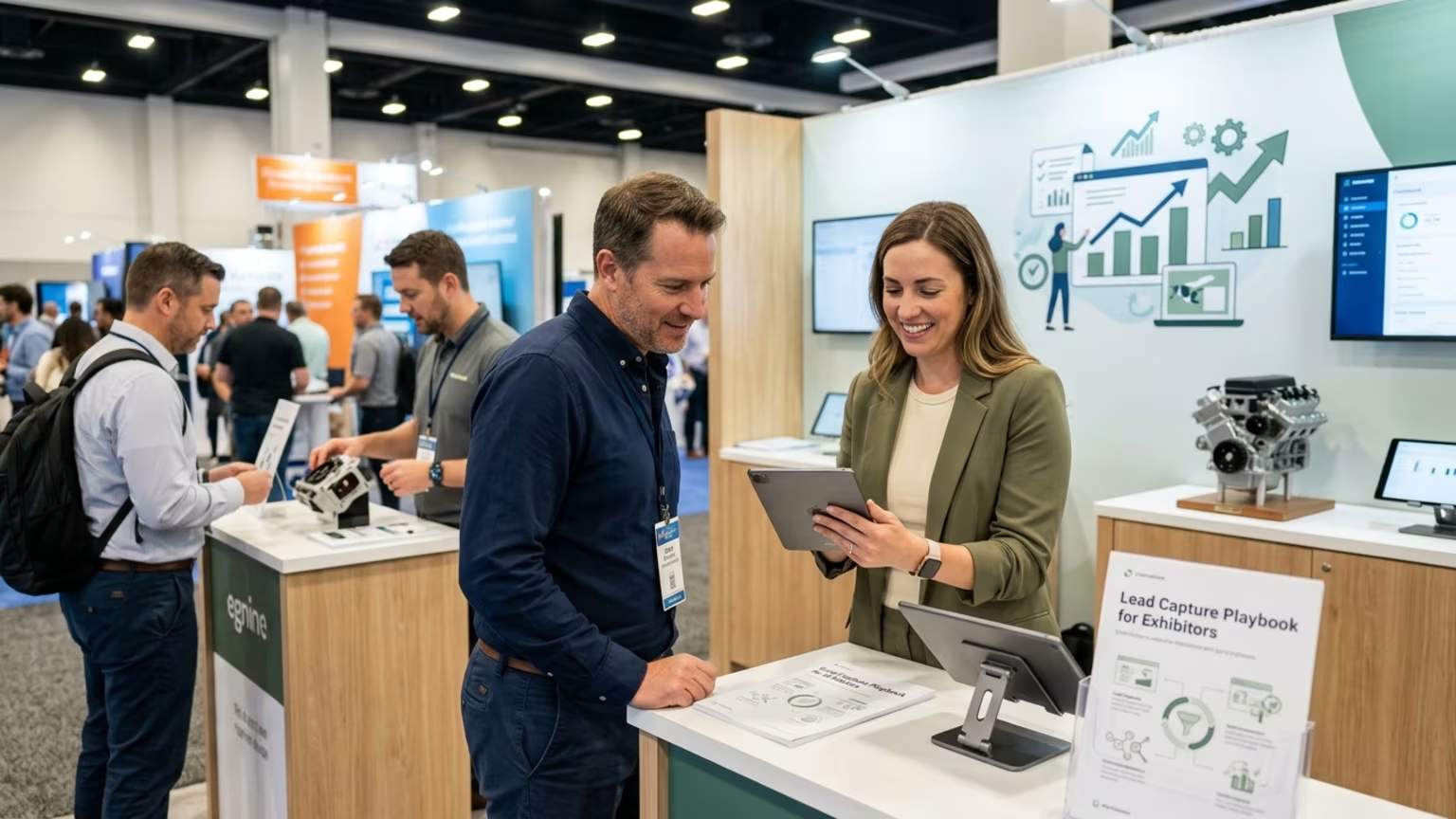
On September 15, 2026, SEMA published an official exhibitor article focused on converting booth conversations at the upcoming 2026 SEMA Show into actionable business leads. SEMA updated this guidance on September 16, 2026. The 2026 SEMA Show is scheduled for November 3 through November 6 in Las Vegas.
SEMA reported that exhibitor commitments had exceeded 1 million net square feet of indoor exhibit space. The organization also confirmed that more than 2,000 brands are preparing to participate in the event. In a massive venue with thousands of competitors, relying on accidental conversations is no longer a viable strategy. SEMA has made it clear that structured data collection is required to secure a strong return on investment.
The central focus of SEMA’s guidance is the Maritz Xpress Leads system. SEMA recommends that exhibitors use Maritz Xpress Leads to scan attendee badges and capture lead information in seconds. This digital approach is intended to replace handwritten contact notes entirely. For a busy booth, handwritten notes create avoidable friction and inconsistent data.
According to SEMA’s FAQ, buyer badges contain encoded registration information that exhibitors retrieve with a rented Maritz scanner. Booth staff can collect this information instantly. Exhibitors can collect these scanners on-site from Maritz counters located at exhibitor service desks in each exhibit hall. SEMA’s FAQ listed September 22, 2026, as the early-bird ordering deadline for lead retrieval.
SEMA’s FAQ says lead retrieval can support qualification through follow-up action codes, reduce manual data entry, and provide attendee demographic information. The system can capture encoded buyer registration information instantly. However, the system requires active staff participation to function properly. Equipment must be picked up, charged, and assigned to specific team members before the doors open.
The guidance specifically instructs teams to review captured leads at the end of each day. A daily review allows staff to organize information while the conversations are still fresh in their minds. SEMA says Xpress Leads gives sales teams a head start on post-show connections. This structural change demands a tighter workflow on the floor.
For brands in the automotive, CPG, and beverage sectors, this guidance reinforces a fundamental shift in experiential marketing. Generating large crowds and distributing samples means very little without a mechanism to track buyer intent. SEMA’s exhibitor guidance argues that a successful show program should generate business opportunities before, during, and after the event.
Booth traffic is simply the top of the funnel. A brand must convert that attention into organized information and then into follow-up activity. Investing heavily in booth design without a lead capture strategy produces brand awareness, but it fails to generate pipeline. At Makai, we view data capture as the backbone of every physical activation.
We designed and managed a 40 by 20 foot trade show environment for Glanbia at Natural Products Expo West 2025. We brought think!, Isopure, Optimum Nutrition, and Amazing Grass into one coordinated space. Our team handled the concept, operations, staffing, and breakdown for the entire footprint.
We distributed more than 14,000 recorded product samples across the activation stations. If we had relied on paper forms for that volume, the lead data would have been useless. Properly integrating trade show lead capture workflows ensures that high volume sampling translates into trackable revenue.
We provide clear reporting on reach, trials, leads, and sales to guide next steps in campaign optimization. Our measurement approach tracks awareness, engagement, and conversion. This process turns brand moments into actionable data that demonstrates business impact. SEMA is explicitly pushing exhibitors toward this exact standard.
This shift in data collection changes how marketing teams must plan their booth footprint. You cannot simply rent a scanner and expect your brand ambassadors to figure it out on site. Every single staff member needs to know the exact criteria for scanning a badge. They must understand which fields or action codes are required for different types of interactions.
Qualification must happen at the point of contact directly on the show floor. A scanned badge alone does not create a qualified opportunity. A booth team may still need to add conversation notes, specific product interest, buying timing, and budget requirements. Capturing this context separates a casual visitor from a serious buyer.
Using follow-up action codes allows the team to separate immediate sales conversations from general product inquiries. It also helps filter out media contacts or lower priority networking leads. Staff must apply these codes correctly before the attendee leaves the physical space. Because SEMA does not publish a required action code taxonomy, brands must treat their qualification definitions as an internal operating decision.
Brands that fail to enforce this discipline will end up with a massive list of unqualified names. That scenario creates significant friction for the sales department after the show concludes. Relying on centralized lead capture protocols prevents this exact bottleneck.
The daily lead review recommended by SEMA also requires a dedicated operational time slot. Teams must hold a daily lead stand-up to process the day's activity. During this review, the team can identify incomplete records, remove duplicate entries, and clarify missing notes.
They can also flag high-priority opportunities for immediate action. A short daily review ensures that critical context is not lost during staff shift changes. This prevents the common problem of team members holding onto isolated piles of contacts.
SEMA’s focus on fast post-show connections means the data routing rules must be established weeks in advance. Lead ownership, data export formats, and initial outreach messaging must be finalized before the event opens. A brand marketing team needs to answer specific procedural questions before arriving in Las Vegas.
The team must decide exactly who owns the high-priority leads. They must determine which department handles retail opportunities versus media inquiries. The team must identify what information must accompany each lead. They also need to define how outcomes will be reported back to the marketing division.
When you map these details early, the physical activation becomes a predictable engine for pipeline growth. We managed a four-week, multi-market Costco sampling program for Pulmuone's PlantSpired line. The program delivered more than 65,000 samples and recorded an 18 percent sold-to-sale rate. That campaign gave us a concrete example of how structured retail sampling can connect trial with purchase.
While a retail sampling tour operates differently than a massive convention, the core principle is identical. You must document every transaction and route that data cleanly to the right personnel. SEMA is forcing trade show exhibitors to adopt the same rigorous tracking standards used in dedicated retail roadshows.
Exhibitors who ignore this standard will spend weeks sorting spreadsheets while their competitors are already booking sales meetings. By treating the physical booth as an integrated data capture point, brands can maximize their return on investment.
Before your logistics team ships the final crate to Las Vegas for that 1 million square foot floor, you need to evaluate your internal qualification process. Ask yourself: does every person on your booth staff know exactly how to categorize a buyer using an action code, or are they still just scanning badges blindly?
Trade show coordinators managing multi regional or national campaigns face intense pressure to prove event ROI through qualified pipeline rather than just vanity metrics like badge scans. When inefficient post event follow up and CRM routing threaten your ability to close deals, Makai takes command of the physical execution. Under our Consumer Events capability, we design memorable live experiences that bring brands and people together through interaction, emotion, and engagement. Request a proposal

30 Years Experiential & Retail Activation Partner for CPG & Beverage Brands | Multi-Market Demos, Roadshows & Costco/Club Programs That Actually Sell