Robbie Thain
Founder, CEO

Learn how top CPG campaigns featured in Adweek translate creative storytelling into measurable retail sales through precise floor execution and staffing.
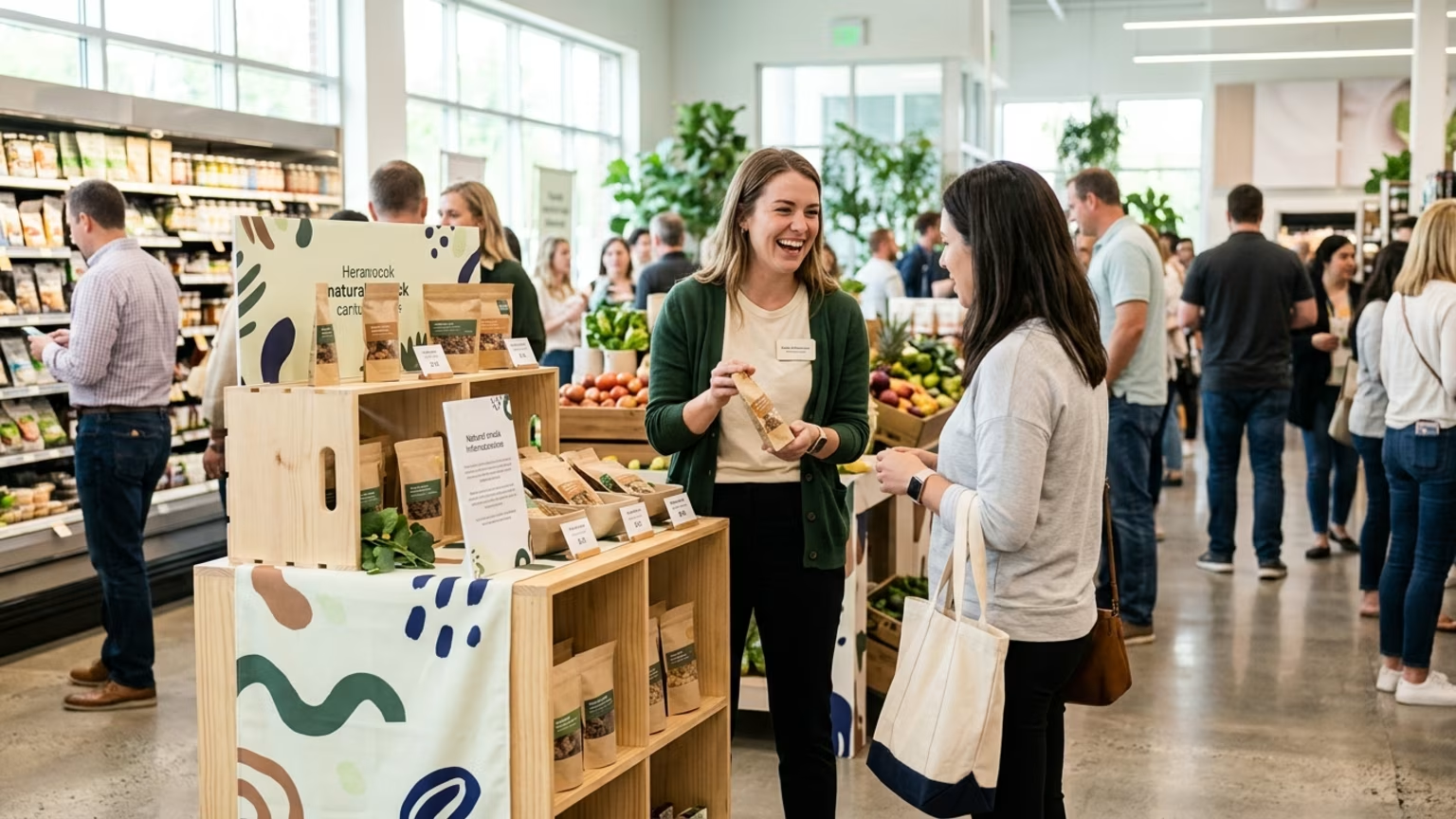
A field marketing manager stands in an empty grocery aisle before the store opens. They hold a tablet displaying a multimillion dollar commercial for a new snack. The delivery truck with the physical sampling assets is currently stuck in traffic. Real world execution is about to test the creative vision of a major national rollout.
Field marketing directors face immense pressure to prove that these physical activations actually generate sales lift. The gap between a beautifully shot commercial and a folding table in a grocery aisle is massive. Closing that gap requires a seasoned approach to event logistics and human engagement.
This operational tension was highlighted when Adweek published its July 31, 2026 Ads of the Week roundup. The publication featured 10 campaigns bridging creative concepts with consumer attention. One standout was the collaboration between Hershey's Reese's brand and Mondelez's Oreo brand. The resulting product combines Reese's peanut butter candy with Oreo's sandwich cookie format.
Hershey reported that Reese's Oreo generated more than $188 million in retail sales during its first year. Adweek reported this same sales figure while quoting a Hershey executive. The executive noted that delivering comparable retail sales in the campaign's second year is the primary objective. Achieving that commercial goal requires turning massive advertising awareness into physical product trial.
Brands must answer a core query to succeed on the ground. How do marketing teams take a high profile creative idea and execute it seamlessly on the retail floor? Connecting above the line storytelling with retail touchpoints requires flawless operational discipline. The most brilliant advertising campaign means nothing if the in store experience falls apart.
Brands often use bold entertainment concepts to capture attention in crowded markets. The Adweek roundup featured several distinct examples of this highly visible creative strategy. The publication highlighted an absurdist courtroom drama for BMW and a period drama parody for DoorDash. When consumer packaged goods companies attempt similar activations at retail locations, planning space becomes a critical hurdle.
Translating broad media concepts into multichannel experiences requires securing physical real estate early. Retailers demand strict adherence to footprint constraints and local fire codes before approving any live event. Field marketing teams must negotiate floor placement weeks before the scheduled launch date. Without proper permits, even the most innovative physical display will be turned away at the loading dock.
Advanced logistical preparation prevents these costly launch day delays. Managers should create an exhaustive site prep checklist for every targeted store location across the country. This checklist must detail the exact electrical requirements and footprint dimensions for all promotional assets. Proactive communication with store managers ensures that the execution matches the initial creative blueprint exactly.
Site surveys are another mandatory step in the pre production phase. Teams must measure aisle widths and verify loading dock hours to avoid logistical bottlenecks. Identifying potential obstacles early allows operators to modify the physical footprint before fabrication begins. This detailed approach keeps the experiential activation aligned with retailer expectations and safety regulations.
Store managers prioritize their daily sales targets over your promotional event. Gaining their support requires presenting a flawless operational package that minimizes disruption to their aisles. Providing them with a clean execution timeline and guaranteed cleanup procedures builds immediate trust. A cooperative retail partner will often direct more foot traffic toward your sampling footprint.
Creative advertising relies on recognizable talent to make a memorable impact on consumers. Reese's Oreo is currently being promoted around its first anniversary with a campaign starring Lindsay Lohan and Amy Sedaris. The commercial was directed by Patricia Arquette and places Lohan in a fictional Twin Retreat. In the spot, she helps twins resolve their differences as a reference to her dual role in the 1998 film The Parent Trap.
While celebrity partnerships drive massive awareness, local execution relies entirely on everyday brand ambassadors. makai approaches this critical transition through a deeply human centric aloha methodology. We believe that trained staff must translate the warmth of a digital campaign into genuine conversations. A friendly smile and a confident product recommendation will ultimately persuade a shopper to make a purchase.
Our training programs focus on empathy and active listening over rigid sales scripts. Brand ambassadors learn to read body language and adapt their approach for every individual shopper. This authentic interaction builds trust and naturally guides the consumer toward the sampling station. Human connection turns a standard grocery run into a memorable moment of product trial.
Our team has navigated these exact dynamics for decades across national product launches. We understand that a consumer packaged goods brand lives and dies by its retail sell through rate. Deploying enthusiastic talent who understand the nuances of food and beverage sampling creates a distinct competitive advantage. The focus remains on turning a brief sensory experience into a permanent change in buying behavior.
This focus on rigorous training directly supports scaling live experiences across multiple regions. A Director of Brand Strategy in the CPG snack division shared: 'The Makai team turned our product launch into a sensory event that shoppers still talk about. From creative storytelling to flawless in-store execution, they made snack time unforgettable. We couldn't have asked for a stronger partner.'
Our team created an in-store experience that left a lasting impression on consumers and became a memorable brand moment.
Securing attention is merely the first phase of any effective physical activation. The Adweek roundup showcased On's Race for the Feeling campaign featuring Boston Marathon winner Hellen Obiri. It also highlighted Yahoo work featuring Summer House star Kyle Cooke. High profile campaigns generate foot traffic, but operators must capture that momentum digitally to sustain growth.
Moving a consumer from a physical handshake to a secure database entry requires integrated technology. Field teams equip their brand ambassadors with tablets to scan unique barcodes during sampling events. These digital touchpoints instantly route customer information directly into the corporate system for future follow up. This seamless data collection allows brands to accurately measure Return on Investment for their retail initiatives.
Companies must build a clear operational bridge between the physical interaction and the digital record. Providing incentives like exclusive digital coupons encourages shoppers to share their contact information on the floor. This structured approach helps brands prove ROI in-store by tracking post event purchase behavior. Clean data routing transforms a fleeting grocery aisle conversation into long term brand loyalty.
The technology stack must remain invisible to the actual consumer during the interaction. Lengthy digital forms will cause shoppers to abandon the engagement before submitting their information. Streamlined data capture tools keep the conversation flowing naturally while silently building the backend sales pipeline. Every qualified interaction on the floor becomes a measurable asset for the marketing department.
Marketing executives are tired of reviewing event reports that only highlight vanity metrics like total impressions. They need to see clear evidence that a physical interaction led to a verifiable retail transaction. Connecting localized activation data with broader point of sale trends creates a compelling narrative for the executive team. This rigorous approach to measurement justifies future investments in physical experiential marketing.
Operational failures will inevitably happen regardless of how much budget a company spends on creative development. The Adweek piece noted an Instacart micro series starring Antoni Porowski and a limited edition La-Z-Boy recliner created with a fashion designer. Complex collaborations like these often require intricate physical displays that can easily break in a retail setting. The true test of a field general is how quickly they implement their contingency plan.
Every deployment requires a documented backup strategy for the worst case scenarios imaginable. If a brand ambassador misses a crucial shift, a regional backup pool must be activated immediately. When internet connectivity fails inside a concrete warehouse store, staff must possess offline data capture tools. These offline records can then be manually synchronized with the primary database once a stable connection is restored.
Experiential operators know that adapting to real time challenges protects the overarching brand image. A broken interactive display should be quickly replaced with high quality static signage and increased personal engagement. Proactive troubleshooting ensures that the consumer never notices the logistical friction happening behind the scenes. This level of operational discipline keeps the campaign focused on driving trial and conversion.
Weather disruptions represent another common threat to physical brand activations. Outdoor sampling vehicles or parking lot displays must have immediate indoor relocation plans pre approved by the retailer. Cross training brand ambassadors on multiple roles ensures the activation continues smoothly even if the team size is unexpectedly reduced. Anticipating these friction points allows the team to pivot without losing sales momentum.
Inventory routing is another critical component of a resilient contingency plan. A wildly successful retail demonstration can deplete on site product inventory faster than initially projected. Field managers must establish rapid replenishment protocols with local distributors to prevent the sampling station from running empty. An empty display table instantly breaks the consumer illusion and halts the sales pipeline entirely.
Marketing leaders must ensure their high level creative concepts can survive the harsh realities of physical retail execution. The most brilliant advertising narrative will falter if the required floor space is not properly permitted. Operational logistics must be addressed during the initial creative briefing rather than treated as an afterthought.
Start by outlining the exact consumer behavior your upcoming campaign needs to change. Determine whether the primary goal is driving immediate product trial or generating repeat purchases. Build the retail bridge directly into the core creative idea.
Your immediate next step should be auditing your internal field deployment capabilities. Review your upcoming retail collaborations to verify that your data capture methods align with local store connectivity constraints. Keep the aloha spirit alive on the floor, and keep the data flowing seamlessly to the pipeline.

30 Years Experiential & Retail Activation Partner for CPG & Beverage Brands | Multi-Market Demos, Roadshows & Costco/Club Programs That Actually Sell