Robbie Thain
Founder, CEO

Consumers are actively assembling value across multiple retail channels. Learn why CPG brands must clearly define their value proposition before the aisle.
On September 22, 2026, NielsenIQ executive Nicole Collida presented new findings at the Groceryshop conference detailing how consumers now assemble value. Food Business News reported on September 25 that shoppers are no longer relying on a single deal-seeking tactic. Instead, they combine multiple strategies across different retail channels to control their grocery spending.
The data presented at Groceryshop highlights a structural shift in how shoppers approach the physical store. According to NIQ figures cited by Food Business News, consumers are actively moving between channels to piece together value. Collida noted that 39% of shoppers reported switching to lower-priced brands. Simultaneously, 34% of consumers are shopping more frequently at discount or value retailers.
Shoppers are also changing how they buy specific categories. The data shows 32% of consumers are buying more private label products. Another 32% are intentionally stocking up when their preferred items go on sale. These figures show that a simple price cut is no longer enough to win the modern shopping cart.
Channel growth figures further prove this operational shift. Over the past year, the club channel grew by 9%. During that same period, traditional grocery remained completely flat. This club channel growth occurred even though promotions accounted for just 11% of club sales.
By contrast, promotions drove more than 20% of sales in other retail channels. Consumer store visits are also trending toward larger formats. Trips per shopper have risen at club and mass retailers over the past three years. Conversely, those same metrics declined at traditional grocery and dollar stores.
Collida characterized club advantages like bulk economics and stock-up occasions as factors that make value propositions obvious to shoppers. She emphasized that promotions need to deliver value exactly as consumers define it. Her point was not that consumers have stopped spending money altogether. Instead, she noted that NIQ sees consumers concentrating their spending on items that matter most to their families.
For CPG marketers, this consumer data demands a fundamental operational reset. Collida stated that brands should define their value proposition before shoppers enter the store. We agree completely. When consumers meticulously build their own value equations across channels, brands cannot rely on passive endcaps to change their minds.
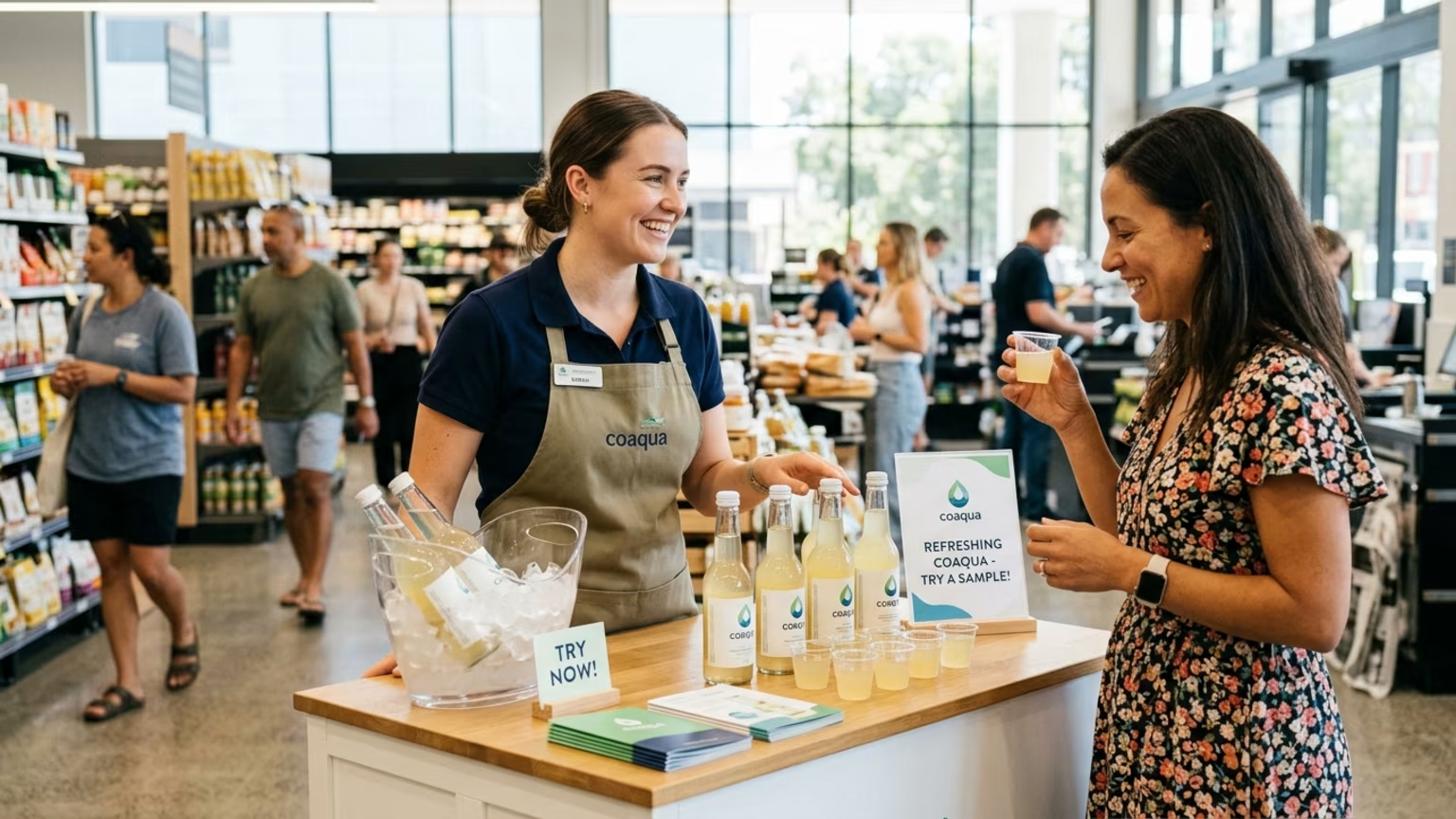
Our team specializes in creating retail demos, product sampling programs, and roadshows that bring brands face to face with their audiences. Each program is designed to drive trial, build consumer relationships, and accelerate retail velocity across multiple locations. We know that handing out a free sample without connecting it to a specific benefit is just a wasted operational expense. A blind price promotion might capture a fleeting moment, but it fails to communicate long-term product worth.
Experiential marketing must translate a product's price into a physical and measurable interaction. If consumers are spending more time calculating value, field activations must give them the exact context they need. We design mobile activations and roadshows that accelerate consumer trial, build trust, and boost retail velocity during 90-day product launch windows. Our structured approach transforms initial product trial into sustained consumer confidence and measurable retail performance.
This structured execution gives shoppers a clear reason to choose the product before they reach the shelf. It also prevents brands from relying on heavy discounts just to move initial inventory. A Director of Brand Strategy in the CPG snack division shared: 'The Makai team turned our product launch into a sensory event that shoppers still talk about. From creative storytelling to flawless in-store execution, they made snack time unforgettable. We couldn't have asked for a stronger partner.' Our team created an in-store experience that left a lasting impression on consumers and became a memorable brand moment.
Our approach is built entirely on measurable business outcomes. We store your sampling product and event gear, then ship, track, and coordinate delivery nationwide so every activation stays on schedule. This logistical control ensures that your value proposition is always delivered precisely when and where foot traffic peaks. A brilliant marketing message is useless if the physical booth setup arrives late or the sampling inventory runs out.
This shift in consumer behavior drastically changes how field teams must plan and execute retail activations. Food Business News reported that NIQ’s 2027 outlook found consumers intend to spend more on fresh produce next year. That same study indicated shoppers will spend about the same on fresh meat and less on in-store prepared foods. Therefore, a single marketing message will fail if it does not adapt to the specific category.
The specific value drivers also vary wildly depending on the product being sampled. Food Business News reported that the 2026 IFIC survey put convenience at 61% and healthfulness at 56% among factors shaping food decisions. A premium frozen meal brand must therefore train its field staff to highlight speed and ease of preparation first. Conversely, a natural beverage brand should instruct its ambassadors to lead conversations with ingredient quality and health benefits.
Field staffing models must evolve from simple sample distribution into active value communication. Brand ambassadors require deeper training to explain product benefits and use occasions clearly. They must communicate relative worth compared to the private label alternatives that 32% of shoppers are now buying. If your field staff cannot articulate why your item justifies its price tag, the activation will not generate sales.
For regional retail programs, execution must become highly localized and physically relevant. Collida recommended that smaller and regional retailers lean into advantages such as local sourcing and fresh assortment. A brand activation at those specific locations must visually and operationally support that local positioning. This requires rigorous coordination to ensure the right assets arrive at the right regional stores on time.
The shift toward deliberate value assembly also impacts inventory planning for field events. If 32% of consumers are waiting to stock up when preferred items are on sale, inventory levels must support sudden volume spikes. Field marketing directors cannot afford to run out of product during a peak retail demonstration. A stockout during a live activation instantly ruins the consumer trust you just paid to build.
Logistics and permitting also become much more demanding when targeting high growth formats. If club channels are winning foot traffic and seeing 9% growth, brands must shift their physical footprint toward bulk environments. You need dedicated coordination to secure club permits and manage heavy pallet shipments. Marketing teams that connect experiential marketing to shopper strategy will capture the consumers who are actively assembling value in these large formats.
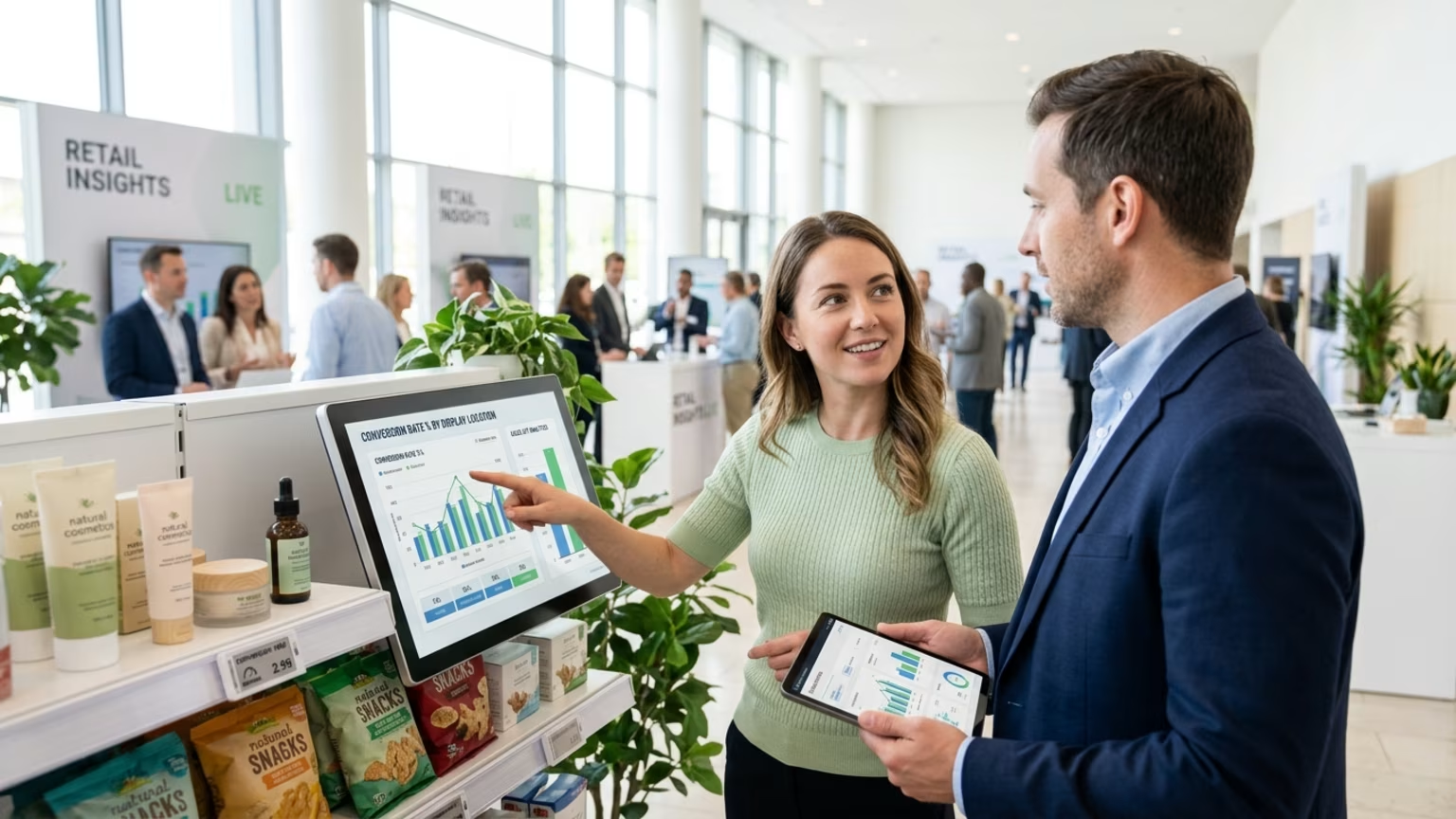
Measuring success also requires a new operational standard for field marketing leaders. The news coverage supplies shopper channel figures but no demonstration specific conversion or sales lift results. Field teams must therefore build their own reporting frameworks to prove that their activations actually drive purchases. Brands need a field measurement framework that proves event pipeline value rather than simply counting the number of samples handed out.
When consumers spend days assembling value online and across channels, the in-store experience must validate their research. Brands that recognize how shoppers complete CPG purchases within 24 hours of need identification will prioritize immediate physical availability. Your physical footprint must deliver absolute clarity on why your product is worth their money. Brands that learn to match retail sampling locations with shopper intent will consistently outperform competitors who rely on passive displays.
If your target consumers are actively assembling their own value across multiple retail channels, does your current experiential marketing strategy clearly justify your product's price before the shopper reaches the aisle?
When brands fail to define their value proposition in crowded retail environments, they generate low quality leads from crowded trade shows and store aisles rather than actual buyers. Makai builds structured physical activations that actively prove your product's worth at the exact point of decision. Using our Costco Roadshows capability, we manage end to end Costco roadshows that bring brands to shoppers through live demos, real conversations, and measurable sales impact.

30 Years Experiential & Retail Activation Partner for CPG & Beverage Brands | Multi-Market Demos, Roadshows & Costco/Club Programs That Actually Sell