Robbie Thain
Founder, CEO

Coty exited its Gucci license early for $400M. See why this transition forces a major operational shift toward owned-brand retail and physical marketing.
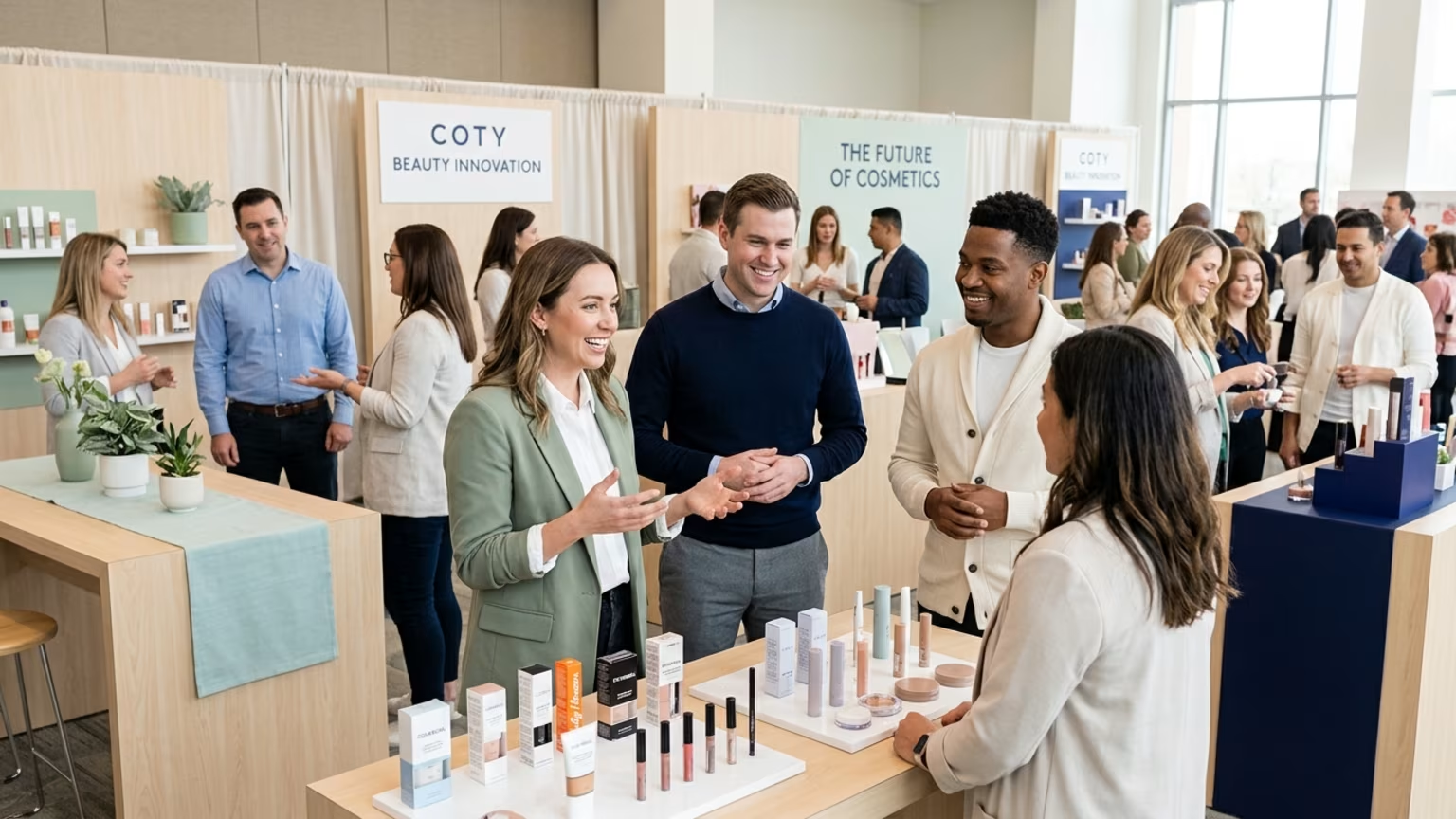
On July 20, 2026, Coty announced a landmark agreement with Kering to exit its flagship Gucci Beauty license early. This strategic handover represents a massive shift in the beauty portfolio of the company. The transition will officially take place on June 30, 2027. This timeline is exactly one year ahead of the original 2028 expiration date.
The agreement immediately alters the revenue pipeline for the organization. Coty will receive a total of $400 million for the early handover of the license. This creates a quick cash influx but removes a brand that naturally generated massive consumer attention. Since 2019, the beauty giant successfully grew the Gucci Beauty license revenue by 60%.
Losing a performer with that kind of historical growth forces a complete rethink of how the company generates foot traffic. The initial announcement sent a clear signal to the physical marketing sector. When a primary revenue driver exits the building, the remaining products must work twice as hard to attract buyers. The early exit accelerates a timeline that the company had been preparing for behind the scenes. This forces their operations teams to deploy experiential resources at a much faster rate.
The financial structure of this handover prioritizes immediate liquidity over long term licensing revenue. Coty secures $250 million upfront as part of the deal. The remaining $150 million will be paid by September 30, 2027. The company plans to use these funds to reduce its net debt.
That net debt currently stands at approximately $2.9 billion. However, this liquidity comes with a severe penalty to ongoing operating profits. Barclays analyst Lauren Lieberman estimates the exit will cost Coty roughly $115 million in annual adjusted EBITDA. That figure represents approximately 15% of the total profit base for the company.
Kering is moving quickly to secure the future of the brand under a different operational umbrella. The luxury group has already signed a new 50-year exclusive license with L'Oréal. This long-term commitment stands in stark contrast to the early termination managed by Coty. Industry reports indicate L'Oréal is covering roughly 70% of the transition costs for this handover.
Coty interim CEO Markus Strobel now faces the reality of filling this massive revenue gap. Strobel is a Procter & Gamble veteran who took over the leadership role in January 2026. He replaced former boss Sue Nabi during a period of high volatility. His mandate is now heavily tied to the performance of the remaining product lines.
At makai, we view this transition as a masterclass in the dangers of relying on borrowed brand equity. A flagship luxury label acts as a natural magnet for retail foot traffic. It pulls consumers into department stores and demands premium placement at trade shows. It achieves this without requiring intense localized promotional spend.
When that gravitational pull disappears, the real work of physical marketing begins. Brands must suddenly prove their worth through targeted experiential activations and aggressive sampling tours. Without the Gucci name, Coty must prioritize its owned assets and newly signed licenses from 2024. These newer additions include Swarovski, Etro, and Marni.
Getting consumers to care about a Marni fragrance requires a fundamentally different field strategy than selling a known commodity. You have to put the product directly into the hands of the shopper. This is where connecting live events to retail sell-through becomes the highest priority for a marketing team. Relying on passive shelf presence will fail.
Operating without a massive name brand umbrella forces a reckoning within the marketing department. Retail buyers at major cosmetic chains base their purchasing decisions on proven demand. When you remove a guaranteed seller from your pitch deck, you have to replace it with a rock-solid activation strategy. Our team has learned that promising digital impressions will never secure premium shelf space for an untested product.
The company is also intensifying its focus on legacy owned brands. This includes a major relaunch of Marc Jacobs makeup and a strategic repositioning of CoverGirl. The research notes that the company wants to target wealthier Gen X consumers with the CoverGirl repositioning. You cannot convince a wealthier demographic to change their established cosmetic habits through digital ads alone.
These specific consumers need to feel the textures and see the pigments in person. This demographic shift requires a relentless focus on high-conversion physical activations. The field execution must match the elevated expectations of a premium buyer. Companies that shift investment to live activations build resilient product lines that do not vanish.
Removing a powerhouse brand from a physical marketing lineup creates immediate shockwaves for field teams. Trade show footprints that once relied on a famous logo to drive booth flow must be completely redesigned. Field marketing managers can no longer expect organic crowds to form out of sheer curiosity. They must deploy highly trained brand ambassadors who know how to intercept and educate attendees.
Every square foot of an activation space must be optimized for active product education. The operational burden shifts heavily toward securing premier retail placement and executing flawless sampling campaigns. Introducing lines like Etro or repositioning CoverGirl requires massive coordination across multiple retail environments. Event producers must secure new venue permits and manage complex logistics to hit target demographics.
Storage and logistics become major pain points as new promotional materials replace outdated collateral across the country. There is no room for delayed shipments or missing display units when you are trying to replace 15% of your profit base. Staffing requirements also change drastically when you lose an easily recognizable brand. Ambassadors representing a newly launched prestige fragrance need deep product knowledge.
They must act as educators who can articulate the specific notes and brand story to hesitant buyers. This means field teams must overhaul their training protocols to ensure consistent messaging. Brands that want to deliver their product straight to their audience need staff who can turn a passing glance into a meaningful conversation. The staff must be disciplined operators who understand sales metrics.
Data collection and lead routing at these events will dictate the success of the new portfolio. Without Gucci masking the performance gaps, every single interaction must be measured and tied to a concrete Return on Investment. Regional managers will need to track exactly how many samples convert to retail purchases. Using modern analytics for live brand experiences ensures that field spending actually moves the needle on gross revenue.
Furthermore, we know that branded products beat private label alternatives when they dominate the physical retail environment. Sampling programs must be precise, consistent, and tracked against specific sales goals. The operations team is fully responsible for keeping the brand alive in the minds of shoppers.
The financial markets have already reacted aggressively to the shifting dynamics at the beauty giant. The share price for Coty has seen a significant decline of approximately 80% since early 2024. This massive drop in valuation puts intense pressure on interim CEO Markus Strobel to execute a flawless turnaround. He must prove that the company can survive and thrive without its most reliable revenue engine.
The timing of the transition leaves very little room for operational errors. Barclays analyst Lauren Lieberman noted that handing back this prestigious license means fiscal year 2028 will be rough. The gap between the $250 million upfront payment and the realization of new brand revenue creates a highly volatile window. Field marketing teams will bear the brunt of this pressure as they are tasked with generating immediate retail momentum.
While L'Oréal covering 70% of the transition costs helps the balance sheet, it does not solve the consumer attention deficit. The true cost of losing a flagship license is measured in the lost conversations at the beauty counter. Rebuilding that trust requires a level of operational discipline that many brands struggle to maintain. The coming years will serve as a stark test of whether the field execution capabilities at Coty match their financial engineering.
When you observe these large corporate maneuvers, the real battle is always fought on the ground. A corporate strategy document cannot force a shopper to pick up a new bottle of fragrance. That action requires a perfectly timed live interaction. The leadership team at Coty will succeed only if their operators deliver flawless physical marketing campaigns.
If your most recognizable flagship product disappeared tomorrow, would your field execution engine be strong enough to make consumers care about the rest of your portfolio?

30 Years Experiential & Retail Activation Partner for CPG & Beverage Brands | Multi-Market Demos, Roadshows & Costco/Club Programs That Actually Sell