Robbie Thain
Founder, CEO

Consumer spending on physical experiences surged 65%. Learn why marketing leaders are shifting budgets to live activations to drive measurable ROI and sales.
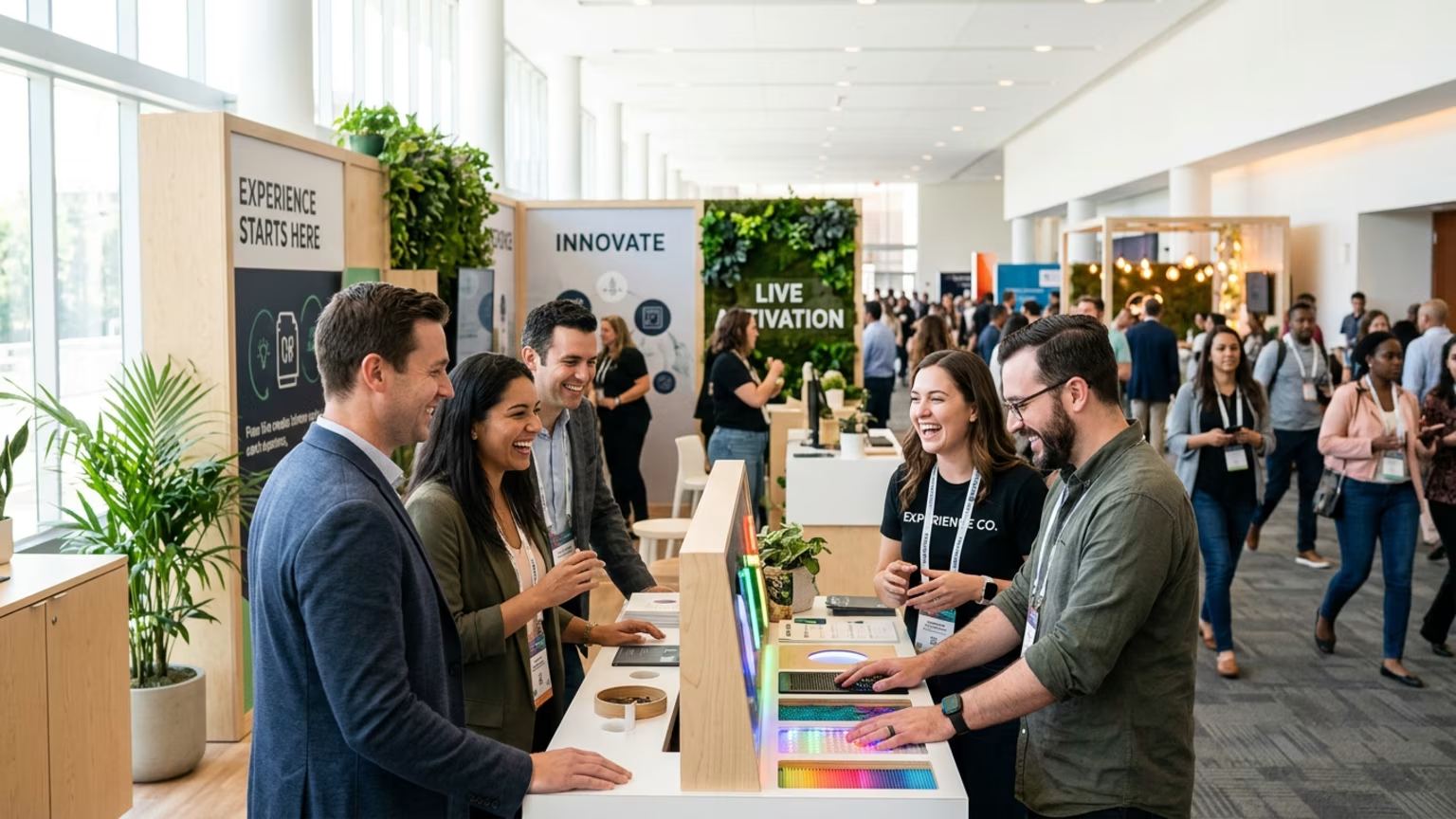
Consumer spending on physical experiences surged by 65 percent between 2019 and 2023. This massive shift proves that buyers now crave tangible interaction over digital noise. Marketing leaders must treat live events as primary sales engines rather than optional brand theater.
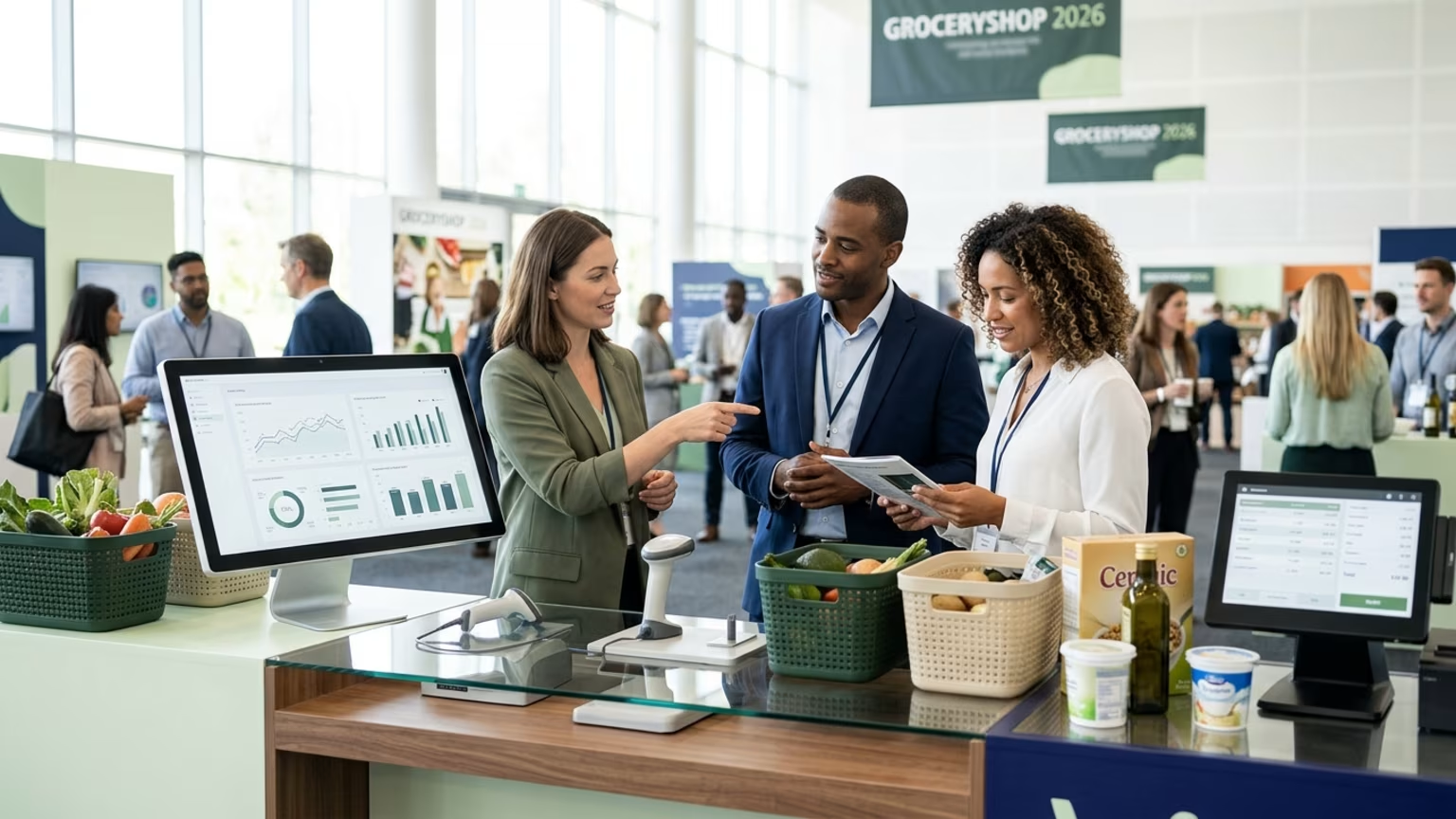
You walk into a major industry expo and the noise hits you instantly. Every company has a flashy booth, glowing screens, and teams handing out cheap promotional items. Behind the scenes, field marketing managers are desperately tracking down missing pallets of sample product. Temporary staff members are staring at their phones instead of engaging with qualified retail buyers.
This chaotic scene plays out every week across the country. Brands spend a massive portion of their budgets on trade shows and pop-up events. The operations often feel like an expensive gamble rather than a precise sales machine. Leaders hope the sheer volume of foot traffic will somehow translate into retail momentum.
Hope is never a reliable business strategy for a marketing team. Live activations cost three to five times more per engagement than digital advertising. When you invest that level of capital, a high failure rate from poor execution is entirely unacceptable. The physical presence looks incredibly busy to an outside observer.
Without a disciplined operational model, field marketing becomes a black hole for your capital. You collect hundreds of low quality badge scans that never convert into actual pipeline. Behind the curtain, the brand is failing to capture any real Return on Investment (ROI).
Moving from this unpredictable chaos to a measurable sales engine requires a structural planning shift. The global experience economy is projected to reach $2.1 trillion by 2032. International visitor spending alone will hit $2.1 trillion in 2025, heavily fueling brand activations across tourism sectors. The global hotel market is expected to reach $1.21 trillion by 2025, creating massive opportunities for branded experiential pop-ups.
We have been connecting brands with people through live experiences, retail programs, and national activations since 1995. Over three decades, we have built a track record of creating meaningful brand moments across the country. We know that the best operators build a framework around targeted trial, seamless logistics, and immediate data capture. They treat the event space exactly like a high performing retail environment.
The data supports this aggressive shift toward physical activation strategy. Research shows 78 percent of millennials now prioritize experiences over material goods. Marketing executives are catching on to this massive shift in consumer behavior. A recent report notes that 88 percent of marketing leaders now identify events as key revenue drivers.
You must align your activation with the actual buying behavior of your target consumer. Digital ads are easily ignored, blocked, or skipped entirely. Live interactions force a genuine reaction and build instant product credibility. By building the data-driven business case for roadshow investments, you protect your marketing budget from executive cuts.
Leading companies are actively reallocating 25 percent of their marketing budgets to live events. They recognize that experiential activations deliver three and a half times higher engagement than standard digital ads. You cannot capture that growth with fragmented execution and weak booth training. You need a centralized framework that connects physical engagements directly to your bottom line.
Execution is where good ideas survive or die on the trade show floor. You need a strict operating procedure to turn a busy event space into a high converting asset. Follow these steps to standardize your field marketing efforts and eliminate guesswork.
Executives do not care about foot traffic or social media impressions. They want to know if the activation actually drove product sales and improved market position. You must track both lead metrics and lag metrics to prove the value of your field marketing. This creates total visibility and financial accountability for the entire leadership team.
Lead metrics tell you if the event is functioning correctly in real time. Track the exact number of qualified samples distributed per hour by your brand ambassadors. Monitor the percentage of booth visitors who complete a full product demonstration. Elite brands consistently aim for a 22 percent trial rate during major retail expos.
Lag metrics prove the long term financial impact of your physical presence. Measure the percentage of event leads that convert into closed wholesale orders within ninety days. Track the localized retail sell-through bump in the specific region where the activation occurred. Industry data shows field activations can boost retail sell-through by 15 to 20 percent.
Tracking these specific numbers helps you justify future event spending to your board. Studies show 94 percent of marketing teams using event-led strategies report consistent revenue uplift. You want to understand exactly how CPG brands turn live event growth into retail sales. Hard sales data is the only language that the finance department truly respects.
Consider the launch of a new premium sparkling beverage brand entering a crowded regional market. Digital advertising alone could not convince buyers to switch from their established legacy favorites. The brand needed physical proof to win over skeptical consumers and cautious retail buyers. They decided to launch a highly targeted sampling tour across three major summer festivals.
The execution relied on absolute precision rather than broad, unfocused scale. The team deployed trained ambassadors to intercept festival attendees with ice cold samples during peak afternoon heat. They tracked every sample distributed and offered a direct digital coupon for local grocery purchases. The activation footprint was simple, clean, and entirely focused on the product taste profile.
The results provided clear evidence for the brand leadership team. The localized activation drove a massive 27 percent spike in retail scan data over the following four weeks. Grocery managers noticed the rapid depletion of stock and quickly expanded the brand shelf space. The physical trial created an immediate consumer demand that digital ads could never match.
The brand used these localized wins to secure a much larger national distribution deal. They proved their product could move off the shelf when supported by the right field marketing. If you want to replicate this level of structured success, you should book a strategy call with our team. We can help you build an operational model that converts real interactions into measurable revenue.
Let us return to that loud, chaotic expo floor from the beginning. Instead of missing inventory and distracted staff, envision a highly tuned operational machine. Your team is engaging the right buyers, tracking every interaction, and delivering perfect product trials. The noise of the event fades away when you have a proven system running your physical activations.

30 Years Experiential & Retail Activation Partner for CPG & Beverage Brands | Multi-Market Demos, Roadshows & Costco/Club Programs That Actually Sell