Robbie Thain
Founder, CEO

Canadian shoppers are boycotting U.S. goods, forcing grocers to rethink assortments. Learn how retail demos can defend your shelf space and drive trial.

On August 21, the collapse of trade negotiations between the United States and Canada triggered new tariffs and retaliatory measures. This immediately altered how Canadian shoppers evaluate products at the grocery store. A consumer push to buy Canadian products and avoid American goods is actively reshaping supermarket assortments across the country. Grocers are increasing their attention to country of origin labeling and actively seeking alternative supply chains.
Loblaw is described in the report as Canada's largest food seller. The retailer restored prominent maple leaf signage in its produce and fresh food areas in August. According to IndexBox, the retailer also reintroduced a "T" label to indicate products affected by tariffs. This labeling helps shoppers quickly identify Canadian alternatives on the shelf.
Metro, Canada's third largest grocery chain, announced its own response to the market shift. The company stated it will continue prioritizing domestic Canadian products under the present circumstances. Independent retailers are also making drastic sourcing adjustments to appease local consumers. Vinces Market operates four stores in the Greater Toronto Area.
The chain shifted its strawberry sourcing from the United States to Quebec. This decision occurred after the store received angry messages about carrying American produce. The company now sources roughly 90 percent of its produce from Canada. These sourcing changes have increased operating pressure at Vinces Market, leading the retailer to reduce advertising spending.
These local retailer decisions are already showing up in national trade data. Government figures cited by IndexBox show the United States share of Canada's vegetable imports fell to 62.6 percent in July. This is a notable drop from 69 percent in July 2023. The shift carries massive financial implications because Canada is the world's fifth largest importer of fresh vegetables by value.
However, the United States still supplied more than half of Canada's fruit imports as of July. This environment creates a severe structural threat for United States brands relying on standard retail distribution. When retailers balance product quality, price, and country of origin, passive displays fail to convert skeptical shoppers. U.S. brands can no longer rely on simple endcaps to drive retail sell through.
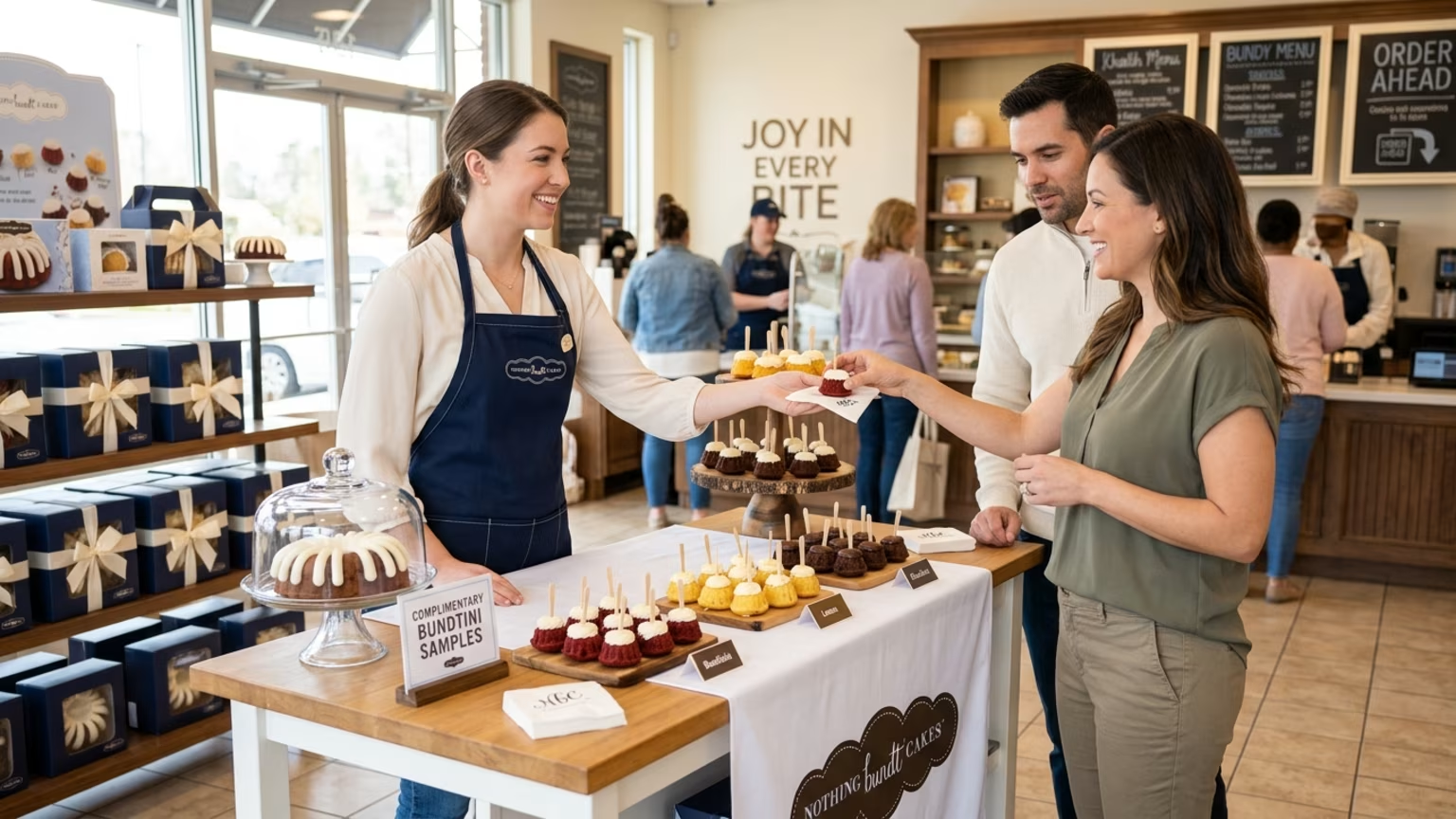
You must put trained personnel in the aisle to defend your value proposition directly. We specialize in creating retail demos, product sampling programs, and roadshows that bring brands face to face with their audiences. Each program is designed to drive trial, build consumer relationships, and accelerate retail velocity across multiple locations. We deliver carefully executed, face to face marketing experiences designed to capture attention and generate measurable sales pipeline.
In a hostile retail climate, your physical marketing must be precise, disciplined, and focused entirely on verifiable product value. A generic sample handed out without context will not overcome a tariff label. Shoppers are highly aware of where their money is going right now. Your field teams must clearly explain the tangible benefits of the product, such as taste, performance, or price per use.
The grocery industry is finding that replacing imported items is not a simple task for every category. The produce department provides a clear example of how substitution works in real time. Fresh produce can sometimes be sourced domestically or seasonally to appease local shoppers. Vinces Market demonstrated this by easily moving its strawberry supply from United States growers to Quebec farms.
However, finding immediate Canadian substitutes is far more difficult for complex consumer packaged goods. Government figures confirm that Canada still relies heavily on the United States for fresh produce. Even with the current boycott, more than half of Canada's fruit imports still originated in the United States as of July. This proves that consumer preference cannot simply erase the practical role of established supply chains overnight.
These sourcing changes have increased operating pressure for independent grocers across the country. Vinces Market was forced to reduce its advertising spending due to the financial strain of shifting suppliers. Retailers are actively seeking alternative supply chains to satisfy shoppers while maintaining profitable margins. For United States brands, this operating pressure means store buyers will be highly critical of underperforming products.
If your brand remains on the shelf, you must prove your ongoing value to the store manager. You cannot rely on historical sales data when the store is facing angry consumer messages. You must deploy physical field teams to generate immediate trial and protect your retail presence. We provide clear reporting on reach, trials, leads, and sales to guide next steps in campaign optimization.
Brands must overhaul their training materials before their next Canadian activation. Brand ambassadors need absolute clarity on how to answer questions about origin. They must know the exact location where key ingredients are sourced. They must also know whether the item is currently affected by tariffs.
Staff should never improvise political arguments on the retail floor. They must rely on retailer approved language that highlights product quality and utility. If a shopper asks a difficult question, the ambassador must respond with factual clarity. The goal is to focus the conversation back on the immediate value of the product being sampled.
Field marketing managers must coordinate with store directors well before the event begins. Retailer signage and assortment decisions are changing weekly. Brands must confirm their shelf adjacency and verify tariff label conventions before setting up a booth. You need to know if the retailer expects your demo positioned near domestic alternatives.
By checking these details, you coordinate field teams with retailers and partners effectively. This clear alignment prevents costly delays on execution day. Store managers will not tolerate logistical confusion during a period of high consumer scrutiny. Your field marketing operations must respect the retailer's current merchandising strategy.
Physical product sampling provides a rare opportunity to gather direct consumer feedback. Shoppers are actively voicing concerns about American products in grocery aisles. Experiential teams should log these interactions and categorize objections by region. This data is highly valuable for sales teams back at headquarters.
Measuring in store demos against digital media requires tracking real world conversations. It is not just about counting the number of samples distributed. You must document what shoppers are saying about your brand origin. This qualitative data helps marketing leaders adjust their broader Canadian strategy.
Retailers are actively replacing some United States sources with Canadian ones. Field teams must build robust contingency plans to account for this reality. A sudden change in store policy might leave your brand with out of stocks. Planners must account for relocated displays, altered planograms, and substitute items.
To build experiences that improve retail sell through, teams need the flexibility to pivot quickly. If a retailer moves your product to accommodate a local brand, your field team must adjust. You cannot execute a successful demo if your product is buried at the back of the store. Field managers must adapt to the physical realities of the current grocery floor.
Brands must measure their activation against actual business risk without making assumptions. Our measurement approach tracks awareness, engagement, and conversion, turning brand moments into actionable data that demonstrates business impact. Experiential programs cannot rely on assumptions when facing a consumer boycott. You must track execution quality, qualified interactions, and origin related questions alongside sales data.
A positive product experience helps a shopper evaluate physical quality. It cannot substitute for transparent sourcing or consistent retail availability. We managed a four-week, multi-market Costco sampling program for Pulmuone's PlantSpired line. The program delivered more than 65,000 samples and recorded an 18 percent sold-to-sale rate, giving us a concrete example of how structured retail sampling can connect trial with purchase.
You must deploy this exact level of structure to offset market friction. A demo is a tactical operational tool, not a public relations fix. It exists to drive measurable retail pipeline at the point of decision. Teams must recognize the limits of physical marketing while maximizing its strengths.
The severity of this operational shift is well documented by local retail leaders. Gary Sands, senior vice president of public policy and advocacy at the Canadian Federation of Independent Grocers, noted a distinct change. He stated that "a lasting shift has occurred in the Canadian mindset." This indicates the behavior is more than a short lived reaction.
Giancarlo Trimarchi, president of Vinces Market, echoed this operational reality. He added that the current consumer reaction is "significantly more forceful than the previous year." When independent retail leaders publicly acknowledge a lasting shift, brands must update their field strategies accordingly. The days of frictionless cross-border retail distribution have officially paused.
Are your field marketing teams properly equipped to defend your brand's retail velocity when shoppers start asking where your product was made?
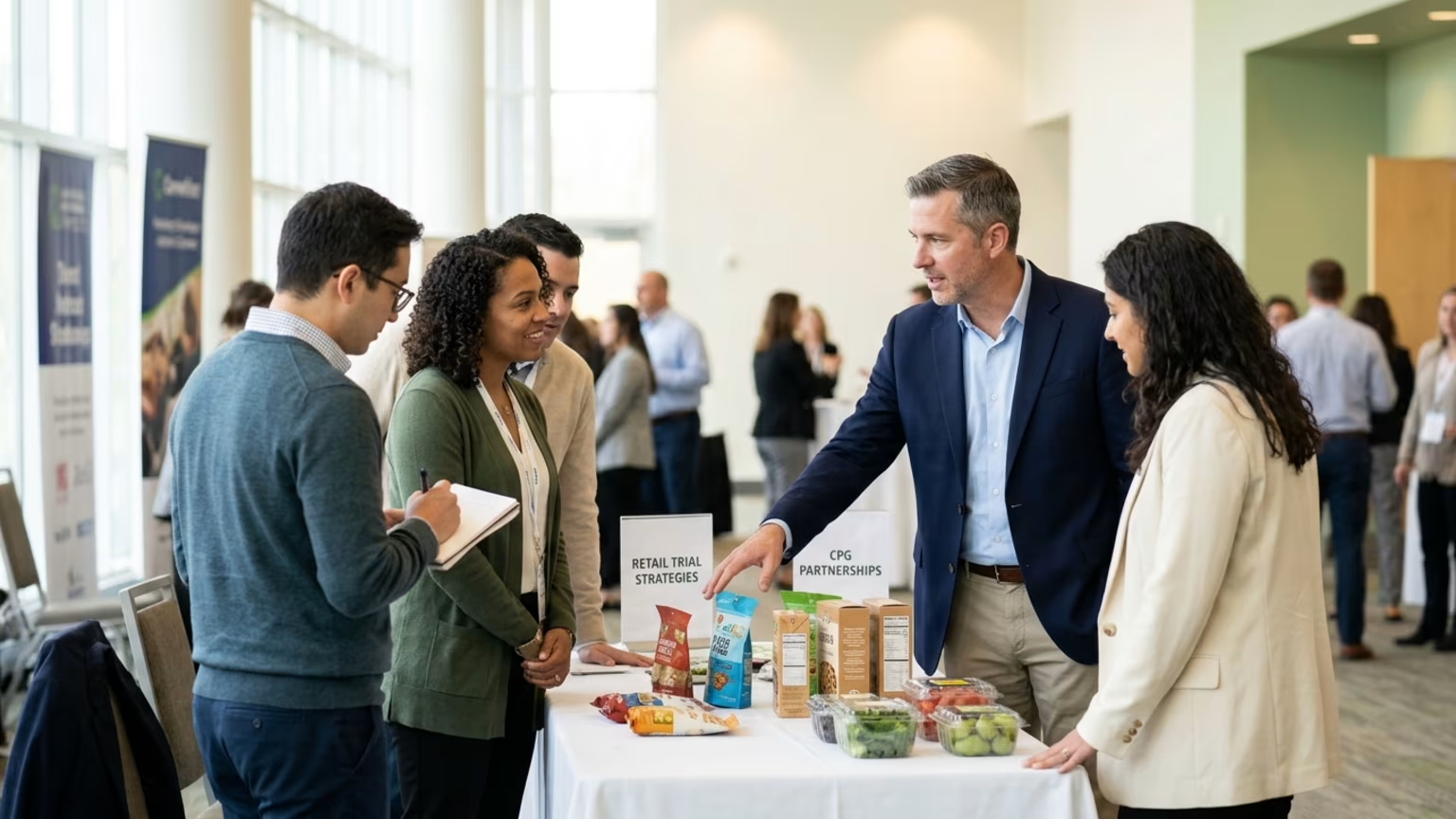
Trade marketing managers navigating cross-border retail expansions require absolute operational command over their field logistics to protect their shelf space. When brands face low quality leads from crowded trade shows, Makai takes control of the activation to secure measurable sales pipeline. Under our Consumer Events capability, we design memorable live experiences that bring brands and people together through interaction, emotion, and engagement.

30 Years Experiential & Retail Activation Partner for CPG & Beverage Brands | Multi-Market Demos, Roadshows & Costco/Club Programs That Actually Sell