Robbie Thain
Founder, CEO

Crowded exhibition floors demand structured booth games, clear qualification frameworks, and strategic incentive ladders to transform passive passersby.
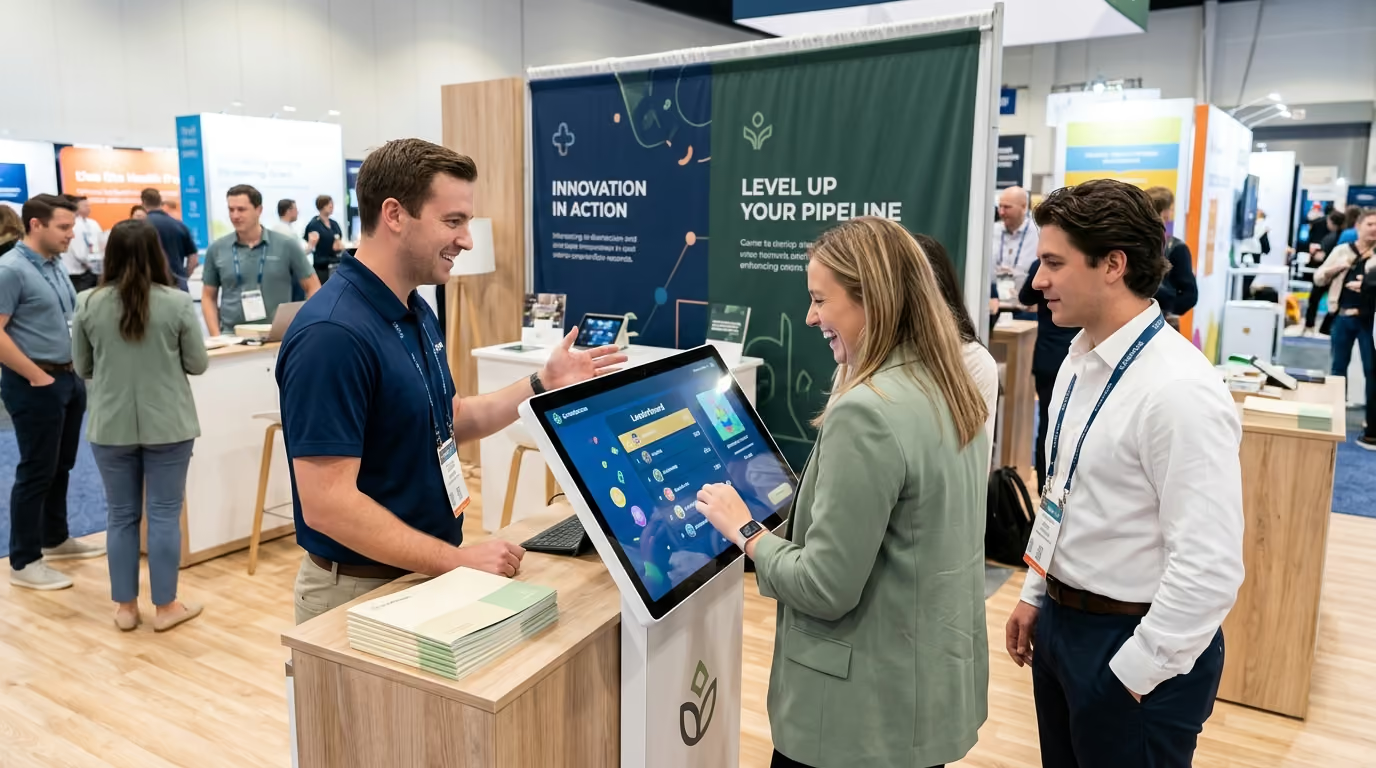
Trade show gamification is not the act of dropping an arcade cabinet or a spinning prize wheel into an exhibit space. It is the deliberate application of game mechanics to influence specific commercial behaviors on the exhibition floor. When engineered correctly, gamification guides attendees to stop walking, absorb product value, reveal operational pain points, and commit to structured follow-up conversations.
This comprehensive guide provides brand leaders and event marketers with an operational blueprint to design booth games that capture attention, filter for buying intent, and protect Return on Investment (ROI). By aligning mechanics with qualification criteria, you can eliminate wasted staff hours and turn live floor engagement into measurable sales pipeline.
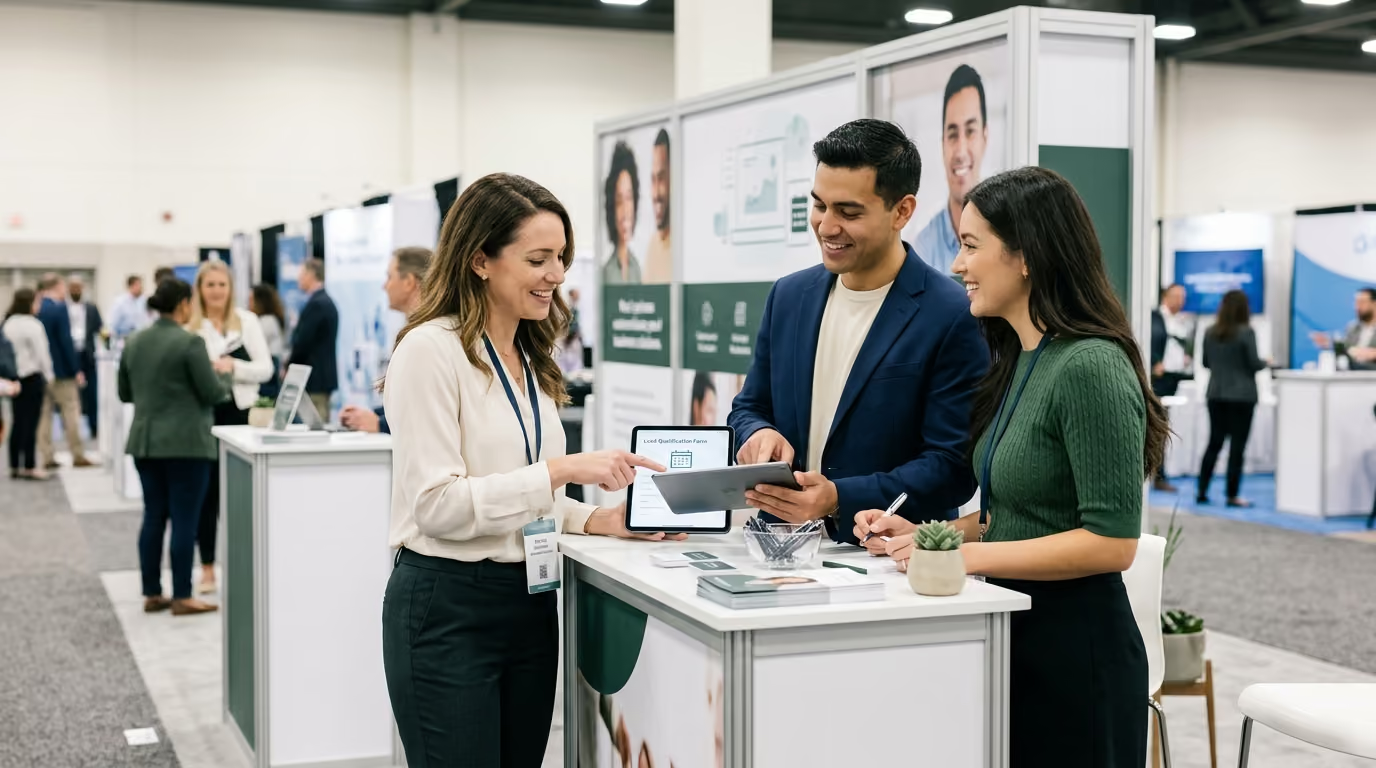
The typical trade show floor is noisy, crowded, and chaotic. Hundreds of exhibitors compete for the exact same minutes of attendee attention. Brand teams watch hundreds of attendees walk past their booth space without glancing up from their mobile devices. When an exhibitor rolls out a generic spin-to-win wheel or hands out high-end consumer electronics, a crowd forms instantly. Yet within minutes, booth staff are overwhelmed by students, prize collectors, and low-fit attendees while key enterprise buyers walk right past the commotion.
When the show floor closes, marketing hands sales a raw export of hundreds of badge scans. The sales team attempts to follow up, only to find disconnected numbers, uninterested contacts, and zero context regarding what each person actually needs. The event looks like an operational success on paper because foot traffic was heavy, but it yields zero closed pipeline.
The governing principle of high-conversion exhibiting is straightforward: reward the behavior that predicts business value, not merely the behavior that produces raw volume. To help marketing leaders avoid vanity metrics, our team has documented the operational frameworks, incentive designs, and data collection protocols required to build gamified activations that convert. We have executed over 1000 campaigns across all 50 states, bringing brands to life in every major U.S. market. From retail demos in Seattle to roadshows in Miami and events in Honolulu, our teams activate brands wherever our clients' audiences are located.
Trade show gamification applies mechanics such as challenge, progression, scoring, competition, and immediate feedback to commercial interactions. It is distinct from pure game-based activations or branded entertainment. Branded entertainment uses spectacle to generate broad emotional recall, which works well for mass consumer awareness. Serious play, by contrast, uses structured challenges to help business buyers diagnose operational gaps, compare workflows, or simulate solutions.
Most booth games fail because they are designed for entertainment rather than qualification. When an exhibitor installs a flashy attraction without connecting the gameplay to their product value proposition, they create an operational bottleneck. Staff spend their energy managing prize lines rather than conducting discovery conversations.
The distinction between foot traffic and qualified engagement is where event profitability is won or lost. Attention simply means an attendee looked at the booth or paused in the aisle. Participation means they completed an action, like pushing a button or spinning a wheel. Engagement means they spent focused time absorbing brand messaging. Qualified engagement occurs only when a participant completes an interaction while providing verifiable data about their role, operational fit, purchasing authority, or active implementation timeline.
When marketing teams treat every game participant as a qualified lead, sales efficiency collapses. A badge scan without commercial context is simply contact information. A marketing-qualified lead must meet specific demographic and firmographic thresholds. A sales-qualified lead must display immediate project need, clear authority, and active purchase timing. Designing a gamified system requires building filters that separate casual players from active buyers before rewards are distributed. Exhibitors shifting away from brand theater to revenue generation build their activations around these qualification thresholds.
A successful gamified booth strategy relies on the Attract, Participate, Qualify, and Convert (A-P-Q-C) framework. This systematic methodology ensures that every attendee interaction moves intentionally toward a measurable business outcome.
The goal of the attract phase is stopping aisle foot traffic within three seconds. Attendees walk expo floors with divided attention, scanning booths while checking mobile notifications. Your visual challenge must be readable from fifteen feet away.
Avoid vague corporate slogans. Instead, use a clear challenge statement, a dynamic scoreboard, or an interactive benchmarking screen. The visual hook must clearly relate to your core industry solution. An attendee should immediately understand what the activity is and why participating is relevant to their professional role.
Once an attendee stops, the entry barrier must be exceptionally low. The initial step should require no lengthy verbal explanations or heavy data input.
Communicate three things immediately: what the visitor needs to do, how many minutes it takes, and what immediate value they receive. If the first step requires filling out a twelve-field registration form on a tablet, participation will drop significantly. Allow visitors to begin with a single tap or touchpoint, capturing their interest before requesting deep contact details.
Qualification must be woven directly into the game mechanics. As the visitor progresses through the activity, their choices should reveal critical business information.
By designing choices that require players to select their current software stack, operational bottleneck, or annual volume, you collect actionable intelligence naturally. The player does not feel interrogated by sales staff. Instead, they make strategic choices within the game interface that simultaneously profile their organization.
The final stage transitions the participant from gameplay into a commercial next step. The game interface should deliver a customized output based on their specific in-game inputs.
This output might be a tailored industry benchmark report, an operational gap analysis, or a specific product recommendation. At this moment, on-booth staff step in to review the results, answer technical questions, and schedule a post-event discovery meeting. The game serves as the icebreaker and diagnostic engine, making the conversion conversation natural and high-value.
Different game mechanics produce vastly different attendee behaviors. Selecting the right mechanic depends on your industry vertical, technical complexity, and target buyer persona.
Diagnostic challenges function as high-performing qualification engines for complex enterprise solutions. In this format, attendees answer four or five operational scenario questions on a touchscreen kiosk.
Each question forces the participant to make trade-offs between speed, cost, regulatory compliance, or operational efficiency. Upon completion, the system assigns them an operational maturity score and highlights specific workflow vulnerabilities. This approach provides immediate educational value to the attendee while capturing their exact business pain points in your CRM.
A configuration sprint challenges the visitor to design an ideal operational workflow or system architecture under set constraints. For example, an equipment manufacturer can challenge buyers to configure an automated packaging line that maximizes throughput while staying within a specific factory footprint.
This mechanic forces the attendee to reveal their technical requirements, facility limitations, and feature priorities. Sales representatives watching the interaction gain immediate visibility into the prospect's operational environment, allowing for precise sales alignment.
Benchmark mechanics appeal directly to executive-level attendees who care about competitive peer data. The visitor enters two or three operational metrics, such as current cost per unit or cycle time, into an interactive terminal.
The screen instantly plots their data against industry averages and displays potential savings achievable through modern solutions. This mechanic generates strong intent signals because high-level decision-makers are motivated by peer comparisons and measurable efficiency gains.
For exhibitors with large island footprints or multi-product portfolios, a discovery passport mechanic drives movement across different booth zones. Attendees receive a digital pass or physical badge card that gets scanned at individual demonstration stations.
To complete the passport, the visitor must participate in brief, hands-on demonstrations across distinct product categories. This mechanic prevents booth crowding in front zones and encourages deep cross-portfolio exploration. Ensure each individual station provides standalone educational value so visitors do not view the activity as a chore.
Interactive quizzes work well for categories requiring industry education or regulatory transition awareness. The quiz should present provocative, industry-specific questions that challenge common misconceptions.
Avoid generic pop-culture trivia completely. Questions should focus on upcoming regulatory shifts, emerging supply chain risks, or technical best practices. Every question answered provides insight into the attendee's technical sophistication and operational preparedness.
The incentive structure determines the caliber of attendees your booth attracts. Offering a single massive prize, such as a high-end tablet or luxury vacation, invariably corrupts lead quality. It incentivizes unqualified participants to crowd your booth, submit fake contact details, and drain staff energy.
A disciplined activation utilizes a tiered incentive ladder. In this system, reward value scales strictly with the depth of the participant's commercial interaction.
Level one rewards are low-cost, brand-aligned items distributed to anyone who completes an initial introductory challenge. These items acknowledge participation without draining budget.
Level two rewards require completing a comprehensive diagnostic or problem-mapping exercise. The prize here should ideally be intellectual property, such as a customized assessment report, an exclusive industry white paper, or an operational checklist.
Level three rewards are unlocked only when an attendee participates in a structured product demonstration with a technical specialist. These rewards represent tangible professional tools, such as specialized industry kits or professional development credits.
Level four rewards are reserved exclusively for vetted decision-makers who formally schedule a qualified post-event meeting. By reserving premium incentives for high-value commitments, you protect marketing budgets and focus staff attention entirely on revenue generation.
To maintain regulatory compliance and brand trust, all promotions must feature clear, posted rules. Review guidelines from the Federal Trade Commission (FTC) and the U.S. Postal Inspection Service regarding prize promotions and sweepstakes. Ensure that entry mechanics never require a commercial purchase to participate. Keep participation transparent, ethical, and accessible to every attendee on the floor.
Collecting attendee data during a gamified activation requires balancing operational speed with strict privacy compliance. A high-tech game interface that captures hundreds of records can quickly turn into a legal liability if privacy regulations are ignored.
Attendees must always understand why their data is being collected and how it will be used. Display a clear, prominent privacy notice directly at the game kiosk or via an easily accessible QR code.
State clearly whether providing contact details is required to play or simply required to receive customized analytical results. Transparency builds executive trust before discovery conversations even begin.
Under global privacy frameworks like GDPR and CCPA, consent must be freely given, specific, and unambiguous. Never bundle transactional permissions with broad promotional opt-ins under a single pre-checked box.
Separate the delivery of game results from general marketing subscriptions. A participant might happily consent to receiving their customized benchmark scorecard via email without agreeing to weekly marketing newsletters. Providing separate, unbundled checkboxes for result delivery, promotional subscriptions, and sales outreach ensures compliance while preserving list integrity.
A physical badge scan does not grant blanket permission for every type of marketing outreach. Industry best practice requires informing attendees before scanning their badge and verbally confirming their preferences.
Document the lawful basis for B2B communications in your event records. For targeted, direct follow-up relating specifically to a discussion held on the booth floor, legitimate interests may apply. For broader promotional email sequences, clear and affirmative consent is standard. Train your team using effective booth conversation scripts so they capture consent naturally during dialogue.
Collect only the minimum data points necessary to run the activation and qualify the lead. Avoid capturing sensitive personal information.
Ensure that all tablets, kiosks, and lead retrieval devices are encrypted and password-protected. When using third-party gamification software, confirm how data synchronizes when offline and establish clear data retention protocols. Never leave unattended screens showing the personal details or performance scores of previous participants.
A poorly managed game can disrupt booth flow, block aisle traffic, and irritate high-value prospects. Modeling hourly station throughput before the event is vital for maintaining an orderly and welcoming exhibit environment.
To determine how many interactive kiosks your booth requires, calculate the complete cycle time for a single participant. This includes explanation time, active gameplay, data capture, result delivery, and staff transition notes.
If an interactive diagnostic takes three minutes to complete and requires one minute for reset and staff notes, a single station can process fifteen visitors per hour. If your event marketing goal is engaging sixty qualified prospects per hour during peak floor periods, you will need four dedicated kiosks. Failing to calculate cycle times creates massive queue bottlenecks during post-keynote floor surges.
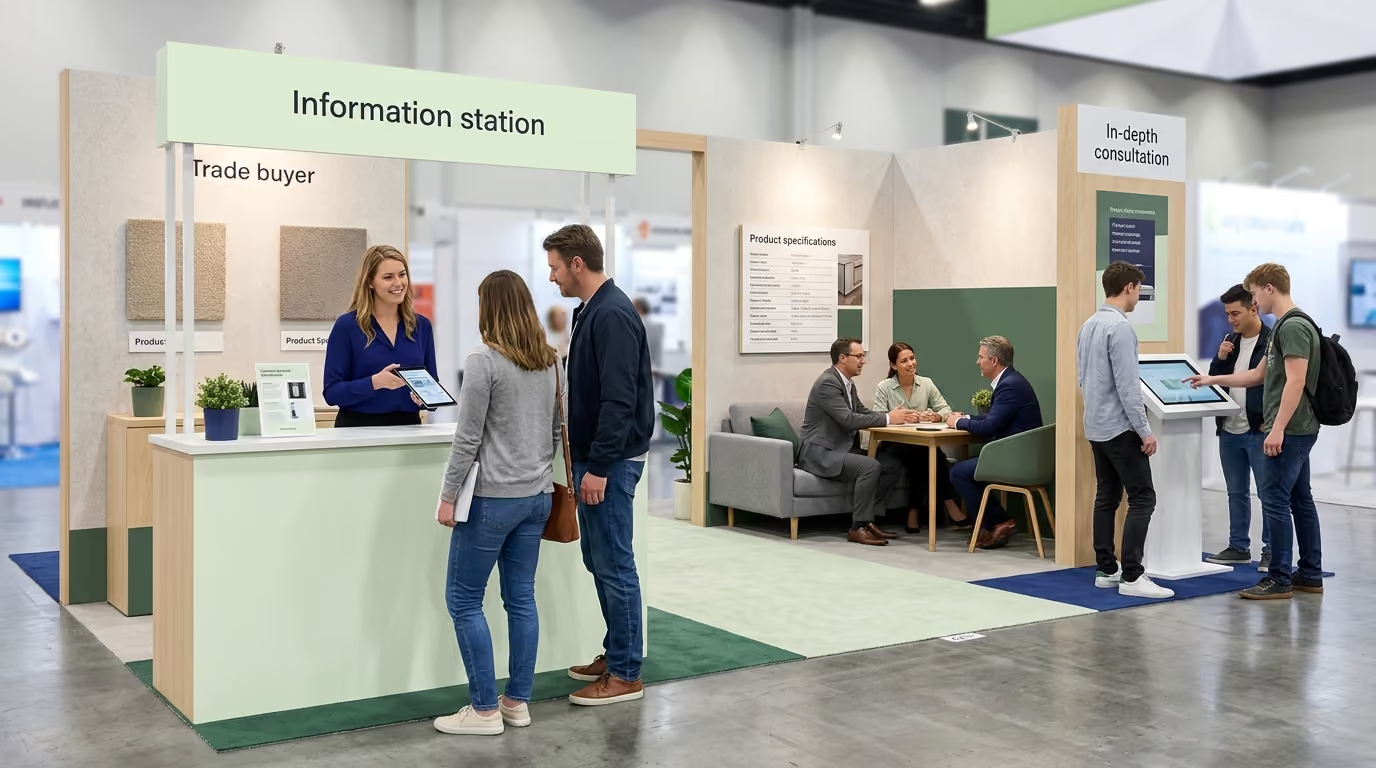
Never force every booth visitor into a single queue line. Design physical layout zones with distinct fast lanes and deep lanes.
The fast lane accommodates self-service kiosks, quick benchmarking tools, and rapid surveys for visitors with limited time. The deep lane is reserved for pre-qualified buyers who want detailed diagnostic reviews or live product demonstrations. This architectural separation ensures that senior enterprise buyers are never stuck waiting behind attendees completing an introductory game.
If an engaging mechanic produces a short waiting line, turn that waiting time into active brand education. Position digital displays within the queue area that showcase case studies, customer results, and product stories.
Staff can walk the line with mobile tablets, answering preliminary questions, pre-registering participants, or routing senior buyers directly to private meeting areas. Transparent signage displaying estimated wait times prevents line abandonment and maintains attendee goodwill.
Booth games must be accessible to all attendees regardless of physical ability. In accordance with guidance from the ADA National Network, temporary exhibition spaces should provide equivalent pathways for interaction.
Ensure interactive touchscreen kiosks are set at accessible heights with appropriate wheelchair clearance. Provide alternative input methods, such as keyboard navigation, voice commands, or staff-assisted play. Visual displays must feature strong color contrast, legible typography, and closed captioning for audio content. Never implement timed physical challenges that disadvantage attendees based on mobility or dexterity.
Proving the commercial success of a gamified activation requires tracking both leading and lagging indicators. Relying solely on raw badge scan volume obscures the true economic value of the event.
Leading metrics provide real-time feedback while the exhibition is active, allowing booth managers to adjust staffing, queue routing, and messaging.
Track the qualified engagement rate by dividing the number of participants meeting qualification criteria by total participants. Monitor the participant-to-meeting rate to see what percentage of players transition into booked post-show consultations. Track station dwell times to ensure gameplay remains snappy and does not cause floor congestion. Proper staffing your booth for qualified engagement ensures staff actively capture these real-time signals throughout the show.
Lagging metrics measure commercial returns after the show floor closes and sales sequences execute. These numbers determine long-term event ROI.
Calculate the cost per qualified lead by dividing total activation expenses by the number of vetted prospects captured. Track sales acceptance rates to verify whether the sales team agrees that the leads generated are genuinely high-fit. Finally, monitor total attributed pipeline and closed revenue over the subsequent sales cycle, measuring live event pipeline creation directly against overall event spend.
The commercial value of booth gamification is realized during the post-show follow-up period. A well-designed game captures rich contextual data, but that intelligence is wasted if marketing sends a generic email blast three weeks later.
Within twenty-four hours of show closure, all participant records should be enriched, cleaned, and segmented within your CRM.
Classify records by engagement depth and expressed purchasing urgency. Group contacts into high-intent enterprise buyers, mid-tier evaluators, and educational nurture leads. Suppress duplicate records, invalid emails, and unconsented contacts before launching sales follow-up sequences.
Generic follow-up emails that say "Thanks for visiting our booth" generate poor response rates. High-conversion outreach references the specific choices, scores, and pain points captured during gameplay.
If an attendee completed an operational gap diagnostic, the follow-up email should open with their specific maturity score and provide a direct link to download their full scorecard. If a prospect configured a custom production setup, the sales team should attach the exact technical specifications they built during the activation. Executing a structured post-show follow-up playbook ensures that sales conversations pick up exactly where the booth interaction left off.
A plant-based food manufacturer exhibiting at a national food expo wanted to drive retail distribution and establish relationships with supermarket category managers. Instead of running a simple sampling counter, they deployed an interactive retail assortment diagnostic on four commercial touchscreen terminals.
Category managers and retail buyers selected their store format, target demographic, and current shelf challenges. The diagnostic engine analyzed their selections and generated a customized shelf revenue optimization scorecard, demonstrating projected category margin improvements.
After completing the diagnostic, the buyer received an artisanal, temperature-controlled tasting flight designed specifically for their regional store profile. By linking the game mechanic directly to retail economics, the brand achieved an 82% qualified engagement rate, booked forty-two follow-up retail reviews, and eliminated booth crowding from non-trade attendees.
Designate dedicated booth hosts who monitor aisle traffic and greet senior executives as they approach. Equip hosts with mobile tablets to offer senior buyers an immediate express lane into private meeting lounges, bypassing standard game stations completely.
Choose gamification software that includes full offline caching and local database storage. All interaction data, scores, and consent records should store locally on each tablet or kiosk and synchronize automatically to your cloud CRM once connectivity resumes.
Structure your game topic around technical, industry-specific challenges that naturally disinterest consumer attendees or prize seekers. Additionally, reserve all tangible or high-value rewards for participants who complete full qualification assessments and meet specific firmographic thresholds.
Yes. Inline 10x10 and 10x20 booths can successfully run gamified activations by utilizing tablet-based diagnostic tools, wall-mounted interactive touchscreens, or mobile QR-driven benchmark challenges. These approaches require minimal physical floor footprint while delivering robust qualification data.

30 Years Experiential & Retail Activation Partner for CPG & Beverage Brands | Multi-Market Demos, Roadshows & Costco/Club Programs That Actually Sell