Robbie Thain
Founder, CEO

High-performing collegiate marketing programs achieve reliable retail conversion through structured candidate screening, rigorous operational onboarding.
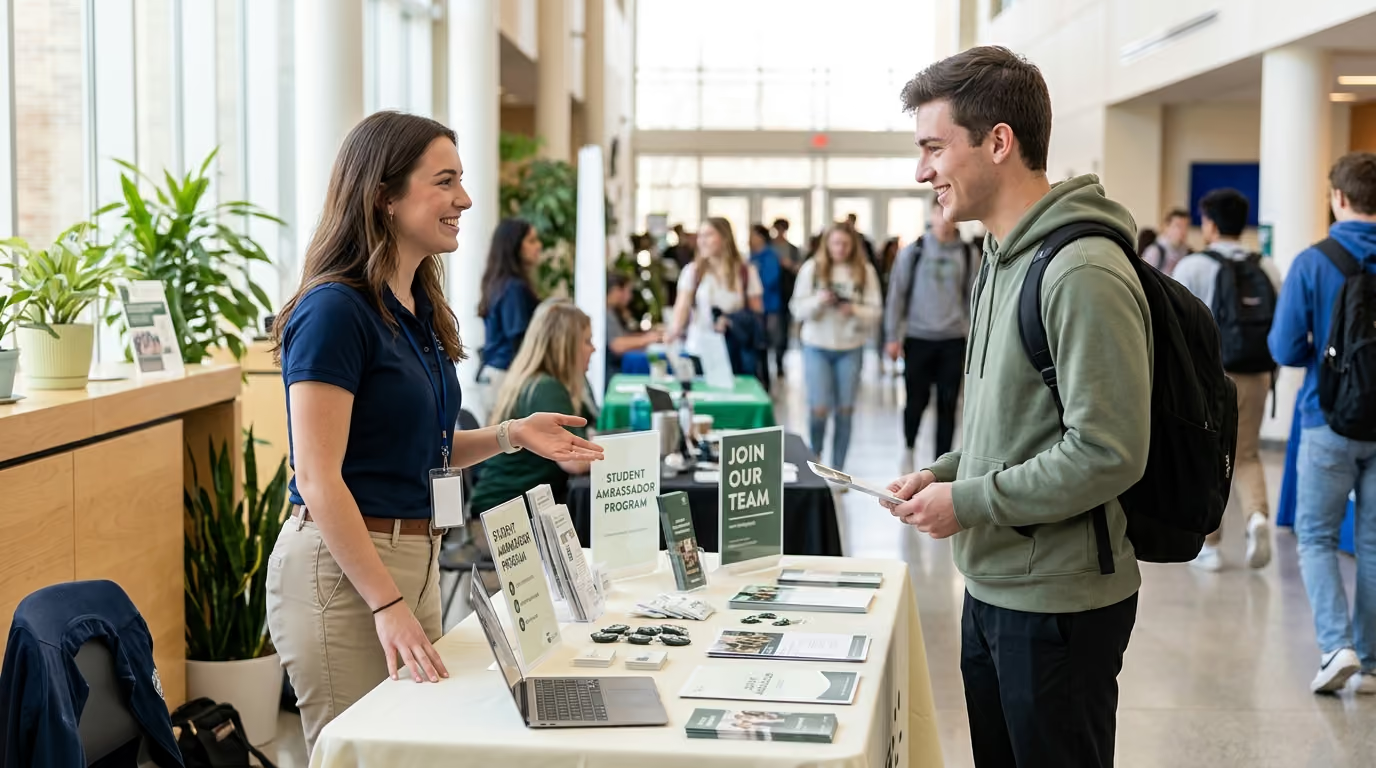
Managing a student brand ambassador network requires a disciplined operational framework that connects talent acquisition, structured field training, daily coaching, and post-campaign alumni reactivation. This definitive guide delivers an end-to-end management architecture to help marketing leaders eliminate turnover, maintain strict compliance, and drive measurable retail conversion across collegiate markets.
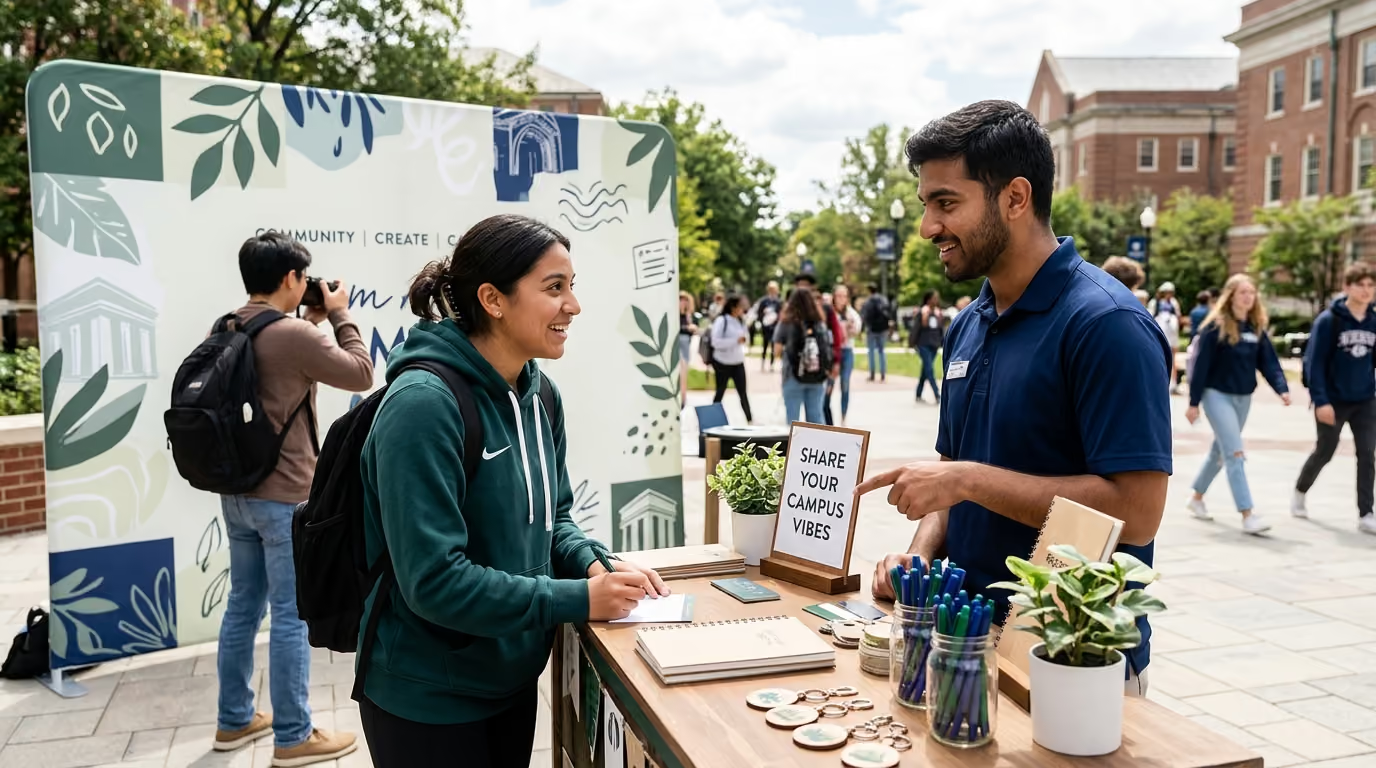
Campus marketing campaigns often begin with intense optimism, only to collide with the chaotic reality of the quad. A field marketing director ships twenty pallets of premium functional beverages to four university markets, expecting organized sampling events, viral content, and grocery store sell-through. Two weeks into the semester, half the student team stops responding on Slack. The remaining ambassadors distribute cold cans without explaining the product benefits, fail to capture consumer contact details, and forget to document their activity. The booth setup is messy, the university permits are questioned by campus security, and the local grocery store shelves remain full.
Building a high-performing campus presence requires treating student representatives as a vital extension of your core field organization. You cannot rely on casual gig work or informal social posts to drive commercial results. Long-term success demands a systematic lifecycle management system that guides every ambassador from their first interview to their post-graduation career.
Many brand leaders search for campus ambassadors by filtering for high follower counts on social media. This vanity approach frequently backfires because high follower counts rarely translate into local campus influence or dependable work habits. A student with ten thousand passive online followers may struggle to engage twenty peers in a face-to-face conversation on the campus green. Selection must prioritize representational credibility, interpersonal communication skills, and genuine role fit.
Academic research on collegiate ambassador models reveals that successful programs treat ambassadorship as a leadership role. Studies examining engineering ambassador programs at Oregon State University and Howard University found that serving in an ambassador role significantly strengthened students' leadership skills, personal goals, and self-efficacy. When you recruit candidates who seek professional development, you attract self-motivated operators rather than passive promotional channels. You can consult our comprehensive manual on launching campus programs to align your recruitment criteria with broader brand goals.
A structured recruitment model establishes clear eligibility baselines before accepting applications. For instance, the University of Georgia graduate ambassador program requires applicants to complete at least one full semester on campus, maintain a minimum 3.0 grade point average, and remain in good disciplinary standing. Applying similar academic standards to commercial programs filters for students who possess time-management discipline. Setting a requirement of fifteen to twenty dedicated hours per month establishes firm expectations before onboarding begins.
An effective selection process uses a multi-stage evaluation funnel:
Review written responses to assess written communication, brand understanding, and existing campus affiliations. Filter out candidates who provide generic answers or demonstrate limited knowledge of your product category.
Conduct a fifteen-minute structured video interview to observe energy, clarity, and verbal engagement. Ask situational questions about how the candidate handles unexpected weather during an outdoor activation, uncooperative university staff, or disengaged students.
Ask the applicant to deliver a sixty-second product pitch as if speaking to a rushed student passing a table. Assess their ability to articulate the unique selling proposition without relying on marketing jargon.
Map candidate memberships across student organizations, athletic clubs, academic departments, and Greek life. Select ambassadors across diverse social pockets to ensure your brand reaches multiple student demographics rather than a single isolated group.
Onboarding is the bridge between recruitment enthusiasm and disciplined field execution. Many organizations simply ship branded apparel, forward a slide deck, and ask ambassadors to start posting and sampling. This lack of structure leads to regulatory violations, off-brand messaging, and rapid student burnout. Effective onboarding requires a formalized curriculum that establishes operating boundaries, product mastery, and reporting standards.
Field programs benefit when they formalize their training pipelines. The University of Arizona humanities ambassador initiative transitioned from an informal volunteer effort into a formal internship that taught public speaking and communication skills. When students receive structured communication training, they can clearly articulate complex value propositions to their peers. Commercial brands must apply the same rigor to equip ambassadors with the technical knowledge and conversational confidence required for high-stakes retail and campus environments.
A complete onboarding sequence must address several core operating modules:
Ambassadors must understand the brand origin, ingredient profile, sourcing ethics, and key differentiators. They must memorize approved product claims and strictly avoid prohibited health or performance promises.
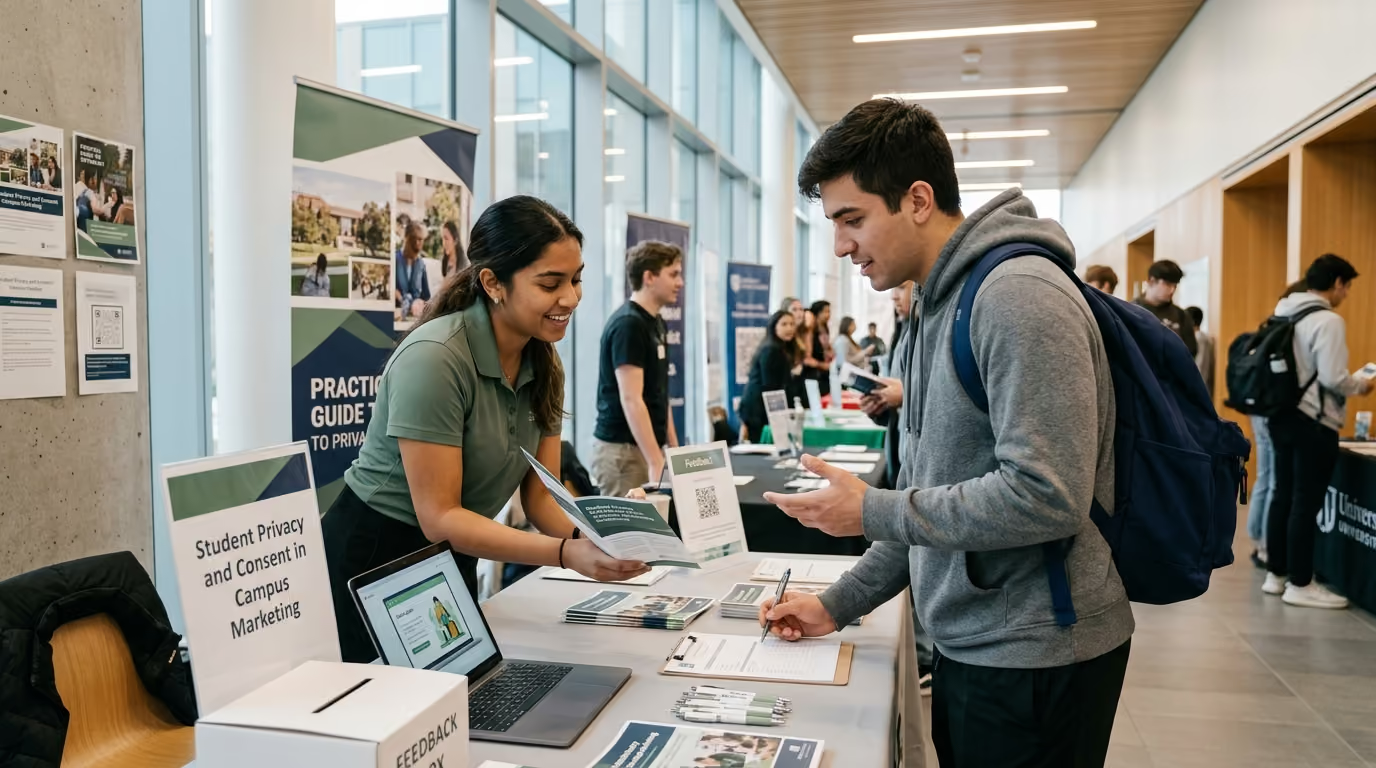
Train representatives on Federal Trade Commission disclosure requirements for all digital content, requiring clear and conspicuous labels on every post. Teach university-specific solicitation rules, commercial permitting processes, and local venue guidelines to prevent campus ejections. You can review our framework for measurable campus toolkits and compliance to standardize these procedures across every campus.
Provide step-by-step procedures for receiving pallet shipments, managing storage lockers, handling dry ice, and staging event collateral. Establish clear protocols for inventory counting, sample tracking, and the return of expensive equipment like branded canopy tents and sound systems.
Equip students with clear escalation paths for consumer complaints, physical safety issues, medical incidents, or hostile interactions. Ambassadors must understand their boundaries and know precisely when to refer complex situations to full-time brand directors.
Validate onboarding completion through a practical assessment rather than passive slide consumption. Require every ambassador to pass an oral product quiz and submit a mock event plan before receiving their initial product allocation.
Managing remote student teams across multiple regional territories requires hands-on operational supervision. College students balance shifting course loads, exam schedules, and social commitments, making continuous oversight essential. Without regular touchpoints, field execution quality deteriorates rapidly over the course of a fourteen-week semester.
A research study examining student ambassadors in South-East London found that ambassadors gained complex transferable professional skills while earning an income, viewing their work as deeply rewarding. To capture this value, managers must provide ongoing professional development rather than treating students as transactional gig workers. Coaching must blend concrete task feedback with long-term skill acquisition, helping students build capabilities in project management, event logistics, and direct sales.
Field supervision must also address the common operational challenges identified in peer-intervention research. Studies highlight that student representatives frequently encounter communication difficulties, over-protectiveness of their peers, and confusion regarding their operational boundaries. Effective managers establish clear guardrails so ambassadors do not overstep into official public relations or corporate spokesperson roles.
Implement a structured rhythm of operational supervision across three core communication channels:
Require ambassadors to submit a two-minute video or written operational log every Monday morning. The check-in should detail planned activation hours, target campus locations, partnership meetings, and inventory requirements.
Conduct fifteen-minute one-on-one video calls to review quantitative performance, assess execution quality, and solve campus-specific obstacles. Use this time to coach the student on negotiation with campus administrators, student government leaders, or local store managers.
Deploy regional field managers or secret shoppers to audit campus activations unannounced. Evaluate booth presentation, ambassador posture, pitch accuracy, sampling hygiene, and lead capture discipline.
Mid-semester attrition is the primary point of failure for collegiate brand programs. Student enthusiasm naturally wanes around midterm examinations, project deadlines, and holiday breaks. Retaining high-performing ambassadors requires an intentional recognition system that reinforces personal identity, belonging, and professional growth.
A 2024 academic study from the University of Queensland revealed that students acting as peer mentors developed a significantly stronger sense of belonging and higher leadership self-identity than non-mentors. When student brand ambassadors feel that their work builds their leadership credentials, their commitment remains high throughout the academic year. Recognition should celebrate operational discipline, creative problem-solving, and team support rather than relying solely on raw volume numbers.
To design an effective compensation and incentive model, review our detailed guide on student brand ambassador compensation models. Layer non-monetary recognition on top of fair baseline pay to build lasting engagement.
A multi-tiered recognition framework maintains motivation across every stage of the academic calendar:
Acknowledge exceptional operational discipline within twenty-four hours of an event. Highlight detailed shift reporting, perfect inventory logs, or outstanding customer interactions inside the team Slack or messaging channels.
Grant peer-nominated and manager-selected awards for specific behaviors such as team support, regulatory compliance, and community outreach. Reward winners with professional development stipends, executive coffee chats, or specialized brand gear.
Promote consistent performers to Senior Ambassador or Campus Team Lead roles after one full semester of exceptional service. Provide verified LinkedIn recommendations, executive references, and documented case studies detailing their campaign achievements for their professional resumes.
Proactively reduce required operational hours by fifty percent during midterms and final exam weeks. Providing built-in academic relief prevents students from having to choose between their grades and their ambassador commitments. For additional retention tactics, explore our analysis on strategies to retain and motivate student ambassadors.
When a student ambassador misses commitments or underperforms, managers need a structured, objective remediation process. Immediate termination without coaching wastes the initial recruitment and onboarding investment. Conversely, ignoring missed deliverables sets a poor precedent that quickly demoralizes the rest of the campus team.
Managers must first diagnose the root cause of the performance breakdown. Most ambassador performance issues fall into four distinct operational categories:
The student struggles with product knowledge, pitch delivery, or physical booth setup. Resolve this through mandatory refresher training, roleplay coaching, and paired shifts with a high-performing campus lead.
The student takes on an overloaded academic schedule, joins a new organization, or experiences personal challenges. Adjust their shift allocation, reduce weekly target hours, or assign a co-ambassador to balance the workload.
The student ghosts team communication, skips scheduled activations without advance notice, or demonstrates poor field energy. Address this directly by discussing accountability, revisiting original program commitments, and clarifying the consequences of continued inaction.
The student shares unapproved health claims, fails to disclose brand sponsorship on social posts, or violates campus facility policies. These severe infractions require immediate removal from active duty to protect corporate brand equity.
Document every performance intervention using a formalized remediation process:
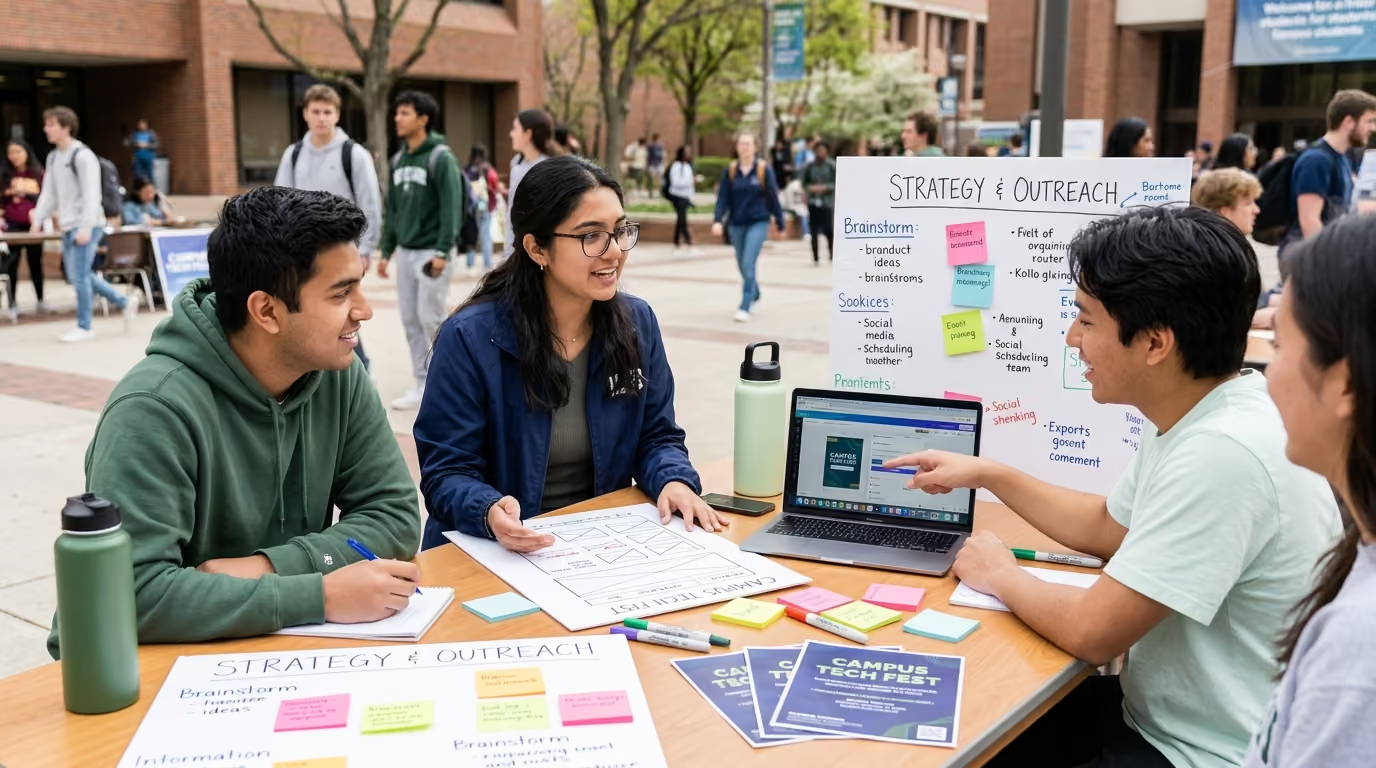
Operational success depends on rigorous, repeatable execution in live campus environments. Ambassadors must understand the exact steps required to prepare, execute, and report on every physical activation. Leaving logistics to chance leads to missed opportunities, poor presentation, and wasted sampling inventory.
Connecting collegiate activations to surrounding retail stores dramatically improves overall program effectiveness. Learn more about connecting student ambassadors with retail demonstrations to drive qualified foot traffic into local retail partners.
Follow this step-by-step operational workflow for every live campus activation:
Measuring collegiate ambassador performance requires moving beyond basic vanity metrics. A commercial ambassador program must generate a positive Return on Investment (ROI) while maintaining brand safety and supporting student leadership development. Evaluating success across multiple quantitative and qualitative dimensions provides an accurate picture of total program impact.
A company presentation from a major global beverage brand outlines a multifaceted campus marketing scorecard, tracking ambassador hiring, content creation, campus sales volume, administrative relationships, and student consumer insights. Marketing executives must balance direct commercial metrics with long-term brand equity and developmental measures.
We provide clear reporting on reach, trials, leads, and sales to guide next steps in campaign optimization. Our measurement approach tracks awareness, engagement, and conversion, turning brand moments into actionable data that demonstrates business impact.
Structure your evaluation framework across five distinct performance categories:
The ambassador lifecycle does not terminate when an academic semester concludes or a student graduates. An offboarding process that is rushed or disorganized damages the brand reputation, loses valuable historical operational knowledge, and results in lost equipment. Treating offboarding with operational rigor turns departing ambassadors into lifelong brand advocates and creates a reliable talent pipeline for future corporate hiring.
Academic research on widening-participation student programs shows that serving as an institutional ambassador significantly benefits personal growth and contributes directly to future professional careers. When students finish their term feeling that the brand invested in their professional development, their affinity for the organization remains strong for years.
Execute a structured offboarding protocol for every departing ambassador:
Conduct a physical audit of all remaining inventory, retrieve expensive event equipment, revoke access to internal software systems, and confirm all outstanding payments or academic credit documentation.
Conduct a thirty-minute exit conversation to capture insights regarding campus market dynamics, competitor activity, facility permitting obstacles, and product reception.
Provide the student with a formal portfolio document verifying their total campaign metrics, leadership contributions, and verified project management hours for their professional resume.
Invite high-performing ambassadors to join an exclusive alumni database, maintaining contact permissions for future seasonal activations, product feedback panels, and corporate recruitment opportunities.
Reactivating experienced ambassadors for holiday blitzes, regional trade shows, or post-graduate field management roles dramatically lowers recruitment and training costs. Build segmented alumni pools based on location, academic major, and past performance ratings. When launching summer sampling tours or regional retail campaigns, query your alumni network before spending capital on third-party recruitment channels.
A growing functional snack brand sought to expand distribution across fifteen major universities in the Midwest. The internal marketing team initially attempted to manage sixty student ambassadors using standard group chats and unmonitored sample shipments. By week six of the semester, thirty percent of the ambassadors were inactive, local retail distribution partners reported zero sales lift, and product inventory sat uncollected in dorm mailrooms.
The leadership team overhauled the entire initiative by implementing this complete lifecycle management framework:
Within one semester, ambassador retention climbed to ninety-one percent. The brand distributed over one hundred thousand samples, generated a forty-two percent increase in retail sell-through across campus-adjacent grocery accounts, and successfully hired three graduating campus leads into full-time regional field coordinator positions.
Transforming an underperforming student ambassador program into a disciplined, high-converting field engine begins with immediate operational improvements. Apply these tactical steps over the next seven business days:

30 Years Experiential & Retail Activation Partner for CPG & Beverage Brands | Multi-Market Demos, Roadshows & Costco/Club Programs That Actually Sell