Robbie Thain
Founder, CEO

Crowded trade show floors demand structured experiential product trials that combine sensory proof, layered architecture.
How do you turn high foot traffic at live activations into measurable retail sell-through instead of wasted inventory? Experiential product trial transforms passive sampling into a structured encounter that validates product claims through direct sensory evidence. By designing activations around sensory congruence, product diagnosticity, guided preparation, and disciplined measurement, brand leaders can eliminate consumer hesitation and build sustainable purchase velocity.
A crowded trade show floor or retail concourse is an unforgiving operating environment. Hundreds of exhibitors compete for the attention of exhausted buyers and distracted shoppers. Most booths rely on passive giveaways, pushing bite-sized samples into passing hands without context or explanation. Attendees take the item, consume it while walking away, and forget the brand name within thirty seconds.
This passive model creates an expensive illusion of traction. Marketing teams celebrate distributing thousands of units, yet post-event retail scanner data shows zero sales lift. The problem lies in the gap between giving away inventory and proving a product claim. When an encounter lacks structure, the consumer registers the interaction as a fleeting handout rather than a diagnostic evaluation.
Brand teams frequently face chaotic field conditions that dilute the product experience. Temperature fluctuations ruin sample texture, ambient convention noise drowns out staff explanations, and unvetted temporary staff fail to articulate core differentiators. Without strict operational standards, live trials generate noise instead of customer acquisition.
Moving from passive distribution to structured trial requires discipline. Brands must control the sensory environment, guide the participant through a defined sequence, and eliminate physical friction. When executed with precision, live trials replace abstract marketing claims with firsthand proof that accelerates purchasing decisions.
Experiential product trial is the deliberate design of a pre-purchase encounter where prospective buyers perceive, manipulate, prepare, or test a product. Unlike simple sampling, an experiential trial provides direct evidence of sensory, functional, and emotional value. It answers how a product works, why it matters, and what specific problem it solves in daily life.
Sensory marketing engages consumers across multiple sensory modalities to influence judgment and decision-making. Research indicates that sensory inputs directly affect attention and long-term memory retention. Vision, sound, smell, taste, and touch work together to form a coherent mental model of the product. The objective is not maximum stimulation, but meaningful and credible stimulation that supports the core value proposition.
A fundamental concept in trial design is perceived diagnosticity. Diagnosticity is the degree to which an experience provides useful information for evaluating product quality. Academic research on sampling demonstrates that perceived diagnosticity directly increases purchase intention. Perceived reciprocity, the feeling of gratitude for receiving a free gift, improves brand sentiment but fails to drive purchase action.
Sensory congruence dictates that sensory cues must match the functional promise of the product. A crisp visual identity paired with a crisp auditory crunch reinforces quality perceptions for snack brands. Research shows that partial sensory alignment can be highly effective when focused on the primary benefit. Introducing excessive or conflicting sensory cues distracts the consumer and degrades confidence in the product.
Direct physical interaction drives embodied learning and mental simulation. Handling packaging, feeling material resistance, or smelling fresh preparation helps prospective buyers imagine using the product at home. Research demonstrates that physical touch increases psychological ownership and perceived valuation. By facilitating hands-on manipulation, brands help consumers project the item into their daily routines.
Designing an effective trial requires orchestrating five distinct layers simultaneously. Each layer addresses a specific cognitive or physical step in the evaluation process. When these layers align, the activation moves the consumer seamlessly from curiosity to verified conviction.
Sensory access governs what the consumer immediately perceives through the five senses. This layer includes visual presentation, ambient aroma, serving temperature, acoustic environment, and tactile packaging weight. The physical sample must represent the ideal consumption state. A beverage served two degrees too warm or a snack presented in a crushed format undermines perceived quality before the consumer can judge the product fairly.
Functional proof demonstrates the product performing its core job under realistic conditions. The consumer must witness the primary claim being validated in real time. For a cleaning brand, this means visible soil removal on a challenging surface. For a functional food, this means showcasing clear ingredient integrity, rapid solubility, or texture stability. The demonstration must be unassisted by artificial tricks to maintain absolute credibility.
Contextual meaning establishes where the product fits into the consumer's daily life. Products evaluated in a vacuum are difficult to value. Establishing context means embedding the trial within a recognizable consumption ritual, such as a post-workout recovery moment, a rushed morning breakfast, or an evening social gathering. Setting the physical stage helps prospective buyers visualize the exact moment of replacement.
Social interpretation involves the human guidance that shapes how the trial is understood. Brand ambassadors, expert demonstrators, and peer participants influence how sensory cues are interpreted. Research in retail settings confirms that positive interactions with product demonstrators significantly increase post-sample purchase incidence. The facilitator highlights subtle quality markers, answers emerging objections, and validates consumer reactions.
Memory and retrieval ensure that the trial translates into future purchasing behavior. The activation must leave the participant with a distinctive sensory signature, a simple benefit statement, and a clear retrieval cue at the retail shelf. When shoppers later enter a retail aisle, visual and verbal triggers reactivate the memory of the live trial. Without structured retrieval mechanisms, trial memories fade before the next shopping trip.
Every live activation must establish an unbreakable link between marketing claims and sensory perception. We utilize the Claim-Proof-Cue framework to ensure every interaction delivers diagnostic value.
For example, if a plant-based dairy brand claims superior creaminess in hot coffee, the proof is an active pour into hot espresso. The cue directs the consumer to watch the rapid integration without separation or curdling. By pointing out the exact visual cue, the demonstrator converts a casual glance into structured verification. The consumer leaves with verified evidence rather than unproven marketing claims.
Designing product comparisons requires extreme methodological care. Academic research across sequential product trials reveals that presentation order and sensory similarity heavily bias consumer preference. When consumers sample items with highly similar sensory profiles, they tend to prefer the first product in the sequence. When products feature dissimilar profiles, consumers display a recency bias, favoring the final sample.
Research also shows that when evaluating two desirable products, participants systematically prefer the second option. When evaluating two undesirable products, they prefer the first. These psychological order effects occur independently of actual product quality. Field teams must counterbalance comparison sequences during testing to prevent artificial preference skews.
Regulatory compliance is mandatory when conducting comparative trials and live demonstrations. The Federal Trade Commission requires objective claims to possess substantiation before dissemination. Furthermore, demonstrations must accurately depict product performance under normal, expected consumer use conditions. Altering physical properties to exaggerate performance exposes brands to severe regulatory enforcement and reputational damage.
Transforming theory into field results requires operational rigor. We specialize in creating retail demos, product sampling programs, and roadshows that bring brands face to face with their audiences. Each program is designed to drive trial, build consumer relationships, and accelerate retail velocity across multiple locations. Implementing a disciplined execution playbook prevents common field breakdowns and maximizes conversion.
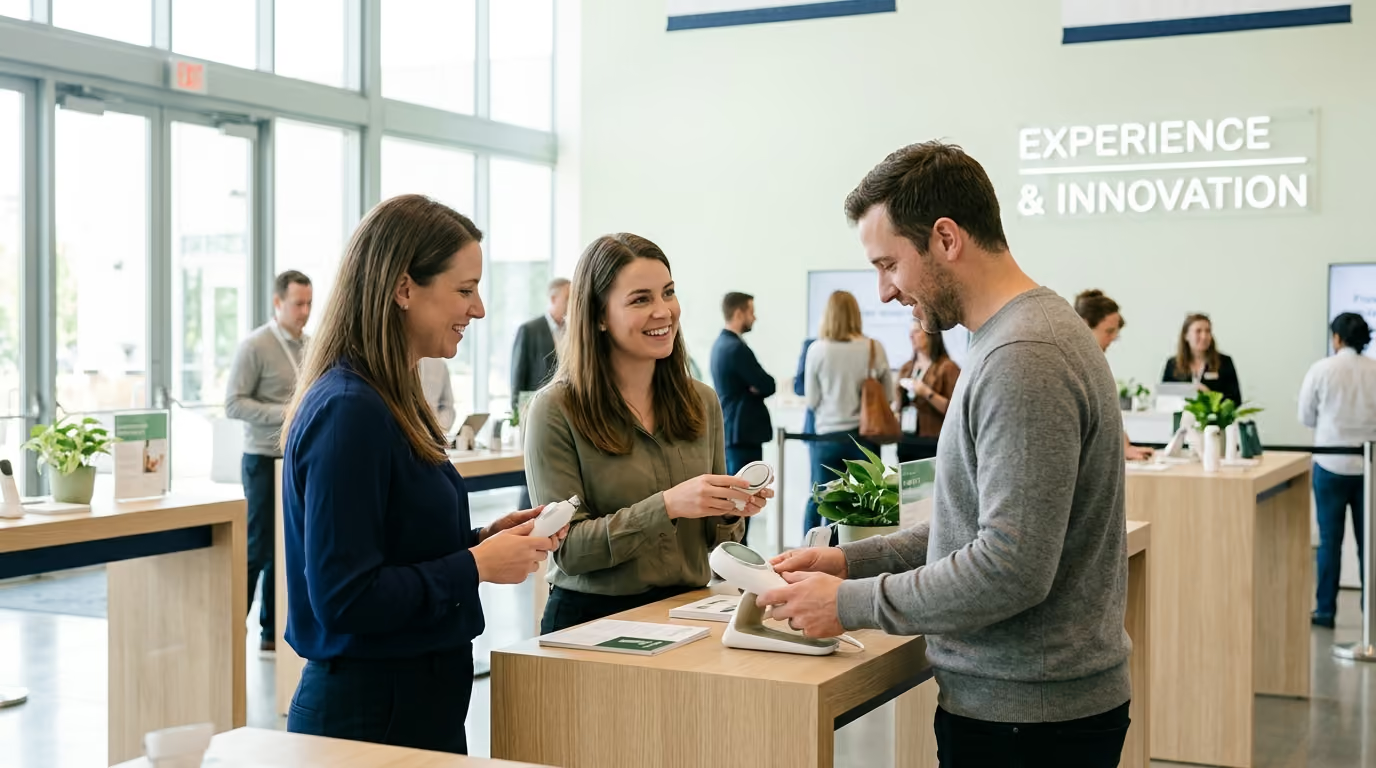
Applying structured formats like the sensory flight allows consumers to evaluate distinct flavor profiles or functional levels methodically. Our field teams utilize structured trade show booth layouts for product trials to separate high-velocity traffic corridors from intimate buyer consultation areas. Understanding the scientific principles of retail product sampling ensures that physical interactions generate sustained repeat purchases.
Before rolling out national roadshows, teams should consult comprehensive guides on selecting the right product trial methodology to match activation formats with specific category dynamics. Integrating these steps into an established experiential product launch playbook guarantees operational repeatability across diverse retail channels.
A premium functional snack brand faced stagnant growth when expanding into conventional retail grocery chains. The product offered superior clean-label nutrition and sustained energy benefits. However, consumer research indicated significant hesitation surrounding taste and texture. Shoppers assumed that high-protein, zero-sugar claims implied a chalky mouthfeel and medicinal aftertaste.
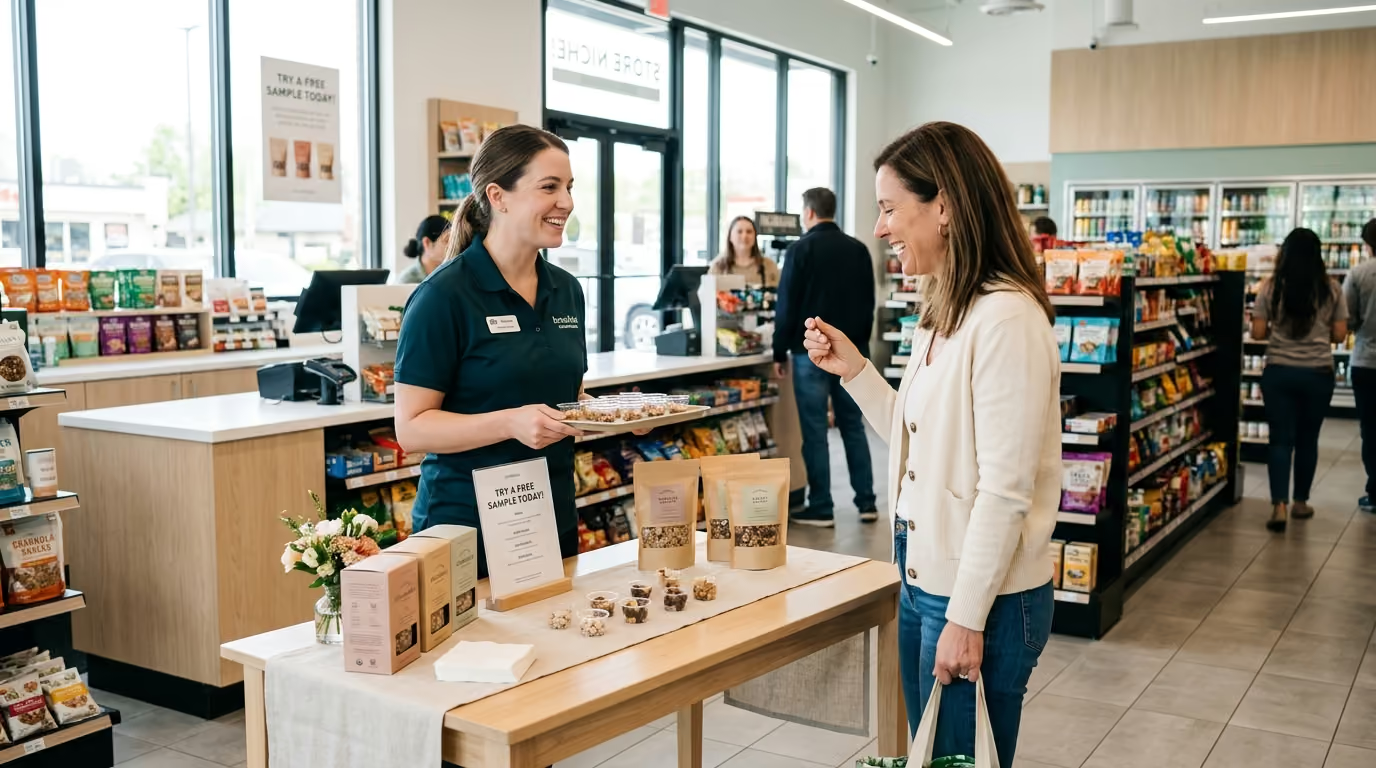
The brand abandoned passive distribution at mass events and implemented a structured guided trial program across target regional retail locations. The team established dedicated preparation stations directly outside high-volume supermarket entrances. Instead of handing out pre-cut, dried-out sample bites, trained ambassadors prepared fresh, bite-sized portions paired with complementary chilled beverages.
Ambassadors initiated conversations with a diagnostic qualifying question: "What is your biggest frustration with clean-label protein bars?" This allowed staff to tailor the subsequent trial to specific consumer pain points. Demonstrators instructed shoppers to notice the immediate crunch and absence of oily residue. The interaction directly addressed sensory preconceptions before purchase hesitations could form.
Staff handed consumers a shelf-locator coupon pointing directly to the snack aisle, accompanied by a promotional offer for same-day redemption. Stores hosting the structured trials experienced a 340 percent lift in category sales velocity during activation weekends. Crucially, baseline sales remained 45 percent higher twelve weeks post-activation, proving that diagnostic trial converted skeptical category shoppers into repeat brand buyers.
Evaluating trial success requires separating volume metrics from diagnostic and conversion metrics. Tracking only distributed units encourages staff to give away product indiscriminately, rewarding speed over qualification. A comprehensive measurement framework balances leading execution indicators with lagging revenue results.
Leading metrics capture real-time execution quality on the activation floor. Field managers must track qualified exposure rates, average dwell times, trial completion percentages, and immediate message recall. Surveying a sample of participants immediately following trial reveals perceived diagnosticity scores. Asking consumers how confident they feel evaluating the product isolates whether the activation clarified or confused the value proposition.
Lagging metrics verify economic viability and calculate Return on Investment. Tracking same-trip retail scanner lift in activated stores against non-activated control stores isolates incremental sales volume. Brands must analyze baseline velocity persistence four, eight, and twelve weeks after the campaign concludes. This demonstrates whether the trial created loyal brand switchers or temporary promotional spikes.
A long-term field study tracking sampling effectiveness over 18 months showed that channel selection dictates engagement trajectories. In-store sampling delivered immediate conversion and brand-switching impact. Direct-mail and online-request sampling generated higher sustained multi-month digital engagement. Brands must align their measurement scorecards with the specific behavioral strengths of each trial channel.
Closing the loop between real-world trial and long-term customer value requires connecting physical trials to digital retargeting through serialized coupons, QR engagement, and retailer loyalty data. Measuring customer acquisition cost against lifetime value ensures the experiential budget drives sustainable enterprise growth.
Live sampling environments carry operational risks that can compromise consumer safety and brand reputation. Food and beverage trials must adhere strictly to the Food and Drug Administration Food Code. Field managers must maintain rigorous standards for temperature control, allergen isolation, personal hygiene, and sanitary waste disposal. A single food safety violation halts an entire national tour and destroys retailer trust.
Acoustic and olfactory pollution represent subtle operational threats. High ambient noise levels force ambassadors to shout, increasing cognitive strain on the shopper and shortening dwell time. Conflicting ambient odors from nearby retail departments interfere with product aroma evaluation. Field teams must audit potential sensory interference during site selection and adjust booth orientation accordingly.
Over-scripting brand ambassadors creates artificial, transactional conversations that undermine authenticity. When staff read rigid marketing bullet points, consumers perceive the interaction as a sales pitch rather than a genuine service. Ambassadors must be trained on technical product knowledge, sensory cues, and objection frameworks, then given the freedom to converse naturally.
Inventory misalignment poses another severe operational risk. Generating massive consumer enthusiasm during a live activation is useless if nearby retail shelves are empty. Field marketing directors must coordinate closely with retail buyers and distributor logistics teams to ensure adequate stock levels before launching field campaigns. Running out of sellable inventory on day one converts high-intent shoppers into frustrated competitors' customers.
Field teams preparing live activations can implement this operational checklist immediately to improve execution quality.

30 Years Experiential & Retail Activation Partner for CPG & Beverage Brands | Multi-Market Demos, Roadshows & Costco/Club Programs That Actually Sell