Robbie Thain
Founder, CEO

Student brand ambassador programs require strict legal governance spanning federal wage laws, FTC endorsement disclosures, content rights.

A student brand ambassador program is a structured commercial partnership between a consumer brand and collegiate representatives. It is not an informal peer giveaway, an unmonitored product-seeding exercise, or an unregulated word-of-mouth campaign. Student brand ambassador programs require strict legal and operational alignment across wage laws, Federal Trade Commission disclosures, student privacy, and university regulations to eliminate commercial risk. Establishing structured compliance workflows transforms campus field marketing from a potential liability into a predictable channel for brand trial and retail sales lift.
Managing peer-to-peer marketing across dozens or hundreds of college campuses presents distinct legal and operational hurdles. Student ambassadors operate at the intersection of several regulated categories. They function as brand representatives, paid workers, advertising endorsers, content creators, on-campus event staff, and handlers of consumer data. When brands manage these programs casually, they risk regulatory fines, labor claims, institutional bans from campus properties, and public relations fallout.
Building a legally sound and high-performing program requires a comprehensive governance model. This guide outlines the legal mandates, contractual frameworks, campus policies, and risk mitigation strategies required to operate a compliant collegiate ambassador network across the United States.
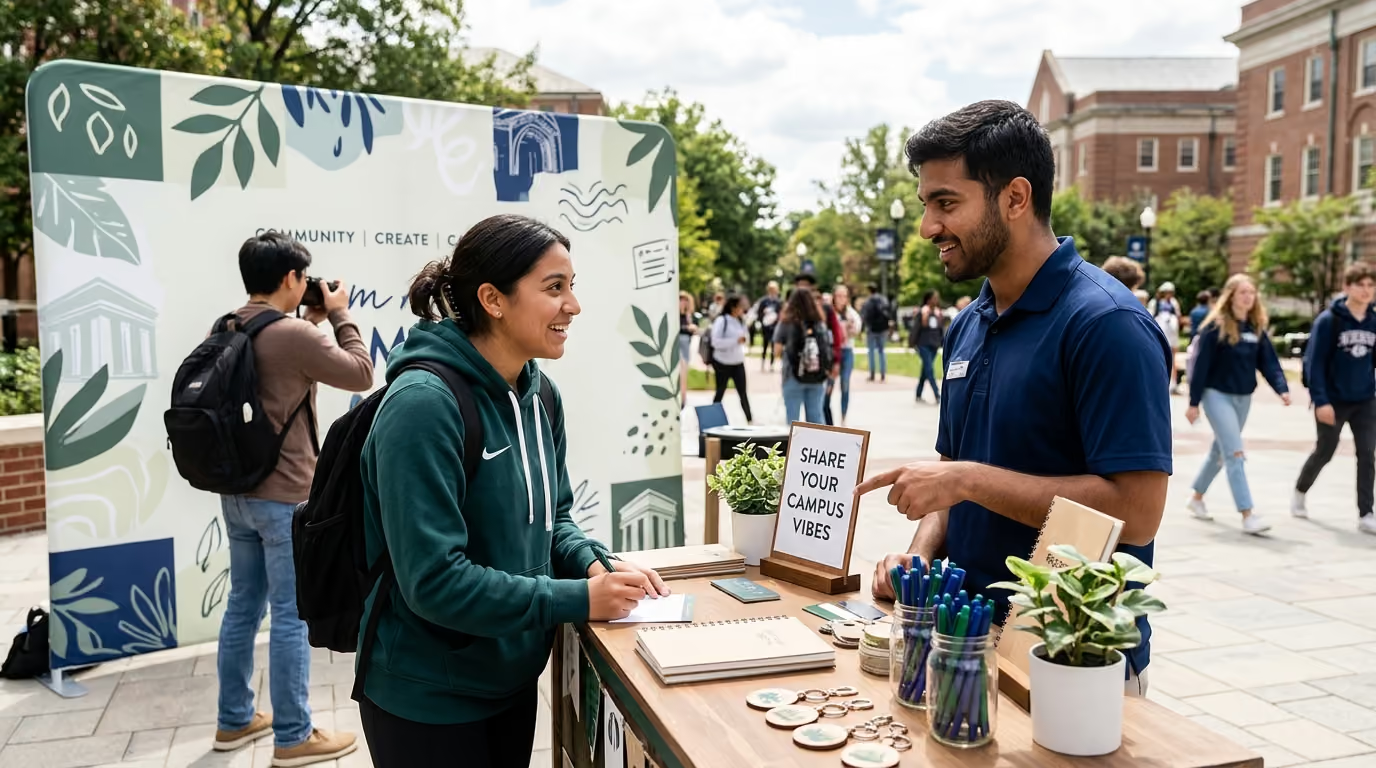
The reality of campus marketing often reveals itself on a Tuesday afternoon during midterms week on a crowded campus plaza. A brand ships twenty cases of product to a sophomore's off-campus apartment with vague instructions to hand out samples and post on social media. The student drags folding tables onto the campus quad, sets up next to the student union without an event permit, and begins handing out caffeinated energy drinks to passersby. Campus security arrives within twenty minutes to shut down the activation for unauthorized commercial solicitation, confiscating promotional banners and ordering the team to leave.
Meanwhile, three other student ambassadors post promotional TikTok videos from their dorm rooms to hit their weekly quota. One student claims the beverage cures chronic fatigue and guarantees higher exam scores, creating an unsubstantiated health claim under federal advertising law. Another student includes a discount link in their video caption but omits any paid partnership disclosure, tagging only the brand handle. A third student records a video inside the campus athletic facility while wearing a jersey with the university seal, violating institutional trademark policies.
By Friday afternoon, the brand team faces a cascade of operational breakdowns. The university office of student conduct sends a formal cease-and-desist letter barring the company from campus property. The legal team flags the unapproved health claims and disclosure failures across social channels. The regional field manager discovers that the ambassadors logged twenty hours of event labor but were promised only a flat one hundred dollar product credit, triggering wage compliance concerns.
This chaotic scenario represents the standard outcome when campus marketing is treated as an informal social experiment rather than an enterprise field marketing operation. Without strict operational boundaries, clear contracts, and continuous monitoring, campus activations quickly break down.
Worker classification is the single largest financial and legal risk in campus marketing programs. Brands frequently make the mistake of treating student ambassadors as independent contractors, unpaid interns, or volunteers simply because the work is part-time, seasonal, or completed around class schedules. Under the Fair Labor Standards Act, worker status depends on the economic reality of the working relationship rather than the label written on a contract.
The U.S. Department of Labor issued a revised independent contractor rule in 2024 that establishes a six-factor economic reality test under federal wage law. This test examines whether a worker is economically dependent on the potential employer or is truly in business for themselves.
When applied to campus brand ambassador programs, these six factors heavily favor an employer-employee relationship in most operational scenarios.
An independent contractor exercises business initiative that directly determines their net earnings. If a student ambassador is paid a fixed hourly rate, a set stipend, or a flat fee per social post, they do not exercise managerial skill that dictates profit or loss. Commission-only models do not automatically create contractor status either, as piece-rate compensation models are standard in many traditional employment relationships.
Independent contractors invest capital into tools, equipment, facilities, and operational infrastructure. A student ambassador who uses a personal smartphone and personal social accounts has not made a capital business investment comparable to the brand. The brand provides the product, marketing collateral, promotional kits, scripts, and software tools.
Ambassador arrangements that span an academic semester or a full school year indicate continuous, recurring labor. Even seasonal programs are considered permanent under the law if the work is ongoing during defined operational windows.
Control is the most common operational failure point for campus programs. If a brand dictates working hours, event schedules, mandatory training sessions, specific talking points, post approvals, or dress codes, the brand exercises substantial control. Maintaining detailed operational oversight over how work is executed is the hallmark of an employment relationship.
Customer acquisition, brand awareness, and field sampling are core business functions for consumer products companies. When ambassadors serve as the primary vehicle for regional market entry or retail sales velocity, their work is integral to the enterprise.
Using personal social media channels and talking to fellow students does not constitute specialized technical skill or business initiative. True independent contractors possess distinct, specialized capabilities and market their services independently to multiple competing clients.
Operating a compliant program means acknowledging these operational realities. When brands design campaigns requiring set shifts, strict scripts, and direct field supervision, classifying students as W-2 employees is the standard protective approach. Brands seeking to establish compliant campus programs should review our guide on building a structured student brand ambassador program to align staffing structures with operational requirements.
The Federal Trade Commission enforces clear standards regarding consumer transparency in digital and live advertising. The core legal principle is straightforward. If there is a connection between an endorser and an advertiser that consumers would not reasonably expect, and it affects how consumers evaluate the endorsement, that material connection must be disclosed.
A material connection is not limited to cash compensation. The FTC considers free products, gift cards, event passes, travel accommodations, performance bonuses, exclusive merchandise, and academic credits as material benefits. If a student receives free beverages or discounted apparel in exchange for posting online, a material connection exists under federal law.
The FTC mandates that disclosures must be clear, conspicuous, and placed where consumers cannot miss them. A disclosure buried in a sea of hashtags, placed below the fold, or hidden behind a "more" link violates federal requirements.
Disclosures must be visible immediately on the screen without requiring user interaction. For video content on platforms such as TikTok or Instagram Reels, the disclosure must be placed directly in the video text overlay as well as in the audio track. Relying solely on platform-level tags, such as the built-in "Paid Partnership" banner, may not satisfy FTC guidelines if the text is small, low contrast, or obscured on mobile screens.
Brands bear direct legal responsibility for the deceptive advertising practices of their campus representatives. Companies cannot outsource legal liability to nineteen-year-old college students through indemnity clauses. Implementing compliance-first ambassador training ensures that every collegiate representative understands disclosure mandates before a single piece of content goes live.
Collegiate brand ambassadors are powerful advocates precisely because their communication style is authentic, conversational, and direct. However, this casual communication style presents severe compliance risks when students begin modifying approved product messaging. Federal law prohibits unfair or deceptive marketing practices, requiring that all objective claims be substantiated before publication.
Under FTC enforcement standards, an advertiser must possess a reasonable basis for all express and implied objective claims. In the consumer packaged goods, beverage, and wellness sectors, health-related statements require competent and reliable scientific evidence. Students frequently create unapproved implied claims by sharing dramatic personal testimonials or exaggerated product benefits.
Personal testimonials do not bypass substantiation requirements. If a student ambassador posts a video stating that a supplement cured their anxiety, the FTC treats that statement as an implied claim that the product will cure anxiety for typical consumers. Advertisers cannot use consumer testimonials to make claims that the company could not substantiate directly.
To manage claim risk systematically, brands must implement an internal claim approval framework. This structure provides ambassadors with pre-approved talking points while outlining prohibited health and performance statements.
Campus marketing programs generate substantial amounts of user-generated content, photographs, video assets, and live promotional moments. Failing to establish precise intellectual property boundaries creates severe operational friction. Brand contracts must explicitly address copyright ownership, commercial usage rights, university trademarks, and Name, Image, and Likeness (NIL) regulations.
A standard creator agreement must delineate the scope of the license granted by the student. Brands should determine whether they require full copyright assignment or a broad, worldwide, royalty-free commercial license. If the brand intends to repurpose student-created content in paid digital advertising, retail displays, or packaging, the contract must state these terms clearly.
Students frequently assume that their status as enrolled undergraduates gives them the right to use university branding in commercial promotions. This assumption is legally incorrect. Universities aggressively protect their trademarks, logos, campus seals, mascot imagery, and building names.
Brand ambassadors must never wear official university-branded apparel, film inside restricted athletic facilities, or display school logos in commercial brand content without a license from the institution. Doing so exposes the brand to trademark infringement claims and immediate campus expulsion.
The legalization of Name, Image, and Likeness compensation for collegiate athletes has opened powerful promotional channels for consumer brands. However, student-athlete engagements operate under distinct compliance rules established by state statutes, conference guidelines, and NCAA policies.
NIL agreements require legitimate commercial deliverables. Contracts that provide compensation without verified promotional activity, or arrangements that tie compensation to athletic achievement or roster retention, constitute impermissible pay-for-play violations. Furthermore, brands must adhere to institutional reporting windows and avoid categories prohibited by specific universities, such as sports betting, alcohol, or adult entertainment.
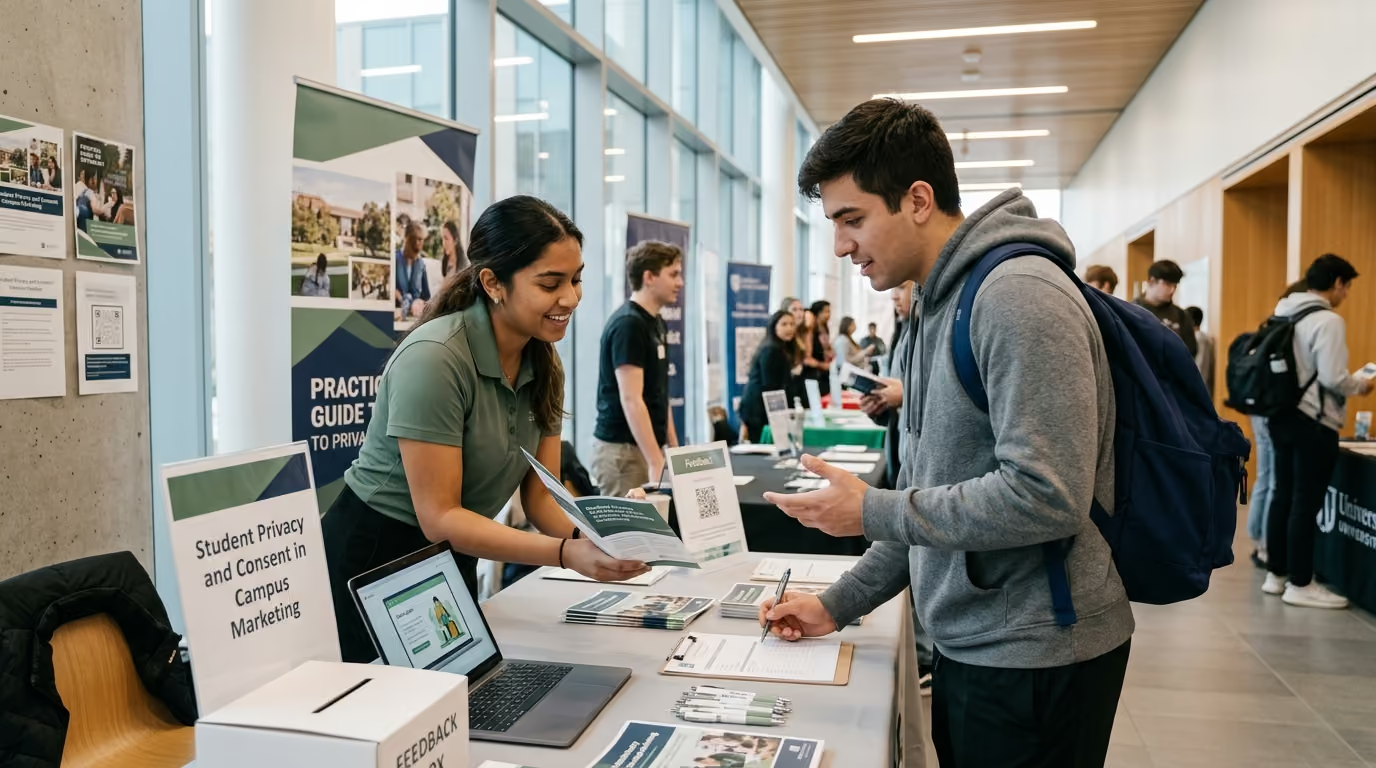
Collecting consumer data during campus activations is a primary objective for consumer brands seeking direct-to-consumer relationships. However, gathering personal information on college campuses requires strict data governance protocols. Brands must navigate federal student privacy standards, state consumer privacy acts, and youth protection rules.
The Family Educational Rights and Privacy Act (FERPA) protects the privacy of student education records. A common industry misconception is that brands can partner with student organizations or campus departments to obtain institutional student directories, email lists, or contact data. Universities cannot disclose student education records or personal contact lists to third-party commercial brands without express written consent.
When student ambassadors collect consumer leads at campus tabling events or retail pop-ups, they must follow data minimization principles. Brands should collect only the data points necessary for the immediate campaign objective. Ambassador-managed lead collection must run through centralized, encrypted software tools rather than personal spreadsheets or paper sign-in sheets.
Brands must also maintain awareness of the Children's Online Privacy Protection Act (COPPA). While college students are generally adults, college campuses frequently host high school visitors, summer camp participants, and dual-enrollment minors under the age of thirteen. Brand activations, digital contests, and sampling booths must include age-gating mechanisms to ensure no personal data is collected from minors without parental consent.
Sampling consumer products in physical campus environments involves intense regulatory scrutiny. Municipal health departments, university property managers, and federal regulatory bodies enforce specific mandates governing food safety, public distribution, and regulated product categories.
When distributing food and beverage samples, brand teams must secure appropriate temporary food facility permits and comply with local health sanitation codes. Ambient temperature tracking, allergen disclosures, and sanitary handling equipment are mandatory operational requirements. Brands operating physical sampling programs should integrate our proven field marketing compliance protocols into their campus field manuals.
Marketing beverage alcohol, tobacco, nicotine, or cannabis on or near collegiate properties represents the highest operational risk category in experiential marketing. The Alcohol and Tobacco Tax and Trade Bureau (TTB) enforces strict regulations regarding social media advertising, commercial coercion, and promotional sampling.
Alcohol brands must enforce rigorous age-gating across all physical and digital touchpoints. Student ambassadors representing alcohol brands must be of legal drinking age and should never distribute product samples directly on campus property. Most collegiate institutions strictly prohibit alcohol marketing, sponsorship, or sampling on university-owned or operated real estate.
Establishing a safe, scalable collegiate marketing initiative requires moving beyond ad-hoc management. Brands must implement an operational framework that governs every stage of the ambassador lifecycle.
In our experience, having connected brands with consumers through nationwide live experiences and campus programs since 1995, long-term campaign success relies on establishing structured operational guardrails before launching field operations. When compliance protocols are built directly into standard operating procedures, field teams execute with confidence and precision.
Our team utilizes an eight-dimension governance model to evaluate every proposed campus marketing initiative:
Executing a high-performing campus activation requires turning compliance policies into clear field workflows. Program managers should execute campus programs using the following structured operational playbook:
For teams deploying multi-campus initiatives, utilizing standardized campus activation toolkits and compliance frameworks ensures consistent execution across different university environments.
Tracking performance in campus marketing requires measuring both marketing effectiveness and operational compliance. Relying solely on top-line engagement figures leaves brands blind to underlying legal risks. Evaluating lead and lag indicators provides complete visibility into campaign health and commercial Return on Investment (ROI).
Reviewing these metrics weekly allows program directors to identify underperforming campus markets, retrain non-compliant representatives, and prove commercial value. Teams seeking deeper measurement methodologies should reference our guide on tracking student ambassador campaign performance to calculate campaign value accurately.
A national functional snack brand launched a multi-campus experiential campaign across twenty major universities to drive product trial and lift sales at campus-adjacent Target and grocery locations. The brand aimed to distribute 100,000 product samples while generating authentic social engagement among college students.
The brand rejected an informal, contractor-based model in favor of a structured, compliant operational architecture.
The structured compliance approach delivered substantial commercial returns while eliminating legal exposure across all twenty markets:
By prioritizing operational compliance from day one, the brand protected its corporate reputation and established a repeatable campus activation playbook.
No. If a student ambassador is performing structured promotional labor, setting up event tables, or working mandatory shifts under brand direction, they are an employee under the Fair Labor Standards Act. Federal and state wage laws mandate that employees receive cash wages at or above the applicable minimum wage. Providing free products or merchandise does not satisfy statutory minimum wage requirements.
Not always. The FTC states that built-in platform tags (such as Instagram's "Paid Partnership" banner) are helpful tools but may not be sufficient on their own. If the built-in tag is small, displays poor contrast, or gets cut off on mobile devices, it fails the clear and conspicuous standard. Brands should instruct ambassadors to include clear text disclosures (such as "Ad" or "Paid partnership with [Brand]") within the post caption and directly on video overlays.
Generally, no. University facilities, libraries, dining halls, and athletic centers are private or restricted institutional property. Filming commercial promotional content inside campus facilities without written permission from university administration violates institutional facility policies and may infringe on university property rights. Ambassadors should film in private off-campus spaces, designated public forums, or officially permitted event locations.
The brand must take immediate remediation steps. Contact the student representative through official communication channels to require an immediate edit or complete removal of the offending post. Document the infraction, the time of notification, and the timestamp of content removal in an internal compliance log. If the ambassador repeatedly posts unapproved claims after retraining, terminate their contract immediately to maintain compliance standards.

30 Years Experiential & Retail Activation Partner for CPG & Beverage Brands | Multi-Market Demos, Roadshows & Costco/Club Programs That Actually Sell