Robbie Thain
Founder, CEO

Retail compliance is rarely a simple checklist, demanding systematic management across risk dimensions and operational complexity tiers for safe brand.
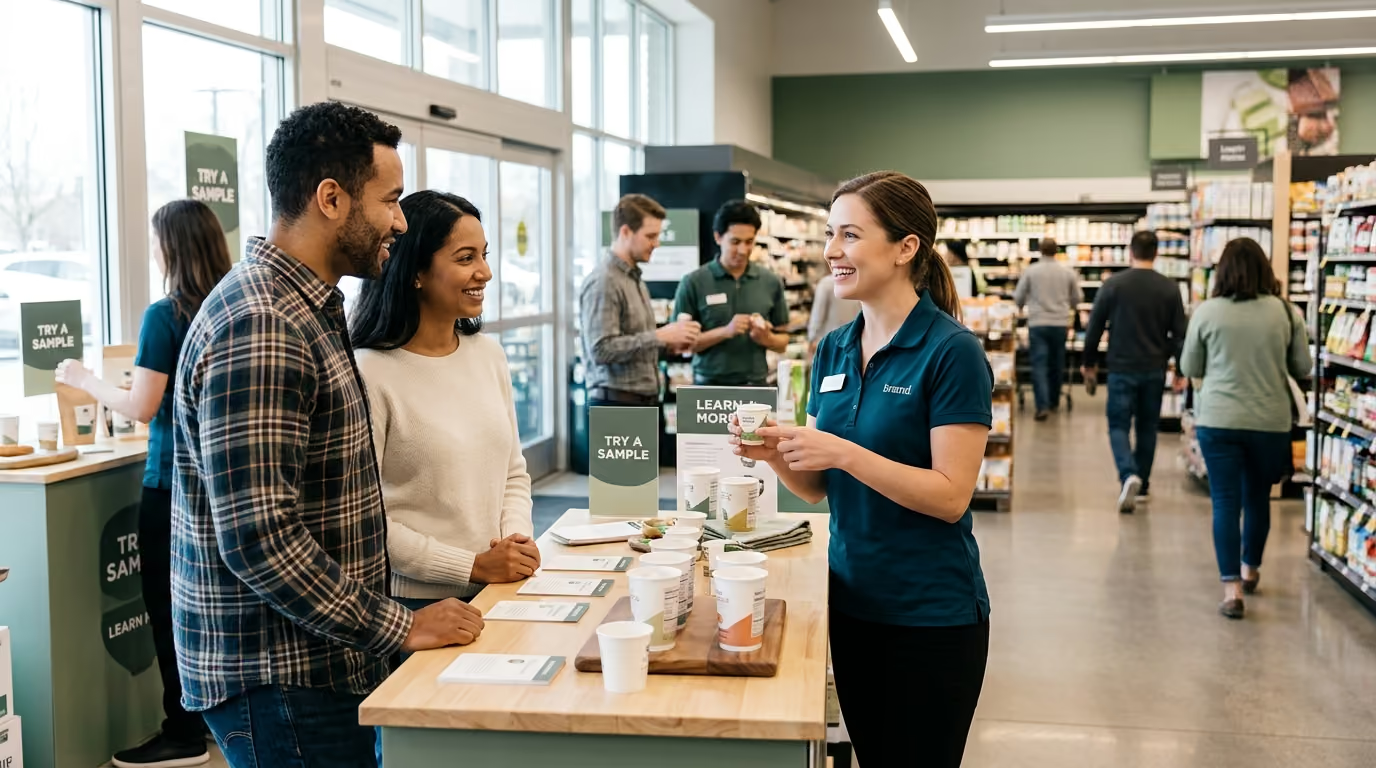
Navigating retail activation compliance requires a unified system that aligns federal mandates, municipal health codes, retailer guidelines, and risk transfer protocols before a single sample reaches a shopper. This guide delivers an operational blueprint to help brand leaders eliminate regulatory bottlenecks, protect enterprise reputation, and execute flawless in-store experiences that drive measurable sales velocity.
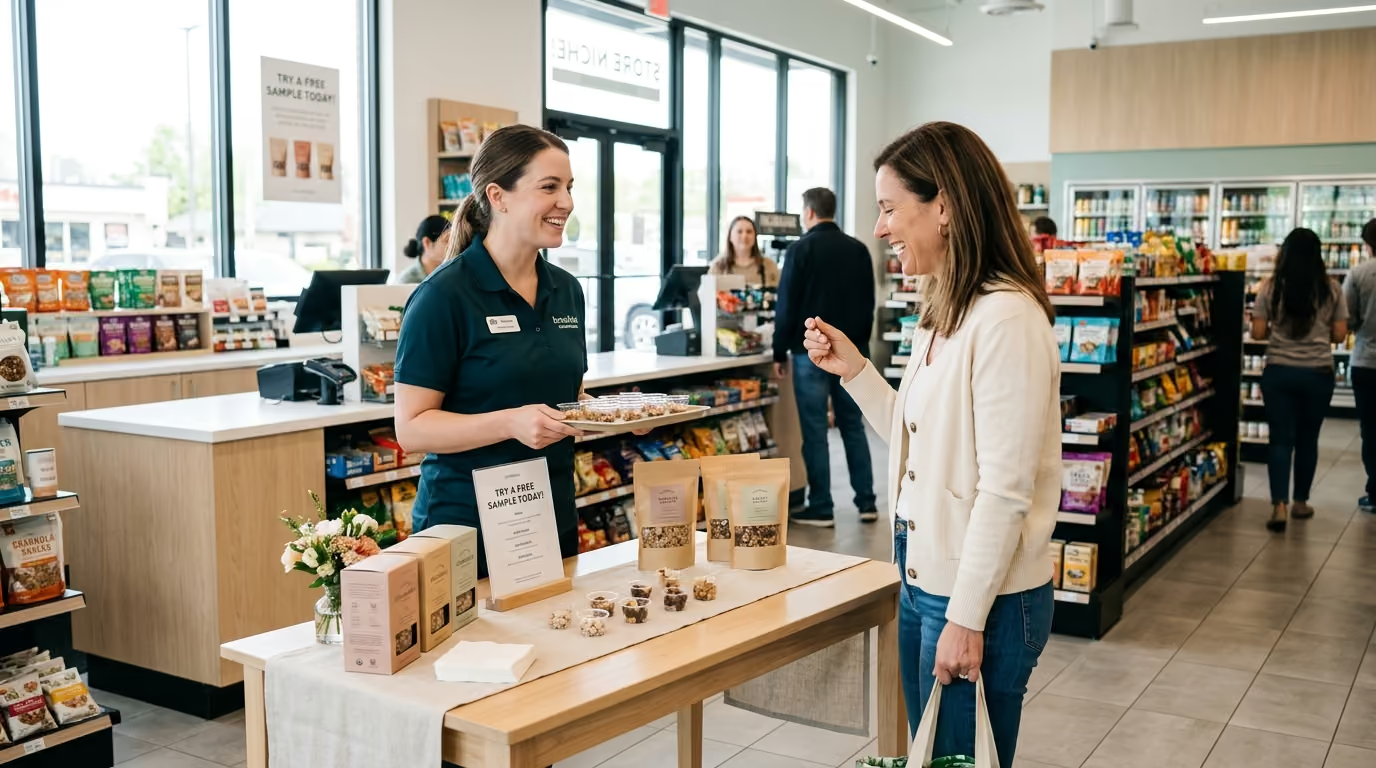
A Saturday afternoon at a high-volume grocery store should be the high-water mark for product trial. Shoppers fill the aisles, inventory sits on nearby endcaps, and your field team stands ready to distribute samples. Ten minutes before the activation begins, the store manager walks over and halts the entire program.
The manager points out that your electric skillet draws too much amperage for the outlet. The local health department inspector happened to be on-site and noticed your team lacks handwashing equipment. Simultaneously, a customer using a wheelchair cannot navigate the aisle because your promotional display narrows the walkway below thirty-six inches.
In an instant, months of retailer negotiations and marketing spend dissolve into operational friction. The team is forced to pack up their gear without distributing a single sample. The scheduled product inventory remains on the shelves, unsold and taking up valuable retail real estate.
This scenario plays out across the country when brands treat retail compliance as an afterthought or a simple box-checking exercise. Experiential marketing operates in the physical world where fire codes, health regulations, commercial insurance policies, and federal advertising rules intersect. When you scale activations across multiple retail partners and municipalities, compliance cannot rely on good intentions. It demands an operator-grade system built on rigorous preparation and clear operational standards.
Retail compliance is not a single permit or a generic checklist. It is the coordinated management of federal, state, local, retailer, venue, and contractual requirements that govern every interaction between your product and the public. To manage this complexity systematically, evaluate every activation across six core dimensions.
Identify exactly what you are distributing, demonstrating, or selling. Packaged snacks carry different risk profiles than perishable dairy, raw proteins, dietary supplements, or alcoholic beverages. Every ingredient, allergen, and product claim requires documentation before field deployment.
Determine how staff handle the product on-site. The compliance threshold rises significantly when a team transitions from handing out sealed, shelf-stable packages to opening, portioning, heating, blending, or chilling food. Each processing step introduces potential vectors for foodborne illness and triggers specific health department classifications.
Examine the physical environment where the activation occurs. An indoor grocery aisle, a big-box store vestibule, a retail parking lot, and an outdoor festival each operate under distinct regulatory frameworks. A permit that satisfies an indoor retailer will not cover a sidewalk demonstration outside their front doors.
Clarify who serves the product and who consumes it. Staff must hold appropriate food handler cards, alcohol server certifications, and background clearances mandated by the retailer. The program must also establish protocols for age-restricted products and cross-contamination prevention.
Audit every marketing message, consumer incentive, and data collection mechanism. Spoken scripts, banner signs, shelf talkers, sweepstakes rules, and digital registration pages must comply with Federal Trade Commission standards. Spoken claims by field staff represent legal advertising statements by the brand.
Review the operating guidelines established by the retailer, landlord, and distributor. Retailers frequently enforce operational, safety, and insurance requirements that are far stricter than local municipal codes. Meeting legal minimums does not guarantee you satisfy retailer vendor agreements.
To streamline planning, classify each activation into one of four operational tiers.
This tier includes distributing sealed, commercially packaged, shelf-stable products such as snack bars, dry goods, or canned beverages. The product package remains completely intact until the consumer opens it away from the station. The primary compliance focus involves retailer authorization, non-obstructed walkways, accurate ingredient disclosure, and general commercial liability coverage.
This tier involves opening packaging to portion, slice, scoop, or pour food for immediate consumer trial. Examples include cutting cheese, scooping salsa, pouring cold juice into sample cups, or portioning bakery items. This tier introduces active food safety risks. It mandates strict handwashing stations, sanitization routines, temperature maintenance, glove policies, and local temporary food permits.
This tier encompasses cooking, blending, heating, or assembling ingredients on the retail floor. Examples include blending smoothies, griddling plant-based burgers, warming soups, or brewing coffee. On-site preparation requires formal food safety management plans, power management checks, fire safety reviews, commercial commissary support, and specialized equipment sanitization.
Alcohol tastings introduce federal, state, and local regulatory oversight alongside heightened civil liability. Programs must comply with Alcohol and Tobacco Tax and Trade Bureau regulations, state alcohol beverage control statutes, and retailer sampling guidelines. Strict age verification, precise sample volume caps, certified pourers, and dedicated liquor liability coverage are mandatory.
A frequent point of confusion for emerging brands is determining which government entity holds jurisdiction over their retail activation. Navigating this landscape requires understanding the division of authority between federal agencies and municipal departments.
The U.S. Food and Drug Administration oversees food manufacturing and processing facilities under the Federal Food, Drug, and Cosmetic Act. Facilities that manufacture, process, pack, or hold food for consumption in the United States must maintain active food facility registration with the agency unless a specific statutory exemption applies. The Food and Drug Administration does not charge a fee for facility registration, and brands should register directly through federal portals rather than using unverified third-party services.
However, holding a valid federal facility registration does not grant a brand authority to sample food inside a grocery store. The Food and Drug Administration explicitly establishes that retail food establishments are primarily regulated by state, county, and municipal health authorities. Federal registration confirms that your manufacturing supply chain meets preventative control standards. It does not replace the local permits required to serve food to consumers in a specific retail aisle.
The Food and Drug Administration publishes the model Food Code as a baseline of scientifically sound food safety practices for retail operations. State and local jurisdictions adopt variations of this model code into binding local legislation. Understanding how local codes classify temporary operations is vital for planning multi-city activations.
The model Food Code defines a retail food establishment as an operation that stores, prepares, packages, serves, vends, or otherwise provides food for human consumption directly to the consumer. A temporary food establishment is defined as an operation that operates at a fixed location for a period of no more than fourteen consecutive days in conjunction with a single event or celebration.
Municipalities apply these definitions differently. One city may allow a brand to sample open food under an existing grocery store permit. A neighboring county may classify your sampling table as an independent temporary food establishment requiring a separate inspection, fee, and permit application filed thirty days in advance. Never assume an event in one city follows the identical administrative process as an activation across county lines.
Before launching a regional or national retail campaign, identify the specific Authority Having Jurisdiction for every target store location. When contacting local authorities, document the answers to several baseline questions:
Failing to account for municipal lead times is one of the biggest mistakes brands make after getting into retail. A permit application submitted three days late can shut down an entire market tour before the first sample is poured.
Food safety is non-negotiable in retail execution. An outbreak of foodborne illness or an unmanaged allergen exposure can trigger product recalls, costly litigation, retailer delisting, and severe brand damage.
Bacterial pathogens multiply rapidly within the temperature danger zone between forty-one and one hundred thirty-five degrees Fahrenheit. When executing open-food sampling or on-site cooking, field teams must implement a written temperature control plan.
For cold foods, products must be transported, stored, and held at or below forty-one degrees Fahrenheit. Field setups relying on standard ice baths often fail health inspections because melting ice creates uneven temperature distribution. Use commercial-grade insulated coolers, dedicated refrigeration units, and calibrated digital probe thermometers to verify product integrity.
For hot holding, foods must be maintained at or above one hundred thirty-five degrees Fahrenheit throughout the sampling window. If staff cook raw meats or heat pre-cooked items, establish clear cooking temperature minimums based on model Food Code standards. A digital temperature log must be maintained at the sampling station, with readings recorded every thirty to sixty minutes. If food falls into the temperature danger zone for more than two hours, protocol must mandate immediate disposal.
Open-food sampling requires field infrastructure that replicates commercial kitchen sanitation standards in a compact footprint.
When running open-food or preparation activations, the station must feature an approved handwashing setup. Where plumbed running water is unavailable, health departments generally require a portable handwashing system. This system consists of an insulated container with a continuous-flow spigot, warm potable water, liquid pump soap, single-use paper towels, and a dedicated wastewater collection bucket. Hand sanitizers are an additional hygiene measure, not a legal substitute for washing hands with soap and water.
All food-contact surfaces, cutting boards, blenders, and serving utensils must undergo regular washing, rinsing, and sanitizing. Field kits should include Food and Drug Administration compliant food-contact sanitizing solutions, such as quaternary ammonium or chlorine compounds, alongside calibrated chemical test strips to verify parts-per-million concentration. Utensils should be replaced with clean, sanitized backups every four hours or immediately upon suspected contamination.
Allergen management has become an urgent operational priority for physical activations. Data from the National Center for Health Statistics shows that in 2024, approximately 6.7% of U.S. adults and 5.3% of U.S. children reported a diagnosed food allergy. Related federal health data from the Centers for Disease Control and Prevention similarly documented allergy rates of 6.2% for adults and 5.8% for children.
These figures mean that in a busy retail aisle, dozens of consumers interacting with your activation each hour live with life-threatening food sensitivities. Brands sampling products containing major food allergens, including peanuts, tree nuts, milk, eggs, wheat, soy, fish, crustacean shellfish, and sesame, must maintain rigorous field controls.
Field teams must keep complete, unedited product packaging or manufacturer ingredient specification sheets on-site at all times. Brand ambassadors must be strictly trained never to guess an ingredient or assure a consumer that a sample is safe for individuals with severe allergies. If a shopper asks about allergen presence or manufacturing cross-contact, staff must present the printed ingredient declaration and allow the consumer to make an informed decision.
Every marketing asset displayed or spoken during a retail activation represents a formal brand communication subject to federal oversight. Packaging, banners, brochures, and field scripts must align with truth-in-advertising principles.
A common misconception among early-stage brand managers is that free promotional samples are exempt from packaging and labeling laws. While certain micro-portion samples distributed directly from a bulk container may not require full individual labels, any prepackaged sample handed to a consumer must comply with core labeling standards.
Under Food and Drug Administration regulations, packaged food labels must clearly declare the statement of identity, the net quantity of contents, the ingredient list in descending order of predominance, major food allergens, and the name and place of business of the manufacturer, packer, or distributor. Providing unlabelled clear plastic bags of product to consumers exposes the brand to regulatory action and customer complaints.
The Food and Drug Administration regulates three primary categories of label and marketing claims for food and dietary supplements:
These statements describe a relationship between an ingredient or substance and the reduced risk of a disease or health-related condition. Health claims require significant scientific agreement and formal pre-authorization by the Food and Drug Administration. Stating that a beverage prevents heart disease or cures diabetes is illegal without federal clearance.
These terms characterize the level of a nutrient in a food, using words such as "low fat," "high fiber," "zero sugar," or "good source of calcium." These phrases are legally defined by federal regulations. A brand cannot describe a snack as "low sodium" unless the formulation meets the exact quantitative sodium thresholds defined in Title 21 of the Code of Federal Regulations.
Commonly used on dietary supplements and functional foods, these claims describe how a nutrient or dietary ingredient affects the normal structure or function of the human body. Examples include "calcium supports strong bones" or "antioxidants support cell health." These claims cannot state or imply that the product diagnoses, treats, cures, or prevents any disease.
Additionally, the Food and Drug Administration enforces updated criteria for using the term "healthy" on food labeling. Under these standards, products using the claim must contain meaningful amounts of whole food groups recommended by the Dietary Guidelines for Americans while adhering to strict limits on added sugars, saturated fats, and sodium.
The Federal Trade Commission enforces broad statutory prohibitions against deceptive, false, or unsubstantiated advertising across all commercial channels. This regulatory authority extends directly to spoken statements made by brand ambassadors on the retail floor.
In an active retail activation, a brand ambassador who improvises medical or performance claims creates significant liability for the brand. If an ambassador tells a shopper that a functional beverage "cures arthritis," "eliminates brain fog," or "guarantees twenty pounds of weight loss," the brand is legally responsible for making unsubstantiated claims.
Maintain an evidence substantiation file for every marketing claim used across retail displays and field scripts. The file must contain the underlying scientific studies, testing methodologies, sample sizes, and regulatory reviews that support your statements. Ambassador training manuals must contain approved talking points and strict lists of prohibited phrases. In our experience managing field activations, scripted discipline protects both the brand's legal standing and the integrity of consumer interactions.
High-engagement activations often involve complex promotional mechanisms, such as alcohol tastings, social media sweepstakes, and creator partnerships. These tactics require specialized legal safeguards.
Alcohol sampling is one of the most heavily regulated activities in experiential marketing. Federal oversight by the Alcohol and Tobacco Tax and Trade Bureau intersects with state Alcohol Beverage Control agencies, county licensing boards, and individual retailer guidelines.
Under federal rules, retail alcohol dealers must register their operations by filing Form 5630.5d with the Alcohol and Tobacco Tax and Trade Bureau before commencing operations. Supplier representatives dispensing distilled spirits samples must also comply with strict recordkeeping standards outlined in federal rulings, including documenting the dates, retailer locations, brand names, and bottle quantities poured.
At the state level, sampling regulations vary widely:
Never deploy a generic, national alcohol sampling playbook. Every state rollout requires an independent legal analysis of local beverage control statutes.
To drive foot traffic and collect consumer contact information, brands frequently run "text-to-win" or QR-code promotions alongside retail activations. However, poorly structured promotions can inadvertently violate federal and state anti-lottery laws.
Under federal law enforced by the Federal Trade Commission and U.S. Postal Inspection Service, an illegal lottery consists of three elements: prize, chance, and consideration. Consideration generally means requiring a consumer to pay money, buy a product, or expend substantial effort to enter.
If your activation features a sweepstakes where winners are chosen by chance, you cannot mandate a retail purchase as the sole method of entry. You must provide a clear, easily accessible Alternative Method of Entry that allows consumers to enter for free with identical odds of winning. Furthermore, promotions must feature complete official rules that disclose eligibility criteria, entry dates, prize retail values, and sponsor identity. Several states also require formal state registration and surety bonding for promotions with prize pools exceeding specified dollar thresholds.
When brands invite influencers, local creators, or retail staff to create content during a store activation, Federal Trade Commission endorsement guides apply immediately.
Under federal endorsement guidelines, any creator or brand advocate who receives compensation, free product, travel reimbursement, or event access must clearly and conspicuously disclose that material connection. Disclosures must be placed prominently within the social post or video, using clear language like "#Ad" or "#Sponsored," rather than being buried in a block of hashtags or hidden behind a "see more" link. Furthermore, endorsers cannot make efficacy claims about a product that they have not personally experienced or that the brand itself cannot scientifically substantiate.
Compliance extends directly to the physical architecture of your sampling booth. Creating an activation that is safe, accessible, and properly insured protects your brand against catastrophic operational liabilities.
Retail stores are classified as places of public accommodation under Title III of the Americans with Disabilities Act. The Department of Justice 2010 ADA Standards for Accessible Design establish strict accessibility requirements for commercial facilities, and temporary experiential activations must comply with these standards.
A common mistake is assuming that because a host supermarket is accessible, your temporary sampling booth is automatically compliant. When a brand sets up sampling tables, display banners, queue stanchions, and electrical cords, it alters the store's physical environment.
The 2010 ADA Standards require that accessible routes through public facilities remain unobstructed and maintain a continuous clear width of at least thirty-six inches. If a sampling cart, promotional display, or consumer line narrows an aisle below this three-foot standard, the activation violates federal accessibility guidelines.
Furthermore, service counters and sampling tables must provide accessible service sections. Table surfaces should generally stand between twenty-eight and thirty-four inches above the finished floor, with sufficient knee clearance for individuals using mobility devices. Point-of-sale tablets, entry forms, and promotional literature must be positioned within standard reachable ranges.
Additionally, Department of Justice regulations state that establishments selling or preparing food must permit service animals in public areas, even where state or local health codes prohibit domestic pets. Staff must be trained on how to interact respectfully with consumers who utilize service animals, adhering strictly to federal questioning limits.
A retail activation involves multiple corporate entities, including the product manufacturer, the experiential agency, the retailer, the venue landlord, and the staffing provider. Allocating liability across these parties requires a comprehensive risk transfer strategy.
Obtaining a Certificate of Insurance is standard practice, but brand leaders must understand that a certificate is merely administrative evidence of coverage, not the insurance contract itself. Your legal and risk management teams must review the underlying policy terms, endorsements, and exclusions.
A robust retail activation risk management package should incorporate several essential coverages:
Provides foundational coverage for third-party bodily injury and property damage occurring at the activation site, such as a slip-and-fall over an electrical cord or a collapsing banner stand.
Protects the brand against claims arising from consumer consumption of the product, including foodborne illness, foreign object contamination, or severe allergic reactions.
Mandatory statutory coverage protecting field staff and brand ambassadors in the event of job-related injuries sustained during event setup, activation, or teardown.
Covers vehicles utilized in field marketing, mobile tours, and product transport between retail locations.
Specialized coverage required for any activation involving the pouring, serving, or sampling of alcoholic beverages. Standard general liability policies contain total alcohol exclusions for entities in the business of manufacturing or distributing alcohol.
Never assume that a retailer's corporate insurance policy covers your brand or field personnel. Contracts should clearly delineate indemnification responsibilities, establishing who pays legal defense costs and damages in the event of an incident on the retail floor. Understanding these insurance obligations is a vital step when selecting a retail activation partner for your campaigns.
Executing compliant retail campaigns across dozens or hundreds of locations requires a repeatable operational workflow. This step-by-step playbook guides marketing teams through every phase of program execution.
Experiential marketing campaigns must deliver clear business value while operating safely. Tracking both operational compliance indicators and financial performance metrics allows leadership to evaluate commercial Return on Investment alongside enterprise risk management.
Evaluating performance across lead and lag metrics provides a balanced scorecard for retail execution.
The percentage of municipal health and event permit applications approved without administrative rejections or late penalties. Target: 100%.
The percentage of deployed field personnel who have completed mandatory brand scripting, allergen management, and food safety training. Target: 100%.
The percentage of unannounced internal quality assurance audits and municipal health inspections passed without major operational citations. Target: 98% or higher.
The percentage of scheduled temperature checks executed on time and falling within safe food holding parameters. Target: 100%.
The percentage of consumers who try a sample and subsequently place a product into their shopping cart during the activation window.
The percentage increase in unit sales volume at the activation store during the event weekend compared to pre-event baseline sales and non-activated control stores. As brands navigate shifting market conditions, many consumer brands increase retail activations amid softer demand to stimulate immediate shelf takeaway.
The total activation expense, including staffing, permits, equipment, and product samples, divided by the number of completed consumer sampling interactions.
The sustained increase in baseline retail velocity measured four, eight, and twelve weeks post-activation. Measuring sustained velocity demonstrates how connecting roadshows to retail sell-through drives recurring revenue long after the field team departs.
Examining how compliance principles apply across real-world retail scenarios clarifies the operational differences between activation formats.
A natural foods brand launches an organic snack bar across five hundred national supermarket locations. The brand plans to deploy brand ambassadors to hand out individual samples.
A specialty food company demonstrates frozen dumplings by steaming and searing them inside high-traffic club store locations.
A craft spirits distillery launches a multi-city tasting tour across regional liquor retailers.
Retail activation compliance is not a static milestone. Revisit this guide whenever your brand encounters operational trigger events:
A disciplined compliance program does not hinder experiential creativity; it establishes the foundation that allows bold retail activations to scale safely, legally, and profitably across the country.

30 Years Experiential & Retail Activation Partner for CPG & Beverage Brands | Multi-Market Demos, Roadshows & Costco/Club Programs That Actually Sell