Robbie Thain
Founder, CEO

Three decades of experiential marketing show that choosing the right field activation agency requires rigorous vetting, clear goals, and verified store performance.

Selecting the right retail activation partner determines whether your physical marketing budget drives measurable sales velocity or disappears into unverified field expenses. This guide provides brand leaders with an operational framework to evaluate agencies, structure binding scopes of work, and verify performance across every retail environment.
Brand leaders often search for how to choose a field marketing agency after experiencing a breakdown at store level. A regional demo rollout collapses because brand ambassadors fail to show up, store managers deny floor access, or product inventory sits undiscovered in the backroom. Marketing executives watch planned retail campaigns turn into operational fire drills when agencies lack rigorous field management.
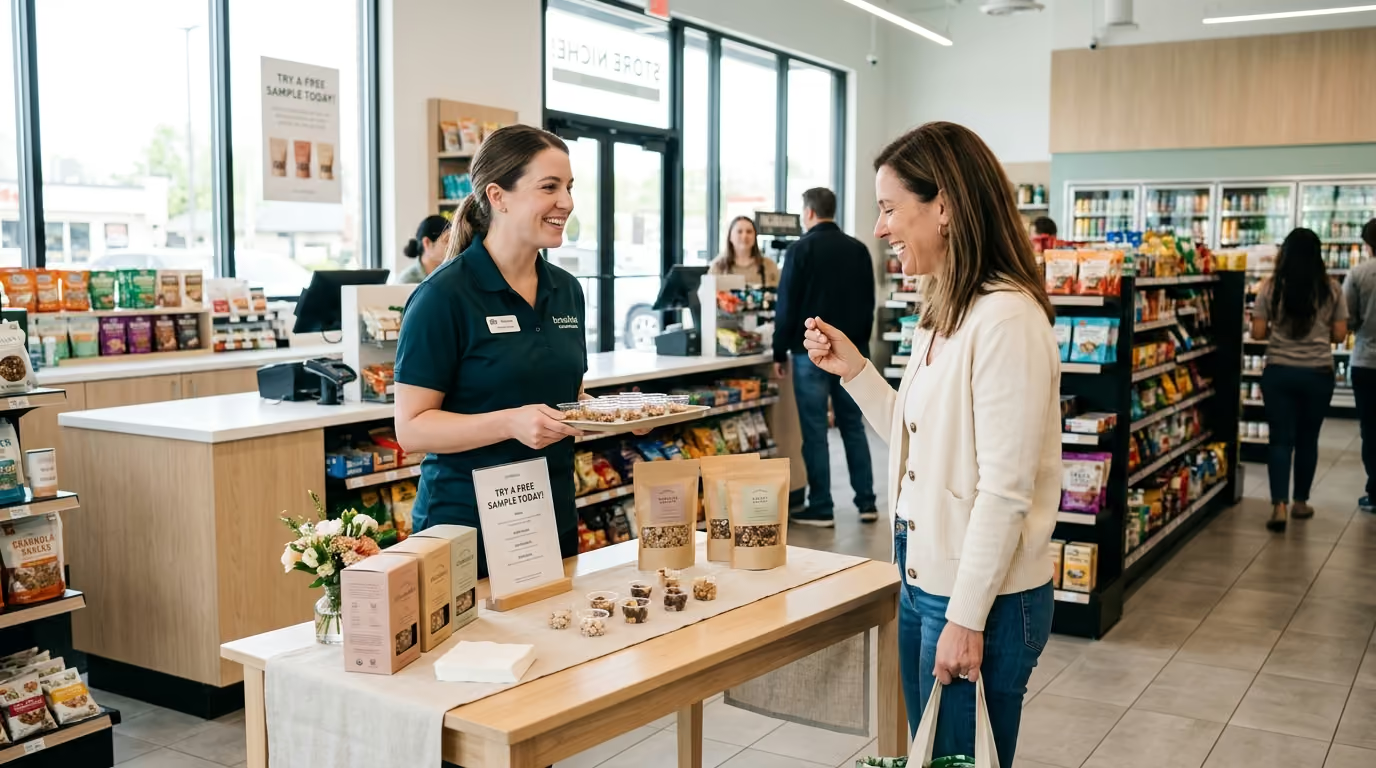
Executing inside major retailers presents logistical friction that traditional advertising agencies rarely understand. A field team must navigate distinct store rules, variable floor layouts, strict health regulations, and changing grocery traffic patterns. When an agency treats physical store activations as simple staffing exercises, the brand suffers from low consumer engagement and unrecorded sales data. Success on the retail floor requires disciplined operations, vetted field personnel, and clear coordination with store managers.
Selecting an execution partner requires defining your primary commercial goal before choosing a specific event format. Brands make a costly mistake when they request a mobile tour or nationwide sampling push without defining the exact shopper friction they need to solve.
In our experience, successful brand activations start by identifying the precise behavioral shift needed at the shelf. We have been connecting brands with people through live experiences, retail programs, and national activations since 1995. Over three decades, we have built a track record of creating meaningful brand moments across the country. That operating history shows that different retail objectives demand entirely different operational structures.
A complete activation strategy follows a strict decision hierarchy:
Academic research published in the Journal of Retailing demonstrates that in-store product sampling generates both immediate sales spikes and sustained baseline lift over extended periods. The study indicates that repeated sampling events create compound sales growth while expanding total category consumption rather than merely cannibalizing competing brands. Selecting a partner who understands store segmentation and frequency planning ensures your investment captures these long-term gains.
Retail activation partners operate under distinct business models that dictate their operational strengths. Brands must look past marketing claims to understand how prospective partners actually execute work in the field.
Full-service experiential agencies handle creative concepting, production fabrication, nationwide staffing, and consolidated data reporting. These agencies excel at managing complex, high-visibility campaigns where brand storytelling and custom fabrication must work together seamlessly. Brands planning nationwide tours or custom retail environments often choose comprehensive brand activation services to keep strategy and field production under unified leadership.
Field marketing agencies concentrate on store-level labor recruitment, market supervisor routing, regional demo execution, and direct retail reporting. They build dedicated rosters of product specialists trained for active retail engagement across grocery, mass, and natural store channels.
Staffing vendors provide labor pools to fill shifts, handle hourly payroll, and administer field workers' compensation. They do not typically offer strategic planning, customized reporting dashboards, or complex logistical coordination. Production suppliers focus exclusively on structural design, asset fabrication, regional warehousing, freight shipping, and physical store installation.
Vetting an activation partner requires assessing execution discipline rather than creative presentation decks. Marketing leaders should evaluate prospective agencies across core operational categories before signing long-term master service agreements.
A qualified partner demonstrates an understanding of retail economics, slotting pressures, and store operations. They evaluate trade spend constraints and design campaigns that optimize labor hours against expected store foot traffic.
The agency should explain how their field tactics will adapt across different retail environments. A natural grocery format requires a consultative product conversation, while a high-volume warehouse club demands rapid sample distribution. The agency must identify when a requested campaign format is commercially unviable and propose adjustments to protect client Return on Investment (ROI).
The operational viability of any retail campaign depends on how the partner recruits, screens, schedules, and manages field personnel. Inquire directly about the size of their active, W-2 employee base versus their use of independent contractor networks.
Review their historical shift fulfillment rates, emergency backup procedures, and on-site supervisor ratios across your target geographic markets. Ask prospective partners how they handle last-minute staff cancellations, severe weather disruptions, and unresponsive store personnel. Reliable operators maintain reserve staff rosters in major metropolitan areas to ensure consistent shift coverage.
Field staff act as the direct physical voice of your brand. An activation partner must maintain formal training systems that go beyond basic product information sheets.
Ambassadors must master approved health claims, competitive advantages, consumer objection handling, and proper retail floor etiquette. Training modules should also cover inventory location protocols, sanitation standards, and strategies for directing shoppers toward the retail shelf. Request access to their digital learning management platform to review sample testing materials, completion tracking, and field performance scorecards.
Physical campaigns require precise management of branded assets, demonstration kits, promotional materials, and perishable product inventory. Ask the agency to detail their physical infrastructure, including regional warehouse locations and shipping carrier partnerships.
Examine their protocols for managing cold-chain requirements, monitoring lot expiration dates, and handling reverse logistics for reusable hardware. To avoid unexpected invoices, review our retail activation budgeting guide to ensure storage fees, freight surcharges, and maintenance costs are clearly documented.
An experienced partner maintains working relationships with national and regional retail store managers. They understand scheduling portals, vendor authorization forms, insurance requirements, and designated demonstration spaces for major retail accounts.
The agency must outline their escalation protocol for handling out-of-stock inventory, unauthorized floor moves, or uncooperative store personnel. Partners who document local store conditions help brands prevent the common post-retail launch errors that undermine retail shelf performance.
Managing a structured selection process protects your organization from speculative pitches and unverified agency claims. Follow this phased playbook to vet prospective retail activation partners systematically.
A qualified activation partner must establish a rigorous measurement model before launching field operations. Experiential activations generate multiple data streams, but agencies must separate immediate field outputs from true incremental commercial impact.
Delivery metrics confirm that the agency executed the contracted scope according to schedule:
Engagement metrics measure the quality of interaction between field ambassadors and target retail shoppers:
Commercial metrics demonstrate whether physical retail engagements generated financial returns for the brand. Brands should use advanced methodologies for measuring retail sales lift and attribution across all participating retail locations.
To track short-term store performance, calculate same-day sales lift across active demo locations:
$$\text{Same-Day Sales Lift Percentage} = \frac{\text{Event Day Store Unit Sales} - \text{Baseline Store Unit Sales}}{\text{Baseline Store Unit Sales}} \times 100$$
Calculate immediate shopper conversion rates to evaluate the direct selling effectiveness of on-site staff:
$$\text{Shopper Conversion Percentage} = \frac{\text{Verified Event Day Product Purchasers}}{\text{Total Qualified Consumer Samples Distributed}} \times 100$$
Operational lift calculations provide rapid visibility into daily store execution. However, sophisticated brands use matched-control methodologies to isolate true incremental sales.
Comparing performance in active demo stores against identical control stores accounts for confounding factors like seasonal demand shifts, temporary price reductions, or regional advertising campaigns. An expert activation partner structures control groups before launch to prove that sales growth stems directly from field execution.
Examining verified retail campaigns highlights how tailored execution frameworks solve specific category challenges.
A major confectionery brand executed a seasonal retail demonstration program across high-traffic grocery locations to drive holiday trial. The campaign deployed trained brand specialists who prepared customized product samples, engaged shoppers regarding seasonal gift purchases, and managed inventory displays adjacent to checkout lanes.
By linking interactive consumer sampling directly with nearby shelf stock, the brand captured immediate sales while establishing long-term customer purchase habits.
A packaged snacks company partnered with a mass retail media network to launch a new product line while supporting an existing flagship product. The brand executed coordinated demonstration events across hundreds of retail stores on peak weekend shopping days.
The campaign produced a 228% sales lift among new-to-brand consumers for the new product launch, alongside a 602% sales lift for their established core item. These results illustrate how structured field sampling introduces new products to consumers while simultaneously reinforcing demand for mature product lines.
Contractual ambiguity leads to unexpected cost overruns and operational failures. Master service agreements and scopes of work should specify performance standards, financial obligations, and legal protections.
The scope of work must define included activities, excluded tasks, and client approval points. Detail the exact delivery dates for staffing rosters, training materials, production drawings, and consolidated reporting dashboards.
The contract must clearly establish ownership of creative concepts, promotional assets, consumer data, and field photography. Ensure your brand secures unencumbered rights to all photography, video, and customer records generated during field activations.
Specify named agency personnel for primary leadership roles, including the account supervisor, field operations manager, and logistics coordinator. Require written client approval before the agency can substitute key management personnel during campaign execution.
Establish firm service response times for daily operational queries, urgent retail escalations, and incident investigations. The contract should outline backup staffing obligations if local team members fail to arrive at assigned retail locations.
Define billing structures for agency fees, hourly labor rates, overtime premiums, travel expenses, and asset storage. Require transparent documentation for pass-through costs, such as venue fees, local permits, and freight shipping.
Establish clear billing rules for shifts impacted by severe weather, emergency store closures, or sudden retailer cancellations. Maintain formal audit rights allowing your accounting team to review labor logs and receipts.
Incorporate performance benchmarks tied to financial remedies within the master agreement:
Retail marketing requires substantial insurance coverage to protect against property damage, personal injury, and product claims. Require the agency to provide proof of:
Executing retail activations in specialized categories requires strict adherence to federal laws, state licensing rules, and retailer guidelines.
Food and beverage activations must comply with local health department regulations, safe food handling protocols, and allergen control procedures. Brand ambassadors must maintain current food handler certifications and follow strict sanitary preparation rules.
Teams must maintain continuous temperature logs for perishable inventory, document cold-chain integrity during transport, and use separate preparation tools to avoid allergen cross-contamination. Agencies should follow an operational and logistics planning system to manage refrigeration equipment, clean water supplies, and sanitary waste disposal at every retail venue.
Alcohol sampling programs must navigate complex federal regulations, state alcohol beverage control mandates, and municipal licensing rules. Staff must hold state-approved responsible beverage service certifications and enforce strict age verification checks prior to pouring samples.
The activation partner must control maximum sample pour sizes, track total samples served per individual, and verify approved demonstration zones within each store. Agencies must maintain protocols for addressing intoxicated patrons, denying service professionally, and documenting regulatory compliance.
Brands marketing dietary supplements, over-the-counter health items, or personal care products face strict advertising claim restrictions. Activation partners must ensure field staff deliver approved brand statements without making unauthorized therapeutic claims.
All demonstration scripts, consumer handouts, and point-of-sale displays must undergo formal legal and regulatory review. Agencies must train staff to direct complex consumer medical inquiries to customer service channels rather than attempting to answer them on the retail floor.
Avoid these common vetting mistakes when selecting your next retail activation partner:
Apply this practical implementation checklist this week to evaluate your prospective retail activation partners:

30 Years Experiential & Retail Activation Partner for CPG & Beverage Brands | Multi-Market Demos, Roadshows & Costco/Club Programs That Actually Sell