Robbie Thain
Founder, CEO

Singapore brands are replacing static showrooms with interactive experience centers. Learn how CPG marketers can turn physical sampling into learning hubs.
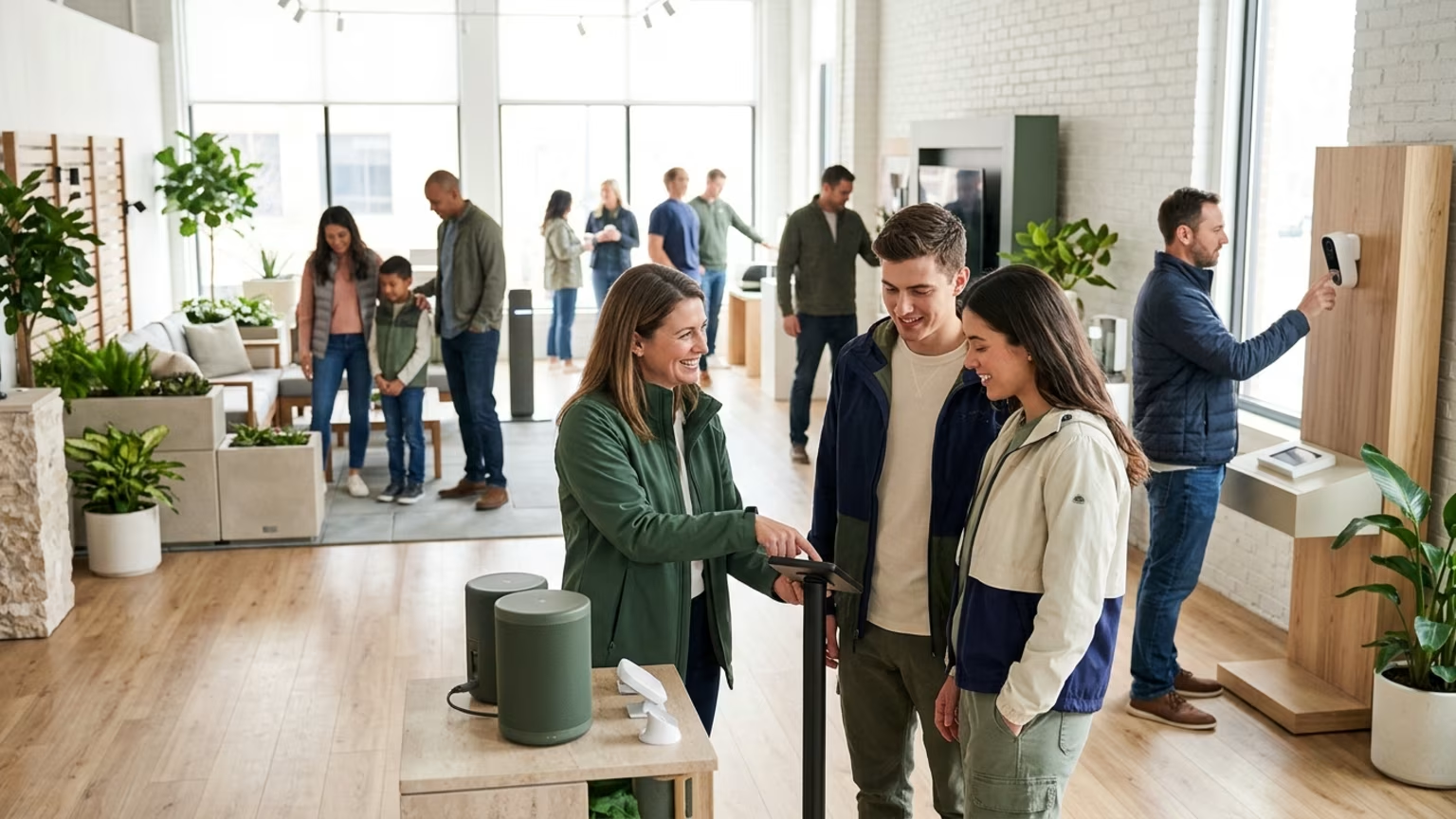
On September 11, 2026, The Straits Times reported a documented shift in how specific home and lifestyle brands use physical environments. Brands including Woosa, Hansgrohe, and Flexform are replacing conventional product-display showrooms with sensory experience centers. These spaces allow consumers to test products in realistic environments rather than viewing them on static displays. The development signals a broader move toward physical spaces designed for active participation.
The shift redefines the primary function of physical brand spaces. In June, Flexform launched its Singapore Experience Centre on Bendemeer Road in partnership with its distributor. This Rosso Italia Living partnership prioritizes relaxed introductions over immediate transactions. In March, Rigel opened a revamped experience center in Changi featuring a Wellness Ensuite.
This Rigel installation includes a Wellness Ensuite with a cold-plunge tub, sauna pod, and immersive ceiling shower. Woosa now operates The Dreamery in Tampines North. Here, customers can book enclosed sleep pods hidden behind curtains to test mattresses. At Hansgrohe’s Water Studio on Mohamed Sultan Road, visitors can see and feel approximately a dozen shower fittings in operation.
The Straits Times article notes that these formats engage consumers earlier in the buying journey. Singapore University of Social Sciences marketing associate professor Dianna Chang states that traditional showrooms primarily serve a sales function. She argues that experience centers engage consumers earlier by allowing them to interact with products in realistic settings. Consumers can then imagine how those products might fit into their lives.
For marketers managing consumer packaged goods, this shift confirms a core operational reality. A physical footprint is defensible only when it provides functional proof that a digital screen cannot replicate. We believe sampling and demonstration spaces should function as category-learning hubs rather than mere distribution points. This approach reduces hesitation while positioning the brand as an educational resource.
According to Demo Wizard, in-store demonstrations allow a trained ambassador to prepare and sample a product at retail. This format is particularly critical for items where taste, texture, or scent heavily influences purchase decisions. A static display cannot respond to a skeptical shopper. A trained brand ambassador can turn a technical feature into a highly relevant everyday benefit.
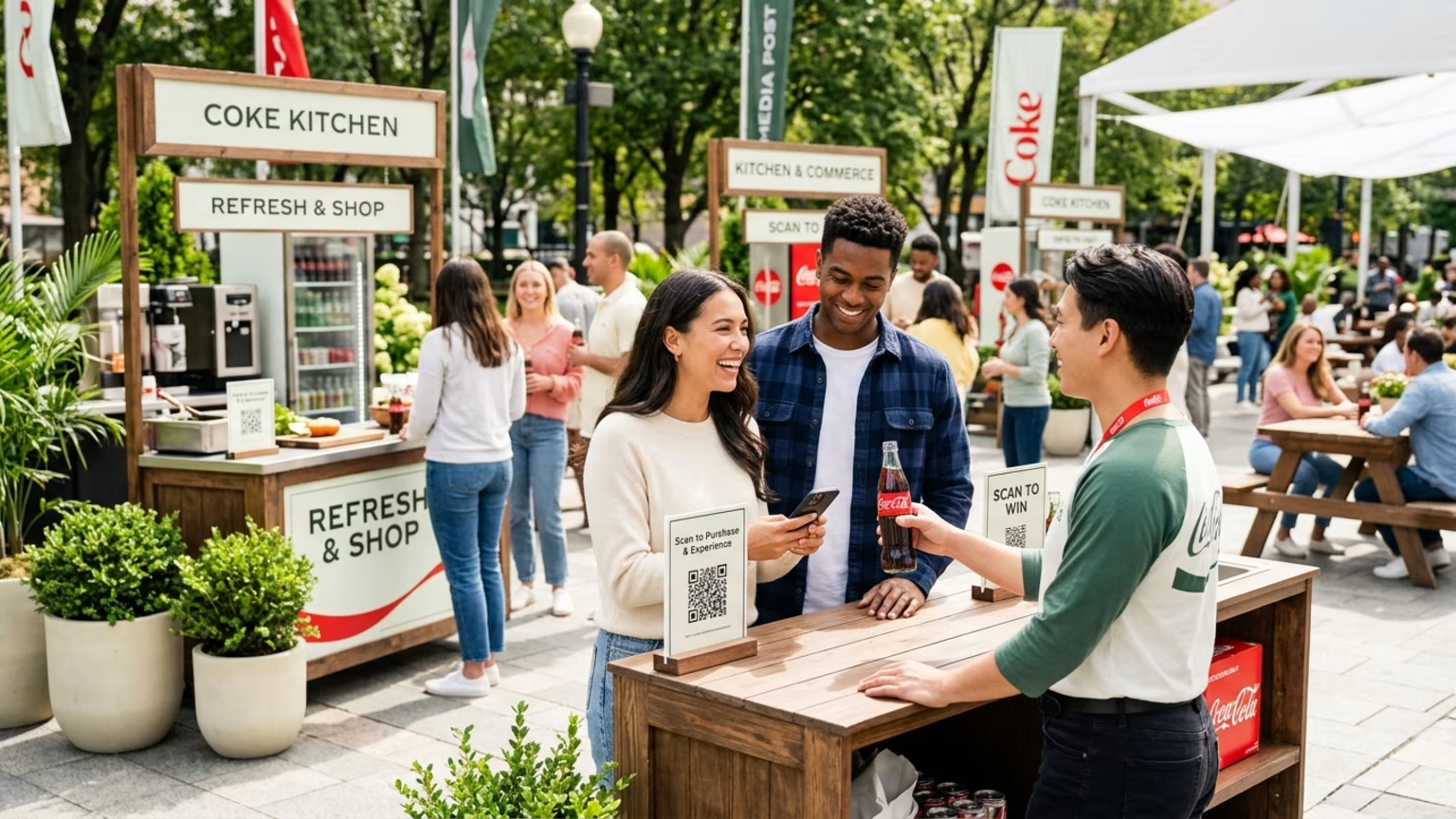
Our Experiential Marketing service applies this exact logic to high-volume retail and live environments. We specialize in creating retail demos, product sampling programs, and roadshows that bring brands face to face with their audiences. We structure these activations to overcome specific barriers to trial while building authentic consumer relationships. Shoppers receive hands-on education, compare options, and leave with a clear path to purchase.
Transitioning from static displays to immersive centers creates immediate logistical demands. Interactive spaces require rigorous attention to capacity management, staffing, maintenance, and appointment flow. For example, Rigel’s Wellness Ensuite requires advance booking and is subject to availability. The Straits Times explicitly cautions that some spaces may simply be ordinary showrooms with a more fashionable label.
The true distinction is behavioral. The physical operation must actually support realistic testing and interaction to be effective. This operational burden scales significantly when brands take these experiences into the field. Managing a mobile footprint requires standardizing the consumer journey across multiple regions without losing the sensory impact.
We manage end to end Costco roadshows that bring brands to shoppers through live demos, real conversations, and measurable sales impact. Field staff must be trained to manage high-traffic flows while delivering consistent product education. Marketers must ensure their logistics partner can handle the physical storage, shipping, and nationwide coordination required. Flawless execution prevents the activation from becoming a crowded bottleneck.
The psychological gap between viewing a product and experiencing it is significant. Singapore Management University assistant professor of marketing Shilpa Madan draws a sharp distinction between the two formats. Madan told The Straits Times, "A showroom says, 'Here is the product. Have a look'. An experience centre says, 'Come and try living with it for a while'."
She notes that experience centers can reduce uncertainty and help consumers personalize products. They also translate technical features into understandable benefits while positioning brands as category experts. Other industry leaders echo this sentiment regarding the necessity of sensory proof. Woosa co-founder Tyler Peh connects mattress testing to the product’s unusually frequent and intimate use.
Peh notes that people use mattresses for seven or eight hours at a time. He adds that sleep can directly affect physical health, mood, and work performance. Hansgrohe marketing executive Stella Tan argues that online platforms cannot fully reproduce the sensory aspects of physical spaces. She says hands-on testing and human guidance can increase shopper confidence.
Rigel branding strategist Tana Bui adds that homeowners care deeply about emotional resonance. They are increasingly concerned not only with whether a renovation is functional but also with how a space feels. She describes the company’s objective as moving consumers beyond imagining a product from a specification sheet. They want shoppers to actually feel the rain shower and picture their own routines.
Evaluating the success of these spaces requires tracking concrete outcomes rather than just foot traffic. Brands need to document product trials, track subsequent retailer visits, and measure retail velocity nearby. The Straits Times article contains no market-size estimate, conversion-rate data, or return on investment figure for the featured centers. Planners must establish a clear comparison method before launching any immersive physical program.
Many brands successfully blend live engagement with strict performance metrics to bridge this measurement gap. We designed and managed a 40 by 20 foot trade show environment for Glanbia at Natural Products Expo West 2025. This brought think!, Isopure, Optimum Nutrition, and Amazing Grass into one coordinated space. We handled concept, operations, staffing, and breakdown for the entire layout.
There were more than 14,000 recorded product samples distributed across the activation stations during the event. This scale of execution ensures that every physical interaction feeds into a measurable business outcome. Brands that invest in trade show experiences that drive real business see better downstream results. They move beyond passive observation and actively convert visitors into documented leads.
Measuring regional performance also requires comparing post-activation retail velocity against a clean baseline. Marketers should analyze comparable locations that lacked sampling support over a designated window. Utilizing shopper data to optimize in-store engagement allows teams to prove their value. This approach transforms a vague brand exercise into a hardened sales tool.
When marketers prove that demos drive incremental sales, they secure better budgets and stronger retail partnerships. Every marketer must eventually justify their physical footprint to financial stakeholders. Experience centers provide a powerful model for turning passive observers into active participants. Physical marketing must do what screens cannot.
If your current field strategy relies on passive displays and unguided sampling, what specific sensory barrier is preventing your shoppers from converting today?
True brand loyalty is rarely built through a screen alone. It forms quietly in the moments when a product finally makes sense in a person's hands.
Transitioning from static product displays to sensory category-learning environments requires flawless physical execution. Makai ensures every consumer interaction is supported by trained staff, solving the low quality leads from crowded trade shows that often plague passive booths. With our Costco Roadshows service, we manage end to end Costco roadshows that bring brands to shoppers through live demos, real conversations, and measurable sales impact.

30 Years Experiential & Retail Activation Partner for CPG & Beverage Brands | Multi-Market Demos, Roadshows & Costco/Club Programs That Actually Sell