Robbie Thain
Founder, CEO

At Advertising Week New York, leaders from Target and JPMorgan Chase discussed using events to fuel digital content. Here is what that means for field logistics.
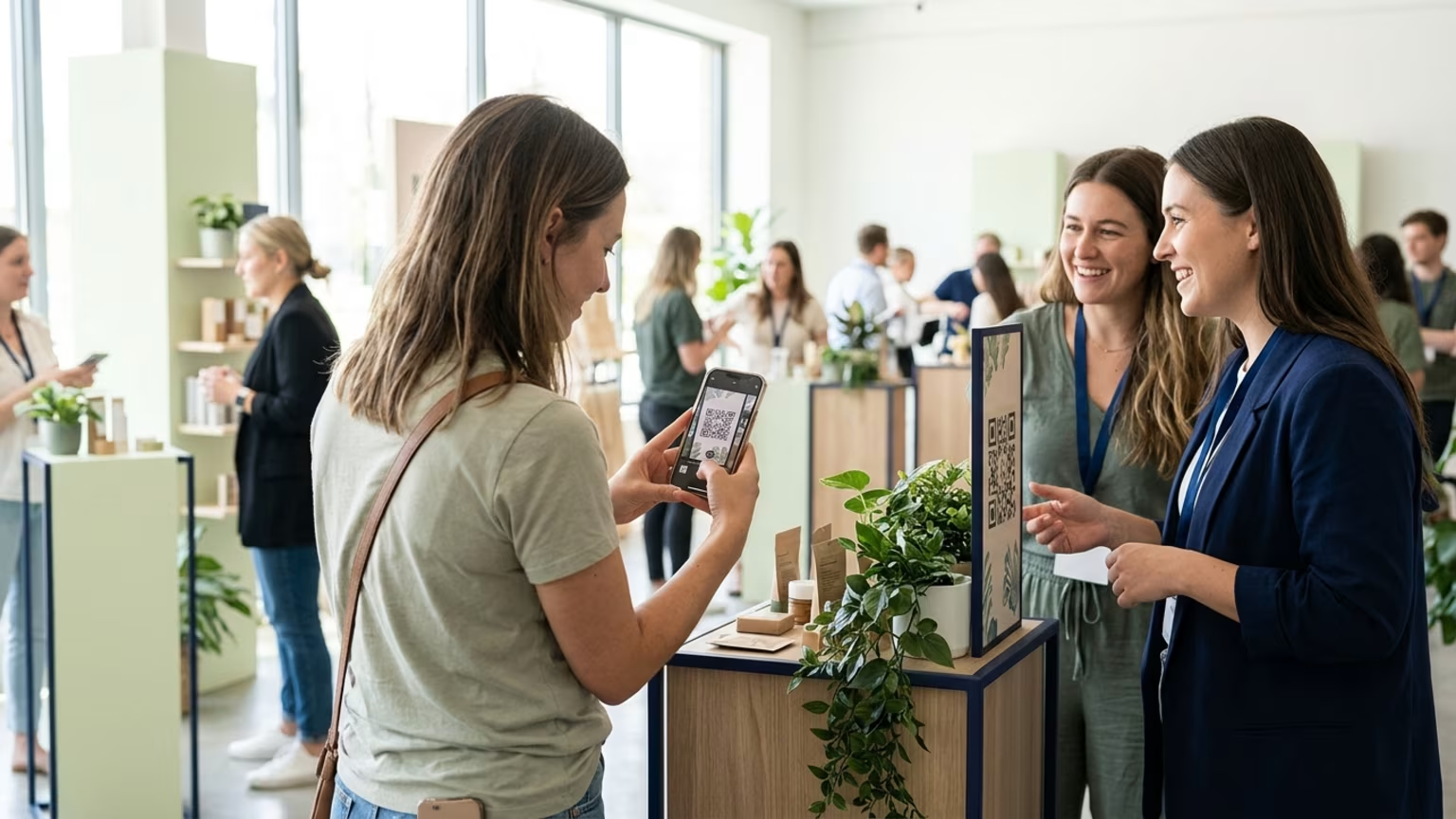
On Oct. 5, 2026, marketing leaders from JPMorgan Chase and Target joined VaynerX at an Advertising Week New York panel to discuss the relationship between analog experiences and digital content. VaynerX chairman Gary Vaynerchuk moderated the discussion alongside JPMorgan Chase CMO Carla Hassan and Target senior vice president Michelle Mesenburg. The panel addressed how organizations are balancing real-world marketing engagements with the need for algorithmic visibility. This conversation framed live activations as both in-person engagements and scalable sources of reusable social creative.
The event highlighted a growing operational tension for marketing teams managing large physical footprints. Marketers face increasing pressure to prove the value of their live activations through measurable digital reach and brand visibility. This panel provided a clear look at how major consumer brands are attempting to bridge the gap between street-level engagement and digital algorithms. The executives detailed their strategies for making sure that a physical brand interaction continues long after the consumer walks away from the booth.
The strategic shift discussed at the event centers on treating live activations as content production engines. Vaynerchuk called this approach the "relevance barbell" and argued that experiential marketing allows brands to produce social creative at scale. The panel suggested that merging events and content provides a structural advantage. Hassan noted that JPMorgan Chase uses its 5,000-plus branches and events like the Chase Sapphire Dinner on the Court to engage people while creating digital content.
Target provided another clear example of blending physical presence with digital reach. Mesenburg highlighted the retailer's two-day presentation at the New Museum during New York Fashion Week in September. Target showcased its design legacy there before moving the program to a secondary location. Target's own announcement noted that the New Museum activation was followed by an interactive customization experience at its SoHo concept store.
These efforts illustrate a clear push to turn physical footprints into scalable media channels. Both executives demonstrated how large brands actively map physical consumer interactions into a digital format. The panel stressed that the physical environment provides a unique backdrop for creating authentic digital narratives. As this approach becomes more common, the operational requirements for executing these events will shift dramatically.
We have been connecting brands with people through live experiences, retail programs, and national activations since 1995. Over three decades, we have built a track record of creating meaningful brand moments across the country. In our experience, the push to turn live events into content engines makes logical sense but often creates friction on the event floor. Consumer packaged goods and beverage brands rely on physical marketing to drive actual retail sell-through and immediate product trials.
If your field teams prioritize capturing video over facilitating real conversations, you might gain social reach but lose the in-store conversions that fund the program. True success requires treating the attendee's physical experience as the primary objective rather than a secondary backdrop. As Mesenburg noted during the panel, brands must create an experience that is worth attending first. She stressed giving people something they can describe in their own words and carry into their communities.
Attendees can tell when they are participating in a genuine brand moment versus acting as unpaid extras in a commercial shoot. Brands that understand this distinction build physical footprints that serve the customer first. We have seen this tension play out across massive consumer events and small retail footprints alike.
A Director of Brand Strategy in the CPG snack division shared: "The Makai team turned our product launch into a sensory event that shoppers still talk about. From creative storytelling to flawless in-store execution, they made snack time unforgettable. We couldn't have asked for a stronger partner." Our team created an in-store experience that left a lasting impression on consumers and became a memorable brand moment.
For marketers choosing the right physical environment, the primary goal must remain focused on the actual consumer interaction. A physical activation should convert casual shoppers into loyal buyers through direct sensory engagement with the product. When you nail the operational execution on the floor, the shareable content naturally follows.
When brands merge event production with content creation, the logistical demands on the floor multiply immediately. Operating these hybrid spaces fundamentally changes how you staff your booths and route your trade show traffic. Field teams now have to manage lighting setups, audio recording equipment, and media release clearances alongside their regular product sampling permits. This operational reality demands strict footprint flow control to prevent bottlenecks around the primary sampling counters.
If camera crews block the path to your product, your core retail consumers will simply walk right past the display. To succeed in this complex environment, event managers must build specific zones for content capture while keeping the main demonstration areas wide open. Vaynerchuk argued that removing silos between event and content teams can help marketers save money and operate more seamlessly. Doing that requires rigorous advance planning before the first transport truck ever arrives at the venue.
You cannot successfully combine these teams on site without a highly detailed and unified logistical roadmap. We build festival zones, premieres, and pop-ups that turn viewers into fans and fans into advocates. We design moments people want to share, using music tie-ins, screenings, and live stunts to bring stories to life while our crews manage execution and track reach and response metrics. This approach requires disciplined field oversight to ensure the cameras never compromise the consumer's ability to touch and taste the product.
Every piece of equipment on the event floor must have a designated zone that does not interfere with your primary sales pipeline. Marketers must map their physical layouts carefully when blending physical trials with digital amplification to keep foot traffic flowing efficiently. Without this level of logistical discipline, brands risk creating chaotic environments that alienate the very consumers they want to engage. A seamless physical operation provides the foundation for high quality digital content.
The Advertising Week panel also highlighted the increasingly complex relationship between physical video capture and artificial intelligence platforms. Hassan said that large language models process brand video content in ways that can affect how brands appear in consumer queries. This creates a new mandate for event marketers to capture high quality footage that search algorithms can easily digest.
However, tracking this specific Return on Investment remains incredibly difficult for marketing leaders managing physical budgets. While the panel presented a compelling strategic thesis, it did not provide accompanying sales, conversion, or reach data for these examples. Digiday reported that marketers still lack an agreed baseline for measuring brand visibility in AI answers, preventing AI event analytics from replacing vanity metrics reliably. This absence of standardized data collection makes claims about visibility gains difficult to compare consistently across different brand activations.
The demand for measurable outcomes from experiential investments is growing louder across every industry category. Marketing teams that want to prove the value of their physical events must build measurement into their creative briefs early. You cannot assume that increased social activity automatically equals measurable business impact or immediate retail movement. Establishing clear metrics for both the physical engagement and the digital echo is critical for proving commercial success.
Marketers should treat algorithmic visibility as a potential benefit to test rather than a guaranteed commercial outcome.
Are your physical marketing operations structured to deliver flawless real-world product trials while seamlessly fueling your digital content engine? As the lines between physical presence and algorithmic reach continue to blur, the most effective marketing teams are mastering the logistical reality on the ground. A brilliant digital strategy will always rely on a meticulously executed physical foundation to sustain it.
Failing to manage the physical flow of an activation while chasing digital content often leads to scattered attention and poor booth flow. Makai prevents this by designing event footprints that prioritize both hands-on consumer interaction and seamless content capture. Through our Storage & Logistics service, we store your sampling product and event gear, then ship, track, and coordinate delivery nationwide so every activation stays on schedule.

30 Years Experiential & Retail Activation Partner for CPG & Beverage Brands | Multi-Market Demos, Roadshows & Costco/Club Programs That Actually Sell


