Robbie Thain
Founder, CEO

High-converting campus brand tours require strategic route planning, seamless experiential visitor journeys, and structured student ambassador staffing.
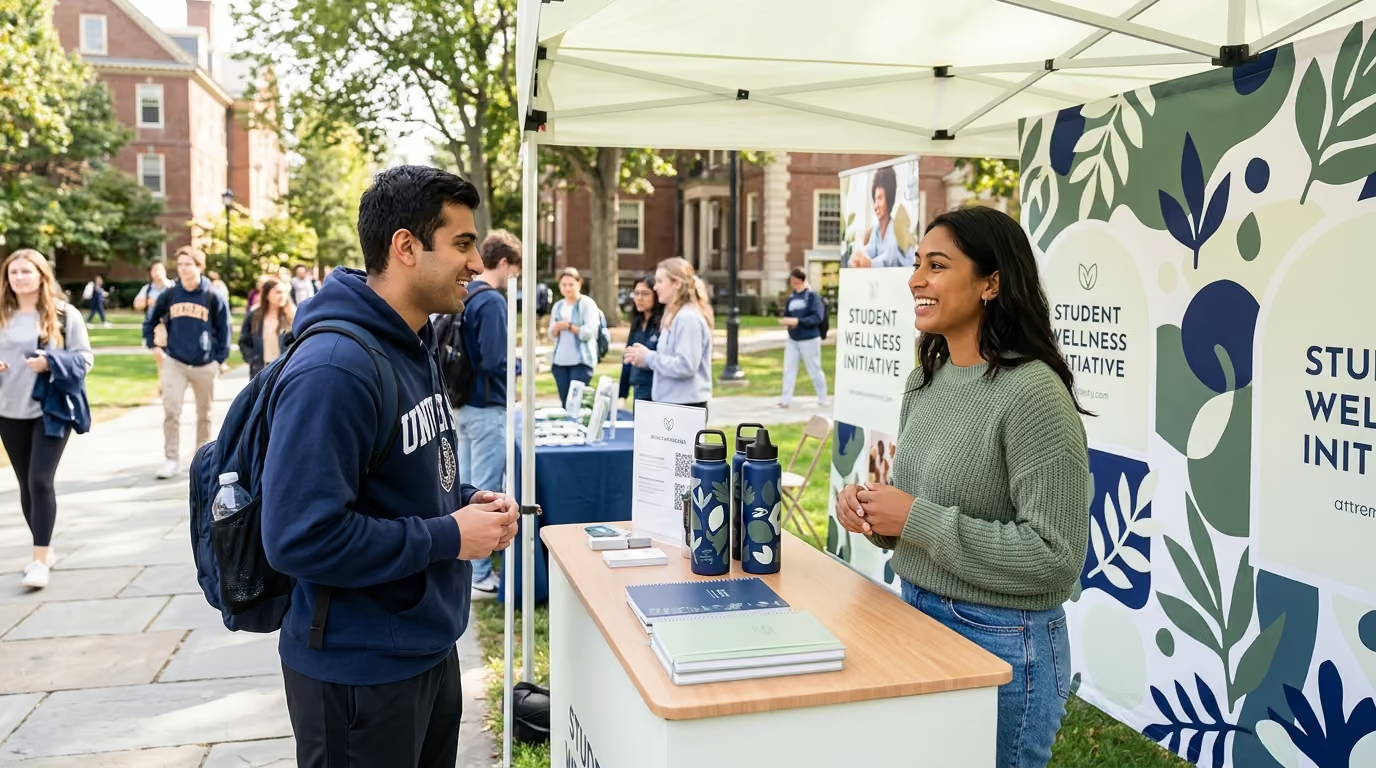
A campus brand tour is a coordinated, multi-market experiential roadshow designed to drive product trial, brand affinity, and measurable retail demand across higher education institutions. It is not a random distribution of free samples from a van parked on a public curb, nor is it a passive table set up in a student union without clear conversion mechanics. A true tour is a precision-engineered campaign that pairs mobile production logistics with authentic peer-to-peer engagement to create repeatable commercial outcomes.
This playbook delivers an end-to-end operational framework for planning, staffing, executing, and measuring high-converting campus brand tours across United States universities. Brand operators will learn how to turn high-density student foot traffic into verified product trials, customer opt-ins, and sustained retail sell-through without operational breakdowns.
Executing a multi-stop brand roadshow across college campuses presents unique operational friction. Unlike traditional event venues or commercial convention centers, universities operate as decentralized mini-cities. Each institution maintains its own governance structures, student life policies, risk management protocols, and facility restrictions. When marketing teams treat a university campus like a standard commercial footprint, field operations rapidly deteriorate.
A typical breakdown occurs when a brand arrives on site with a full mobile activation rig, only to encounter physical and administrative barriers. The production team discovers that the designated activation quad consists of centuries-old brick pavers that cannot support the axle weight of a standard promotional vehicle. Simultaneously, the campus student activities office informs the tour manager that the sound permit only applies to acoustic volume, shutting down the sound system instantly. Meanwhile, the student ambassadors hired through a third-party agency fail to show up, leaving the brand with thousands of perishable samples and no local staff to interface with passing students.
Crowd dynamics compound these logistical problems. Student foot traffic between classes moves in intense, predictable ten-minute surges followed by forty minutes of quiet paths. Production teams that do not anticipate these traffic spikes get overwhelmed during class changeovers. Lines spill into emergency egress routes, product distribution bottlenecks, and digital opt-in systems crash under sudden local network congestion. When the bell rings, the crowd vanishes, leaving behind packaging waste that violates university littering policies and threatens future campus access.
Without rigorous field protocols, campus activations become costly exercises in brand fog. Marketing directors receive glamorous photos of smiling students holding products, but they lack data on total reach, sample distribution accuracy, opt-in compliance, or subsequent retail velocity. Transforming campus chaos into predictable pipeline requires treating the university environment as a specialized operational ecosystem. Teams looking to avoid these common field failures can study avoiding multi-stop roadshow execution pitfalls to build structured guardrails early in the planning process.
Selecting the right campuses requires balancing audience opportunity with geographic and operational feasibility. Many brands make the mistake of simply selecting the top twenty largest universities by undergraduate enrollment. This blunt approach often leads to high travel overhead, massive permit fees, restrictive campus commercial policies, and diluted student interactions. A disciplined selection model evaluates prospective stops across five distinct dimensions.
Gross enrollment numbers rarely tell the full story. A commuter campus with 30,000 students may yield far fewer meaningful brand interactions than a residential college of 12,000 where students live, eat, and socialize on campus grounds. Evaluate each school based on on-campus residency rates, undergraduate age distribution, academic focus, and lifestyle affinity with your product category. Research on college choice published in StudentPOLL shows that campus hospitality, peer friendliness, and interaction with current community members heavily dictate how prospective students judge an institution. For commercial brands, the lesson is identical: reaching receptive students in an environment conducive to conversation is far more valuable than pushing samples at commuters running to their cars.
Long haul drives between activation stops inflate vehicle wear, driver fatigue, fuel expenses, and staffing costs. When mapping a national or regional tour, group target schools into tight geographic clusters. A strong routing plan creates regional loops that limit drive times to under four hours between consecutive stops. This clustering allows the production team to execute consecutive weekday activations while reserving weekends for maintenance, travel, and restocking.
University policies regarding commercial marketing vary widely across jurisdictions and institutional types. Public state universities often have defined public forum areas with established commercial permitting pathways, though they may require lengthy administrative reviews. Private institutions maintain complete discretion over commercial access, often requiring departmental sponsorship from student affairs, athletics, or dining services. When scoring campus feasibility, assess:
Align campus selection directly with the brand's retail distribution footprint and core growth priorities. If a consumer packaged goods brand is launching across major grocery chains or mass retailers in the Southeast, the campus tour should anchor heavily around major universities in those specific retail territories. Coupling campus excitement with immediate local availability drives measurable sell-through. Brands seeking to connect campus ground games directly to grocery aisles can review strategies for turning campus foot traffic into retail beverage sales to coordinate experiential stops with retail inventory.
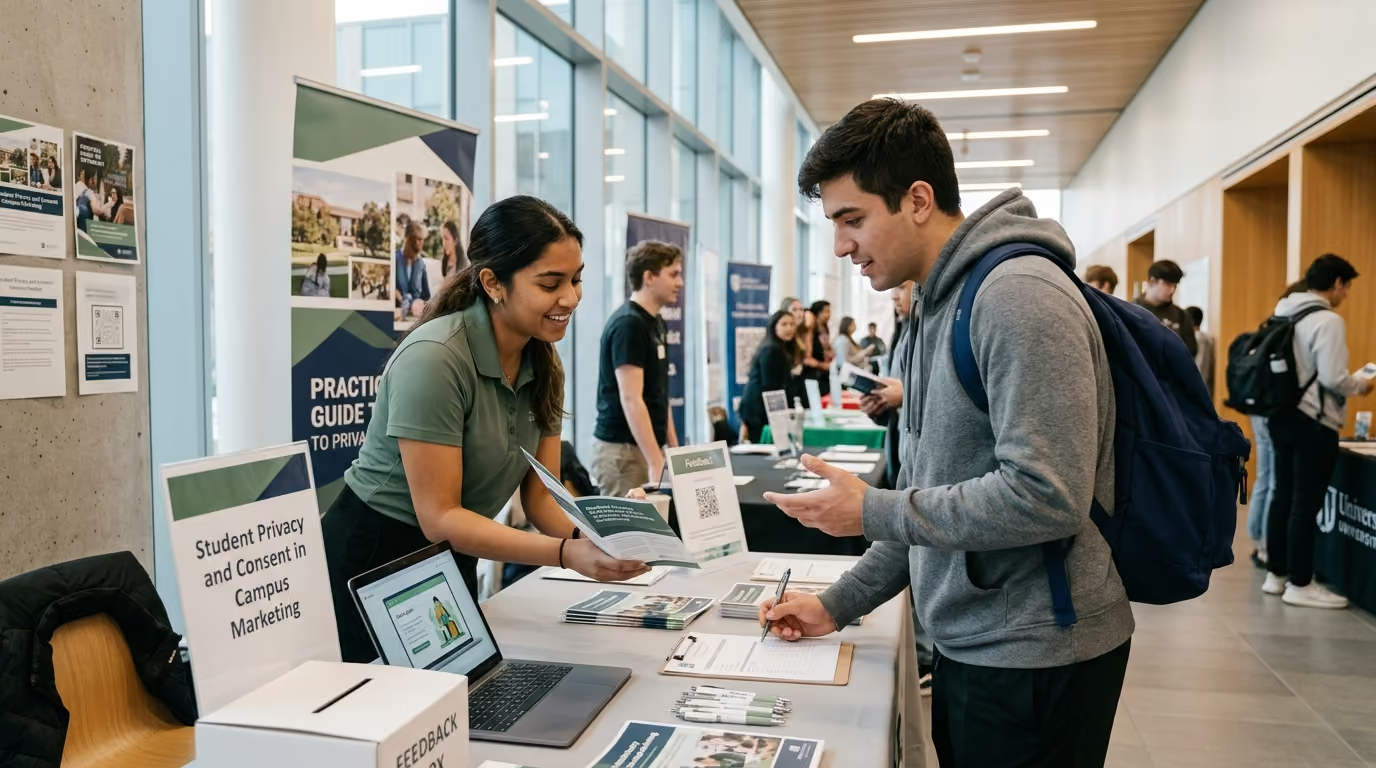
Not all campus venues support robust data capture or retail attribution. Evaluate whether the activation location offers reliable cellular connectivity for digital data collection tools, clear boundaries for tracking foot traffic, and proximity to retail outlets where promotional redemption can be monitored. A smaller campus with an enclosed plaza that enables high data capture rates often delivers a superior Return on Investment (ROI) compared to a sprawling campus where engagement cannot be tracked accurately.
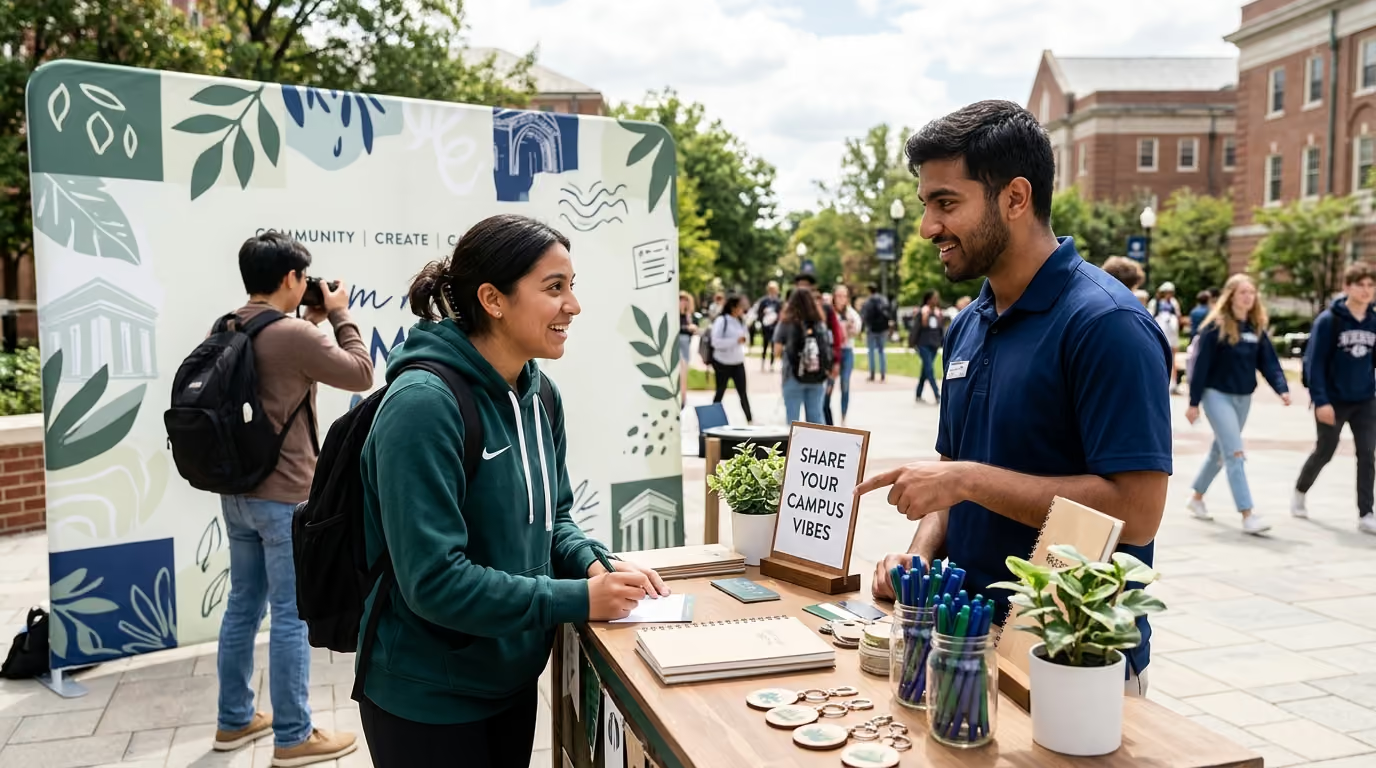
A campus activation footprint must balance visual attraction with high-velocity throughput. Passing students decide whether to engage with an activation within three seconds of visual contact. If the footprint appears confusing, high-pressure, or difficult to navigate, students will walk past to make their next class. A high-converting campus experience is architected into five sequential touchpoints.
The outer perimeter of the activation must communicate clear value from forty feet away. High-visibility signage, branded canopies, and architectural structures should state what the experience offers without marketing ambiguity. Avoid generic corporate slogans. Instead, use direct propositions such as free cold product trial, interactive skill challenges, or campus-exclusive merchandise customization. The arrival zone must feature dedicated entry markers that guide foot traffic naturally into the activation without blocking adjacent pedestrian paths.
As students cross the entry threshold, they must be greeted by credible peers rather than aggressive sales personnel. Student brand ambassadors or trained collegiate brand representatives break down natural consumer defense mechanisms. The greeting should be concise, welcoming, and informative, explaining exactly how the activation works and what the student can experience.
Passive sampling yields low brand retention. The center of the footprint must offer an active, tactile experience that invites participation. Depending on the product category, this could involve:
Active participation increases average dwell time from thirty seconds to over three minutes. This extended contact window creates the necessary emotional runway for genuine brand affinity to form.
Once a student experiences the core activation, the journey transitions immediately to conversion. Do not ask for personal data or app downloads without offering clear value in return. The conversion mechanic should feel equitable, such as exchanging contact information for premium campus merchandise, high-value product vouchers, or entry into a substantial semester-long scholarship sweepstakes. Use contactless mobile mechanisms like quick-response codes, mobile wallet passes, or tap-to-enter near-field communication tags to minimize friction and prevent lines at registration stations.
The final touchpoint reinforces the immediate next action. As students exit, ambassadors distribute retail redemption coupons valid at nearby campus bookstores, convenience markets, or grocery partners. The exit pathway must lead cleanly back into main campus thoroughfares without crossing the entry line. A standardized digital follow-up message should deploy via email or text within twenty minutes of the interaction while brand excitement remains fresh.
Field staffing represents the primary operational variable that makes or breaks a traveling campus tour. Successful tours implement a bifurcated staffing model that clearly separates technical production management from student-facing brand engagement. Blurring these responsibilities leads to operational bottlenecks, safety oversights, and uninspired consumer interactions.
The traveling production crew provides logistical continuity across the entire tour schedule. This dedicated team travels with the tour vehicles and oversees technical execution. Core production roles include:
While production professionals manage infrastructure, collegiate talent drives engagement. A 2021 study on prospective college student visits published by BHDP demonstrated that direct interaction with current students heavily influences institutional trust and decision-making. In a commercial context, students trust their peers far more than traveling corporate spokespeople. Integrating local student brand ambassadors provides instant cultural fluency, campus navigation knowledge, and natural peer rapport.
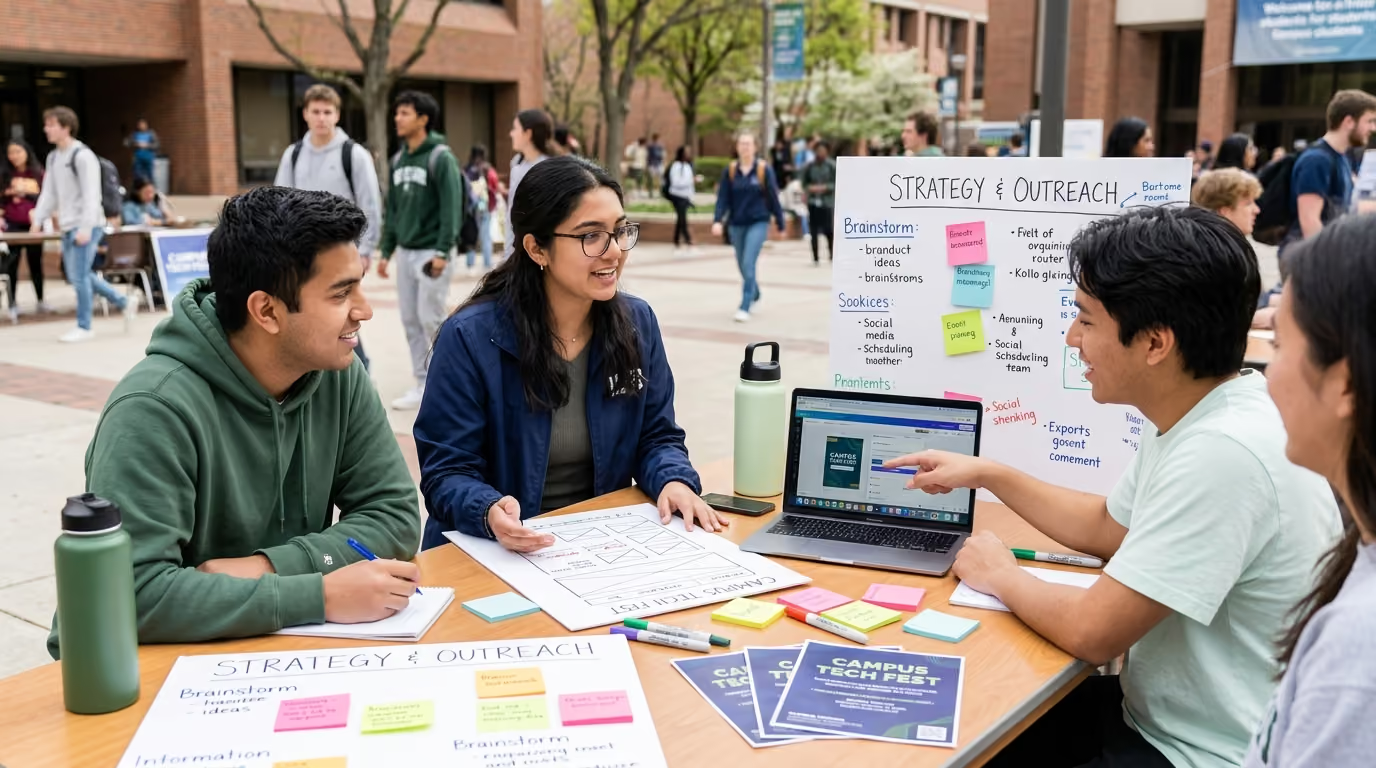
Deploying student talent effectively requires structured operational integration. Brands can learn how to operationalize student networks through student ambassador integration with local retail demos to maintain consistency across different markets.
Student ambassadors must receive systematic operational training prior to entering the activation footprint. A casual briefing thirty minutes before opening is insufficient. Implement a mandatory three-stage training program covering the following components:
Campus production planning requires exceptional adaptability. A physical build that functions perfectly on an open asphalt parking lot may prove impossible on an uneven campus quad surrounded by historic academic buildings. Developing a modular production blueprint allows the roadshow to adapt to varying campus environments without compromising visual impact or brand standards.
Rather than manufacturing a monolithic, single-configuration activation build, construct a tiered, modular equipment package. This architecture consists of a standard core footprint supplemented by scalable modular units.
Never confirm a campus stop without conducting a rigorous advance site feasibility assessment. Tour leads should document physical, environmental, and municipal conditions using a standardized site sheet:
Production leads can establish sound operational guardrails by reviewing operational logistics for experiential activations to build comprehensive pre-event checklists that eliminate site-level surprises.
A campus tour is fundamentally a specialized supply chain operation. Running out of product during a mid-day surge damages brand credibility and inflates your cost-per-interaction metrics. Conversely, carrying excessive inventory strains vehicle weight limits and increases the risk of product expiration or heat damage. Managing tour logistics requires strict multi-tier inventory controls and rigorous chain-of-custody tracking.
Divide all tour inventory into three clear operational classifications to prevent stockouts and safeguard production continuity:
Implement strict inventory reconciliations at four distinct points throughout every tour stop:
Campus brand activations operate in dynamic, uncontrolled outdoor environments. Weather anomalies, mechanical failures, campus closures, and local safety incidents can halt an activation instantly. The Events Industry Council emphasizes that professional event risk management requires pre-determined contingency plans with explicit activation indicators. A contingency plan without a predefined trigger is merely an aspiration.
Outdoor collegiate spaces offer little natural shelter from severe weather. Establish concrete weather triggers that dictate immediate operational pivots:
Teams looking to formalize their risk management protocols can consult contingency planning frameworks for field logistics to standardize emergency procedures across diverse jurisdictions.
Define structured responses for common operational failures before the tour departs:
Executing a seamless campus brand tour requires absolute adherence to structured operational timelines. The following step-by-step playbook outlines the critical path from ninety days out through post-event reporting.
Evaluating campus brand tour performance requires moving beyond surface-level vanity metrics. Tracking gross attendance or social media impressions provides little visibility into actual commercial impact. According to the EventTrack research series by Event Marketer, over half of sophisticated experiential marketing leaders measure business performance based on qualified leads, immediate product sales, and verified post-event sales lift.
To establish clear Return on Investment, marketing leaders must measure tour execution across a structured four-level hierarchy.
Delivery metrics confirm whether the activation operated according to plan:
Participation metrics quantify the volume and depth of student interactions:
Response metrics measure immediate changes in consumer perception and purchase intent:
Business outcome metrics connect field activations directly to corporate revenue and retail velocity:
A Director of Brand Strategy in a CPG snack division shared their experience with our field team: "The Makai team turned our product launch into a sensory event that shoppers still talk about. From creative storytelling to flawless in-store execution, they made snack time unforgettable. We couldn't have asked for a stronger partner." In our experience running high-volume roadshows across diverse collegiate territories, translating consumer excitement into verified retail velocity requires this exact operational discipline. Our team created an in-store experience that left a lasting impression on consumers and became a memorable brand moment.
To establish reliable financial attribution, maintain a consistent post-event measurement window of thirty to sixty days. Compare retail velocity trends across participating campus trade areas against matched control markets to prove real revenue causation rather than mere correlation.
Campus permitting lead times vary significantly depending on the institutional structure. Major public universities often require permit applications, facility requests, and health department notifications between sixty and ninety days prior to the desired activation date. Private universities with streamlined student activities offices can occasionally approve commercial footprints within thirty to forty-five days. A safe planning timeline initiates campus engagement four to five months before the planned tour launch to secure optimal dates and premium quad locations.
Many large universities maintain exclusive beverage or food service contracts with major food conglomerates that restrict competing brands across campus grounds. To navigate these exclusivity covenants, partner directly with student organizations or academic departments to activate within recognized public forum areas where commercial speech rules apply. If on-campus commercial rights are entirely blocked, secure permits for private property, public rights-of-way, or athletic tailgate zones located immediately adjacent to campus borders to engage students without violating institutional vendor agreements.
A balanced campus tour operating model deploys one professional Tour Manager and one lead production technician for every footprint, paired with four to eight local student brand ambassadors depending on footprint size. Professional staff manage vehicle safety, university administrative relations, audio-visual technology, and inventory control. Student ambassadors manage human connection, peer education, digital registration guidance, and localized social engagement. This separation ensures operational security while preserving authentic, peer-led brand engagement.

30 Years Experiential & Retail Activation Partner for CPG & Beverage Brands | Multi-Market Demos, Roadshows & Costco/Club Programs That Actually Sell