Robbie Thain
Founder, CEO

Overflowing event bins and generator emissions challenge field tours, requiring redesigned packaging, route density, modular footprints.

Most brand teams believe that sustainable experiential marketing starts with buying compostable sampling cups. In our experience running field campaigns across the country, swapping single-use plastics for bioplastics without changing your underlying operational logistics changes almost nothing. Real sustainability in mobile tours requires rethinking route planning, refrigeration, product forecasting, water use, and end-of-life recovery systems from the ground up.
This resource provides field marketing directors and brand leaders with an operational blueprint for executing lower-impact mobile sampling tours without sacrificing throughput, consumer experience, or pipeline velocity. By treating environmental impact as an operational logistics problem, marketing teams can systematically cut field waste, document credible emissions data, and protect brand reputation.
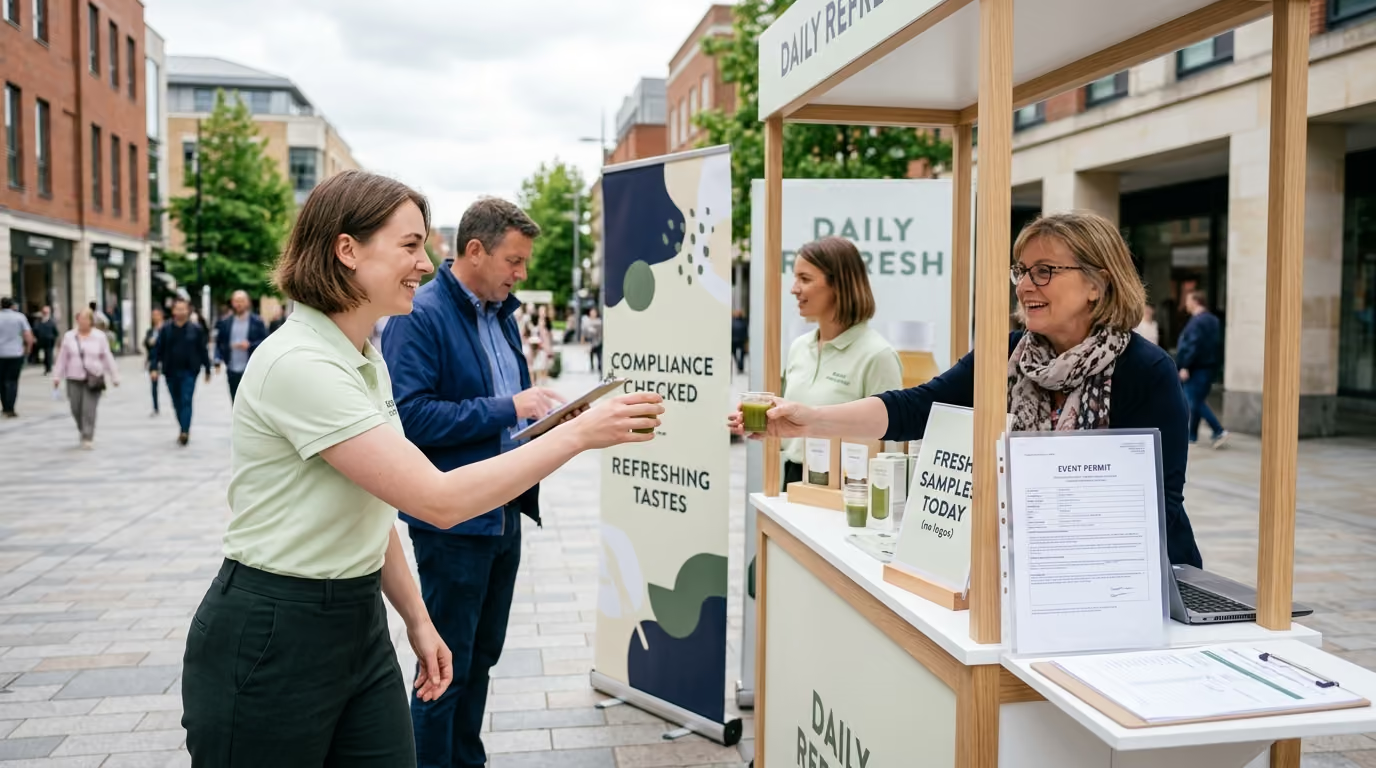
The average mobile sampling footprint at a festival or high-traffic street activation generates an enormous amount of unseen waste. By noon on a Saturday, standard 55-gallon trash bins overflow with single-use sample cups, branded paper napkins, plastic film, and half-eaten product. Behind the activation footprint, diesel generators idle continuously to power under-insulated cold storage trailers. Field teams discard cases of spoiled dairy or beverage inventory due to fluctuating internal cooler temperatures during transit.
This operational mess creates major financial and environmental friction. Material flows worldwide reached roughly 95.1 billion tonnes in 2020, with 19.9 billion tonnes ending as solid waste and a global circularity rate of just 7 percent, according to the United Nations Environment Programme Global Resources Outlook. Single-use sampling models contribute directly to this linear consumption pattern. When bins overflow, trash spills into storm drains and public spaces, creating negative brand impressions for local consumers and municipal inspectors.
Brand ambassadors often lack the training or time to sort waste streams during peak traffic surges. Contamination quickly ruins dedicated recycling or compost bins, forcing cleaning crews to divert entire loads to local landfills. Meanwhile, corporate sustainability reports claim zero-waste milestones based on the theoretical recyclability of packaging rather than verified municipal processing. Marketing executives are left with inflated activation costs, high disposal fees, and substantial exposure to regulatory scrutiny.
Building a resilient experiential tour requires eliminating these operational failures before the tour truck leaves the warehouse. Marketing directors must demand the same precision from sustainability workflows as they do from footprint buildouts, staffing ratios, and lead capture mechanics. To make field programs successful, teams need bulletproof field logistics and contingency planning that account for waste management under volatile public conditions.
Sustainable sampling requires life-cycle thinking across every phase of tour execution. Food production accounts for roughly 26 percent of global greenhouse gas emissions across farming, processing, packaging, transport, and waste. Supply chain stages like distribution, packaging, and retail generate approximately 18 percent of those food emissions. You cannot solve an operational footprint issue simply by switching print vendors.
Field marketers must apply an impact reduction hierarchy that prioritizes prevention over downstream compensation. The preferred order of operations begins with source elimination, followed by reduction, reuse, repair, recycling, commercial composting, and safe surplus donation. Carbon offsets should only address measured residual emissions after exhausting all operational reduction strategies.
Before purchasing hardware or staging inventory, build a comprehensive baseline model. Document total product purchased, units sampled, units spoiled, printed collateral weight, vehicle fuel consumption, generator runtime, and water volume. Express these baseline figures as intensity metrics, such as grams of waste per completed consumer interaction. Measuring footprint per completed sample establishes an honest functional unit to compare performance across diverse markets and activation formats.
Conduct a targeted hotspot analysis across your campaign supply chain. Identify which tour assets generate the largest material volume, demand continuous refrigeration, travel the furthest distances, or create the highest disposal friction. In many CPG tours, unconsumed product and generator fuel generate far higher emissions than marketing banners. Knowing your true operational hotspots prevents your team from spending budget on low-impact cosmetic fixes while ignoring systemic logistics waste.
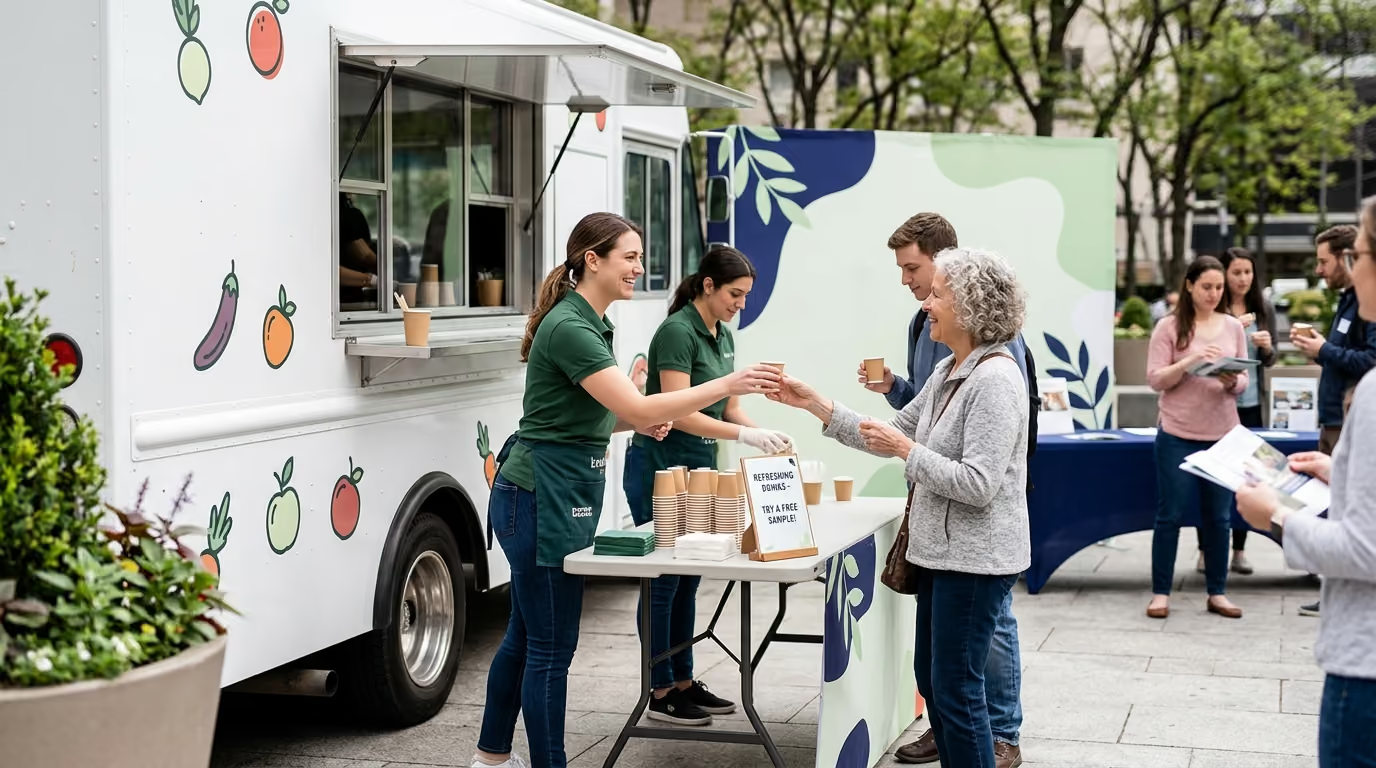
The cleanest sample cup is the one you never manufacture. Packaging elimination represents the most effective intervention in field marketing. Where local public health codes allow, serve samples directly from bulk dispensing systems into portioned reusable vessels. Replace individual sample boxes, single-serve plastic sachets, and secondary promotional cartons with bulk presentation formats that require minimal disposable materials.
When reusable vessels fit the operating environment, select durable serviceware that withstands high-temperature commercial sanitation. Reusable tasting cups, trays, and serving utensils deliver superior environmental performance when supported by efficient reverse logistics and high cycle counts. The United Nations Environment Programme notes that reusable products outperform single-use items when they achieve sufficient reuse cycles and use low-energy local washing. Reusable systems require tracking loss rates, wash water volume, transport miles to sanitation facilities, and replacement thresholds.
If your tour moves across multiple distant cities with tight turnaround times, reusable dishware logistics may create excessive transport emissions. In those scenarios, select single-use packaging formats engineered specifically for local municipal recovery infrastructure. Avoid problematic material combinations such as plastic-lined paperboard, multi-layer foil pouches, dark carbon-black plastics, and tiny tear-off tabs that optical sorting machines fail to capture. Every packaging specification must document post-consumer recycled content, certified compostability standards, and local processing acceptance.
Compostable serviceware only delivers real value if collected cleanly and transported to an industrial composting facility. The Federal Trade Commission Green Guides state that marketers making compostable claims must possess reliable scientific evidence that all materials break down safely and promptly in designated facilities. If a city lacks commercial composting infrastructure, certified bioplastics end up in municipal landfills where they generate methane under anaerobic conditions. Select single-use serviceware based on verified destination facilities in each tour market rather than generic vendor claims.
Refrigeration represents a major energy consumer and operational risk factor on high-volume sampling tours. Approximately 3.3 billion tonnes of carbon dioxide equivalent are tied to food that is lost or wasted globally each year. When mobile cold storage fails, thousands of product units spoil instantly, wasting all the energy, water, and agricultural labor embedded in manufacturing. Preventing temperature excursions protects both tour return on investment and environmental performance.
Reduce your cooling burden by optimizing product selection and holding procedures. Where feasible, sample shelf-stable product formats or ambient-stable components that require chilling only immediately prior to consumer service. Pre-chill products in high-efficiency commercial warehouses before loading them into tour vehicles rather than relying on vehicle-mounted refrigeration units to drop bulk temperatures. Use validated, high-performance passive insulated coolers for short-duration service footprints to eliminate generator runtimes at the distribution point.
When designing your mobile footprint, audit your power requirements and connect directly to municipal grid power whenever venue infrastructure permits. If portable generators remain unavoidable, specify high-efficiency Tier 4 diesel or hybrid battery-generator systems sized precisely to your continuous electrical load. Oversized generators running at partial capacity burn excess fuel and produce heavy local exhaust. Establish strict anti-idling policies for all tour transport and support vehicles during setup, restocking, and breakdown windows.
Water management requires equal operational discipline. Eliminate single-use bottled water for field staff by installing high-capacity filtration dispensers and providing insulated personal bottles. Establish separate operational protocols for consumer drinking water, food preparation, handwashing, and equipment cleaning. Track greywater generation and ensure all wastewater is disposed of safely into municipal sanitary sewer systems in strict compliance with local environmental regulations.
Transportation planning must prioritize route efficiency long before evaluating alternative fuel platforms. Food transport accounts for approximately 5 percent of global food-system emissions. However, mobile marketing tours generate substantial avoidable emissions through erratic routing, empty deadhead miles, redundant depot returns, and unscheduled hot-shot freight deliveries. Designing an efficient operational footprint requires understanding how brands plan mobile roadshow tours to scale city to city with optimal geographic sequencing.
Structure national campaigns around tight regional market clusters rather than bouncing vehicles across non-contiguous states. Consolidate long-haul freight movements by using regional storage hubs to hold backup product inventory, printed assets, and replacement hardware. Grouping activation dates within specific metropolitan zones minimizes transit miles, cuts driver fatigue, and allows staff to use local transit networks.
Staff travel frequently generates higher carbon emissions than freight movement when activation teams fly between event stops. Lower this impact by hiring experienced local market managers and brand ambassadors in each destination market. Maintain a small, highly trained travel crew to supervise quality control, and hire local talent for customer engagement and line management. For deep guidance on regional talent management, reference the complete guide to staffing mobile sampling and guerilla activations across diverse markets.
When evaluating vehicles, select the smallest chassis capable of safely carrying your payload and equipment. Match vehicle specifications to actual route conditions, payload weights, and electrical demands. Where urban low-emission zones, charging infrastructure, and route ranges allow, deploy electric cargo vans or plug-in hybrid utility vehicles for local market activation. Ensure drivers follow defensive driving standards, maintain optimal tire pressure, and avoid rapid acceleration cycles that spike fuel burn.
Custom scenic builds that get discarded after a single marketing tour represent an enormous waste of budget and raw materials. According to the United Nations Environment Programme, global resource extraction could rise 60 percent by 2060 compared with 2020 levels without urgent interventions in material circularity. Experiential activations must move away from single-use plywood structures, vinyl banners, and custom foam props toward modular structural architecture.
Design mobile footprints using standardized, reusable structural frameworks made from durable aluminum or steel trusses. Incorporate universal mounting channels that accept interchangeable graphic skins, modular display counters, and adjustable product shelving. Build transport cases with custom high-density foam inserts that protect structural hardware, display monitors, and lighting fixtures across hundreds of freight cycles. Designing durable footprints means designing mobile activations for real people and rough field conditions over long deployment schedules.
Graphic production requires strict material discipline. Eliminate dates, market-specific venue names, and time-sensitive promotional claims from durable structural signage. Use high-resolution digital displays or modular magnetic graphic panels for localized messaging, pricing, and campaign calls to action. We blend physical and digital experiences by integrating QR codes, mobile technology, and real-world activations into a cohesive layer across retail, event, and tour experiences. This approach eliminates the need to print, transport, and dispose of thousands of paper coupons and promotional flyers.
At the conclusion of each campaign cycle, conduct a formal physical asset audit. Categorize all structural components, lighting rigs, digital displays, and furniture into distinct disposition pathways: return to active inventory, repair for subsequent deployment, donate to community non-profits, or disassemble for certified metal recycling. Maintain detailed digital maintenance logs for every serialized road case to maximize asset longevity and improve capital efficiency.
Executing high-diversion waste management on the ground requires robust physical infrastructure, trained personnel, and strict sorting protocols. Event sustainability frameworks, including standards modeled after ISO 20121, require systematic planning, measurable operational targets, and transparent record-keeping. The following operational playbook outlines the step-by-step process for managing waste streams during live field activations.
Food and beverage sampling campaigns generate substantial surplus inventory through unpredictable foot traffic, rain cancellations, and inaccurate demand forecasting. Discarding edible food waste represents a serious operational failure that damages project return on investment. The United States Environmental Protection Agency food-recovery hierarchy establishes source reduction as the most preferred strategy, followed by surplus food donation to feed food-insecure individuals.
Preventing surplus begins with conservative, algorithmic inventory forecasting. Model product requirements using historical venue foot traffic, hourly weather forecasts, historical conversion ratios, and portion sizes. Divide inventory into distinct staging tiers: sealed master cases held in primary cold storage, intermediate batches staged in secondary footprint coolers, and active inventory opened for immediate consumer service. Never open master cases or break product seals until front-line service demand strictly requires replenishment.
Establish verified surplus donation channels weeks before your tour truck rolls into the market. Partner with local food rescue organizations, shelters, and regional food banks that maintain certified commercial cold chains. Verify recipient acceptance criteria, intake schedules, allergen labeling requirements, and transportation protocols in writing. Ensure all surplus product intended for donation remains in unopened master cartons with intact tamper-evident seals and clear expiration dates.
Field teams must understand when food donation is legally and safely prohibited. Never donate products that experienced temperature excursions, items with broken primary seals, products with unverified allergen profiles, or inventory past legal expiration dates. Document all rejected or spoiled product weights in your daily log alongside the root cause, such as cooler mechanical failure or ambient heat exposure. Maintain strict traceability logs connecting donated lot numbers to specific recipient agencies to ensure total regulatory compliance and food safety.
Marketing claims regarding environmental performance face intense regulatory enforcement from the Federal Trade Commission and state attorneys general. Broad, unqualified marketing statements such as "eco-friendly," "zero waste," "green activation," or "100% sustainable" violate federal truth-in-advertising guidelines. Every environmental statement published on signage, press releases, or social media must be supported by competent, reliable empirical evidence.
The Federal Trade Commission Green Guides state that unqualified recyclable claims can be misleading unless recycling facilities are readily accessible to at least 60 percent of consumers where the item is distributed. On a mobile sampling tour, claiming a sample cup is recyclable is deceptive if the venues and municipalities along the tour route do not accept that specific polymer. Marketers must qualify all claims geographically or specify the precise recovery facilities utilized during the campaign.
Carbon offset claims demand rigorous accounting standards and strict chain-of-custody verification. Marketers must clearly define the precise emissions boundary analyzed, whether covering direct vehicle emissions, electricity consumption, or full supply chain manufacturing. Offsets must represent real, additional, permanent, and independently verified emissions reductions that cannot be sold more than once. Transparent brands publish their raw operational data, reduction achievements, and residual offset documentation in accessible public case summaries.
Audit all third-party environmental certifications before printing vendor logos on consumer-facing marketing assets. Require packaging suppliers to provide independent laboratory testing documentation, such as ASTM D6400 or D6868 standards for compostability. Retain all scale receipts, municipal recycling manifests, food donation forms, and fuel logs in a master audit file for five years. Rigorous documentation protects brand reputation and provides corporate sustainability officers with audit-grade reporting data.
A professional sustainability program relies on real-time operational data rather than broad end-of-year estimates. Brand managers must track both lead and lag performance indicators to identify operational bottlenecks, control vendor costs, and optimize field execution. Tracking precise metrics allows marketing teams to benchmark performance across different tour legs, venues, and activation formats. To establish comprehensive field reporting, integrate these data points into your KPI blueprints for high-accountability mobile activations across the entire campaign lifecycle.
Evaluating performance across these indicators allows brand directors to compare the cost-effectiveness and footprint efficiency of mobile sampling against other marketing channels. For a structured financial analysis, evaluate your results against the mobile activations versus digital spend return on investment model to demonstrate clear commercial and operational value.
To understand how these principles function under live field conditions, consider how a high-growth premium cold-brew coffee brand restructured its national twenty-city summer sampling tour. The brand originally operated diesel-powered refrigerated trucks that distributed single-use, plastic-wrapped 2-ounce plastic sample cups alongside printed paper coupon booklets. The original campaign generated roughly 450 pounds of mixed municipal solid waste per activation day, experienced high ice melt costs, and lost 14 percent of total liquid inventory to temperature excursions during transit.
Our team helped redesign the activation around closed-loop operational principles. The brand replaced individual plastic sample cups with custom-fabricated stainless-steel bulk dispensing kegs that served directly into 100 percent post-consumer recycled paper tasting cups coated with certified plant-based linings. Digital QR codes etched directly onto the aluminum service counter replaced printed paper coupons, enabling direct digital lead capture and immediate digital coupon delivery to consumers' mobile wallets.
The tour routing was completely restructured into three tight regional geographic clusters: Northeast, Midwest, and Pacific West. Long-haul truck travel dropped by 34 percent, and the team partnered with local cold-storage warehouses in primary hub cities to pre-chill inventory and hold surplus stock. The brand hired local market brand ambassadors through regional partners, drastically cutting crew flight requirements and hotel bookings. High-efficiency commercial battery packs replaced idling gas generators, providing silent, emission-free power for the draft dispensing pumps throughout eight-hour festival days.
The operational results demonstrated that sustainable execution directly supports commercial success:
Field execution excellence proves that sustainability and high-performance marketing work together when supported by rigorous planning and operational discipline. Selecting optimal event sites and mapping municipal waste infrastructure is critical; teams should consult the location intelligence guide for brand activations to target venues with compatible environmental infrastructure.
Operational discipline turns environmental strategy into measurable field success.

30 Years Experiential & Retail Activation Partner for CPG & Beverage Brands | Multi-Market Demos, Roadshows & Costco/Club Programs That Actually Sell