Robbie Thain
Founder, CEO

Whirlpool is expanding live kitchen demos and integrating AI to drive high-ticket sales. Learn how retail experiences capture buyer data and measurable ROI.
Whirlpool (also known as Whirlpool Corporation) projects 2026 earnings to reach approximately $6.25 per diluted share. This financial projection provides the operational capital for a massive shift in how physical products are sold. On July 22, 2026, the company announced a sweeping expansion of live in-store kitchen demo zones across major U.S. retail locations.
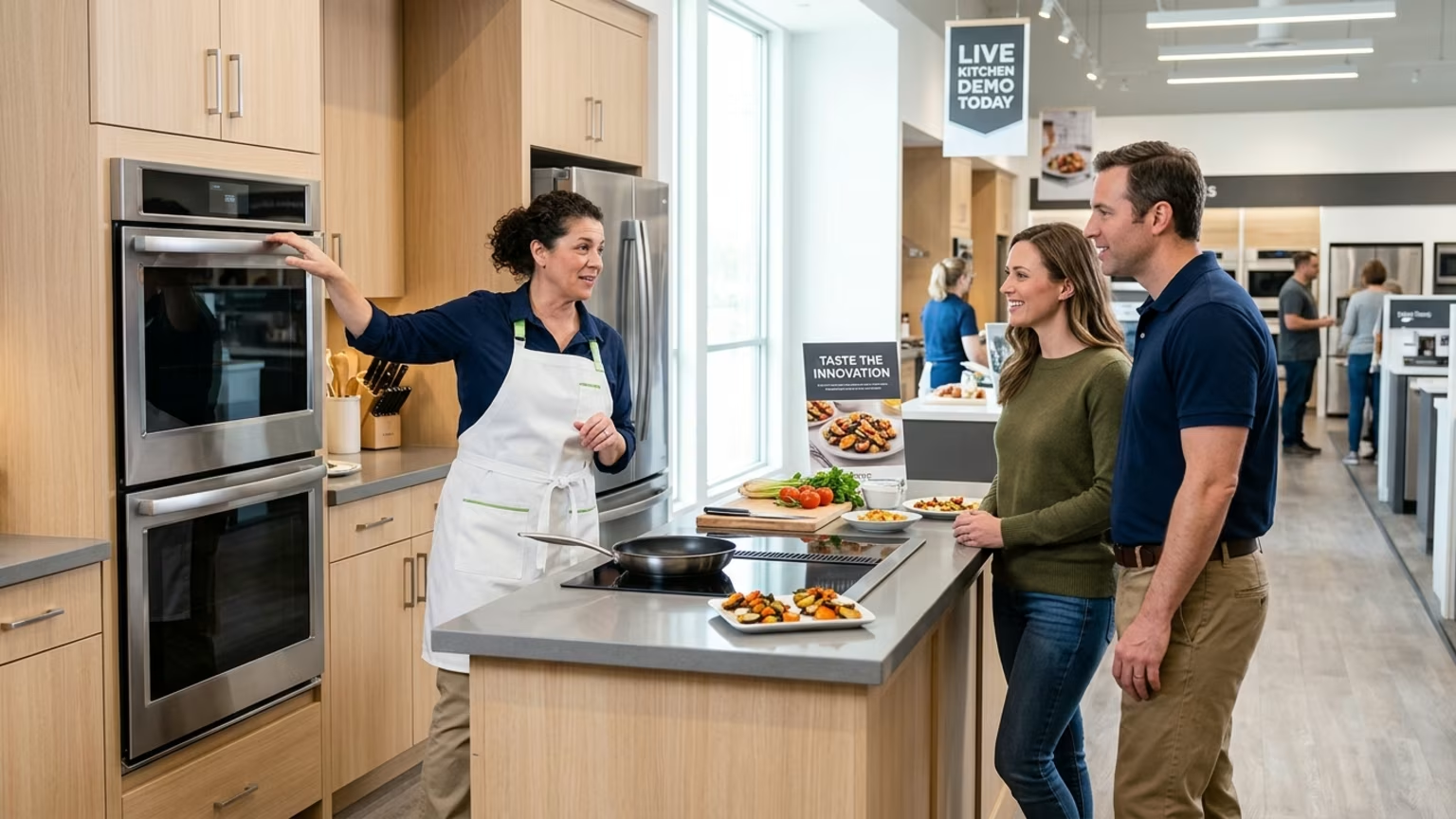
The strategy moves far beyond standard static displays and passive endcaps. These new zones function as permanent interactive environments on the store floor. Professional chefs lead these demonstrations to showcase the full capabilities of premium appliances. Shoppers are invited to transition from passive browsing to active, hands-on participation.
The core focus of these physical activations is the premium W Collection. The demonstrations specifically highlight the intuitive 6th Sense technology built into these high-end models. Selling high-ticket items requires buyers to understand the entire kitchen suite ecosystem. A live chef can physically prove the value of connected appliances working seamlessly in unison.
This physical expansion pairs directly with a major technological integration. The company recently partnered with GrowthLoop to utilize an agentic AI-powered marketing platform. This system is designed to support direct-to-consumer marketing and customer engagement. The primary focus for this AI deployment is the KitchenAid Small Appliances portfolio.
The integration solves a massive logistical flaw in traditional physical marketing. Shoppers who engage with a chef do not simply walk away and disappear from the brand radar. Their physical interactions trigger automated follow-ups through a connected customer relationship management platform. Every physical retail interaction is explicitly designed to push the buyer further down the trackable sales funnel.
Retail demo programs often get judged on cups poured rather than on incremental pipeline. That mismatch is exactly why physical activations frequently fail to justify their steep operational costs. Brands must tie in-store experiential touchpoints to outsized sales lift using hard data. The integration of agentic AI proves that experiential marketing is now a highly measurable revenue channel.
Industry leadership is recognizing this critical operational transition in real time. According to discussions on YouTube featuring Macy's CMO, retail marketing is shifting away from fragmented campaigns. The new industry standard is the cohesive campaign platform that unifies multiple marketing channels. Operating disconnected physical events is a massive waste of capital and staffing resources.
We know that mid-to-senior marketing operators face immense pressure to prove measurable Return on Investment. You cannot run a beautiful in-store activation if it produces fog instead of concrete evidence. Capturing consumer attention with the senses is only the first half of the field operation. You must capture the lead with integrated technology to ensure steady retail sell-through.
This unified approach gives field marketing leaders total control over the extended buyer journey. It eliminates the logistical guesswork that traditionally plagues in-store product trials. When physical interactions feed into automated digital retargeting, the brand secures a massive competitive advantage. The store floor simply becomes the first physical touchpoint in a continuous digital sales cycle.
Driving trial for a high-ticket kitchen suite requires a completely different operational playbook than standard sampling. A single low-margin appliance does not justify the massive overhead of a permanent interactive demo zone. The strategy relies entirely on demonstrating how multiple premium products function as a cohesive unit. The chef acts as the trusted guide who walks the shopper through the premium W Collection ecosystem.
Brands that implement these retail demonstrations create a predictable pipeline of highly qualified buyers. Incorporating artificial intelligence allows the field team to personalize follow-ups based on specific, documented interactions. This creates a reliable feedback loop where physical events continuously improve backend digital targeting efforts. The physical execution and the digital operations become completely interdependent.
Capturing buyer data on the floor allows the marketing team to measure pipeline progression. Experiential marketing overhead is high, so proof of performance is strictly mandatory. By tracking the buyer from the chef demonstration to the final purchase, brands can calculate true Return on Investment. This data-driven execution is what separates a vanity project from an operator-grade sales engine.
Executing chef-led kitchen zones requires intense field staffing and logistical precision. Brands cannot rely on inconsistent brand ambassadors to sell high-margin product suites. Standardizing staff training is a strict requirement for repeatable demo success in roadshows. The field team must clearly articulate the specific technical benefits of the integrated 6th Sense technology.
The global mandate for interactive marketing is already highly visible across major international markets. In July 2026, an immersive American Time experience launched at the Huashan 1914 Creative Park in Taiwan. This event featured an 8-in-1 Chef machine and mission-based trials according to reports from Storm.mg. Global operations are clearly aligning around high-touch, mission-based consumer participation.
European markets are similarly adopting a highly connected integrated media strategy. Beko Europe recently launched a massive advertising campaign for the W Collection across premium streaming platforms. Engage.it reports that this targeted placement includes major platforms like Netflix, Prime Video, and RaiPlay. This digital media placement directly reinforces the premium physical push occurring in global retail spaces.
Meanwhile, U.S. operations are managing massive celebratory events alongside their standard retail push. July 2026 marks the 115th anniversary of the manufacturing giant. Multi-market events are scheduled across corporate hubs in Benton Harbor, Chicago, and several critical Ohio locations.
These include manufacturing facilities in Clyde and Findlay. Additional celebration sites include Greenville, Marion, Ottawa, and Perrysburg.
Managing multi-market activations requires a strict, operator-grade logistical discipline. Brands must coordinate complex permitting, dedicated staffing, and heavy equipment logistics simultaneously. A single logistical failure can completely ruin the flow of a high-ticket kitchen demonstration. Flawless execution is the only operational way to protect the integrity of the live brand experience.
Creating memorable interactions requires absolute precision on the retail floor. A Director of Brand Strategy in the CPG snack division shared: 'The Makai team turned our product launch into a sensory event that shoppers still talk about. From creative storytelling to flawless in-store execution, they made snack time unforgettable. We couldn't have asked for a stronger partner.' Our team created an in-store experience that left a lasting impression on consumers and became a memorable brand moment.
Physical retail experiences are no longer isolated promotional events. Integrating live demonstrations with a retail playground playbook turns foot traffic into trackable pipeline data. The integration of agentic AI into physical activations changes the standard for operational performance measurement. The days of handing out a physical flyer and hoping for a sale are completely over.
A strong financial position allows brands to fund massive experiential investments. The $6.25 projected earnings per share demonstrates the capital required to build permanent in-store zones. However, every brand must strictly measure the conversion rate of their physical marketing footprint. How are you capturing live consumer data to ensure your next in-store activation feeds directly into your digital revenue stream?

30 Years Experiential & Retail Activation Partner for CPG & Beverage Brands | Multi-Market Demos, Roadshows & Costco/Club Programs That Actually Sell