Robbie Thain
Founder, CEO

Utz Brands showcased its snack portfolio at the 2026 NACS Show. Learn how retail-facing product sampling secures distribution and drives sales pipeline.

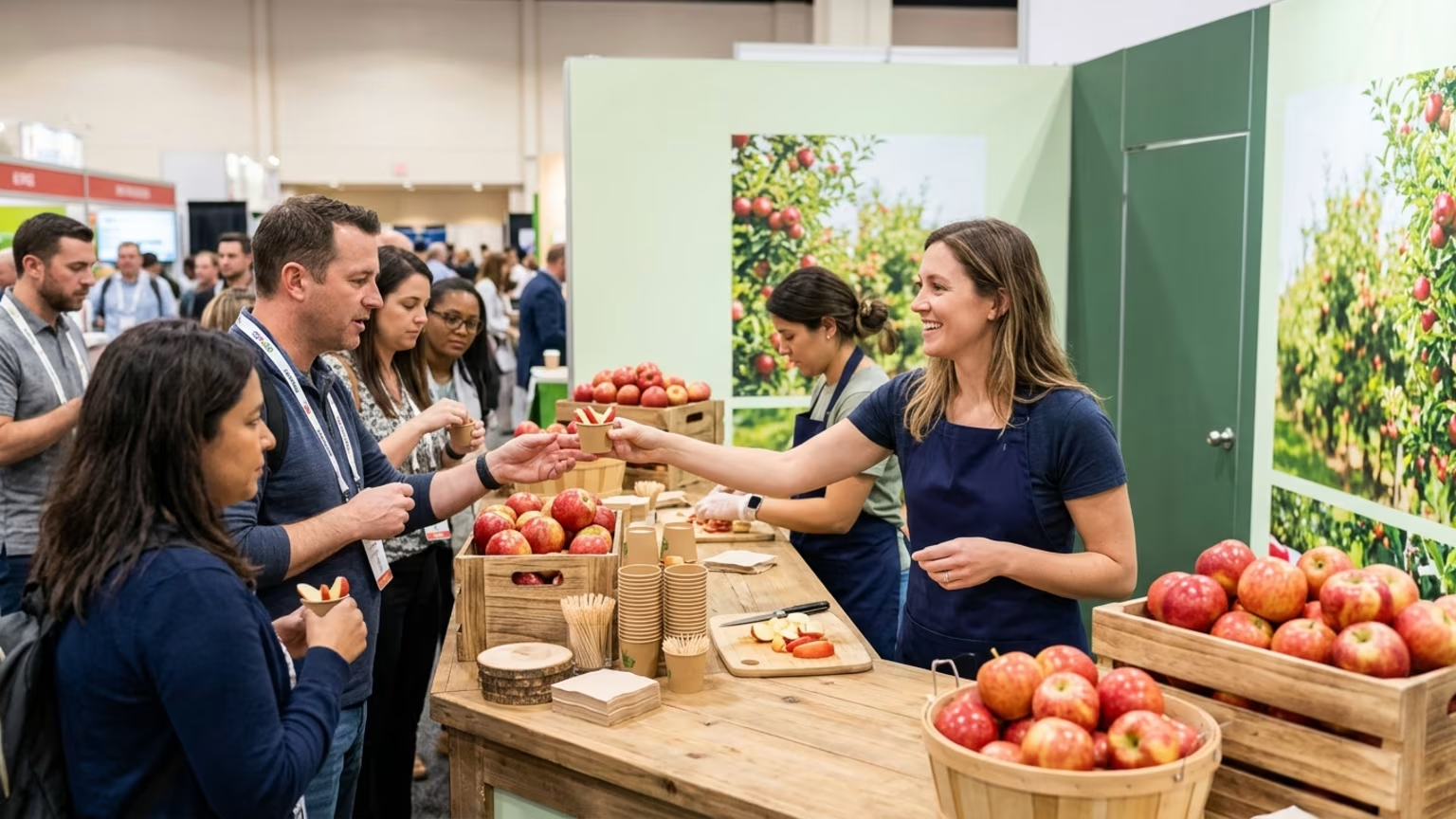
On October 7 through October 9, 2026, Utz Brands showcased its expansive product lineup at the National Association of Convenience Stores (NACS) Show. The event took place at the Las Vegas Convention Center. The company designed booth N3221 specifically as a product-trial opportunity directed at attending retailers. This activation established a physical timeline for presenting new innovations and legacy items directly to wholesale buyers.
The decision to activate at a major industry trade fair represents a clear logistical commitment. Presenting multiple brands under one corporate umbrella requires precise footprint coordination. Retail buyers attend these events to evaluate flavor profiles, packaging, and consumer appeal before making shelf-space decisions. The booth served as the primary physical touchpoint for these critical commercial evaluations.
The sampling lineup spanned multiple distinct brands within the Utz portfolio. Attendees could sample items from Utz, Zapp's, Boulder Canyon, TGI Fridays Snacks, Miguelito's, Golden Flake, and On The Border Chips & Dips. Managing seven different brand identities in one booth requires strict operational control. Staff must handle varied packaging styles and product categories simultaneously.
Featured products included Utz Ripples Chicken Dipping Sauce Flavored Potato Chips. The company also presented Utz Spicy Pickle Bites developed in collaboration with Grillo's Pickles. Boulder Canyon tortilla chips made with avocado oil were available in Nacho and Sweet & Spicy Chili flavors. The company release also listed Utz Buffalo Ranch Snack Mix and TGI Fridays Buffalo Ranch Potato Skin Chips. Zapp's pretzels and potato chips were available to sample, including its recognizable Voodoo flavor.
The company also featured specific protein snacks during the Las Vegas event. These included Cheddar Flavored Pretzels with 8 grams of protein per 1-ounce serving. The booth also offered Cheddar and Hot & Spicy Cheese Flavored Curls listing 10 grams per 1-ounce serving. Measuring and distributing exact 1-ounce portions requires trained brand ambassadors who understand strict compliance standards.
The physical booth must accommodate different serving requirements for each brand identity. Preparing fresh samples of Utz Spicy Pickle Bites requires completely different handling procedures than opening bags of Zapp's potato chips. Brand ambassadors must transition smoothly between these products while speaking knowledgeably about each item. This level of cross-training ensures that the staff can pivot their pitch based on which product catches a buyer's attention.
We specialize in creating retail demos, product sampling programs, and roadshows that bring brands face to face with their audiences. Each program is designed to drive trial, build consumer relationships, and accelerate retail velocity across multiple locations. We see trade show sampling as the critical first step in securing the retail distribution that makes those regional roadshows possible.
Brands cannot rely on static presentations to sustain long-term retail velocity. Companies must prove to wholesale buyers that the product tastes good and addresses current consumer demand. Trade show activations provide that immediate proof of concept. Marketers must understand how to plan a booth that drives leads to maximize this expensive footprint.
When a brand introduces multiple flavor variations and protein claims simultaneously, buyers need to physically taste the innovation. Relying entirely on digital marketing collateral rarely secures premium end-cap displays at major convenience stores. The physical booth serves as the starting line for these critical marketing initiatives. The strategy shifts from telling buyers about a product to letting them experience the portfolio directly.
Retail buyers navigate trade show floors looking for items that will actively drive foot traffic to their stores. A well-executed sampling booth provides a simulated retail experience right on the convention floor. The buyer gets to see the packaging, taste the product, and gauge the reaction of other attendees in real time. This dynamic environment creates a sense of urgency that flat presentations simply cannot match.
Executing a multi-SKU sampling footprint triggers a massive chain reaction across field operations. Consolidating seven brands into one space demands highly structured traffic management. If booth flow is poorly designed, attendees create bottlenecks that block valuable retail buyer conversations. Field teams must prioritize turning trade show sampling into retail pipeline velocity rather than simply handing out free food.
When trade show visitors overwhelm a sampling station, brand ambassadors lose the ability to qualify the interaction. They end up pouring samples as fast as possible just to clear the line. This operational failure prevents the team from identifying actual wholesale buyers in the crowd. Staff must maintain control of the physical space to protect the commercial objective.
The downstream effects impact everything from inventory storage to daily staffing requirements. Storing surplus potato chips and protein snacks safely requires climate-controlled logistics and strict inventory tracking. We store your sampling product and event gear, then ship, track, and coordinate delivery nationwide so every activation stays on schedule. Managing multiple product types means tracking different expiration dates and lot numbers.
Operations managers must equip their brand ambassadors with the right digital tools to qualify every conversation. The field staff must capture retailer feedback, scan attendee badges, and route that data to the sales department. Without a structured data capture protocol, the expensive samples simply become free snacks for passing attendees.
Stacey Schultz, senior vice president of marketing at Utz Quality Foods, commented on the activation strategy. She described the show as an opportunity to demonstrate the breadth of the company's portfolio to retailers. Schultz also noted that the portfolio was intended to serve varied tastes, needs, and occasions. This framing clearly positions the physical footprint as a comprehensive business presentation.
This approach aligns with our own methodology for managing large brand portfolios on crowded expo floors. We designed and managed a 40 by 20 foot trade show environment for Glanbia at Natural Products Expo West 2025. That activation brought think!, Isopure, Optimum Nutrition, and Amazing Grass into one coordinated space. We handled concept, operations, staffing, and breakdown for the entire footprint.
Our team distributed more than 14,000 recorded product samples across the activation stations during that event. Operating at that scale requires a deliberate floor plan to prevent one popular sample station from overwhelming the rest of the portfolio. Managing multiple brands requires strict adherence to brand guidelines and distinct presentation areas. Proper structural planning prevents operational chaos when managing a complex activation environment.
We design mobile activations and roadshows that accelerate consumer trial, build trust, and boost retail velocity during 90-day product launch windows. Our structured approach transforms initial product trial into sustained consumer confidence and retail performance. When a brand secures a new retail commitment at a trade show, the work moves to the consumer level. That transition requires a scalable field marketing infrastructure.
Successfully activating at the consumer level requires rigorous measurement and structured reporting. We managed a four-week, multi-market Costco sampling program for Pulmuone's PlantSpired line. The program delivered more than 65,000 samples and recorded an 18 percent sold-to-sale rate. This gives us a concrete example of how structured retail sampling can connect trial with purchase after a product hits the shelves.
A trade show appearance is a singular retailer-facing moment within a broader multi-channel business strategy. Brands must implement strict metrics to prove trade show Return on Investment in post-event roadshows to validate their experiential spend. The initial trial must eventually translate into measurable commercial activity.
The journey from a Las Vegas convention booth to a convenience store shelf requires relentless operational focus. Brands invest heavily in these trade show environments to initiate conversations that will drive quarterly revenue. If the field team drops the ball on data collection, that investment yields nothing but empty snack bags. Operations leaders must view the trade show floor as the very top of their sales funnel.
The Las Vegas Convention Center provided the physical space for Utz to present its snack portfolio directly to buyers. The true test of any trade show footprint lies in the operational follow-up and the resulting retail distribution gains. Every sample served must connect back to a clear commercial objective.
How is your marketing team capturing qualified buyer data during high-volume product sampling events to ensure immediate pipeline impact?
Failing to convert high-volume trade show trial into actionable buyer data wastes massive activation budgets. Makai eliminates low quality leads from crowded trade shows by executing Experiential Marketing campaigns that create hands on brand moments that connect emotionally and turn customers into ambassadors. Request a proposal

30 Years Experiential & Retail Activation Partner for CPG & Beverage Brands | Multi-Market Demos, Roadshows & Costco/Club Programs That Actually Sell