Robbie Thain
Founder, CEO

Charlotte's Web launched the Route CBD mobile tour to navigate California product restrictions. Read how the brand merged legal product access with advocacy.
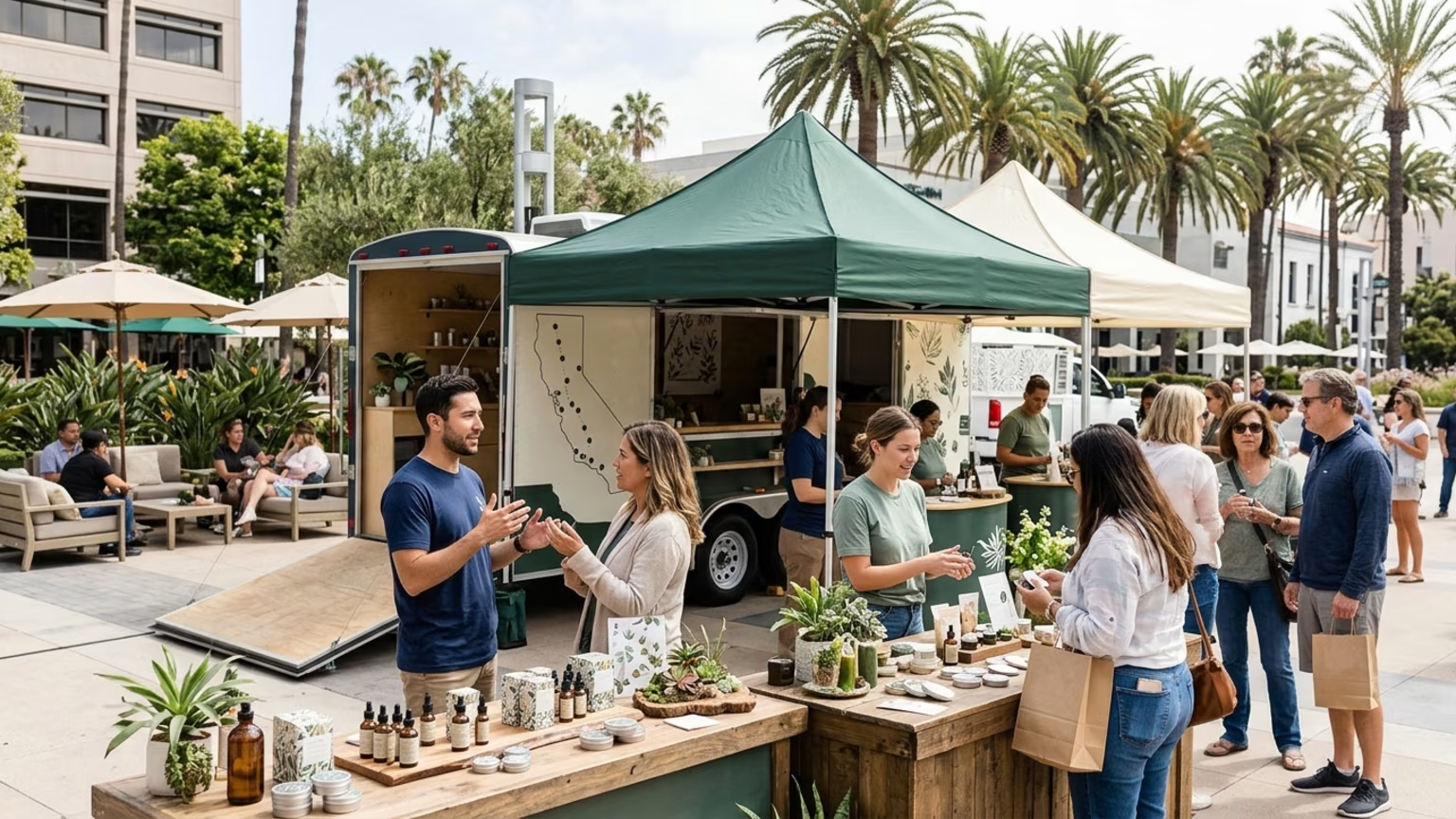
Between Aug. 10 and Sept. 11, 2026, Charlotte's Web launched a campaign called Route CBD. Event Marketer reports that this seven-city mobile tour traveled around Nevada and California. The brand developed this campaign directly after California enacted bills in July. According to Event Marketer, these new laws eliminated consumer access to full-spectrum hemp products.
MediaPost similarly described the new regulations as effectively banning the sale of these items in the state. The statutory changes created an immediate distribution challenge for the company. It forced the brand to rethink how it interacted with its established customer base. Rather than abandoning the market entirely, the leadership team opted for a physical intervention.
The legislative changes in California severely impacted the company's product portfolio. MediaPost reported that full-spectrum products represented roughly 60 percent of the business for Charlotte's Web. This estimate came directly from the brand's Chief Commercial Officer Mindy Garrison. The regulations suddenly restricted a primary revenue driver in a major geographic market.
Garrison told MediaPost that some consumers really need the full spectrum. She stated that the company did not want these individuals to lose access to their preferred items. MediaPost also reported that Charlotte's Web was redesigning part of its portfolio to include more broad-spectrum products.
Instead of waiting for legislative changes or shifting entirely to online sales, the team mobilized a physical asset. The brand launched a truck that carried hemp products consumers could legally purchase. Event Marketer characterized Route CBD as the company's first mobile tour. The campaign combined this legal product access with active consumer advocacy.
MediaPost reported that the truck later appeared directly in California. During those specific California stops, the brand gave away full-spectrum hemp rather than selling it.
When standard retail distribution channels close, CPG marketers often retreat to wait out the storm. We see this differently from our position managing complex physical campaigns. A carefully planned physical roadshow provides a tangible way to maintain consumer relationships during a period of restricted access. Charlotte's Web structured the Route CBD tour around three pillars of awareness, advocacy, and access.
The activation proved that a physical presence can serve multiple business objectives simultaneously. We know firsthand that brands deploying multi-city roadshow campaigns can turn a temporary distribution disruption into a direct consumer connection. We specialize in creating retail demos, product sampling programs, and roadshows that bring brands face to face with their audiences. Each program is designed to drive trial, build consumer relationships, and accelerate retail velocity across multiple locations.
Maintaining momentum across state lines requires a disciplined approach to physical field marketing. For example, we ran the Little Debbie Share a Smile Tour as a 21-market mobile activation using a branded truck, trailer, and Cupcake Smart Cars. Across the tour, we distributed 224,534 cupcakes and earned coverage from three local television stations. That kind of multi-market execution requires precise scheduling and constant local adaptation to keep the brand message intact.
The Route CBD truck also served as a dedicated content-gathering space for the company. Event Marketer reports that the team recorded attendee videos for social media. Charlotte's Web planned to compile some of this footage into a short documentary for federal regulators. This approach shows how a field marketing footprint can actively feed digital communication channels.
Running an advocacy campaign across state lines creates intense logistical demands for the field team. According to Event Marketer, the team moved the truck to different locations once or twice a day within each city. This aggressive routing schedule forced the campaign to rely on rapid communication updates to retain visibility. The team promoted stops on social channels and updated its website constantly to keep audiences informed.
The field team also distributed informational flyers to direct foot traffic toward the mobile footprint. Handling direct consumer inquiries on the road requires dedicated staffing and clear communication protocols. Garrison shared that the driver and tour manager provided a personal cell number to manage immediate access questions. This high-touch approach requires staff members who can operate well under pressure in unpredictable environments.
The activation successfully generated more than 9,000 emails according to Event Marketer. Gathering that volume of contact information relies heavily on capturing digital analytics in a physical environment without causing traffic bottlenecks. The tour invited attendees to share personal stories and write letters to California legislators. Visitors could also write directly to Governor Gavin Newsom regarding the new hemp legislation.
Frequent route changes and continuous advocacy capture demand substantial preparation time before launch. Garrison specifically identified starting the planning process earlier as the one thing she would change about the tour. Moving a commercial vehicle multiple times a day requires securing local permits and managing shifting parking regulations. Executing multi-city sampling deployments demands tight alignment between the field staff and the central marketing team.
We design mobile activations and roadshows that accelerate consumer trial, build trust, and boost retail velocity during 90-day product launch windows. Our structured approach transforms initial product trial into sustained consumer confidence and retail performance. Managing a focused promotional window requires locking down local permits well before the truck ever starts its engine. If the logistics fail, the entire consumer experience breaks down on the pavement.
The motivation behind the tour was highly specific to the legislative hurdle in California. Garrison framed Route CBD directly as a response to this sudden product access problem. She told Event Marketer that the company reasoned, "if we can’t sell it online or in retail, we’ll sell it across the border." Garrison noted that the physical experience was intended to feel like a refuge.
She wanted the mobile footprint to serve as a place for education and community where visitors would not feel ostracized. This strategy successfully mobilized highly motivated consumers who wanted to support the brand. Event Marketer recounted a story of one family that drove three hours from San Bernardino. They traveled to the first Las Vegas stop specifically to obtain product for their daughter.
In MediaPost, Garrison described the overall policy issue as nuanced. She noted that Charlotte's Web supported removing intoxicating and synthetic products from retail shelves. However, she emphasized the need to distinguish those synthetic items from therapeutic hemp. MediaPost also reported a further advocacy effort called "Know the Difference" intended to educate Congress.
That outlet noted that Route CBD footage was being used as part of this ongoing lobbying effort.
The immediate regulatory challenge for this category required a rapid physical response from the marketing team. Yet the logistical lessons from this campaign apply to any CPG brand managing a complex multi-region rollout. A well-executed mobile tour relies on early planning, tight daily routing, and clear on-site communication. The ability to gather emails and record video content adds significant value only if the field operations remain stable.
If your primary retail channel disappeared tomorrow, does your team have the operational agility to mobilize a direct path to your consumers? True brand resilience does not happen on a spreadsheet or a digital dashboard. It is built on the pavement, verified by real interactions, and proven when a company meets its audience exactly where they stand.
Field marketing directors and event managers regularly execute complex multi-city roadshows that require strict operational precision. Makai prevents scattered attention and poor booth flow during these critical tours by storing sampling product and event gear, then shipping, tracking, and coordinating delivery nationwide so every activation stays on schedule.

30 Years Experiential & Retail Activation Partner for CPG & Beverage Brands | Multi-Market Demos, Roadshows & Costco/Club Programs That Actually Sell