Robbie Thain
Founder, CEO

Learn how CPG marketing operators can prevent roadshow failures by aligning trade marketing, executing field staffing audits, and synchronizing retail inventory.
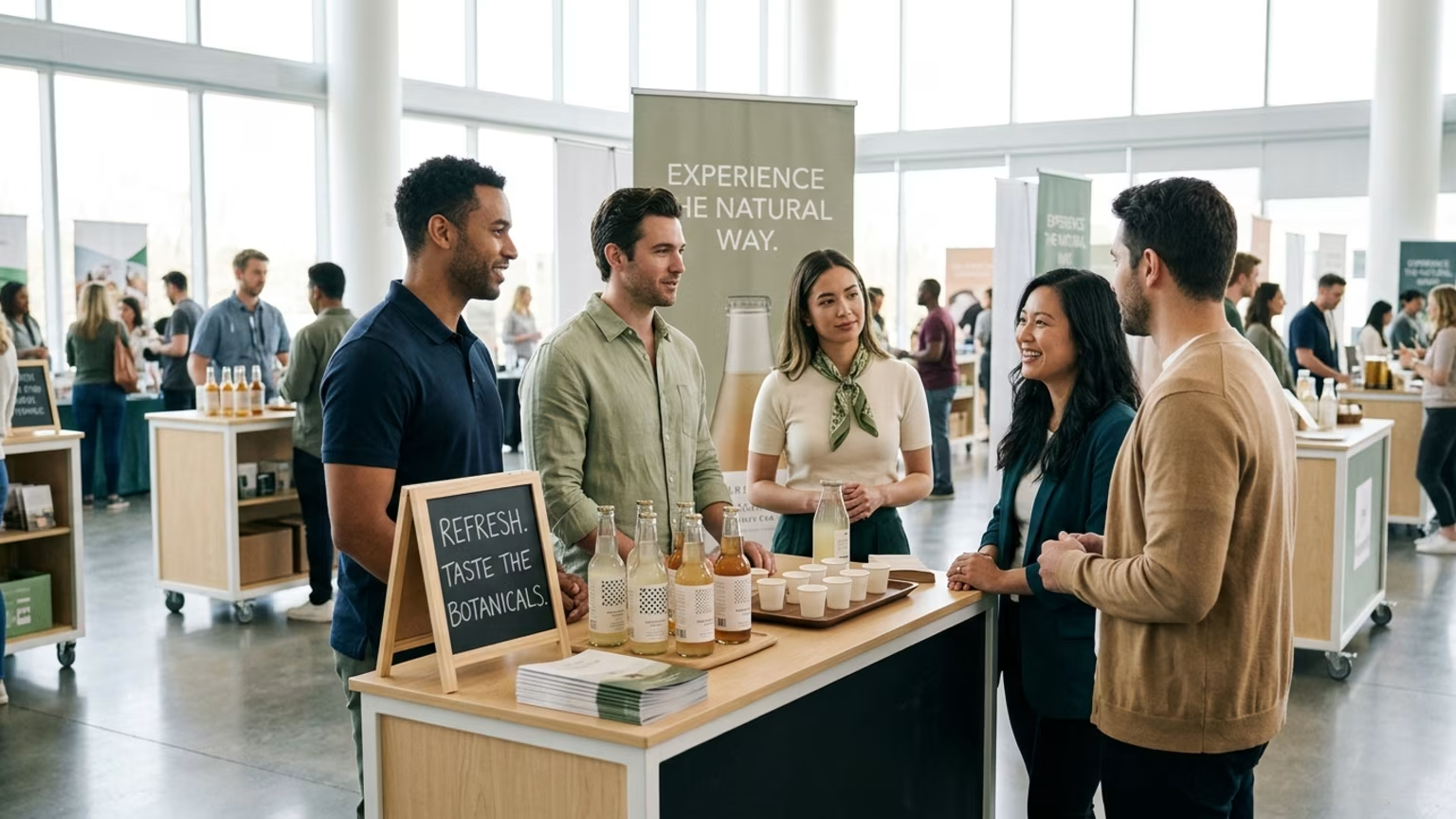
Retail demo programs often get judged on cups poured instead of incremental pipeline. That operational mismatch is exactly why high-budget roadshows burn to the ground. Creative ambition frequently outpaces field logistics. We call these coordination disasters "beautiful dumpster fires" because they look great on camera while silently draining your trade marketing budget.
The financial stakes for physical brand activations have never been higher. The global experiential marketing industry reached 128.35 billion US dollars in 2024. Experiential budgets in 2025 are projected to reach 128.35 billion globally. This rapid capital injection means brands are fighting harder than ever for retail attention.
Marketing departments are taking notice and shifting funds accordingly. Enterprise marketing departments now dedicate 29 percent of their total budgets to experiential marketing. Among consumer packaged goods companies, the allocation is even higher at 34 percent. This massive capital reallocation means executive scrutiny is tightening around event performance.
Experts warn that many brands mistake larger scale for better outcomes. A prevalent pitfall is valuing high-visibility branded backdrops over genuine human value. This misplaced priority leads directly to photo-op fatigue. Attendees do not retain brand memory when they are only treated as props for social media content.
When operators get the logistics right, the financial upside is massive. According to research from Elation Digital, well-executed experiential campaigns typically yield a Return on Investment between 3:1 and 5:1. You cannot achieve those numbers by handing out free samples without a clear strategy. You need military-grade precision on the event floor.
A Vice President of Marketing must justify every dollar spent on a highly fragmented trade budget. Our internal data from 2025 and 2026 shows that FMCG brands can reach a 4-7:1 ROAS. These physical brand activations outpace passive advertising by generating actual human connections. Data from AnyRoad shows that immersive events can drive a 306 percent higher lifetime value compared to traditional advertising.
Beyond direct sales, these interactions change consumer perception permanently. Research confirms that 91 percent of consumers report more positive brand feelings after an experience. People want to touch and taste products before committing to a long-term purchase. They want to ask questions and interact with knowledgeable staff.
Despite these clear benefits, execution remains a massive hurdle for mid-market brands. Industry analysts at r4.ai note that trade marketing teams often design complex roadshows without field input. This oversight leads to physical displays that do not fit 70 percent of intended retail outlets. You cannot generate revenue if your booth literally cannot fit through the store doors.
While top brands are seeing outsized returns, a middle tier of companies generates only average results on similar budgets. This performance gap happens due to fragmented execution and wildly inconsistent staffing. You cannot expect premium conversion rates if your field execution varies wildly from city to city.
You must change how your brand executes mobile tours and retail demos today. The days of hiring general labor and hoping for the best are completely over. makai treats every local stop as a highly coordinated sales mission. We focus strictly on operational excellence to prevent common launch failures.
Pre-selling your activation is absolutely mandatory for retail success. Field teams need at least two weeks of lead time to pre-sell the activation to store managers. If you skip this critical step, the first week of your campaign is often lost to inventory and compliance issues. Store managers will quickly reject surprises.
Inventory alignment requires constant communication between the field and the warehouse. Failed launches frequently occur because activations land at the wrong time. A demo might happen before the product is actually on shelves or after excess inventory has already been marked down. Your field team must synchronize their arrival with actual store stock.
You should manage event prep timelines carefully to avoid these timing disasters. Proper sequencing keeps your teams aligned and your retail partners happy.
To avoid common flops, operators must solve for three critical staffing issues. First, you must eliminate no-shows by building bench depth and backup protocols. Second, you must replace untrained staff with brand ambassadors who can answer detailed product questions. Third, you must enforce accountability through strict field reporting metrics.
Leading agencies are fundamentally changing their talent pipelines. They are moving away from general labor toward specialized Strategic Initiative Leads and parallel career tracks for field ambassadors. You need staff who view your product launch as a serious business objective. Training must focus heavily on sales conversion rather than just handing out flyers.
We have executed over 1000 campaigns across all 50 states, bringing brands to life in every major U.S. market. From retail demos in Seattle to roadshows in Miami and events in Honolulu, our teams activate brands wherever our clients' audiences are located. We know firsthand that preventing field operations dumpster fires requires relentless staffing discipline. You cannot outsource your brand reputation to untrained temporary workers.
Passive sampling without data capture is an expensive vanity project. Operators must connect physical interactions to digital follow-up systems immediately. FMC Agency found that ROI improves by 3.4x when brands retarget event attendees with digital ads within the first 30 to 90 days.
Every sample handed out should be a deliberate data acquisition opportunity. You can use QR codes, text-to-win sweepstakes, or simple email captures to build your list. When a customer tries your product at a local retail roadshow, they should see your digital ad two days later. That specific integration turns a local trial into a recurring customer relationship.
Logistics between roadshow stops must be sequenced carefully for load-out, transport, and load-in. You must build enough buffer time into the schedule to prevent crew burnout and setup delays. Rushing a tired crew into a new market guarantees a sloppy presentation. Measurable sales lift from mobile roadshows depends on consistent energy levels from your front-line workers.
A common failure is applying a uniform approach to every city on a roadshow calendar. Audiences in different markets perceive and value events differently. You must require local adaptation for each specific retail environment. Field marketing pop-up activations demand a flexible approach that respects local consumer behavior.
Marketing leaders must evaluate their experiential programs on actual pipeline contribution. You need to adjust your KPI dashboards this quarter to track pre-sale compliance, staffing retention, and post-event retargeting conversions. A beautiful branded backdrop means nothing if the execution fails at the retail level.
The math is clear for operators willing to do the hard work. A well-run program secures retail confidence and drives up to a 7:1 ROAS in the consumer packaged goods sector. Stop accepting unmeasured brand theater. Demand operational rigor from your field teams, align your inventory schedules perfectly, and turn your next roadshow into an undisputed revenue driver.

30 Years Experiential & Retail Activation Partner for CPG & Beverage Brands | Multi-Market Demos, Roadshows & Costco/Club Programs That Actually Sell


