Robbie Thain
Founder, CEO

Dreamforce 2026 showcases impressive technology scale, but missing financial proof reveals an event measurement crisis. Learn how to track tangible outcomes.
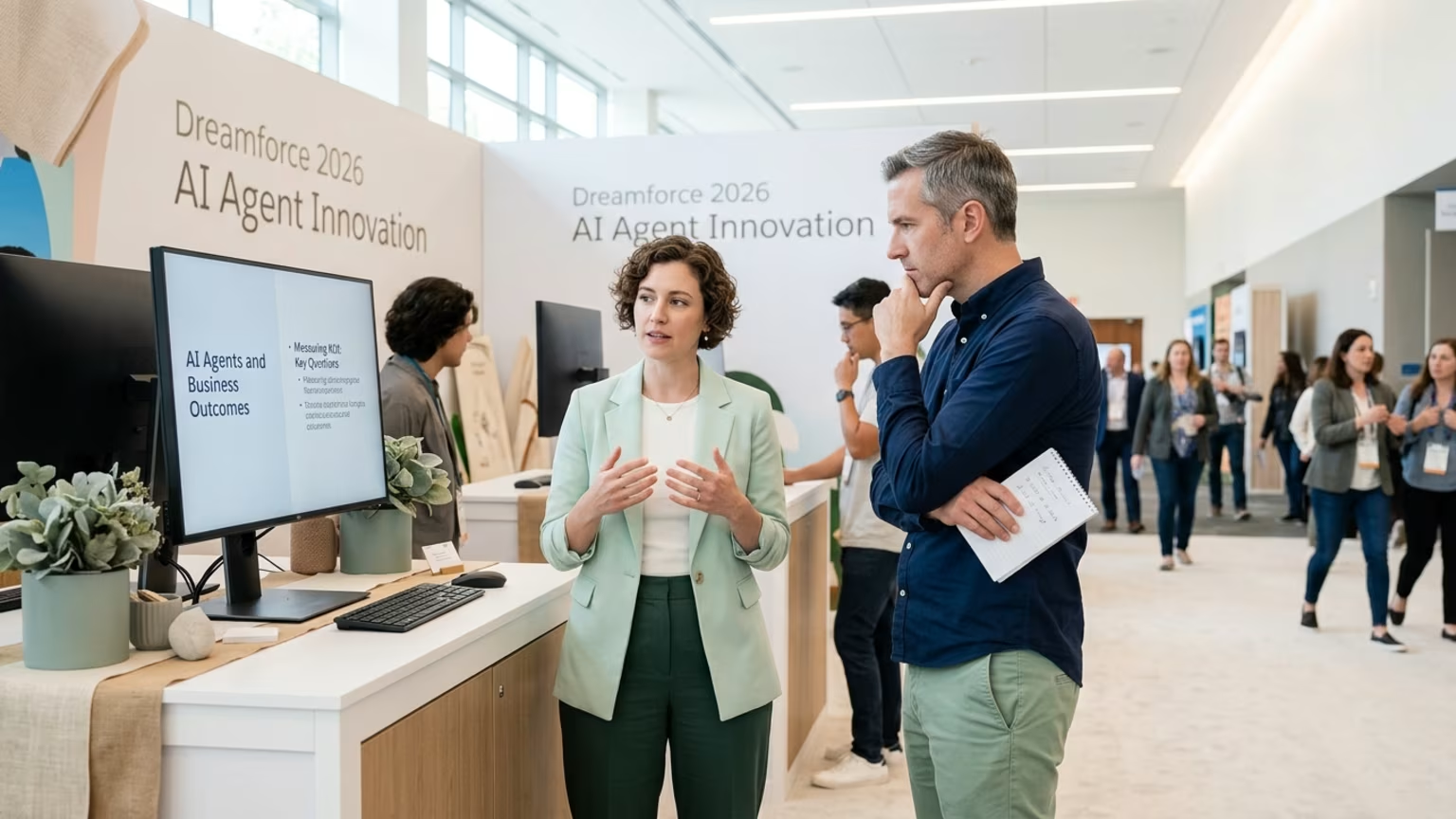
Salesforce is preparing for Dreamforce 2026 at the Moscone Convention Center in San Francisco. The massive technology conference runs from September 15 to 17 and centers entirely on the Agentic Enterprise strategy. This strategy envisions a model where people, artificial intelligence agents, and software platforms work together to manage business processes. However, your giant interactive virtual reality booth at an event like this is bleeding you dry.
Event marketers often fall into the trap of confusing loud stage presentations with actual commercial validation. A beautiful booth might attract thousands of curious onlookers and generate endless social media chatter. But relying on vague engagement metrics instead of hard financial tracking will drain your budget. You must use brutal operational tracking to prove that the expense actually moves the needle for your business.
The mainstream approach to major trade shows often fails because it prioritizes scale over substance. Dreamforce 2026 represents overwhelming scale, offering more than 1600 breakout sessions, 50 keynotes, 150 hands on trainings and demos, and 240 community roundtables. Salesforce is also running a virtual program with more than 400 sessions focused on Agentforce, Slack, and Data 360. However, MarketScale reported that pre event materials did not include customer reported Return on Investment figures.
Those same materials lacked Agentforce adoption metrics or production cost to run figures. This diagnostic gap speaks directly to the anxiety of a chief marketing officer spending six figures to get zero qualified pipeline. A technology event can easily demonstrate what a product does without proving whether it is financially viable at scale. This missing data leaves procurement teams asking unanswered questions about actual production costs and measurable value.
This measurement crisis is not isolated to technology showcases, as corporate marketers at recent summits have shown pressure mounting across the industry. Ei Advisory reports that only 21 percent of B2B marketers can measure event returns confidently. Meanwhile, 67 percent of marketers cite this exact measurement as their biggest challenge. Spending a fortune on a beautiful activation without capturing intent is a guaranteed path to a dumpster fire.
The Makai alternative worldview rejects the idea that you must choose between a great experience and great data. We bring a unique aloha backed operator mentality to the show floor, pairing warm human authenticity with brutal operational discipline. When a brand ambassador has a genuine conversation with a buyer, it yields better trial and conversion rates. Consumers want real human connection rather than just a flashy demonstration that lacks substance.
Salesforce reports some impressive platform growth statistics, claiming businesses begin creating agents within an average of two days. They also report that the average number of activated agents per organization nearly tripled over the past year. Furthermore, the action to output ratio of agents is growing at a 15 percent compound monthly rate. While agent deployments more than double year over year, adoption volume alone does not equal profitable usage.
New industry research on event pipelines confirms that structured interactions generate the best outcomes. Bizzabo reports that event programs average only 0.2 non registration intent forms per event, yet the forms used average 91 submissions. This indicates a massive missed opportunity for operators to gather crucial data. When you apply strict discipline to your field marketing, you capture the intent that most brands leave behind on the floor.
The gap between digital agent tracking and physical event measurement is striking. When a software company measures an action to output ratio, they track every click and system response perfectly. Field marketers must bring this exact same rigor to the physical show floor. If your brand ambassadors operate without a proper tracking system, you are essentially flying blind during your most expensive campaigns.
Relying on basic attendance data forces your sales team to guess which leads actually want to buy. Registration metrics tell you who showed up, but they never tell you why a person stayed to talk. You need your staff to capture specific buying intent at the precise moment of engagement. This approach reduces wasted outreach and ensures your sales team focuses only on qualified demand.
You must shift your focus from tracking impressions to tracking tangible outcomes like samples distributed to target buyers and retail meetings booked. Bizzabo recommends tying each field event to a defined key performance indicator. You must connect your activation to a CRM campaign, UTM source, and resulting pipeline value. This methodology creates a basic chain from the initial invitation to a downstream commercial outcome.
Salesforce’s own media materials contain selected customer performance claims that highlight this need for accurate tracking. Salesforce says Live Nation’s Venue Agent spans 120 venue websites and could automate more than 300,000 fan inquiries annually. Salesforce reports that SaaStr achieved a 72 percent open rate, a 10 percent response rate, $2.7 million in additional closed revenue, and $3.5 million in pipeline. But individual customer stories require proper attribution rules and a known comparison group to serve as valid benchmarks.
Before approving a massive roadshow or product launch, you must define the primary business objective. Your goal might be qualified leads, retail action, booked meetings, or repeat purchases. Setting this objective dictates exactly what data your staff must collect on the floor. Without a measurement brief, your team will default to scanning badges and hoping for the best.
A major reason events fail to show value is an artificially short tracking window. Ei Advisory argues that the common 14 day attribution window may capture only about 20 percent of event impact, recommending a 90 day minimum instead. If you judge a major trade show after two weeks, you are missing the reality of the buyer journey. A consumer might sample your product, remember the brand, and buy from a retailer months later.
Consolidating your lead capture tools illustrates why capturing intent at the moment of engagement is critical for your field teams. Registration alone rarely explains what someone intends to do after experiencing a brand. You must add a small number of consented fields tied to the specific campaign goal. Whether you track retail interest or a meeting request, the data must flow seamlessly into your central systems.
If a partner reports massive reach or leads, you must demand the full investment context and request the denominator. You need to ask vendors for the total cost base, not just the final outcome. A credible review separates production, staffing, travel, technology, and follow up costs to calculate a true cost per qualified lead. Without this deep financial transparency, any reported return is just an educated guess.
The core takeaway from the Dreamforce 2026 rollout is that an impressive demonstration is merely an invitation to investigate rather than a substitute for concrete financial proof. Marketing leaders must prioritize brutal execution and traceable outcomes over expensive stage design. When you demand clear cost accounting and verified pipeline data, your experiential programs stop being decorative expenses. They become powerful engines for qualified revenue, better trial rates, and long term business growth.
Marketing operators managing enterprise software conferences struggle to convert casual booth traffic into verified commercial data. Makai eliminates the problem of inefficient post event follow up and CRM routing by deploying our Brand Activations capability. We create high energy activations that turn awareness into participation and drive measurable consumer response. Request a proposal

30 Years Experiential & Retail Activation Partner for CPG & Beverage Brands | Multi-Market Demos, Roadshows & Costco/Club Programs That Actually Sell