Robbie Thain
Founder, CEO

Chicago's 2026 Bike the Drive created a rare urban corridor for CPG brand activations. Learn how marketers navigate strict logistics and zone planning for ROI.
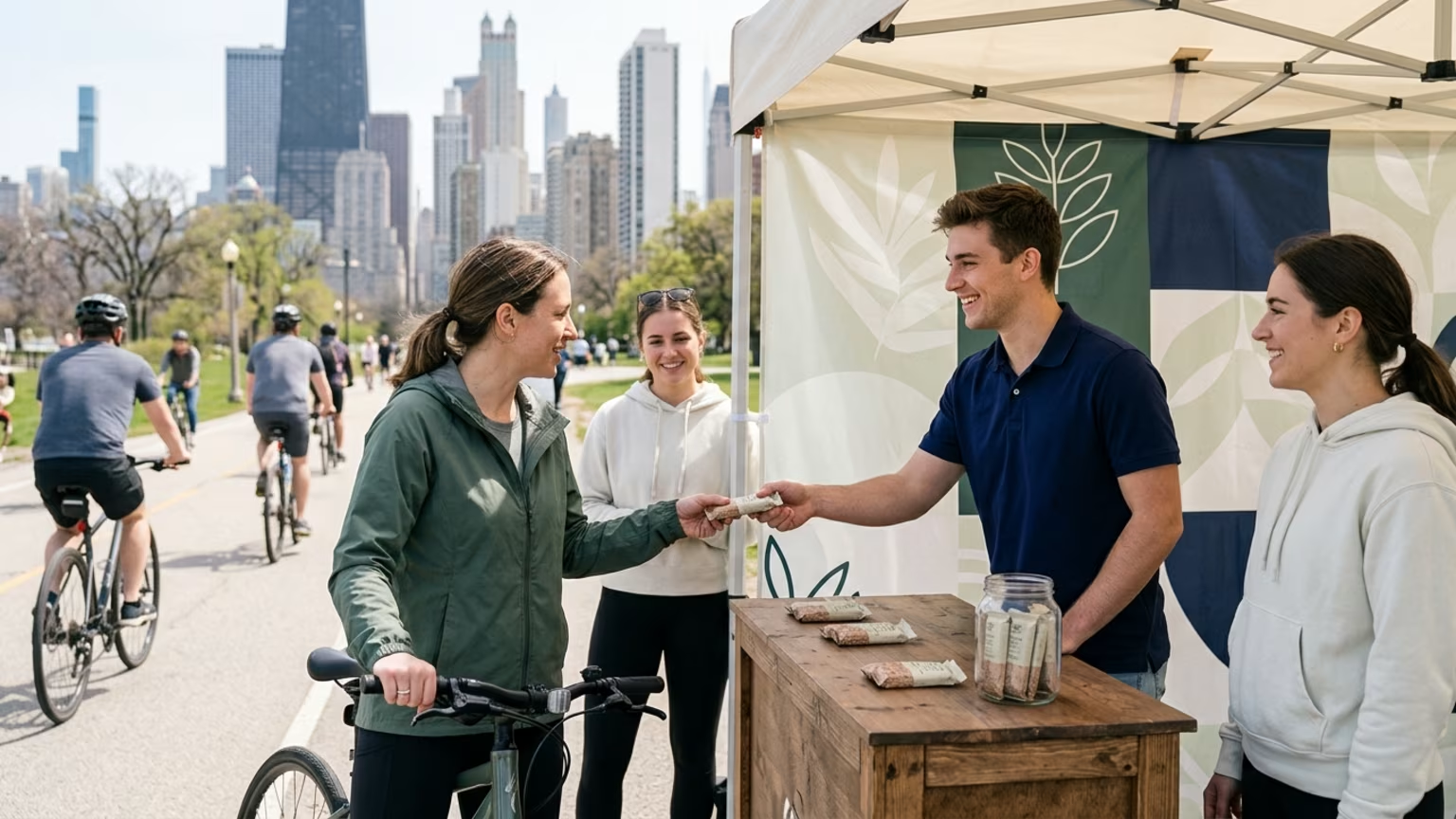
On Sunday, September 6, 2026, the 25th annual Bike the Drive temporarily removed cars from a major Chicago transit artery. The event converted a roughly 30-mile loop of DuSable Lake Shore Drive into an exclusive cycling corridor. This massive route stretched from Hyde Park to Edgewater. It transformed a conventional roadside space into a highly active environment for thousands of participants.
The logistical shift required heavily controlled municipal coordination. The roadway was closed to car traffic starting around 6 a.m. and remained restricted until late morning. According to the event’s official information, automobile traffic was scheduled to resume between 11:30 a.m. and noon. Meanwhile, ABC7 reported a closure running from Hollywood Avenue south to 59th Street until 11:45 a.m.
The operation disrupted normal traffic patterns far beyond private vehicles. ABC7 reported temporary reroutes or shortened trips for nine different CTA routes. The affected transit lines operated on or near DuSable Lake Shore Drive. Riders themselves were funneled through specific entry points at Bryn Mawr Avenue, Fullerton Avenue, Oakwood Boulevard, and the Griffin Museum of Science and Industry.
The official rider start window spanned from 6:30 a.m. to 10:30 a.m. Event organizers also planned rolling rider diversions onto the nearby Lakefront Trail as cars returned. The physical layout was divided into clear functional zones. The route featured rest locations equipped with restrooms, water, and snacks.
These utility hubs were placed at Bryn Mawr Avenue, the Griffin Museum of Science and Industry, and Butler Field. ABC7 reported that the 2026 programming added DJs at rest stops, a family fun zone, and a mini-golf course at the main festival based at Butler Field in Grant Park. Participation required strict adherence to safety and operational protocols. Participants needed to register, sign waivers, and wear helmets. They were also required to follow course marshals and display rider numbers.
Official event materials explicitly warned riders about uneven pavement and potholes. The infrastructure included dedicated mechanics and support vehicles to maintain constant flow across the 30-mile loop. Organizers heavily utilized checkpoints at Fullerton Avenue and Oakwood Boulevard to manage the crowd. This level of oversight highlights the complexity of operating within an active roadway.
We have been connecting brands with people through live experiences and national activations since 1995. In our experience, closed-corridor civic events represent exceptional environments for field marketers. The Chicago Tribune reported that approximately 15,500 cyclists participated in this year's ride. This scale offers beverage and snack brands access to a concentrated audience moving through a defined space.
Many marketers battle digital noise by deploying offline first activations to win consumer attention. Bike the Drive is a fundraiser produced by and benefiting the Active Transportation Alliance. It forces attendees to unplug and engage physically with their surroundings. This physical exertion creates immediate consumer needs for hydration, nutrition, and recovery support.
CPG brands thrive when they can solve an immediate participant problem. A brand that supplies electrolytes or sun protection feels additive rather than intrusive. The multi-stage consumer journey allows companies to engage people during arrival, rest, and post-ride socializing. This type of utility-driven presence generates far more authentic interaction than standard billboard advertising.
The environment shapes the value of every consumer interaction. A closed urban corridor removes the visual clutter of traditional advertising and forces attendees to focus entirely on their surroundings. This heightened awareness gives physical marketing a significant advantage over typical digital placements. When a brand delivers a flawless physical experience in this setting, it stands out immediately. Earning this visibility requires treating the roadway as a shared community asset.
However, high attendance does not automatically guarantee massive activation reach. Not every participant will stop at every rest location or spend time at the festival. Brands must model their expected reach by zone and dwell time instead of treating the total participant count as guaranteed impressions. Earning attention here requires a strategy built around genuine utility and flawless execution.
Activating within a restricted morning window demands rigorous operator-grade discipline. Riders were encouraged to start by 8 a.m. to complete the course safely. Field marketing crews therefore needed their infrastructure, power, cold chain, and signage completed before dawn. Late setup is never an option when strict municipal road closures dictate the operational schedule.
Brands managing multi-site programs often rely on consistent frameworks for mobile roadshow tours. A single monolithic footprint is too broad for a dispersed route like this one. Marketers must distribute their presence across entry zones, rest stops, and the main Butler Field festival. Each location serves a different operational objective and handles different interaction speeds.
Distributing operations properly is key to securing accurate compliance checklists for urban street activations. Every station must respect the organizer's traffic-management plan to avoid bottlenecking riders near intersections. Teams cannot simply hand products to moving cyclists without risking safety and route congestion. Careful spatial planning ensures that the physical experience converts smoothly without obstructing emergency access routes.
To maximize engagement during such a fast-paced morning, field teams must map their tactics to specific participant mindsets. A defensible strategy separates the consumer journey into distinct interaction points. This prevents field staff from overwhelming attendees with complex messages during brief hydration breaks. Applying correct messaging per zone maximizes efficiency.
Handling complex product logistics requires immense foresight. Sampling programs must account for strict food safety guidelines and proper refrigeration during a long morning footprint. Brand teams must manage these requirements without obstructing rider flow or creating unsafe congestion points. Proper waste collection is equally critical to maintain the integrity of the open route. Failing to manage trash damages a brand's reputation and violates the organizer's trust.
Throughput capacity must be calculated down to the minute. A brand serving thousands of cyclists must estimate queue lengths, product replenishment rates, and staff productivity. Relying on sheer crowd size is a common pitfall for inexperienced event coordinators. A smart operator measures success through rigorous performance indicators rather than vague attendance metrics.
Marketing teams need a robust framework to prove the value of their on-site investments. Relevant metrics include the total number of samples distributed, completed product trials, and QR scans initiated. Field directors should also track coupon redemptions, cost per completed trial, and staff service throughput. These data points provide a clear picture of how efficiently a team captured consumer attention.
Treating the event organizer as a strategic partner is equally crucial. Because this ride supports the Active Transportation Alliance, commercial brands must respect the nonprofit mission. Partnership models might include funding a dedicated rest stop or underwriting specific safety support services. Aligning with the event's goals prevents a brand from appearing exploitative or obstructive.
The emotional context of an open road shapes how consumers interact with participating partners. Clare McDermott of the Active Transportation Alliance told the Chicago Tribune that the event offered a chance to experience what roads might feel like if they were more comfortable for cyclists. This community-focused atmosphere changes the standard commercial dynamic. Brands that align with this active lifestyle vision earn deeper consumer trust.
The 2026 ride occurred during a period of intense local interest in cycling. The Chicago Tribune reported, citing the city, that the Divvy bike-share program surpassed one million rides in July 2026. This data underscores a highly engaged audience eager for shared mobility experiences. Marketers who respect this culture can build meaningful connections that extend far beyond a single Sunday morning.
Marketing leaders face intense pressure to turn fleeting event encounters into documented retail pipeline. Operating inside heavily regulated municipal footprints requires a flawless physical foundation and meticulous logistical execution. As you finalize your regional strategy for the coming quarters, how will your field teams adapt their site operations to capture qualified leads during short-window civic closures?
Designing zone-based physical experiences for large civic street closures forces marketers to execute precise logistical flow. Makai resolves scattered attention and poor booth flow by deploying our Guerilla Marketing capability. We launch creative, street level ideas that surprise, delight, and generate authentic word of mouth. Request a proposal

30 Years Experiential & Retail Activation Partner for CPG & Beverage Brands | Multi-Market Demos, Roadshows & Costco/Club Programs That Actually Sell


