Robbie Thain
Founder, CEO

Learn how major CPG brands use multi-city pop-up tours and roadshows to turn physical product sampling into trackable first-party data and retail pipeline.
Mondelēz International generated approximately 36 billion dollars in net revenues in 2023. The company describes its flagship product, Oreo, as the world's number one cookie brand. It is sold and enjoyed by consumers in over 100 countries. When a mega brand of this scale needs to launch limited-edition flavors or build seasonal momentum, they turn to physical brand experiences.
Experiential marketing for consumer packaged goods goes far beyond simple product handouts. Multi-city pop-up tours allow brands to turn passive snacking moments into measurable retail pipeline. This operational playbook shows how field marketing leaders can structure physical footprints to capture first-party data and drive direct store velocity. Operators need clear frameworks to extract real business value from physical events.
The mandate for experiential marketing has shifted toward strict revenue alignment. Field marketers can no longer justify massive event budgets with simple photo recaps and vague foot traffic estimates. Chief marketing officers demand clear attribution models that connect physical sampling to immediate retail momentum. Every element of a multi-city tour must be engineered to capture shopper data and accelerate direct product sales.
Retail demo programs get judged on cups poured rather than incremental pipeline. Field marketing managers know the familiar chaos of deploying folding tables outside busy grocery entrances or inside crowded expo halls. Staff arrive late with missing inventory or poor talking points. Visitors grab free snacks and vanish before anyone can capture meaningful consumer data.
The activation generates foot traffic but fails to create any trackable connection to upcoming seasonal merchandising pushes. Brand ambassadors hand out premium product to people who have no intention of buying. Event managers scramble to restock displays while ignoring the core data capture mechanics. The entire operation feels rushed and disconnected from broader corporate sales goals.
Without a rigorous operational framework, field events burn through marketing budgets quickly. Pop-up tents collapse under poor weather conditions. Mobile sampling trucks get stuck in transit due to missing local permits or poor route planning. Teams return to the office with empty boxes but no hard evidence that the campaign influenced shopper behavior.
Many consumer packaged goods companies fail because they treat experiential marketing as an afterthought. They assign live event coordination to junior staff members with no logistical training. This leads to fractured communication between the local field team and the national retail buyers. The resulting activations look busy but deliver zero trackable business value.
Field leaders solve this problem by treating mobile roadshows as integrated marketing channels. Instead of deploying isolated sampling tents, experiential campaigns must bridge the gap between initial product trial and final retail sell-through. Brands that invest in mobile pop-up tours and roadshows to support retail expansion standardize their physical footprint across multiple regional locations. A consistent structural design ensures every brand ambassador operates with the same engagement protocols and inventory controls.
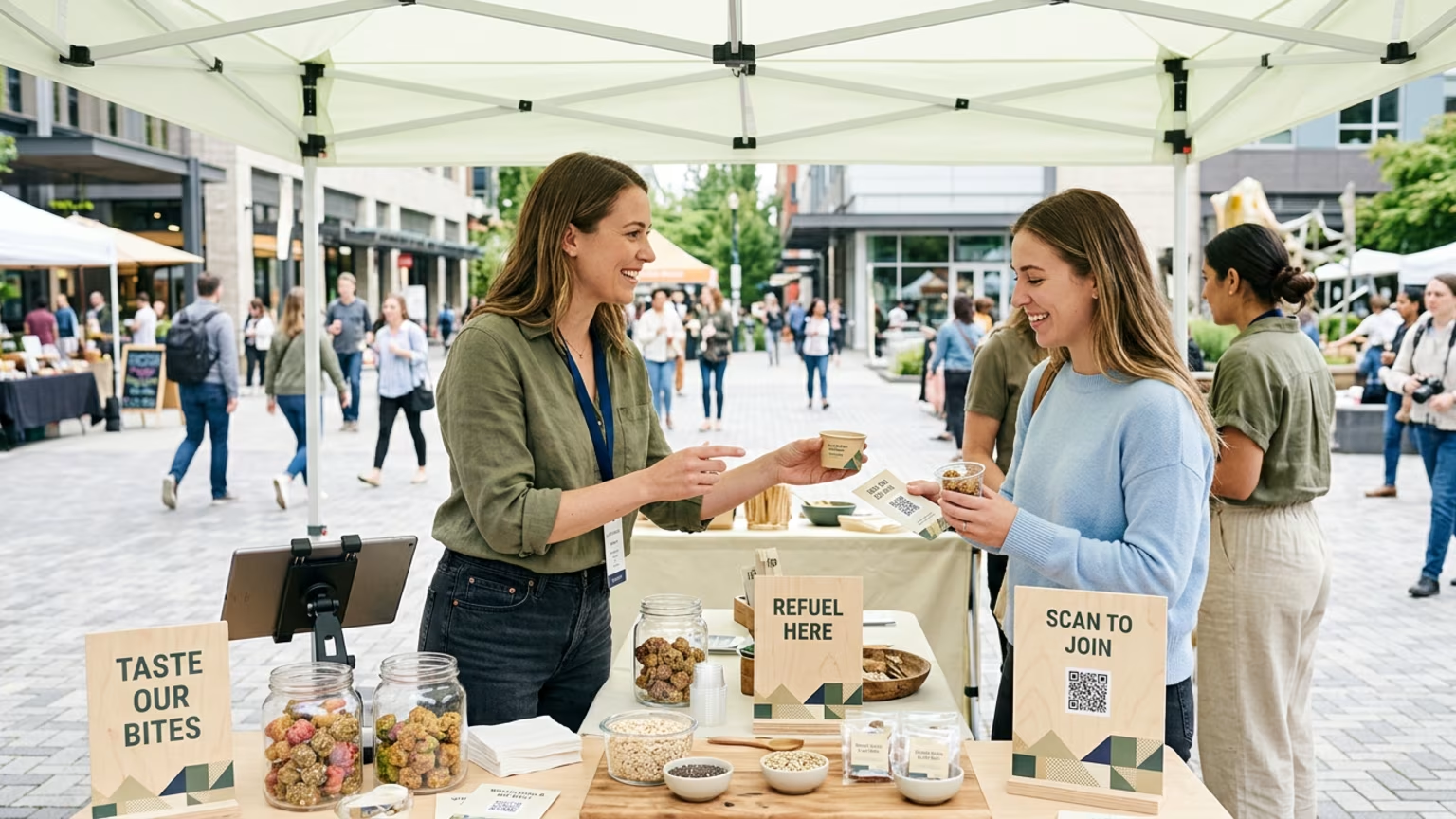
The strategic approach relies on intentional zone mapping. An effective multi-city tour divides the physical space into distinct interactive areas for sampling, data collection, and photo sharing. This layout controls crowd flow and prevents the chaotic bottlenecks that ruin typical trade show booths. Clear signage directs attendees naturally through the activation sequence.
Another core pillar is the integration of digital capture tools. Modern experiential activations use QR codes, text-to-win sweepstakes, and gated Wi-Fi networks to gather consumer information. This mechanism transforms a fleeting taste test into a persistent digital relationship. The brand can then retarget these consumers with specific digital coupons when the product hits local retail shelves.
Strategic tours also rely on psychological triggers to drive immediate action. When consumers physically interact with a brand in a well-designed pop-up space, their baseline purchase intent rises significantly. Offering exclusive merchandise or limited time digital coupons capitalizes on this heightened emotional state. The physical activation serves as a high conversion sales environment rather than a passive billboard.
Taking a pop-up tour across state lines requires a military-grade approach to logistics. Consumer packaged goods brands cannot afford regional inconsistencies when launching a seasonal push. You must lock down every operational detail before the first truck leaves the warehouse. The following execution steps will keep your multi-city campaign on track and under budget.
To prove Return on Investment, experiential directors must isolate the variables that indicate commercial success. Lag metrics look backward to measure the overall business impact of the tour. The most accurate lag metric is the lift in retail sell-through at stores located within a specific radius of the pop-up activation. Secondary lag indicators include total new customer acquisitions and the overall cost per qualified engagement.
Lead metrics track the live health of the activation while it is still running. Operators monitor daily sample distribution rates against projected inventory targets. They also track the conversion rate of QR code scans or digital opt-ins during the live event. These real-time data points allow field teams to adjust staffing ratios or shift locations before a multi-city tour loses momentum.
Teams that know how to monitor metrics that prove mobile roadshows drive sales lift gain the trust of their executive board. You should report these numbers daily during the tour. Waiting until the campaign concludes makes it impossible to fix poor conversion rates. Data transparency turns marketing expenses into trackable revenue drivers.
A dedicated CRM dashboard should act as the central source of truth for the entire campaign. Field managers must log their daily inventory counts, staff hours, and weather conditions into this centralized system. Comparing these operational inputs against your digital opt-in rates reveals the true efficiency of your tour. You can quickly identify which cities or venues yield the most profitable consumer engagements.
The true value of experiential data lies in its application to shopper marketing. When a consumer opts into a text message program at a pop-up event, they signal high purchase intent. Brands can use this list to distribute targeted promotions during critical seasonal merchandising pushes. The physical event acts as an acquisition funnel for the digital marketing team.
Retail buyers also respect hard numbers over flashy event photos. Presenting a major grocery chain with localized foot traffic data proves that your brand generates its own consumer demand. This evidence secures better shelf placement and secondary floor displays. Data transforms an experiential recap deck into a powerful B2B sales tool.
Integrated reporting bridges the gap between field marketing and sales leadership. When a pop-up tour concludes its run in a specific regional market, the sales team must immediately pitch those engagement metrics to local retail buyers. Demonstrating localized consumer excitement forces grocery chains to restock shelves faster. Your field activation directly accelerates the traditional commercial sales cycle.
Massive organizations like Mondelēz International prove that product trial requires intentional structure and significant operational backing. You do not need billions in revenue to apply these exact same principles to your own brand. Any snack or beverage company can transition from isolated sampling tables to coordinated regional tours. The key is prioritizing measurable retail outcomes over simple brand awareness.
Execution quality separates successful product launches from costly mistakes. We see how emerging CPG snack brands turn mobile tours into retail pipeline by refusing to cut corners on staffing and logistics. We specialize in creating retail demos, product sampling programs, and roadshows that bring brands face to face with their audiences. Each program is designed to drive trial, build consumer relationships, and accelerate retail velocity across multiple locations.
Success in physical marketing requires a relentless commitment to operational details. You must align your local staffing plans, digital capture tools, and supply chain logistics into a single unified strategy. At makai, we provide the architectural framework and boots-on-the-ground management to execute these massive logistical undertakings. We eliminate the guesswork so your marketing team can focus on scaling the core brand narrative.
We store your sampling product and event gear, then ship, track, and coordinate delivery nationwide so every activation stays on schedule. Field marketing requires operator-grade discipline to turn live brand experiences into measurable pipeline. Stop wasting budget on events that produce fog instead of hard evidence. Book a strategy call with our team to start building a multi-city tour that actually converts.

30 Years Experiential & Retail Activation Partner for CPG & Beverage Brands | Multi-Market Demos, Roadshows & Costco/Club Programs That Actually Sell


