Robbie Thain
Founder, CEO

H-E-B is aggressively scaling in-store demos across Texas for summer grilling. Learn how CPG brands can drive trial and measurable sales lift through sampling.

Most consumer packaged goods brands waste their summer marketing budgets on invisible digital ads when the real conversion happens entirely on the grocery floor. H-E-B is aggressively scaling its in-store demo program across Texas for the grilling season, offering marketers a massive opportunity to secure premium placement and measurable sales lift through direct product trial.
Walk onto a major Texas grocery floor on a Friday afternoon before a long summer weekend. The meat department is packed with shoppers rushing to grab fresh brisket, heavy charcoal bags, and bulk cooler ice. Your premium barbecue sauce or specialized summer beverage sits quietly on aisle four, completely ignored by the distracted crowd. Without a physical presence near the high-velocity action, your product is just another label fading into a dark, crowded shelf.
Brand teams spend thousands on targeted social media ads to build awareness, yet they lose the actual conversion at the final point of purchase. Consumers are overwhelmed by long shopping lists, crowded aisles, and the sheer volume of competitive choices. They want immediate solutions for their weekend entertaining plans, not a scavenger hunt for a new condiment. This disconnect creates a massive blind spot for regional marketing directors trying to prove their advertising spend.
You can buy all the digital impressions you want, but a forgotten product on a stagnant shelf produces zero actual revenue. The reality of retail execution requires intercepting the shopper exactly where their attention is focused. Many field marketing managers assume that retail foot traffic automatically equals product discovery. This false assumption leads to wasted inventory, missed sales targets, and frustrated executives who question the value of the physical retail channel entirely.
A busy store floor is a chaotic environment that actively works against quiet brands. Shoppers have their heads down, their carts full, and their patience running extremely thin. To break through this natural defense mechanism, a brand must create a physical disruption that is welcoming, informative, and highly relevant to the immediate seasonal need. Waiting for the consumer to find your product is a strategy destined for failure.
The expansion of H-E-B summer sampling programs offers a systematic path to fix this exact retail disconnect. A proper in-store strategy moves your product out of the stagnant aisles and places it directly into the hands of ready buyers. This requires treating the retail floor like a highly focused marketing event rather than a passive, forgettable display zone. You must orchestrate cross-category bundling, trained brand ambassadors, and strategic placement to capture the intense regional grocer traffic.
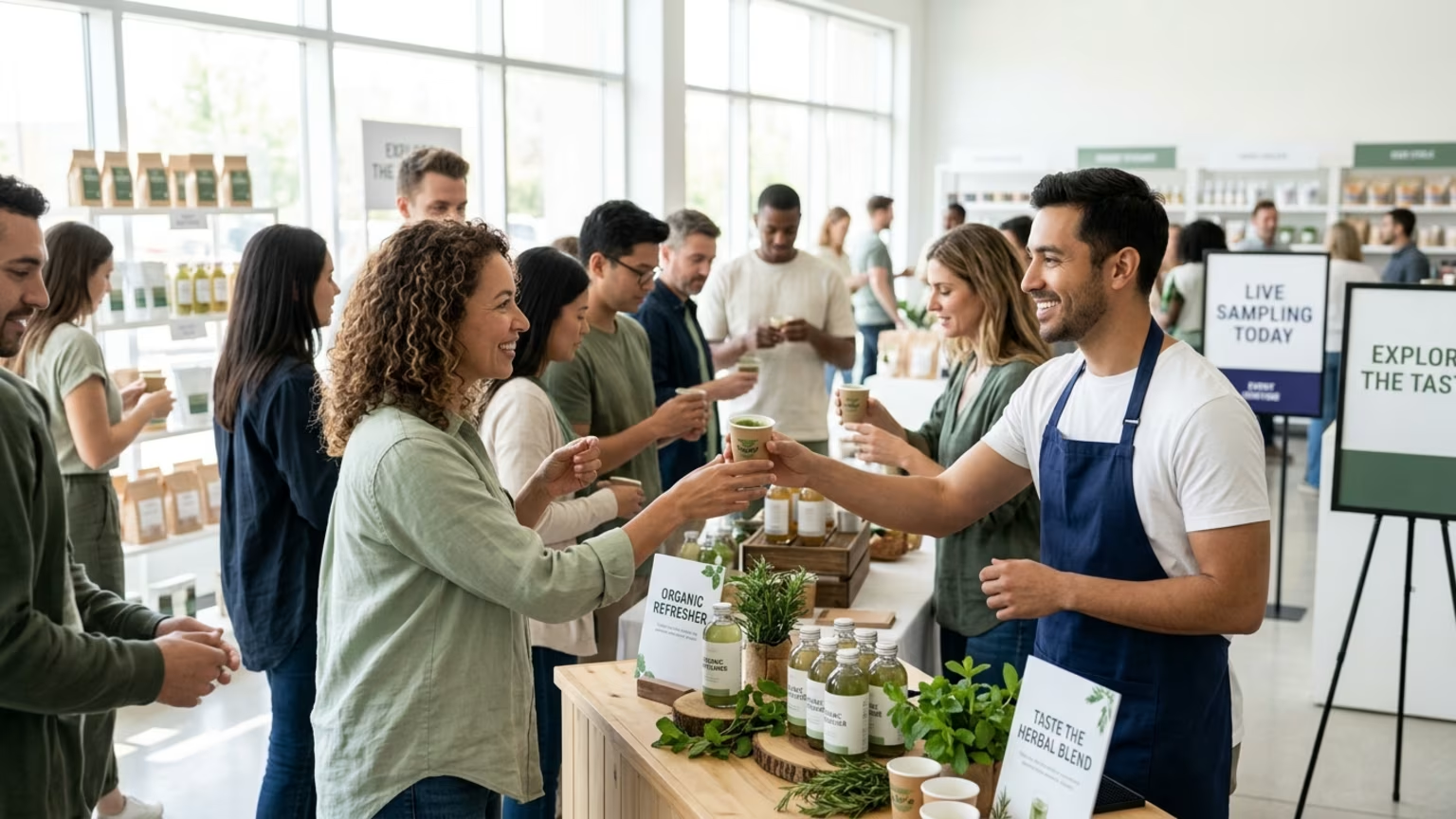
We specialize in creating retail demos, product sampling programs, and roadshows that bring brands face to face with their audiences. Each program is designed to drive trial, build consumer relationships, and accelerate retail velocity across multiple store locations. You need a centralized strategy that seamlessly coordinates complex logistics, product inventory, and intensive field staff training. This approach replaces random sample hand-outs with a tightly controlled process that turns a quick taste into a confirmed purchase.
The operational tempo required for a successful regional grocery execution mirrors the high demands of bulk warehouse environments. Brands that run effective CPG in-store sampling events often adapt their strategies from high-volume channels. The exact same discipline used to manage massive weekend roadshows applies perfectly to the summer grilling rush at H-E-B. You must train your field marketing teams to handle continuous crowd pressure without losing their conversational sales skills. This level of rigorous preparation separates amateur brand theatrics from professional sales operations.
Aligning with a retailer initiative like summer grilling requires precision and operational discipline from your entire marketing team. You cannot simply drop a folding table near the registers and expect a massive spike in product movement. Book a strategy call with our operations group to learn exactly how to build this framework for your own product lineup. When a brand integrates its physical presence with retailer priorities, the results scale predictably and profitably. Brands that execute targeted retail sampling programs consistently dominate their respective categories.
Running a successful retail activation during the peak summer grilling season requires strict discipline and clear operational steps.
Proving the true financial value of these expanded programs requires tracking both leading and lagging indicators with absolute precision. The leading metrics give your field marketing managers real-time visibility into the operational health of the live activation. You should track total interactions per hour, the exact number of samples distributed, and the percentage of staff arriving perfectly on time. These raw operational data points tell you if the team is performing their daily duties at the required volume.
If consumer interactions drop significantly during peak store hours, you know immediately that the staffing approach or physical location needs rapid adjustment. Tracking script adherence and the quality of brand messaging confirms that your ambassadors are representing the company correctly. You cannot fix a broken activation after the weekend is over, forcing real-time operational reporting to become an absolute necessity for modern field marketing.
Modern experiential marketing relies heavily on clean data pipelines to justify large physical activations. Relying on hand-written notes or vague verbal reports from field staff is no longer acceptable for premium consumer packaged goods brands. You must deploy digital reporting tools that capture shopper sentiment and inventory levels directly from the retail floor. This immediate flow of information allows your leadership team to spot regional trends and adapt marketing messages instantly.
Lagging indicators provide the hard financial justification required by your executive leadership team. The most critical measurement is Return on Investment, which must carefully account for staff pay, product costs, logistical fees, and travel expenses. You must track same-day sales lift, attach rates with bundled products, and the overall increase in category share during the promotion week.
Successful marketing teams routinely measure repeat purchase velocity over the following month to prove that the initial trial created a lasting consumer habit. When you master how to track field performance accurately, your budget conversations become rooted in absolute mathematical certainty. The core goal is turning that initial physical interaction into long-term consumer loyalty, forcing accurate data collection at every step.
Consider the recent summer launch of a premium plant-based sausage brand across fifty Texas supermarket locations. The regional marketing director faced consistently low initial trial rates, driving hesitant shoppers to completely ignore the new product in the specialized vegan cooler. The team aggressively pivoted their approach by aligning with the grocer summer grilling initiative and moving the product to a high-traffic perimeter station. They staffed the customized booths with trained operators who grilled the sausages live, filling the busy aisles with a compelling, savory aroma.
The active brand ambassadors paired the cooked samples with popular local hot dog buns and a premium mustard, offering a complete, recognizable flavor profile. Shoppers who normally avoided meat alternatives willingly tried the product, enjoyed the authentic taste, and bought the entire bundled package on the spot. This highly focused physical activation generated a massive same-day sales lift, cleared out the entire backroom inventory, and secured permanent shelf space expansion for the critical fall season.
A smart, disciplined strategy turns a simple taste test into a highly measurable retail victory. The data gathered during these fifty activations gave the brand the exact proof they needed to secure additional funding from their board of directors. The leadership team learned that physical trial was the only way to overcome the ingrained consumer hesitation toward their specific category. Great brands are built quietly on the retail floor, secured in those genuine moments when a shopper decides to trust a new flavor for the very first time.

30 Years Experiential & Retail Activation Partner for CPG & Beverage Brands | Multi-Market Demos, Roadshows & Costco/Club Programs That Actually Sell