Robbie Thain
Founder, CEO

General Mills pairs live in-store product sampling with retail media and loyalty data to prove how physical trials drive targeted conversion and category growth.
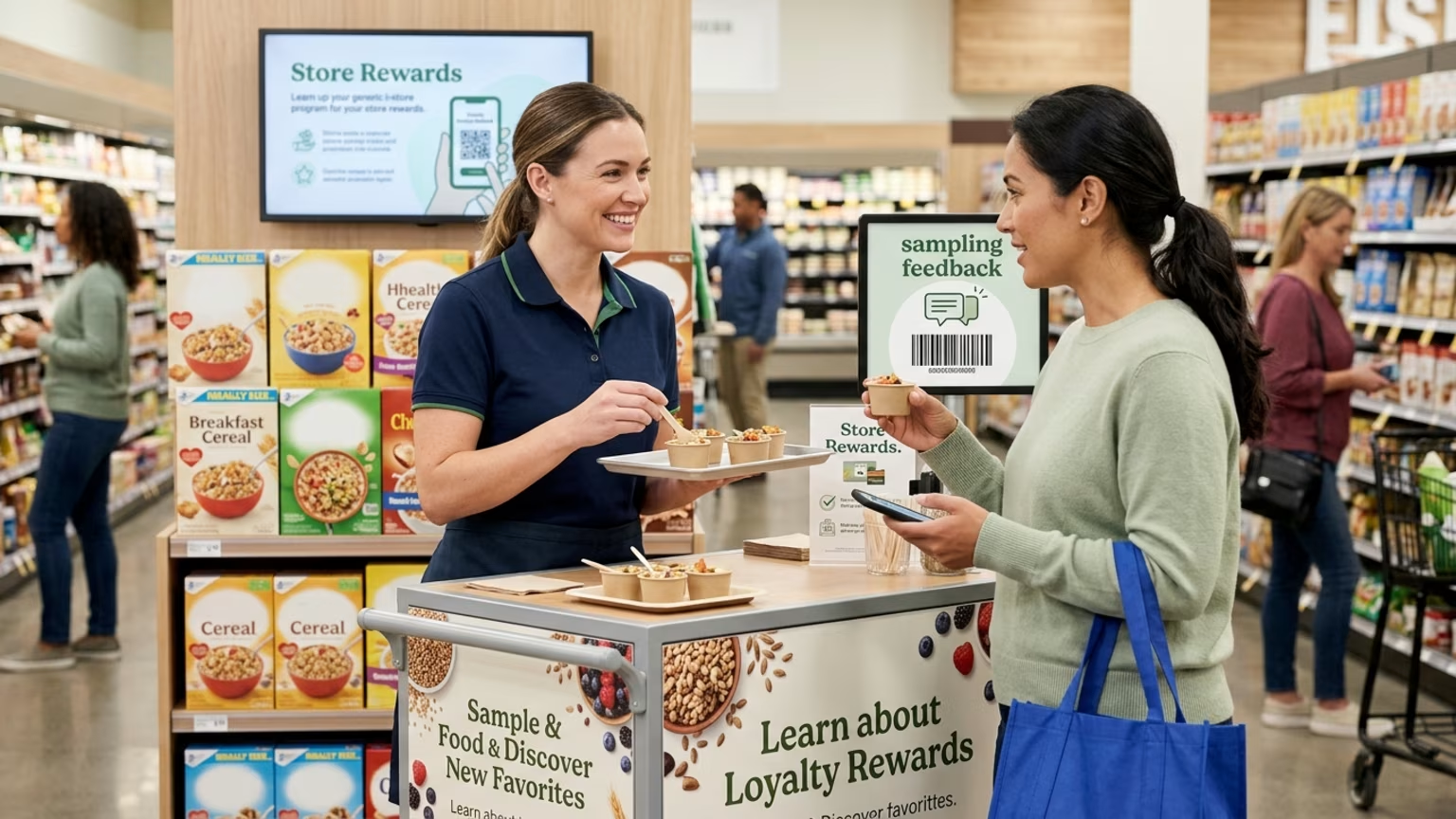
A field marketing manager stands at the end of a busy grocery aisle counting empty tasting cups. They pack up their folding table, log three hundred samples distributed, and drive home feeling victorious. They have absolutely no idea if a single person actually bought the product. General Mills has launched an updated in-store demo strategy that pairs live product sampling with retailer media and loyalty data to fix this exact blind spot.
Your legacy approach of judging a retail activation by the number of crackers handed out is a fundamental waste of capital. Marketing executives spend six figures on field teams and walk away with zero qualified pipeline data. Counting foot traffic and smiles is brand theater. If you cannot draw a straight line from a physical taste test to a measurable transaction, you are simply funding free snacks for shoppers.
This lack of operational discipline is exactly why experiential budgets are often the first to get cut. When times get tough, finance teams look for the marketing channels that cannot prove their worth. The inability to show direct attribution turns what should be a powerful sales tool into a speculative expense. The days of getting away with fuzzy metrics and feel-good reporting are completely over.
The experiential marketing space is littered with campaigns that look great in photographs but fail to move the needle on shelf. The core issue is a complete lack of verifiable attribution. Brands deploy ambassadors to retail locations, hand out thousands of units, and hope the sales data miraculously ticks upward the following week. This creates a beautiful disaster where marketing leaders scramble to justify their budgets.
Chief Marketing Officers lose sleep over this ambiguity because they are held accountable for Return on Investment. They understand that in-store product trials are powerful, but they cannot defend the spend without concrete evidence. When sales do rise, distinguishing between a sale caused by an in-store demo versus a simultaneous digital ad remains a challenge. This often leads some retailers to report 'attributed sales' as a combined total rather than isolated variables.
This blended reporting obscures the actual performance of the field marketing team. A brand might spend heavily on localized digital ads during a sampling weekend, completely masking a poorly executed physical event. The inverse is also true, where an incredible in-store activation subsidizes a failing digital campaign. Without precise separation, resource allocation becomes a guessing game.
As digital tracking grows more restricted, relying on blind hope in the physical store is no longer a viable strategy. Marketers are under massive pressure to show how offsite digital ads and physical interactions connect to real transactions. Industry analysts note that retail media networks are positioning multi-touch attribution as the glue that connects offsite digital ads to in-store physical purchases. Without this data infrastructure, brands are essentially flying blind.
The makai approach relies on a simple truth about physical marketing. Warm, human authenticity must be paired with brutal operational discipline to yield better trial and conversion rates. We have executed over 1000 campaigns across all 50 states, bringing brands to life in every major U.S. market. From retail demos in Seattle to roadshows in Miami and events in Honolulu, our teams activate brands wherever our clients' audiences are located.
This extensive field time proves that a smile and a great product are only half the equation. The other half is guaranteeing every activation is strategically positioned to capture measurable shopper data. A highly charismatic brand ambassador is practically useless if the campaign lacks the structural framework to track conversions. Real-world engagements require a foundation of trust and operational excellence. We believe in combining an approachable, aloha-style interaction with operator-grade execution to turn fleeting consumer interactions into documented sales lift.
General Mills is deepening its retail ties through environmental initiatives, such as a 40,000-acre regenerative agriculture program with Walmart and ADM. This initiative further integrates the brand into the retailer's supply chain narrative, demonstrating how deep, authentic partnerships build long-term value. When field ambassadors operate with this level of alignment, they stop being mere sample distributors. They become vital touchpoints for targeted shopper conversion.
By treating every sampling event as an integrated data capture opportunity, brands can bridge the gap between field execution and corporate strategy. This operational mindset changes the conversation with retail buyers entirely. Instead of begging for shelf space based on social media trends, you can walk into a meeting with hard data proving your brand moves volume. It requires a fundamental shift from treating field marketing as an art project to treating it as a precision sales instrument.
The objective of a retail demo must shift from tracking passive impressions to tracking tangible outcomes. General Mills is evolving its in-store demo strategy by integrating traditional live sampling for cereals and snacks with retailer media networks and first-party loyalty data. By leveraging retailer loyalty signals instead of legacy cookies, the strategy allows for transactional matching that connects a physical interaction to a specific purchase recorded on a shopper's account. This means brands can finally see exactly who tasted a sample and subsequently bought the product.
Advanced attribution models provide the clarity that marketing operators desperately need. According to data from Intentwise, the program uses closed-loop attribution, which in modern retail environments like Walmart allows brands to distinguish between "in-store advertised sales" and "in-store other sales". An in-store advertised sale represents a direct purchase after exposure, while an in-store other sale captures halo effects where a shopper buys a different product within the brand's portfolio. Linking these metrics gives brands a clear picture of true consumer behavior.
This level of tracking fundamentally alters how success is defined and reported up the chain of command. A successful activation is no longer defined by how many people walked past the booth. It is defined by samples distributed to target buyers, retail meetings booked, and verified transaction volumes. When you can prove that a single physical interaction led to a basket size increase, the entire financial model of experiential marketing changes.
Major retailers are expanding their data lookback windows, some up to 25 months, to help brands track the long-term impact of media and sampling on customer lifetime value. Marketing analysts suggest that tracking repeat purchase rates by acquisition cohort is one of the most reliable ways to measure the long-term success of customer acquisition efforts. The General Mills program is designed to provide CPG marketers with data-backed proof of how demos drive conversion and category growth. Instead of hoping a retail buyer notices a localized bump in volume, you can bring them documented proof of retail trial execution and repeat purchases.
The integration of physical sampling with robust loyalty data marks a necessary maturation for experiential marketing. Brands can no longer afford to run disconnected retail activations that fail to demonstrate clear financial return. By demanding rigorous data attribution, companies are proving that a targeted in-store sampling strategy for trial and conversion operates as a highly effective acquisition channel rather than just a brand awareness exercise. The most successful marketing teams will prioritize measurable sales impact, guaranteeing every live interaction translates into verifiable revenue growth.
When you demand flawless execution over mere aesthetics, the results speak for themselves in the retail aisles. Relying on blind distribution metrics is an outdated strategy that smart marketers are rapidly leaving behind. The future belongs to those who measure precisely what happens after the tasting cup is thrown away. Operational excellence and verifiable data are the true drivers of retail success.

30 Years Experiential & Retail Activation Partner for CPG & Beverage Brands | Multi-Market Demos, Roadshows & Costco/Club Programs That Actually Sell


