Robbie Thain
Founder, CEO

Discover how American Express turned its NFL Melbourne sponsorship into a measurable experiential fan journey with interactive drills and strict footprint logistics.
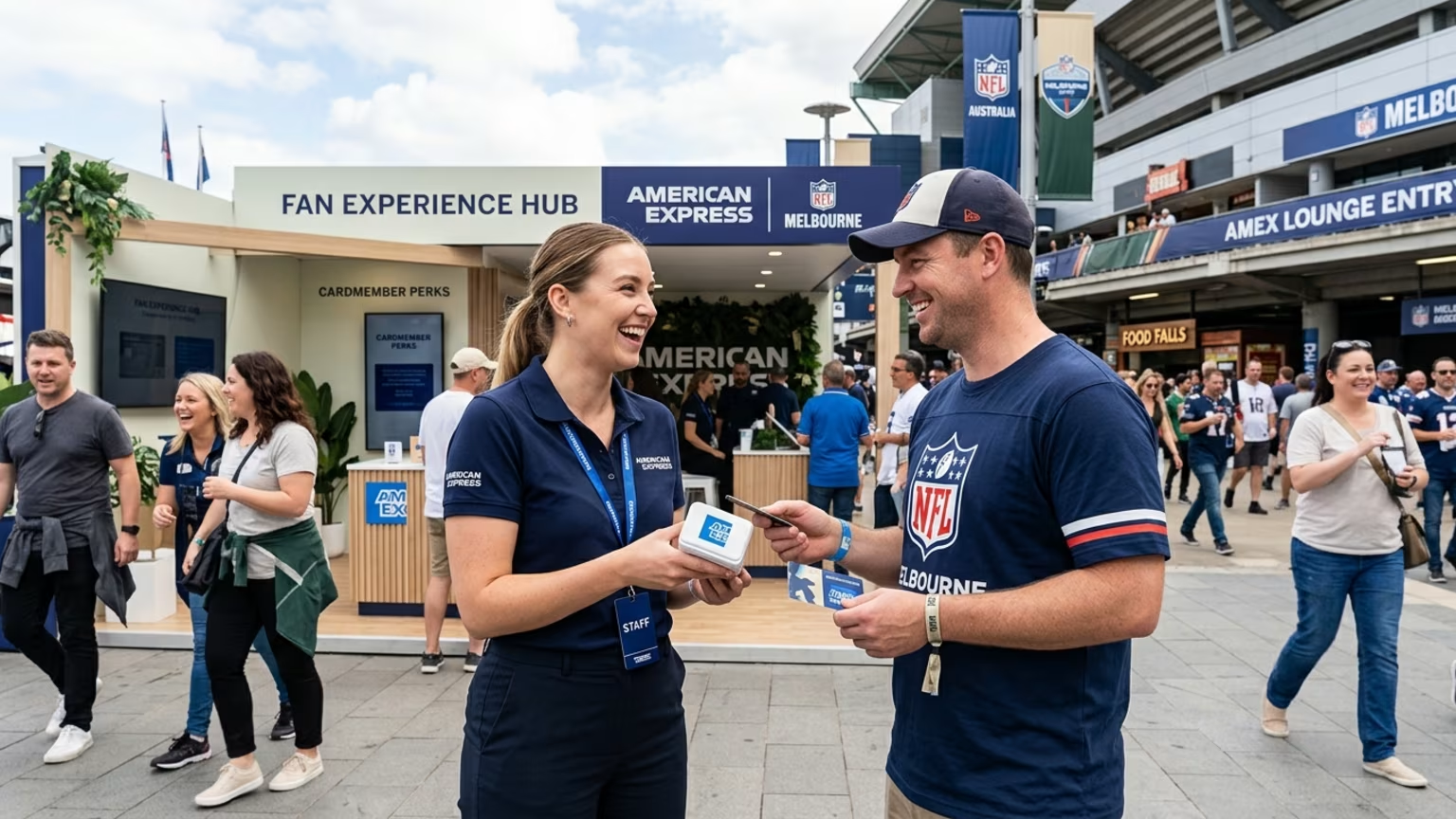
On September 11, 2026, the Los Angeles Rams and San Francisco 49ers played the first National Football League regular-season game in Australia. The historic matchup took place at the Melbourne Cricket Ground. American Express activated heavily as the official payments partner for the event. The financial brand presented the halftime show featuring the Jonas Brothers and the surrounding three-day NFL Kickoff Festival. The festival ran at Melbourne Park from Thursday, September 10, through Saturday, September 12.
The logistics behind this activation show a clear departure from traditional static stadium signage. The broader festival operated with a reported 18,000-person capacity. Adult grounds passes started at $49 for some sessions and peaked at $59 for the Friday session. Children aged 13 and under could attend for free with an accompanying adult ticket.
Inside the festival grounds, the American Express Fan Experience served as the primary physical anchor. The activation space was deliberately designed around the pre-game rituals of professional football players. Visitors interacted with a locker-room-inspired photo backdrop to generate highly shareable content. They also participated in digital football drills that matched their physical performance with a specific field position.
The operation extended directly into comprehensive food and beverage logistics. American Express brought prominent Melbourne restaurant Ruben’s Deli into the festival footprint as its official dining partner. The kitchen served United States game-day classics alongside locally adapted specials inspired by the Rams and 49ers. Eligible card members utilized a priority lane and received a complimentary dessert item at the dining experience.
These physical touchpoints then moved from the festival grounds directly into the stadium itself. Card members attending the game received specialized Gameday Radios to follow the live action from their seats. Some members also secured an exclusive viewing experience for the halftime performance. The league and Victoria reportedly have a multi-year partnership covering at least two regular-season games between 2026 and 2029.
We manage field programs for consumer goods brands every day. This Melbourne activation proves that successful sponsorships require a strictly structured physical journey. American Express did not just purchase a logo placement on a stadium wall. They built a deliberate sequence that moved fans from festival discovery to interactive participation and physical dining.
Food and beverage marketers must study the Ruben’s Deli integration closely. Connecting a brand experience to a physical consumption occasion is critical for measurable pipeline. The restaurant partnership localized a massive global sports property by utilizing a recognizable local operator. It gave thousands of attendees a tangible reason to stop, eat, and spend meaningful time in the branded environment.
In the consumer goods sector, we constantly see brands struggle with isolated metric tracking at large events. The integration of a focused dining partner shows how to solve this exact problem efficiently. When attendees redeem a complimentary dessert, the brand captures a verified physical interaction. This data point is far more valuable than simply counting the total number of people who walked past the installation.
Interactive technology also creates clear actions that our field teams can measure accurately. The digital football drills required active participation rather than passive observation. When brands design experiences around physical actions, they generate concrete data points for their operations teams. This structured approach is exactly how smart marketers separate simple reach from verified consumer engagement.
American Express commissioned Morning Consult to survey 2,002 United States adults in late August 2026. The research reported that 58% of surveyed consumers said valued entertainment access makes them more likely to remain loyal. That stated loyalty intent actually rose to 69% among Generation Z and Millennial respondents. While this represents directional survey data, it highlights the intense perceived value of exclusive physical access.
Executing a layered activation across a massive festival requires absolute operational control. When brands introduce hot food partnerships and interactive digital drills, the downstream logistical burden multiplies rapidly. Field marketing directors must manage crowd flow meticulously to prevent bottlenecks near the priority lanes. If the digital drill queue bleeds into the dining area, the entire customer journey completely breaks down.
This complexity forces brands to rethink their field staffing models and deployment strategies. Brand ambassadors cannot just hand out flyers passively at an event of this scale. They must manage technology resets for the digital drills and route card members accurately. Staffing consistency directly impacts how consumers perceive the brand during high-stress peak festival hours. Designing the field experience around customer flow becomes the primary operational mandate for the entire team.
Permitting and compliance also become central to the physical execution strategy. Serving hot food in a high-traffic festival environment introduces strict health department regulations and oversight. Adding custom digital installations requires specialized power drops, reinforced cabling, and rigorous weatherproofing protocols. Agencies must build centralized compliance checks to de-risk these massive consumer events before the gates ever open.
Many brands completely underestimate the storage and logistics required to pull off a multi-day festival. Storing sampling product, shipping event gear, and coordinating nationwide delivery is a massive operational lift. If the locker-room photo backdrop arrives damaged, the entire social content strategy fails instantly. B2B exhibitors are increasingly shifting their trade show booth design toward demo-centric experiences for this exact reason.
Controlling the physical supply chain ensures that every single activation stays precisely on schedule. Measurement technology is also finally catching up to these complex physical operations. GumGum recently launched a sports-media offering powered by Relo Metrics and VideoAmp data. This specialized tool is designed to identify sponsorship exposures during live broadcasts and build addressable audiences.
Connecting live footprint data with broadcast exposure allows marketing teams to track true commercial outcomes. Brands that demand strict logistics often see the highest return on investment from their live activations. Every physical interaction must be mapped to a specific business goal before the freight ships. Our team knows that managing these logistics properly requires specialized expertise and rigorous coordination. You cannot rely on fragmented local vendors when a global sponsorship investment is on the line.
The strategic intent behind this physical build was explicitly clear from the start. Naysla Edwards serves as the vice president of brand, marketing and member experience for American Express. Edwards stated that the company wanted to make the week more memorable through access, benefits and experiences beyond the game itself. The ultimate goal was to facilitate deep participation rather than just passive viewing.
The football league also viewed the physical festival as a critical international expansion tool. Charlotte Offord serves as the league's general manager for Australia and New Zealand. Offord described the first Australian regular-season game as a landmark moment for the sport. She noted that the partnership with American Express would create more ways for fans to participate in the historic event.
The meticulous execution in Melbourne proves that operational discipline turns passive sponsorships into active sales pipelines. As you plan your next major consumer event, look at your physical footprint very closely. Are your field activations designed to capture verified consumer actions, or are you just paying for expensive background scenery?
Keep your operations tight and your footprint intentional. Makai out.
Trade show coordinators managing multi regional campaigns often struggle to translate massive sports sponsorships into structured physical footprints. When brands trust Makai with execution, we solve the difficulty of navigating complex event logistics, permits, and staffing. We plan and manage trade show spaces that attract attention, start conversations, and convert visitors into customers.

30 Years Experiential & Retail Activation Partner for CPG & Beverage Brands | Multi-Market Demos, Roadshows & Costco/Club Programs That Actually Sell


