Robbie Thain
Founder, CEO

Bain Capital's acquisition of Gong cha highlights a shift toward physical trial and service-oriented retail. Learn how to optimize field marketing for ROI.
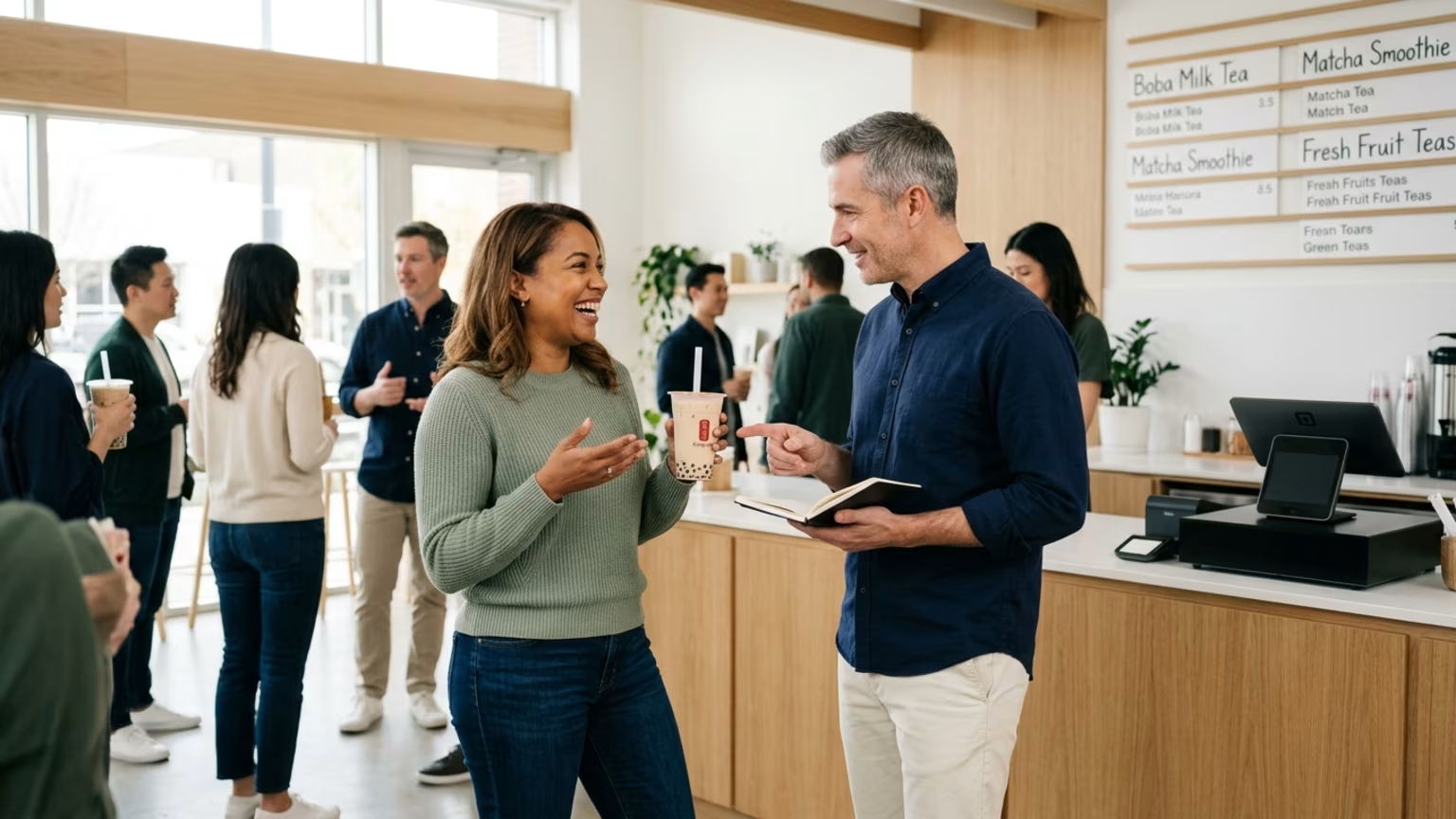
A commercial real estate broker reviews a property portfolio for a premium outdoor shopping plaza. They bypass a traditional apparel retailer to sign a high-volume beverage franchise instead. That exact scenario is playing out globally as Bain Capital has agreed to acquire Gong cha from TA Associates and other shareholders. This transaction represents far more than a standard private equity investment in food and beverage.
It is a calculated bet on the superior Return on Investment of physical trial over digital-only customer acquisition. The expected transaction clearly signals where smart capital is moving in the consumer sector. The deal is expected to close in the fourth quarter of 2026. For marketing operators managing tight budgets, the underlying message is loud and clear.
Physical venues that drive immediate trial and repeat purchase are becoming the most valuable assets in modern retail. Relying purely on digital ads to build consumer trust is a losing strategy for physical goods. Shoppers want to taste and experience a product before committing to a daily habit. Turning real-world locations into engines for product sampling is the ultimate play for sustained commercial success.
The numbers behind this industry shift show a massive preference for interactive consumer environments. NPR reported, citing CoStar data, that in the 20 largest U.S. cities, traditional retail tenants were declining while personal services and entertainment were expanding. The modern consumer wants to participate in an experience rather than just browse quiet shelves. This behavioral change is forcing commercial landlords to rethink their tenant mix entirely.
The same NPR report noted a major milestone for commercial property leasing. More retail space was leased to service-oriented businesses than to shops selling physical goods for the first time in the cited period. Investors are following this momentum toward physical interaction and localized consumer engagement. Real-world consumer touchpoints are proving highly resilient despite the conveniences of digital commerce.
This environment perfectly supports platforms with massive physical footprints and integrated customer experiences. Gong cha operates approximately 2,200 stores across more than 30 countries and territories. This extensive international network generates significant commercial output for the operator. Earlier reported figures suggested Gong cha generated annual EBITDA of more than $70 million.
Regional growth plans further highlight the demand for physical brand presence in competitive regions. The company reportedly has approximately 240 U.S. locations and has targeted 500 North American stores by 2028. However, global scale does not guarantee uniform success across every single market.
One source says Gong cha’s mainland-China store base declined to 239 locations by the end of 2023. Furthermore, its mainland-China operating company was dissolved in 2024. These geographic contrasts prove that global concepts require rigorous localization to survive. A brand cannot simply open doors and expect instant consumer adoption without flawless execution.
For a Vice President of Marketing, these industry shifts reframe how field marketing budgets should be allocated. A rapidly expanding beverage chain functions as a distributed network for product trial and localized campaigns. When investors buy into a massive physical footprint, they are acquiring thousands of daily customer touchpoints. These locations blend product consumption with direct consumer interaction and immediate merchandising opportunities.
Brands that invest in physical distribution must view these footprints as active experiential infrastructure. You can no longer rely on passive product placement to drive aggressive quarterly growth targets. Instead, every location must serve as a repeatable venue for sampling and direct consumer conversion. This requires teams to validate access and control over franchise-level execution before launching national programs.
Operators must determine if they can mandate promotional consistency across a diverse store network. Uneven staffing or poor signage at the local level will derail an otherwise brilliant campaign strategy. A standardized playbook is required to turn these venues into high-converting consumer engagement centers. Marketing leaders must bridge the gap between corporate ambition and local market reality.
This operational tension is a familiar challenge for operators managing retail demo checklists across multiple regions. Real-world consumer engagement demands more than a basic stand and unenthusiastic free samples. It requires mystery shopping, centralized reporting, and clear escalation procedures to maintain rigorous quality control. Brands that master this consistency can turn a fragmented franchise network into a powerful marketing engine.
Furthermore, scaling a consumer brand requires capital partners who understand the value of physical presence. Leaders must justify experiential budgets by proving that local trial directly feeds the bottom line. Learning how CPG brands fund retail expansion with non-dilutive capital is critical for sustaining these physical marketing efforts. When you tie live activations to revenue, you secure the resources needed to expand your field presence.
The shift toward service-oriented retail forces brands to change how they execute live activations today. Field marketing teams must abandon vanity metrics like general foot traffic or vague brand awareness surveys. A successful physical activation must connect product trial directly to an immediate commercial action. This means designing programs around measurable outcomes like coupon redemption or incremental transactions during the activation window.
When planning a mobile sampling tour, the primary goal is creating clear evidence of commercial movement. A consumer trying a new beverage must be guided toward a definitive next step. This could be an in-store purchase, a limited-time offer, or a loyalty program sign-up. If the consumer walks away without taking action, the engagement failed to generate real Return on Investment.
Event complexity scales quickly when you expand operations across hundreds of distinct physical locations. Teams must prioritize modular experiences that adapt to different store sizes and local staffing levels. Relying on complex setups that require intensive corporate oversight will inevitably lead to execution failures. Programs must be built for repeatability to ensure uniform quality across all targeted global markets.
Smart operators often refine their event logistics supply chain strategy to handle this exact type of expansion. Inventory shortages or missed deliveries can ruin a high-profile retail push in a matter of hours. You must coordinate centralized storage, tracking, and delivery so every activation stays on schedule. Precise logistical execution is the only way to support aggressive North American store targets.
Finally, you must equip your field ambassadors to collect actionable data at the point of interaction. Every poured sample should ideally yield consumer feedback, a lead capture, or a direct retail sale. Modern operators use first-party shopper data to optimize in-store engagement and prove campaign value. Transitioning from basic sampling to data-driven retail conversion separates average brands from industry leaders.
Physical retail is shifting rapidly away from static product displays toward active consumer experiences. The reported acquisition of a global beverage franchise highlights the massive value of interactive physical footprints. Real estate data proves that service-oriented businesses are now dominating the modern commercial landscape. Marketing leaders must adapt by treating physical locations as powerful engines for measured consumer trial.
Operators must adjust their dashboards this quarter to measure trial-to-purchase conversion and cost per qualified interaction. Avoid funding live activations that fail to capture customer data or drive a tangible commercial next step. Stop settling for engagement counts and start demanding measurable pipeline from every field activation. The brands that win will be those that turn physical presence into undeniable financial performance.

30 Years Experiential & Retail Activation Partner for CPG & Beverage Brands | Multi-Market Demos, Roadshows & Costco/Club Programs That Actually Sell