Robbie Thain
Founder, CEO

WTM London's 2026 technology expansion introduces new AI and lead-management tools. Learn how capturing buyer context at trade shows improves event ROI.

WTM London recently announced an expanded use of artificial intelligence and lead-management technology ahead of its November 2026 show at ExCeL London. The organizers stated this expansion aims to improve visitor and exhibitor experiences, support business opportunities, and streamline operations. Event coverage citing organizer information lists more than 4,000 exhibitors, 5,500 buyers, and over 46,000 attendees. It also anticipates participation from professionals across more than 180 countries.
This massive scale requires a strict logistical approach to attendee engagement. The announcement outlines a concrete model for connecting physical booth interaction with structured post-event reporting. Event organizers are building systems to document the exact handoff from a live interaction to a structured follow-up context.
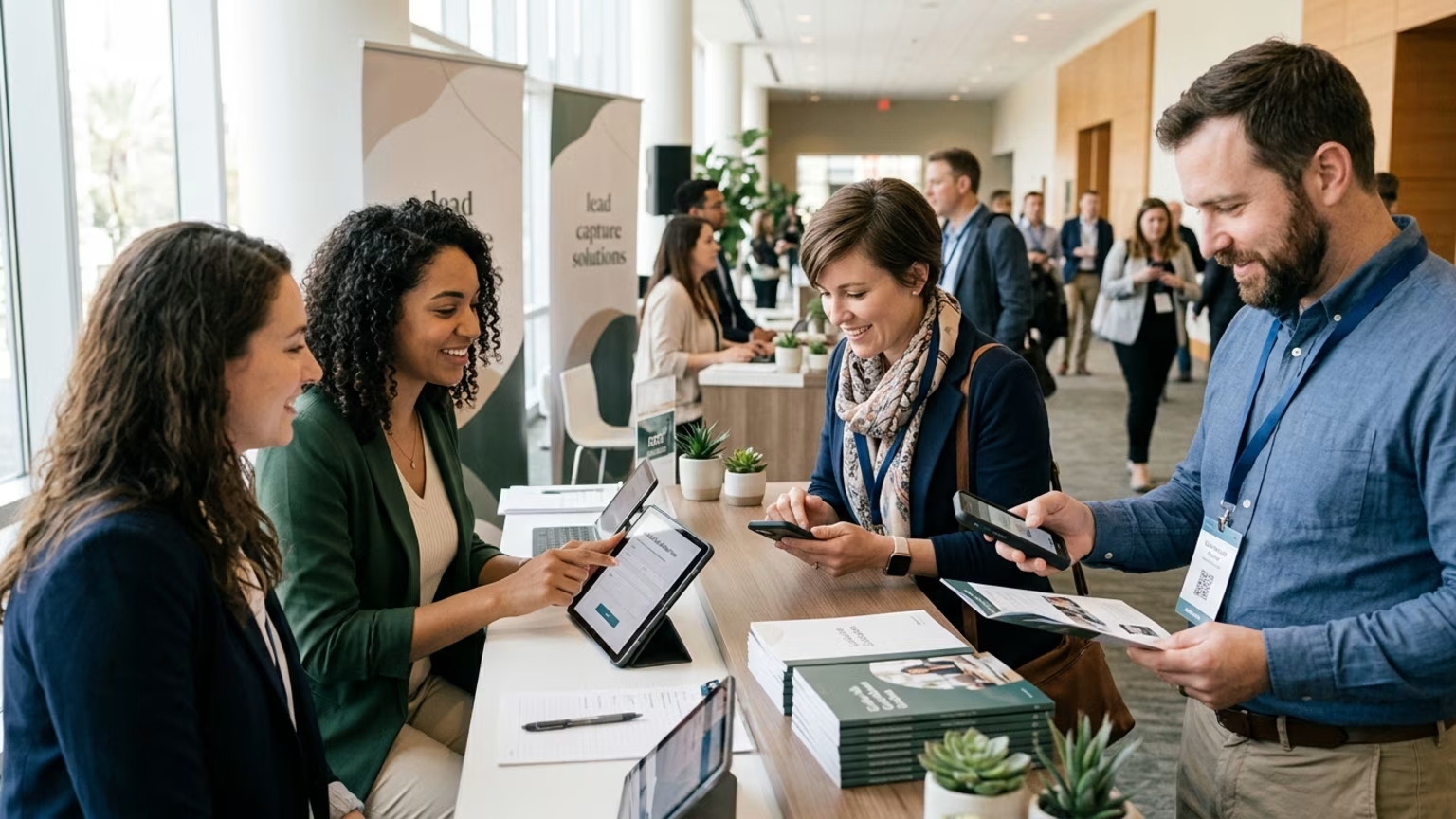
The technological expansion introduces several distinct operational changes for exhibitors and attendees. WTM London is deploying a platform called Connect Me to let registered buyers, media, and exhibitors pre-schedule meetings. Attendees access these scheduled meetings directly through the event app. On the show floor, visitors can use Colleqt QR codes to scan exhibitor stands, collect product information, and register their interest.
Attendees can also use badge-based contact exchange to pass their details to exhibitors quickly. At the end of each day, attendees receive an email summary of their interactions to help organize their notes. For exhibitors, a Lead Manager app provides tools to review, qualify, and add notes to leads. This creates a direct link between a casual booth visit and a formal follow-up activity.
The event is also integrating AI into its conference sessions through a partnership with Rozie Synopsis. This system will provide real-time transcripts, session summaries, and key takeaways on mobile devices. Attendees will access this content later through a searchable hub. An interactive show map, real-time updates, and a sli.do-powered function for submitting conference questions are included in the event app.
WTM London is introducing offline AI-powered real-time translation headsets in partnership with Vox Technologies. These headsets use smart transmitters and will be available at the Future Stage for Travel Tech sessions. The system supports several major languages. English, French, and Spanish are confirmed, while Arabic and Mandarin are also supported.
This announcement provides a concrete model for connecting exhibitor engagement with post-event reporting. At Makai, our team knows that generating measurable sales pipeline requires strict control over the physical activation footprint. A badge scan alone documents attendance, but it does not document intent or readiness to buy. We focus on capturing both the identity of the buyer and the context of the conversation.
For consumer goods and beverage brands, the valuable data is rarely just a contact name. Field teams need to know if a person merely passed a booth, sampled a product, or requested a retailer location. WTM London’s combination of QR codes, lead qualification tools, and interaction summaries creates a documented workflow. This approach protects the sales pipeline by keeping lead data organized and actionable.
Our team frequently manages end-to-end activations where we must distinguish between casual observers and high-intent leads. A Brand Manager in the CPG space shared: "Makai transformed our test-drive activation into an emotional brand journey. They connected technology, lifestyle, and experience seamlessly, and turned casual visitors into loyal fans." We successfully integrated multiple experience layers to convert casual participants into committed brand advocates.
We build festival zones, premieres, and pop-ups that turn viewers into fans and fans into advocates. We design moments people want to share, using music tie-ins, screenings, and live stunts to bring stories to life while our crews manage execution and track reach and response metrics. This physical engagement generates the exact kind of data that event organizers are now trying to capture digitally. The technology simply provides a faster vessel for information that field teams have always gathered manually.
We provide clear reporting on reach, trials, leads, and sales to guide next steps in campaign optimization. Our measurement approach tracks awareness, engagement, and conversion, turning brand moments into actionable data that demonstrates business impact. A 2025 to 2026 B2B events report identifies AI matchmaking and post-event intelligence among the sector’s key technology developments. WTM London’s approach aligns with this trend by treating lead qualification as a measurable workflow.
However, brand marketers must remember that AI alone does not determine lead quality or commercial value. Human judgment is still required to decide what counts as a valuable interaction. If your team relies solely on automated summaries, you risk missing the nuanced feedback that happens during physical product trials. A structured qualification rubric is still the foundation of any successful trade show presence.
Implementing these technologies fundamentally changes how field teams execute on the show floor. QR codes, badges, and matchmaking apps create more data, which requires clear ownership and follow-up responsibilities before the event begins. If an activation produces a massive contact export without context, the resulting data often goes unused. Marketing, sales, and retail teams must agree on routing rules and response windows in advance.
When marketing teams execute large-scale activations, the gap between a physical interaction and a digital CRM update is where pipeline gets lost. A visitor might express strong interest in a new beverage line during a sampling session. If the brand ambassador cannot immediately log that specific product interest, the follow-up email will likely contain a generic greeting. Generic follow-ups rarely convert into closed revenue or expanded retail distribution. The new standard for experiential marketing is an accountable handoff between the show floor and the sales department.
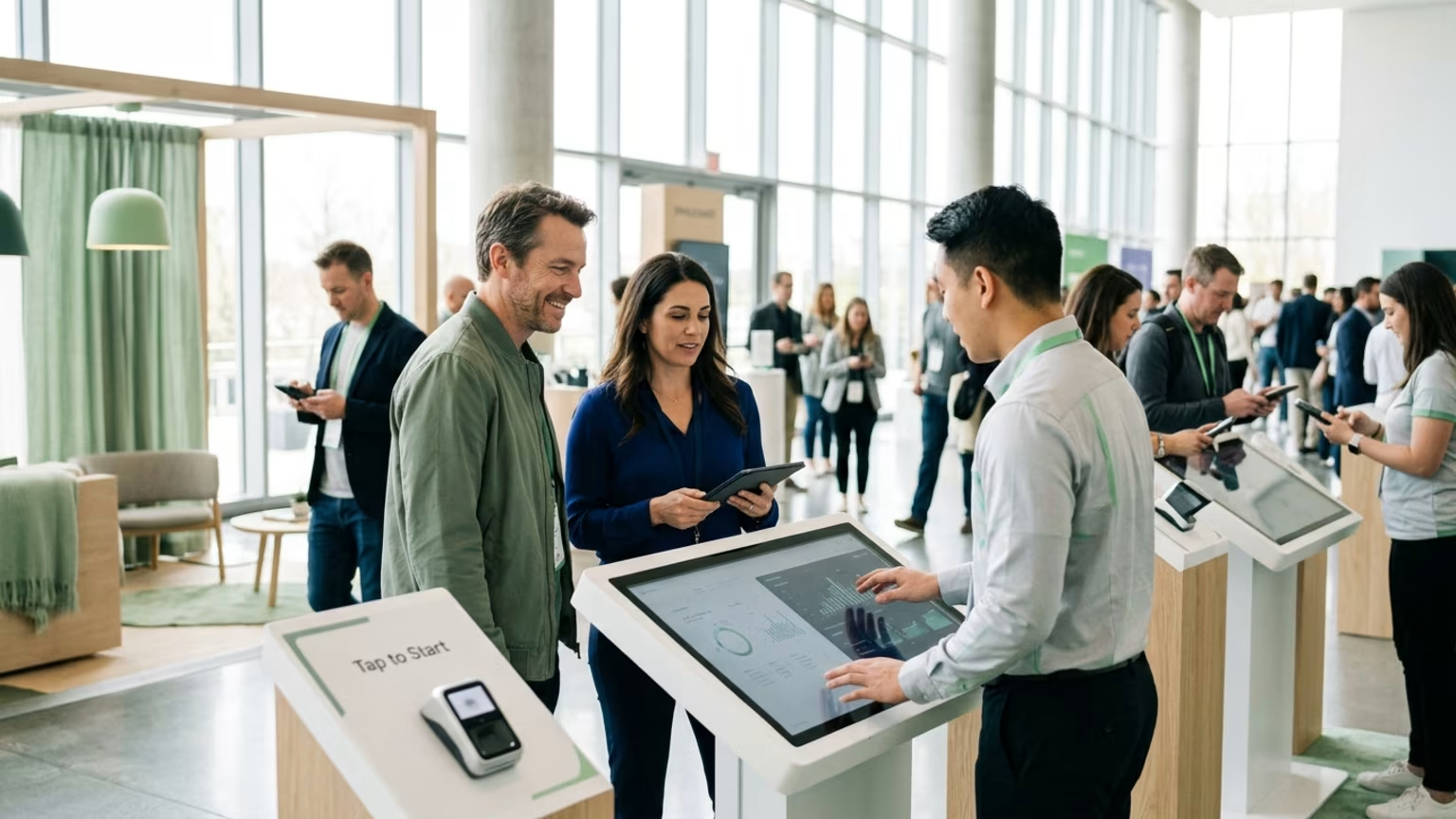
Trade show footprint flow also shifts when visitors rely on mobile apps to navigate and collect information. The physical space must accommodate quick badge scans, dedicated sampling zones, and targeted meeting areas. Brands that plan their trade show footprint strategy around these digital checkpoints see much better audience flow. Field staff must be trained to annotate lead records in real-time, rather than just pointing scanners at passing attendees.
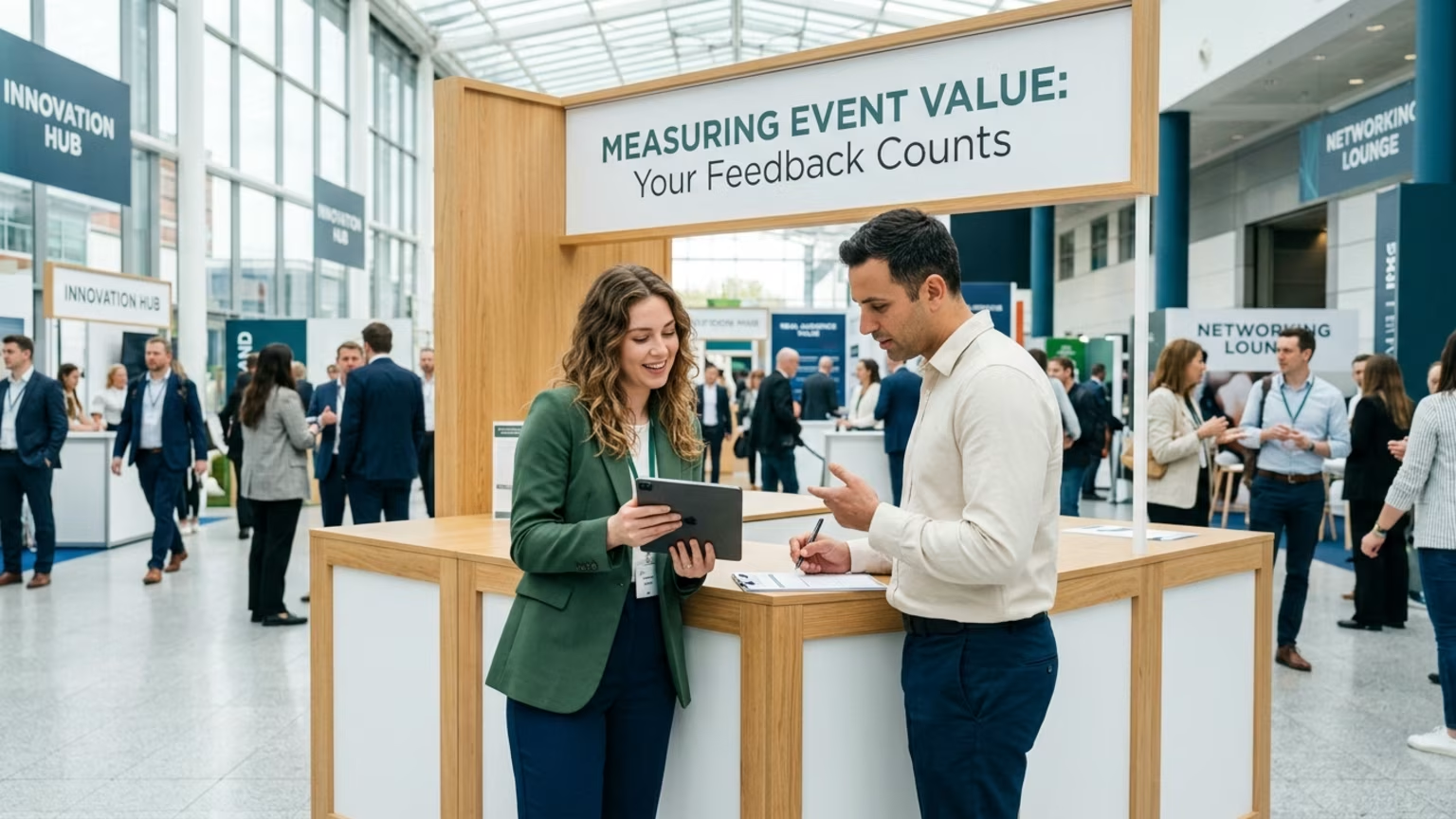
This level of operational discipline prevents crowds from forming organically in areas that block aisle traffic. Event-marketing guidance recommends measuring more than lead volume to determine success. Useful metrics include follow-up completion, meetings booked, lead quality, and revenue attribution. A dashboard that separates total interactions from qualified leads provides a much clearer picture of Return on Investment. When executives ask for proof of performance, clear metrics stop the debate.
We blend physical and digital experiences by integrating QR codes, mobile technology, and real-world activations into a cohesive layer across retail, event, and tour experiences. When technology captures the context of a conversation, brands can prioritize their follow-up queue based on actual buyer interest. Measuring this impact properly often means tracking event performance with better lead capture tools.
WTM London’s model shows how organizers are trying to fix the gap between a crowded exhibit hall and a closed deal. This shift forces brands to rethink their staffing models and training protocols. By defining the desired signal before the event begins, field teams can isolate high-intent conversations from general foot traffic. The result is a prioritized follow-up queue that actually moves the needle for the business. Clear routing rules make certain that urgent retail inquiries reach the right distributor without delay.
The stated objective behind these tools is to improve the fundamental nature of the trade show experience. Chris Carter-Chapman, WTM London’s event director, described the 2026 edition as a “Smart Event.” He noted that the technology applies across conference content, matchmaking, lead capture, and follow-up. Carter-Chapman also framed this technology as a tool for reducing reliance on printed materials.
In a separate interview, he explained that targeted relationship-building can be supported by pre-scheduling meetings through the Connect Me platform. He highlighted the Lead Manager app as a specific way to capture data from stand visitors for later follow-up. These practitioner statements highlight a growing expectation for technology to connect booth engagement with actual sales follow-up. The technology does not replace the conversation, but it protects the context of the interaction.
To prepare for your next major activation, audit your current data collection tools to confirm they record the context of each buyer conversation.
If your field marketing team walked away from your next major expo with a thousand badge scans but zero contextual notes, how would your sales team know who to call first?
To generate a prioritized follow-up queue from major trade shows, Makai builds the physical event spaces needed to capture structured buyer intent. When difficulty measuring real ROI from live events creates blind spots for your sales team, our Promotional Campaigns connect digital and real world touchpoints to boost visibility and spark brand conversations.

30 Years Experiential & Retail Activation Partner for CPG & Beverage Brands | Multi-Market Demos, Roadshows & Costco/Club Programs That Actually Sell