Robbie Thain
Founder, CEO

The Spreadly 2026 Trade Show Pulse Report reveals how digital lead capture and 48-hour automated follow-ups double event ROI for top-performing exhibitors.

A stack of paper business cards sits on a folding table held together by a single rubber band. That rubber band represents the fragile operational thread holding most modern event marketing programs together. Measuring experiential Return on Investment through manual note-taking is now officially operational negligence. Live brand activations that fail to digitally capture and qualify leads on the floor are just expensive catering exercises.
The era of hoping foot traffic organically turns into sales pipeline is dead. When you spend six figures to physically stand in front of your core audience, leaving the data collection to chance is a guaranteed way to lose money. Real revenue demands structured digital discipline from the very first handshake.
The Spreadly report highlights the specific operational hurdles facing trade show professionals. The research was released in late June 2026. The findings are based on a targeted survey of trade show professionals and 37 in-depth interviews. Over half of the interview participants, exactly 54 percent, hold executive leadership roles.
A primary focus of the report is the massive performance gap separating top-tier and bottom-tier exhibitors. The study strictly categorizes top-tier teams as those achieving a Return on Investment over 4x. Bottom-tier teams are defined as those generating a Return on Investment under 2x.
The most jarring finding points to one glaring operational difference between these two groups. Among the teams with a Return on Investment greater than 4x, 62 percent use digital lead capture directly at the booth. In stark contrast, exactly zero percent of teams with a Return on Investment under 2x utilize comparable digital capture technology. This specific technology serves as the dividing line between profitable activations and sunken costs.
The data exposes a severe measurement problem across the wider exhibition industry. The report finds that 65 percent of companies attend trade shows primarily to generate new leads and pipeline. Despite this clear intent to drive business, only 27 percent report being able to accurately measure the event's later contribution to their bottom line.
Exhibitors are also shifting their focus away from raw numbers. Improving lead quality is the primary goal for 43 percent of exhibitors. Only 8 percent are focused on simply increasing their overall lead volume. Operational execution on the show floor remains surprisingly weak across the board.
More than half of all exhibitors, exactly 51 percent, do not qualify leads directly at the booth. The post-event follow-up process is equally flawed. The data shows that 57 percent of exhibitors follow up later than 48 hours after the event concludes. Even though 54 percent of teams use a CRM for capture, only 11 percent have successfully implemented an end-to-end automated trade show workflow.
For a Vice President of Marketing evaluating a fragmented trade marketing budget, these numbers represent a severe wake-up call. You spend vast amounts of capital designing booths, shipping pallets of samples, and flying sales teams across the country. Yet the actual conversion mechanism often breaks down on the event floor. The massive gap between the 65 percent of teams wanting pipeline and the 27 percent who can measure it is where your budget vanishes.
Your finance department will not accept "good brand conversations" as a return on a six-figure investment. When zero percent of low-performing teams use digital capture, the financial lesson for Consumer Packaged Goods operators is undeniable. Relying on passive badge scans or handwritten notes guarantees a poor financial return.
Retail buyers and national distributors walk away from your booth expecting immediate, contextual follow-up. If your field marketing team waits days to send a generic recap email, that buyer has already engaged with a competitor. The competitor who automated their outreach wins the shelf space.
The total lack of in-booth qualification creates massive friction for your sales department. When 51 percent of exhibitors fail to qualify leads on the floor, sales representatives receive a list of completely unprioritized names. They waste hours calling people who only wanted a free product sample or a branded tote bag. This widespread inefficiency destroys sales alignment and burns out your internal teams.
This lack of data also makes future event budgets nearly impossible to justify during annual planning. Trade shows must be treated as the physical entry point to an automated digital funnel. Moving away from manual workflows to a fully automated CRM integration bridges this operational gap.
Marketing leaders need to demand systems where every single scanned badge triggers an immediate categorization. Every dollar spent on physical floor space must map directly to a trackable digital interaction that pushes a buyer closer to a contract.
This macro data trend forces an immediate change in how consumer brands execute retail demos, mobile tours, and trade show appearances. The days of letting field staff simply hand out products and collect casual signatures are firmly over. Brand ambassadors must be trained to act as active data collection points on the floor. Every single floor interaction must end with a digital form submission that captures the specific context of the buyer conversation.
If it is not recorded digitally, it did not happen. We provide clear reporting on reach, trials, leads, and sales to guide next steps in campaign optimization. Our measurement approach tracks awareness, engagement, and conversion, turning brand moments into actionable data that demonstrates business impact.
When a regional buyer tastes a premium snack at a crowded booth, the digital capture tool must record their specific flavor feedback and purchasing timeline. This critical data must route into your CRM system before that buyer even leaves the convention center venue. To combat the reality that 57 percent of teams delay follow-up past the 48-hour mark, brands must drastically pre-build their communication sequences. The follow-up emails should be drafted, legally approved, and loaded into the marketing automation platform before the physical booth is even shipped.
Once a floor representative digitally grades a lead as high-priority, the internal system must trigger an instant response. This specific operational discipline is exactly how real-time data capture fixes broken trade show returns. For high-volume brand activations like Costco roadshows or national sampling tours, this structured workflow is strictly mandatory.
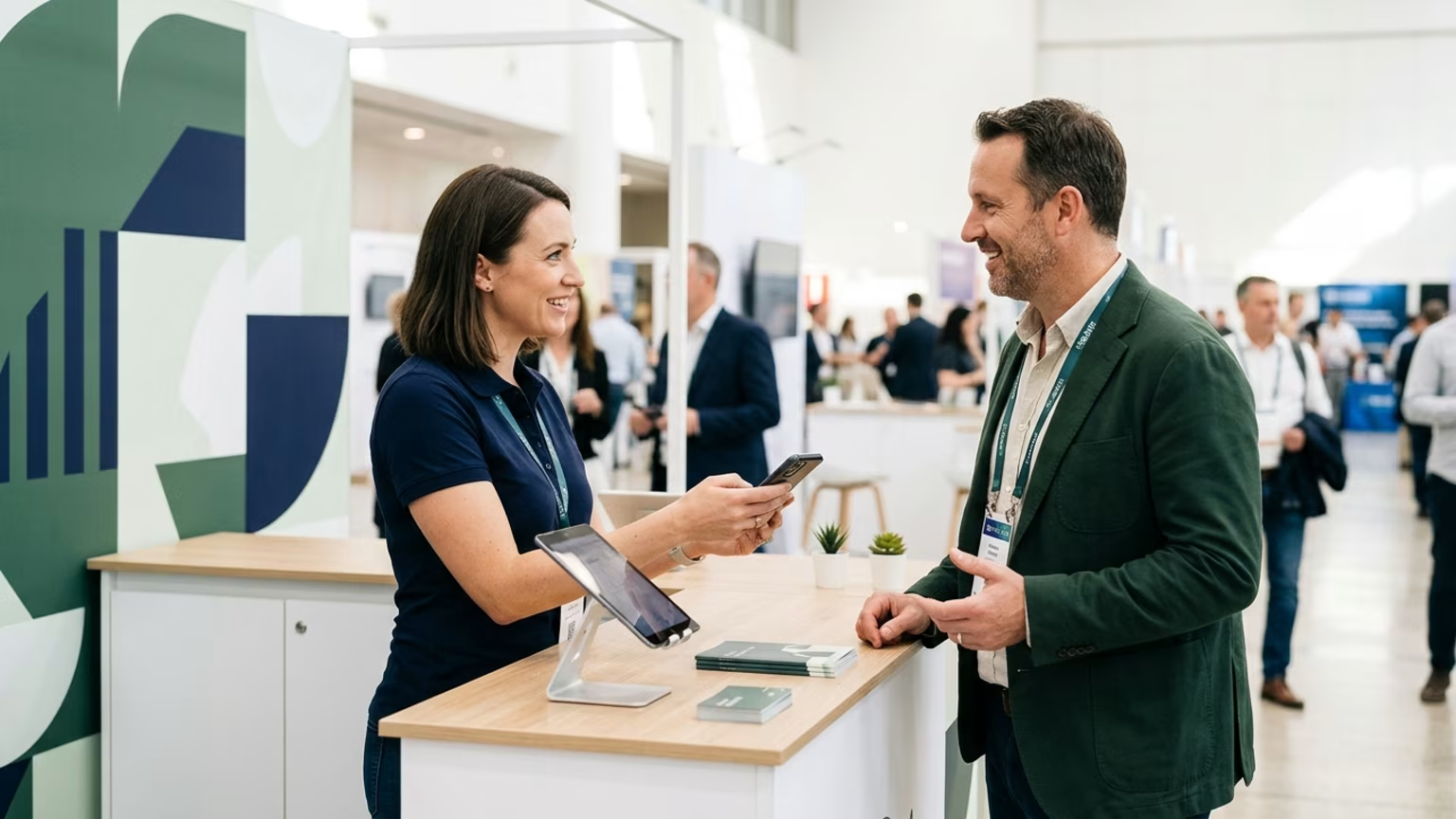
Field staff cannot physically manage hundreds of daily consumer interactions with slow paper forms. Digital business cards and tablet-based qualification questionnaires allow for high-speed data entry without breaking the natural flow of conversation. This ruthless floor discipline separates operators who rethink trade show lead capture from those who settle for meaningless vanity metrics.
Operators must radically adjust their key performance indicator dashboards this quarter to reflect modern event reality. The raw volume of booth visitors is no longer a defensible or accurate metric for trade show success. Marketing leaders must start tracking the strict percentage of digitally qualified leads and their adherence to a 48-hour follow-up window. The integration of digital capture tools directly at the booth is the non-negotiable standard for driving real pipeline.
When you align your floor staff with automated digital workflows, you stop renting physical space and start building a measurable revenue engine.

30 Years Experiential & Retail Activation Partner for CPG & Beverage Brands | Multi-Market Demos, Roadshows & Costco/Club Programs That Actually Sell