Robbie Thain
Founder, CEO

Agree on lead criteria with sales, ask short permission-based questions, and route event contacts by intent. Then track what happens after the handoff.
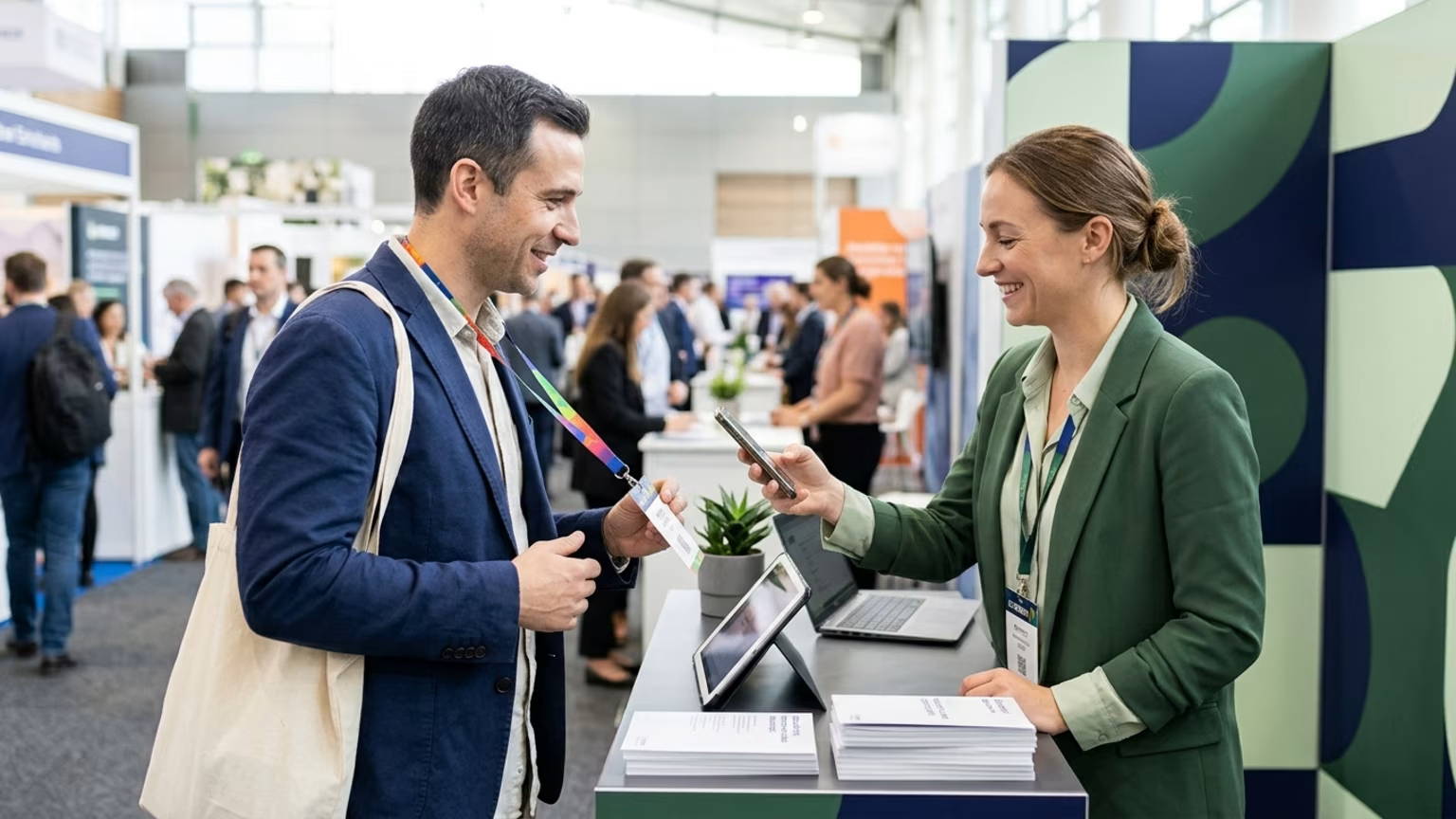
Qualified event lead capture is the practice of identifying which live conversations warrant sales follow-up and recording what sales needs to take the agreed next step. The goal is to connect those conversations to measurable pipeline, not to turn every badge scan into a sales task. A scan identifies the contact. A useful lead record tells sales why the conversation matters and what the visitor agreed would happen next.
In a CEIR industry-insights report, Jefferson Davis defines an exhibition lead as someone booth staff interact with whose follow-up would deliver measurable value to the exhibitor. The report cites CEIR’s 2015 study: exhibitors that qualified leads before, during, or after an exhibition reported that 39% met their criteria. That historical figure is neither a current benchmark nor proof that qualification caused a sales result. It illustrates why scan volume and qualified lead volume belong on separate lines.
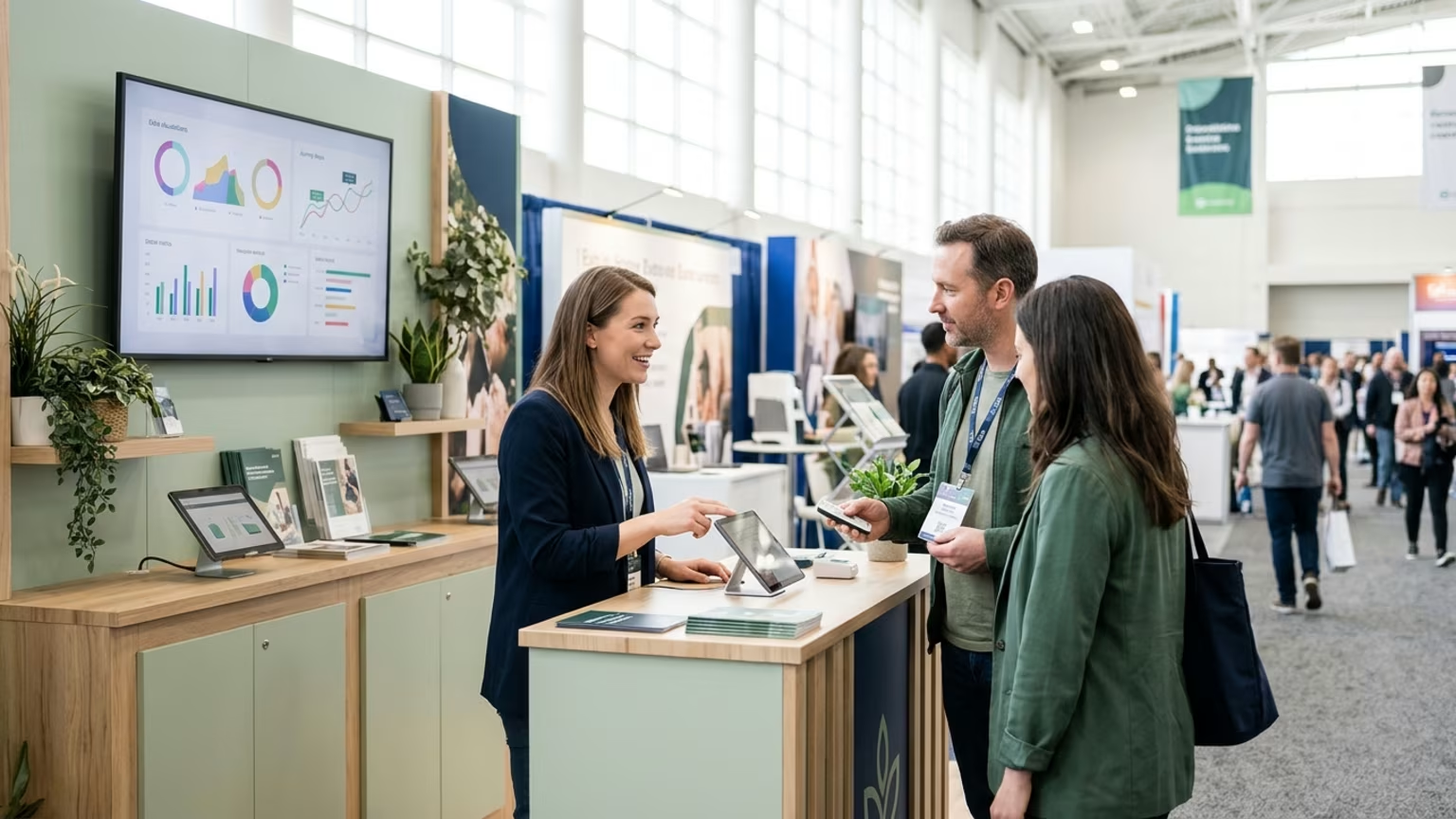
At a food or beverage expo, a conversation about carrying a product can start at the same tasting counter as a conversation about flavor. Both are useful. Only the first points to a possible sales conversation, and even then the booth team needs to know whether there’s a relevant need and whether the visitor wants to continue the discussion. The badge record alone doesn’t make that distinction.
We design live experiences to connect what people feel in the moment with what they want to do next. For a consumer tasting, trying the product or giving feedback may be the action the activation was designed for. A shopper who asks for product updates has expressed a different kind of interest, but permission to send those updates doesn’t make the shopper a business prospect. Reporting each response for what it is gives the field team credit for the experience without sending sales a list it can’t use.
That distinction also helps staff know when to stop asking questions. A visitor who came to taste doesn’t need to answer questions about purchasing authority. A visitor who wants a business follow-up deserves more than a scan and a generic thank-you. The record should fit the conversation, not the other way around.
Before the doors open, ask the people who will follow up what they need to know to take action. Davis recommends involving sales or distribution partners in choosing the information booth staff capture. Cvent likewise recommends defining an attendee, an engaged attendee, a qualified lead, and a sales-accepted lead before the event. Those distinctions let the field team report the interaction without speaking for the team that receives it.
A practical shared definition of a qualified lead could be a contact who fits the intended business audience, expresses a relevant need, and agrees to a specific follow-up. Sales acceptance is a separate decision: the receiving team reviews the record and agrees to pursue it. Agree in advance on who owns that handoff and what information that person needs to accept it. If a field wouldn’t change the routing or the follow-up, leave it out of the qualifier set.
The CEIR report recommends capturing information beyond badge details and agreeing on a clear next action with the visitor. That doesn’t call for a longer interview. It calls for questions that fit the conversation. These prompts are starting points, not a script staff need to run through at every interaction:
Capture the product or demo that drew interest, the need or question the visitor raised, and any relevant role or timing they shared. Then record the agreed next action and contact preference. A note that says interested leaves sales to guess what to talk about. A note that says requested product details by email tells the next person how to begin. If the visitor already answered a question in conversation, there’s no need to ask it again for the form.
Exhibition lead-capture guidance recommends explaining why details are being collected and asking permission to follow up. Keep that permission specific: agreement to receive requested product details isn’t agreement to join an ongoing marketing list. Record what the visitor agreed to, not what the team hopes to send.
The following three routes are a practical starting point. The question is not whether a contact looks good on a report. It’s what action the conversation supports and who should take it.
A trade show follow-up plan should preserve the promise made on the floor. If the agreed next step was to send product information, the receiving team should know that before reaching out. A handoff that drops the promise makes the visitor explain the conversation all over again.
A Return on Investment (ROI) review starts with what the event was meant to accomplish. Cvent recommends looking at who attended, how they engaged, and what happened afterward. We report on reach, trials, leads, and sales so the team can see which outcome it recorded and decide what to adjust. Those measures answer different questions. Keep them separate rather than folding them into one event contact total.
For a trade show with a pipeline goal, look at event cost alongside qualified leads, sales acceptance, meetings, and opportunities. Ask how many records routed to sales were accepted and how many accepted contacts moved to a meeting or opportunity. Those post-event conversion measures give the team a place to look when progress stalls. If sales declines records that seemed qualified on the floor, compare the notes with the agreed criteria before changing the form or adding questions.
For a consumer activation, start with the intended response, such as product trial or feedback. If retail sell-through is the goal and sales data are available, report it separately from trials. Only report trial-to-purchase conversion if purchases can be connected to trials. The exhibition findings describe B2B lead qualification, not what a tasting does to retail sales.
Review the handoff before judging the pipeline. Cvent suggests allowing 30 to 60 days to assess influenced pipeline or closed deals in B2B settings. It also cautions against giving one event credit for every sale that follows. Label pipeline influence as influence, and don’t attribute retail lift to the activation just because sales rose afterward.
A badge scan becomes a useful sales lead when it meets the criteria sales agreed to and carries enough context for someone to take the next step the visitor agreed to.
Deciding which conversations warrant a handoff gives the live interaction a clear purpose, and Makai designs consumer events around that direct engagement. For CPG marketers facing slow follow-up or unclear CRM routing, the focus is on generating qualified leads with a next step the receiving team can act on.

30 Years Experiential & Retail Activation Partner for CPG & Beverage Brands | Multi-Market Demos, Roadshows & Costco/Club Programs That Actually Sell