Robbie Thain
Founder, CEO

The Alaska Seafood 2026 World Cup activation reached an estimated 100,000 visitors. Learn why food brands must move beyond attendance to measure sampling ROI.
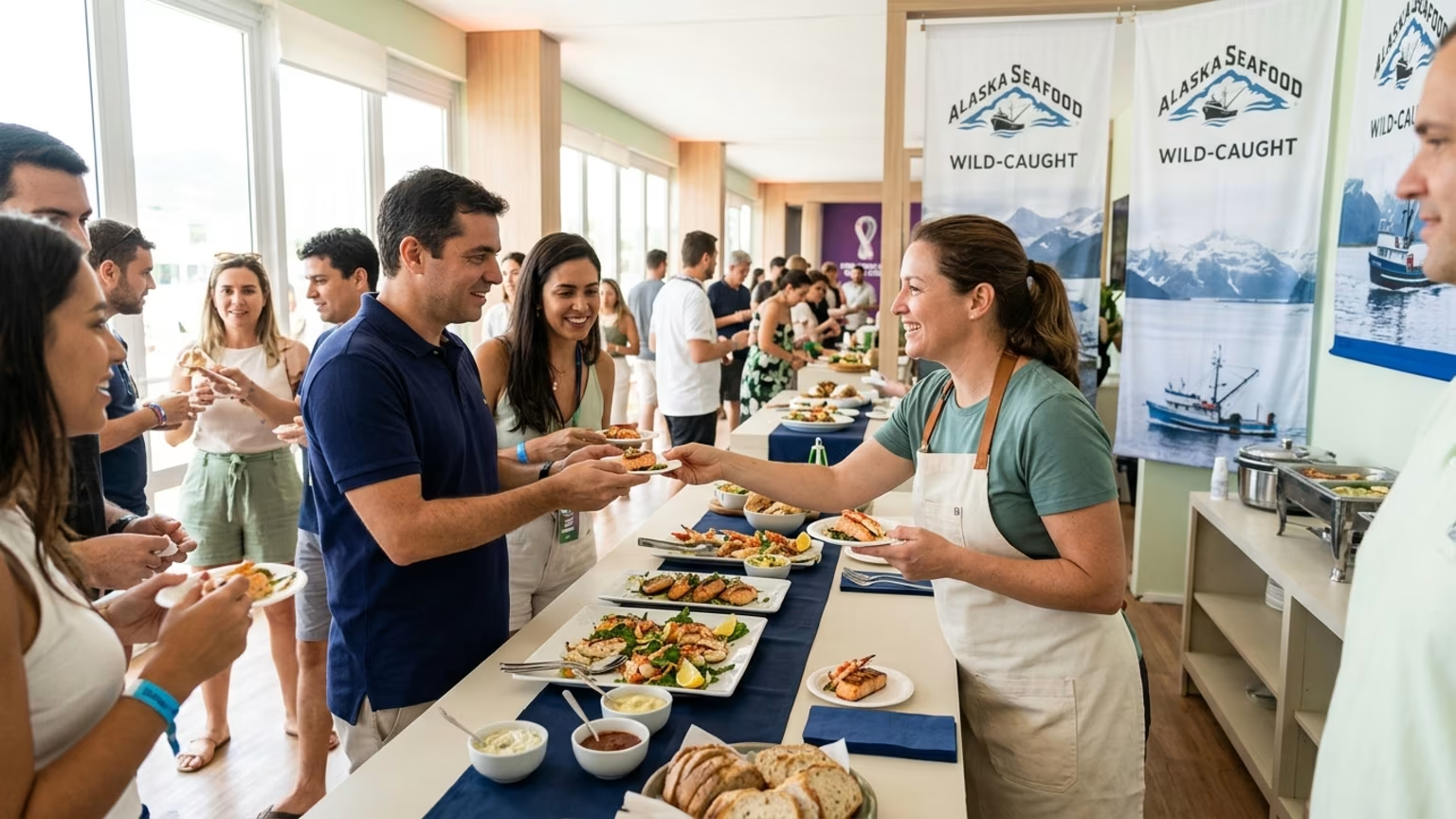
In August 2026, the Alaska Seafood Marketing Institute conducted a World Cup activation at Arena Globo in Parque Ibirapuera. This massive event took place during FIFA World Cup 2026 festivities in São Paulo. The campaign brought live seafood sampling to an international sports audience. ASMI successfully aligned the activation with Brazil's World Cup matches to capture attendee attention.
The activation was designed to connect consumers with a concrete product experience. It placed the product in a culturally relevant context where fans were already gathering. ASMI described the program as a combination of product sampling, consumer education, brand visibility, and media exposure. The organization stated that the activation supported its longer-term market-development objectives in Brazil.
The program combined live tastings with specific promotional activities timed around the actual matches. This timing is critical for maximizing audience engagement. The tasting menu specifically featured Alaska cod and Genuine Alaska Pollock. The report identified the pollock as KiFish for the local audience.
ASMI utilized trained promoters to facilitate the consumer experience at the venue. These field representatives distributed trial materials and introduced Nanook. Nanook is the promotional character for Alaska Seafood. According to ASMI's report, the program reached an estimated audience of more than 100,000 visitors at Arena Globo.
The physical presence was reinforced by spontaneous media exposure through TV Globo, SporTV, and Globo Esporte. The seafood tasting gave ASMI a clear method to connect the brand to food, hospitality, and shared viewing. Consumers were not only exposed to Alaska Seafood branding. They were actively offered samples of specific products and received direct support from trained staff.
This distinction matters because sampling can address a barrier that impressions alone simply cannot solve. It directly answers whether consumers are actually willing to try the product. The World Cup environment offers unusual audience scale and cultural relevance. This setting provided a natural trial moment for the seafood brand.
The operational execution required trained personnel to explain the product and facilitate interactions. Handing out a free unit is never enough to secure brand loyalty. The staff must guide the consumer through the tasting experience.
The Alaska Seafood activation demonstrates the raw power of large public events. ASMI states that the initiative proved the effectiveness of combining experiential marketing with major public gatherings. However, drawing a crowd is only the first logistical step for food and beverage marketers. An audience of more than 100,000 visitors looks impressive on a post-event recap.
Estimated reach is not the same as a qualified commercial interaction. The available report does not disclose the number of samples served or the rate of product acceptance. It completely omits the number of meaningful conversations and any downstream purchases. Without these specific metrics, brand leaders cannot calculate a true Return on Investment.
Marketers must avoid converting reach into financial performance without transaction-level evidence. We design mobile activations and roadshows that accelerate consumer trial, build trust, and boost retail velocity during 90-day product launch windows. Our structured approach transforms initial product trial into sustained consumer confidence and retail performance. We know that counting bodies in a stadium will never replace tracking actual product consumption.
True success requires tracking qualified interactions and trials rather than relying on estimated foot traffic alone. Industry guidance demands a much sharper focus on verifiable outcomes. Event Marketer recommends distinguishing among return on experience, return on emotion, and ROI tied to attendee actions. Those actions could include requesting a meeting or following a brand.
Food brands often struggle to connect physical activations with direct pipeline growth. Handing out thousands of samples feels productive, but without structured data capture, the true business value is lost. The sweet spot for consumer brands is building an experience that forces the attendee to act. This could mean scanning a code for a digital coupon, signing up for a list, or completing a short survey.
Operating a live tasting for a six-figure audience creates intense logistical pressure for any marketing team. Every interaction requires precise field staffing, exact sample portions, and strict footprint control. When an event reaches this scale, standard permit requirements and venue safety regulations become rigid operational hurdles. Brands must coordinate tightly with venue authorities to prevent traffic bottlenecks near their activation.
Trained promoters are critical for maintaining this required operational flow. They must manage the physical distribution of Alaska cod and pollock while delivering the brand message. The report does not state how many promoters were assigned to the activation. If the staff gets overwhelmed, the brand experience degrades into chaotic free giveaways.
This operational reality is why agencies build centralized permit and compliance teams to manage large venue rules. Proper preparation keeps the footprint safe and the sampling process highly consistent. When a brand fails to structure its footprint flow, the entire promotional pipeline breaks down. Long lines create frustration, and staff members stop educating consumers just to move the queue faster.
This rush destroys the educational value of the product trial. The execution must prioritize controlled participation over mass throughput to generate qualified leads. The ASMI source confirms Nanook's participation in the live activation. However, it does not provide independent measurement of the character's effect on awareness or recall.
A mascot can attract attention, but staff must convert that attention into a measurable brand interaction. Visuals alone cannot substitute for a trained ambassador who secures a qualified lead. The report does not state how many visitors actually interacted with promoters. Broadcasters might capture the event, and ASMI reported exposure through TV Globo, SporTV, and Globo Esporte.
That exposure lacks guaranteed audience ratings, total impressions, duration, or attribution evidence. A physical footprint can generate secondary media value, but experiential teams cannot rely on unmeasured broadcasts. Field leaders must instrument their footprint for five metrics to prove field activation ROI before the doors open. The report does not provide sales lift, retailer sell-through, coupon redemption, or repeat purchase figures.
It entirely lacks purchase intent, brand recall, and favorability metrics. To prove commercial impact, marketers need tools like holdout markets, pre-event surveys, or POS-connected redemption data. Without these controls, the event remains an unverified sampling exercise rather than a proven sales driver. The published report clearly notes that the more-than-100,000 figure is merely an estimate by ASMI.
It is not an independently audited attendance figure. A massive audience estimate cannot be used to calculate a trial rate or an engagement rate. Experiential teams must capture first-party data, customer feedback, and unique promotional codes to validate their work. Proper instrumentation creates a clear path from physical interaction to measurable consumer behavior.
Will your next experiential campaign capture measurable sales pipeline, or will it only generate unverified attendance estimates?
Executing a massive sports venue tasting without strict field controls reduces your activation to an unmeasured giveaway. Makai resolves the burden of navigating complex event logistics, permits, and staffing to ensure your footprint drives real pipeline. We deliver Engagement Marketing to turn audiences into participants with live and digital experiences that invite people to try, share, and act.

30 Years Experiential & Retail Activation Partner for CPG & Beverage Brands | Multi-Market Demos, Roadshows & Costco/Club Programs That Actually Sell