Robbie Thain
Founder, CEO

Campus sampling requires structured educational dialogues and strategic frameworks rather than passive product giveaways to drive genuine student retail.
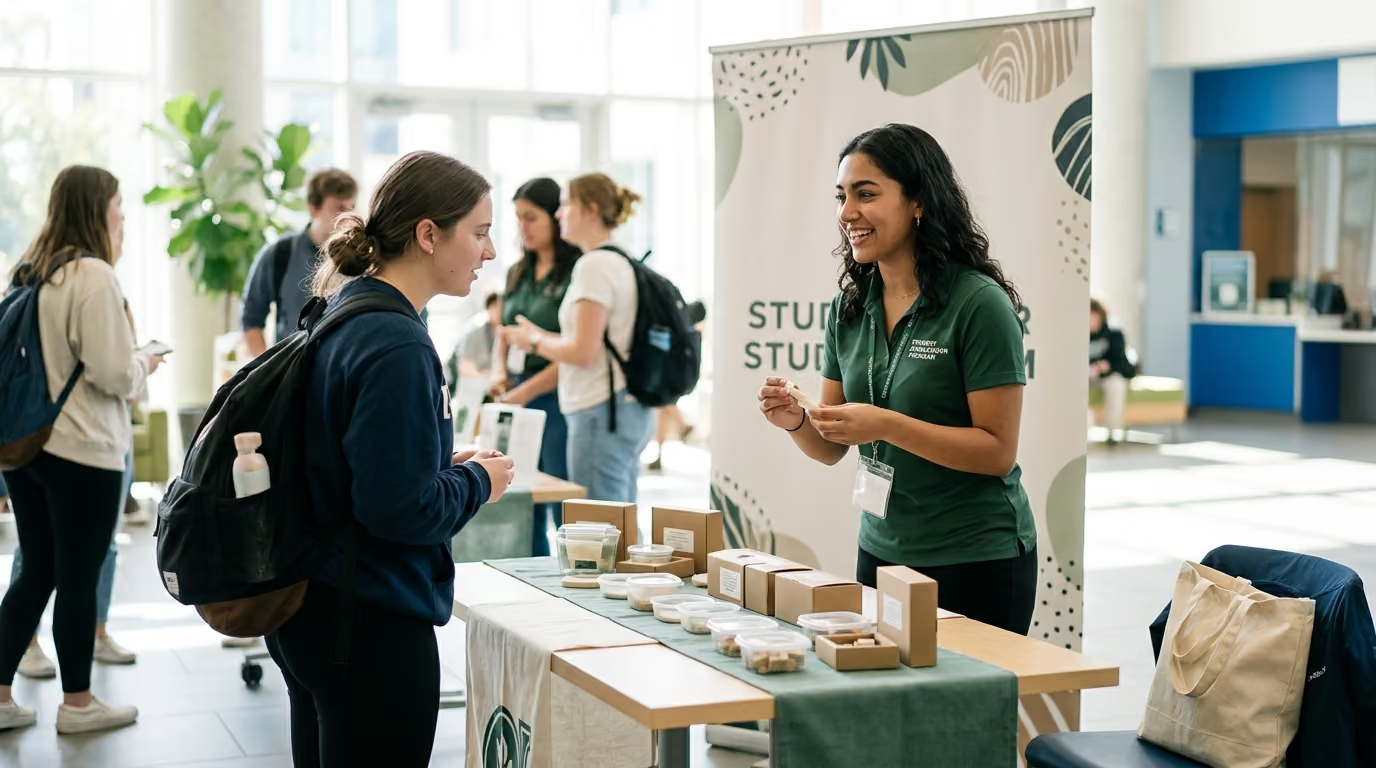
Transforming campus brand representatives into skilled product educators allows consumer brands to turn standard giveaway tables into measurable trial and retail demand. This comprehensive playbook outlines the operational frameworks, dialogue models, compliance standards, and measurement architectures required to run high-performing student ambassador activations.
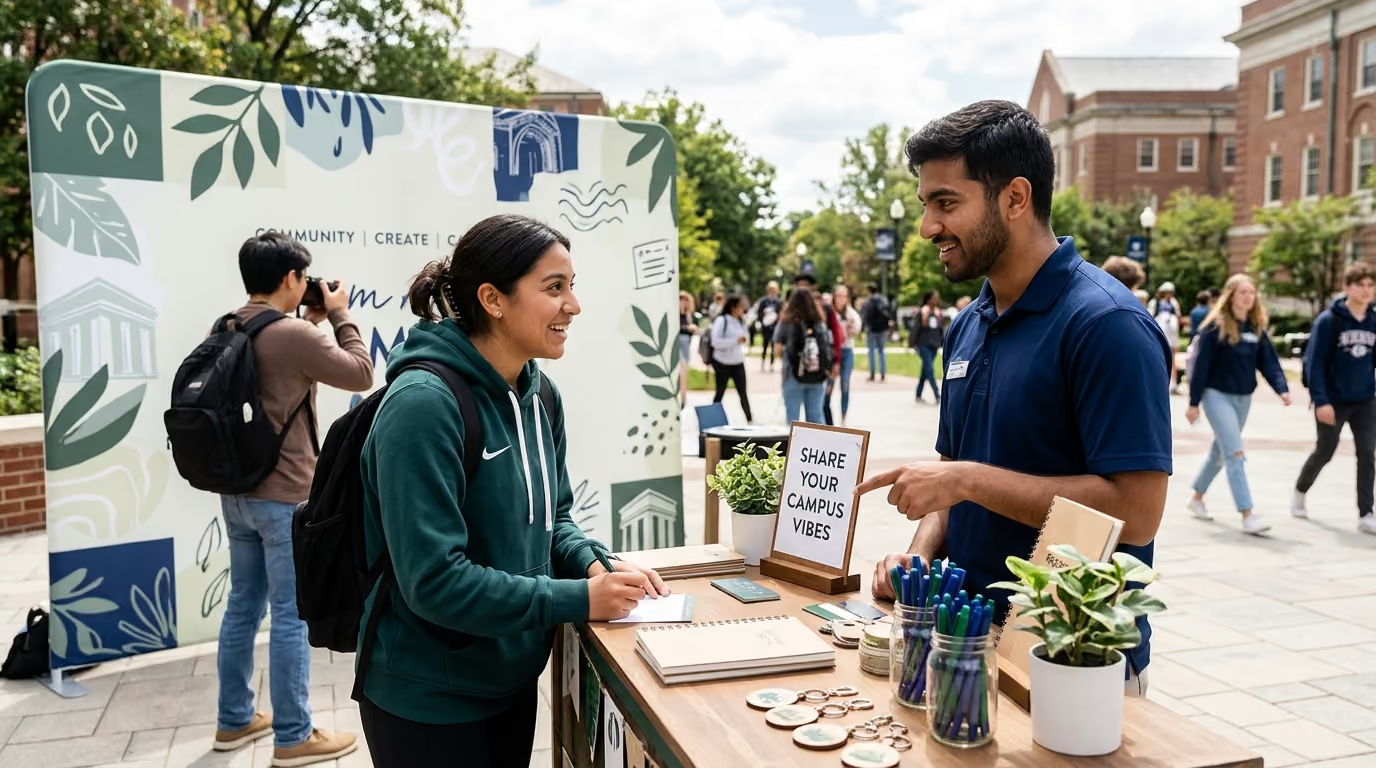
Walk across any major university quad on a Tuesday morning, and you will witness the standard model of campus brand promotion. A folding table stands near the student union, covered in branded keychains, paper flyers, and loose product samples. Two student workers stand behind the table, staring at their phones or shouting scripted slogans at passing crowds. Hundreds of students walk past, grab a free item without breaking stride, and drop the packaging into the nearest recycling bin thirty feet away. At the end of the day, the marketing team logs five hundred distributed units, yet nobody on campus understands what the product does or why they should buy it.
This disconnect happens because brands often treat campus programs as low-cost distribution networks rather than educational touchpoints. When students receive an item without context, they do not develop product understanding or purchase intent. Passing out volume without education creates waste, obscures real consumer sentiment, and burns marketing budget without driving retail velocity. College students are analytical consumers who navigate complex schedules, tight budgets, and constant promotional noise. They do not need more free plastic or generic sales pitches.
A peer-led activation succeeds only when the ambassador functions as a knowledgeable guide rather than a human coupon dispenser. When an ambassador explains how a product solves a specific problem, demonstrates its use, and answers direct questions, trial friction drops. Students learn whether a product fits their daily routine before spending their own money. Building this level of competence requires moving away from memorized scripts toward structured dialogue frameworks. It demands clear product training, operational discipline, and systematic field feedback loops.
Peer education works because university students look to credible classmates to evaluate new products and navigate unfamiliar categories. Research on consumer choices shows that perceived source expertise significantly influences preferences after a recommendation. Social closeness alone does not drive adoption if the peer lacks category competence. To build real authority on campus, ambassadors must master a clear communication structure that turns features into practical benefits.
Our operational model organizes education around the FIVE framework. This model gives ambassadors the tools to qualify needs, explain mechanics, verify claims, guide first use, and direct next actions.
Ambassadors must determine relevance before explaining product features. Pushing a product on every passerby creates irritation and wastes inventory on uninterested consumers. Ambassadors should ask diagnostic questions to identify the student's current habits and pain points.
Useful opening questions include:
This diagnostic approach segments students by use case rather than basic demographics. Ambassadors can quickly identify first-time category buyers, brand switchers, convenience seekers, or price-conscious shoppers.
Once an ambassador identifies a need, they must explain the core benefit in direct language. They should avoid technical jargon, corporate buzzwords, and vague marketing claims.
An effective explanation follows a four-part structure:
For example, an ambassador representing a functional snack might say: "If you have back-to-back lectures without time for lunch, this bar uses slow-burning oats to keep your energy steady until dinner." This sentence explains the problem, mechanism, benefit, and campus scenario in fifteen seconds.
Ambassadors must separate verified facts from personal enthusiasm. Field representatives should never fabricate claims, exaggerate outcomes, or make promises regarding health, performance, or financial returns.
Brands must supply ambassadors with standardized verification assets:
Ambassadors can share personal experiences, such as explaining how a product fit into their study schedule, but they must clarify that individual experiences vary.
A structured trial should guide the consumer through their first product interaction. Unassisted trials often fail because consumers use the product incorrectly or misunderstand the intended outcome.
The ambassador should follow a six-step sequence:
Guiding the trial helps the student evaluate the product accurately, which reduces uncertainty and accelerates adoption.
Every interaction must conclude with a low-pressure, logical next action tailored to the student's level of interest. Forcing a hard sale on a casual browser damages trust.
Ambassadors should offer proportional next steps based on readiness:
Matching the call to action to student interest creates a natural path to purchase without high-pressure tactics.
Ambassadors should never sound like walking press releases. Memorized scripts break down under unexpected questions and sound artificial to college audiences. Instead, teams should implement the ASK-EXPLAIN-INVITE-LEARN model to keep campus interactions natural, educational, and structured.
Open every engagement with an open-ended diagnostic question instead of a promotional pitch. This shifts the dynamic from a sales pitch to a consultation.
Asking first provides context, allowing the ambassador to tailor their points or politely end the conversation if the product does not fit.
Deliver a concise, three-sentence explanation that addresses the student's stated situation.
Keeping the explanation short maintains attention and leaves room for organic dialogue.
Offer a voluntary trial experience that allows the student to test the product without feeling cornered.
Voluntary participation respects personal space and ensures that samples go to genuinely interested students.
Capture the student's real reactions, lingering questions, and reasons for hesitation. Ambassadors should pay close attention to patterns in campus feedback:
Recording these qualitative observations turns the ambassador team into a valuable field intelligence network.
Ambassadors face complex questions regarding pricing, formulation, sourcing, and product safety. Training them to guess answers damages brand credibility and introduces regulatory risk. Ambassadors must follow the "Know, Qualify, Escalate" rule for every inquiry.
When an ambassador possesses approved knowledge, they deliver a direct, factual answer without unnecessary embellishment. For instance: "The student discount gives you twenty percent off at the campus market through the end of finals week."
When answering questions about product performance, ambassadors must qualify statements by noting variable conditions. For example: "This planner app is designed to balance course schedules with work shifts, but setup time depends on how many calendars you sync."
When faced with questions regarding medical advice, severe allergies, safety hazards, legal policies, or complex technical issues, the ambassador must escalate immediately. They should state: "I want to ensure you get precise information on that. Let me connect you directly with our customer support team or share our official safety documentation." A competent ambassador knows the limits of their knowledge and never improvises policy.
Executing a structured campus program requires operational discipline across recruitment, training, field staging, and live management. Brands looking to build structured programs can utilize the student ambassador recruitment and selection playbook to establish an effective talent foundation.
Consumer uncertainty is natural when encountering a new product. Ambassadors must understand that an objection is an invitation for clarification, not a personal rejection or an argument to be won. Handling student objections requires patience, empathy, and strict adherence to approved brand boundaries.
Teams should apply the LACE model to navigate hesitations smoothly:
Handling student concerns effectively requires structured responses to common barriers:
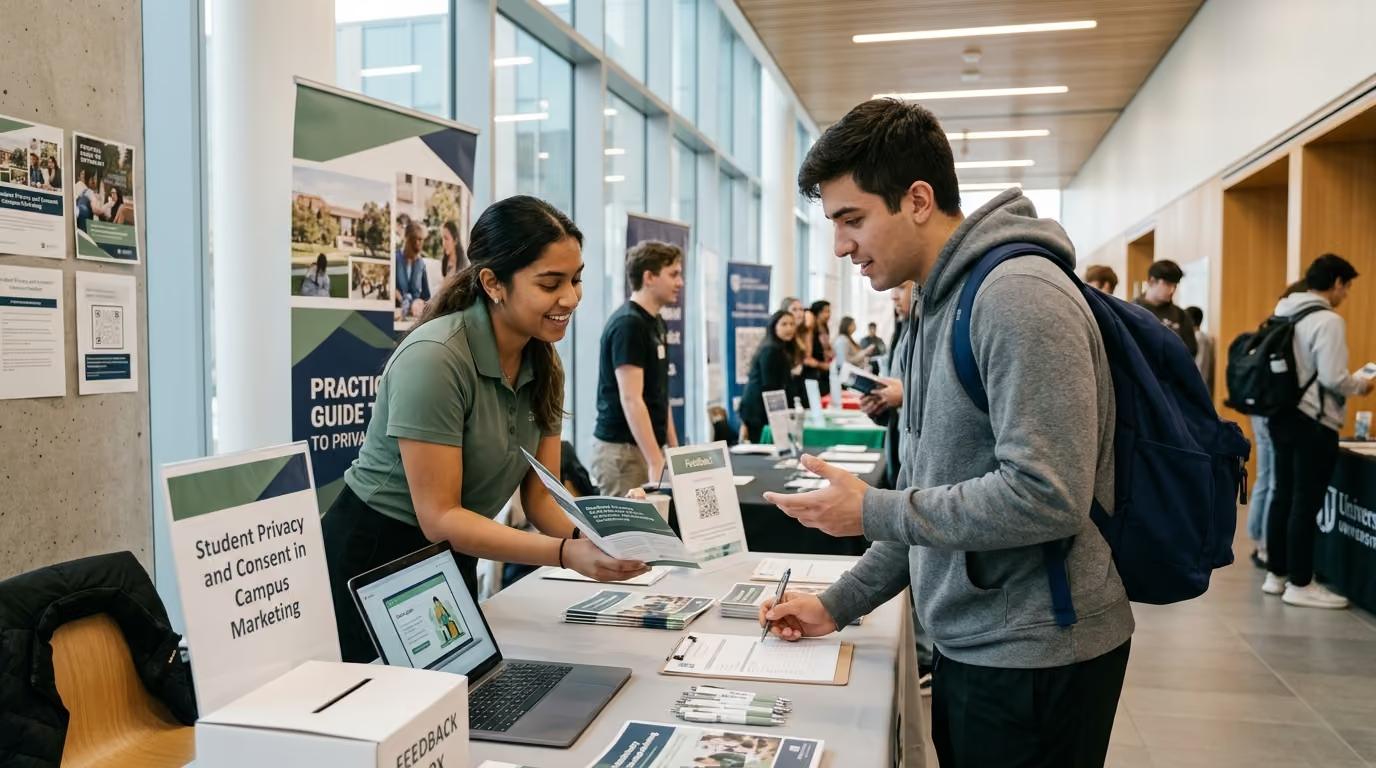
Student ambassador programs operate under federal consumer protection standards. The Federal Trade Commission requires clear, conspicuous disclosures whenever an endorser has a material connection to a brand. A material connection includes monetary compensation, free products, exclusive discounts, event access, or formal employment.
Ambassadors must understand that disclosure is mandatory across all conversations and social channels:
Campus activations must prioritize student safety, sanitation, and regulatory risk management. Food, beverage, and personal care products require rigorous physical handling standards.
Ambassadors must follow strict operational procedures:
Flawless on-campus execution requires robust back-end logistics. Without reliable supply chains, ambassadors run out of inventory, work with damaged gear, and fail to maintain consistent schedules. Managing collegiate campaigns demands clear inventory visibility and physical asset control across every market.
Campuses present distinct logistical challenges, including vehicle access restrictions, shared storage limitations, and strict distribution rules. Program leads must build detailed shipment schedules to ensure materials arrive on time. Ambassadors need secure storage lockers or campus-adjacent drop locations to manage weekly inventory replenishment without cluttering dorm rooms.
Waste management requires dedicated planning. High-volume sampling produces discarded packaging, cups, and napkins that can quickly overwhelm campus receptacles. Ambassador teams must carry dedicated recycling containers and conduct hourly sweeps of the activation zone. Leaving branded trash across a university quad strains relationships with campus administrators and damages institutional goodwill.
A VP of Marketing reflected on our partnership: "Robbie, it was a pleasure working with you and your team. You turned our launch into an experience that connected with shoppers and built lasting excitement for our brand. We're already looking forward to the next project together." Our team created a launch experience that resonated with retail shoppers and generated momentum for future collaborations. Managing complex physical operations while maintaining strict brand standards is how we bridge experiential marketing and retail velocity. For further logistical frameworks, explore our field logistics playbook for moving product and equipment.
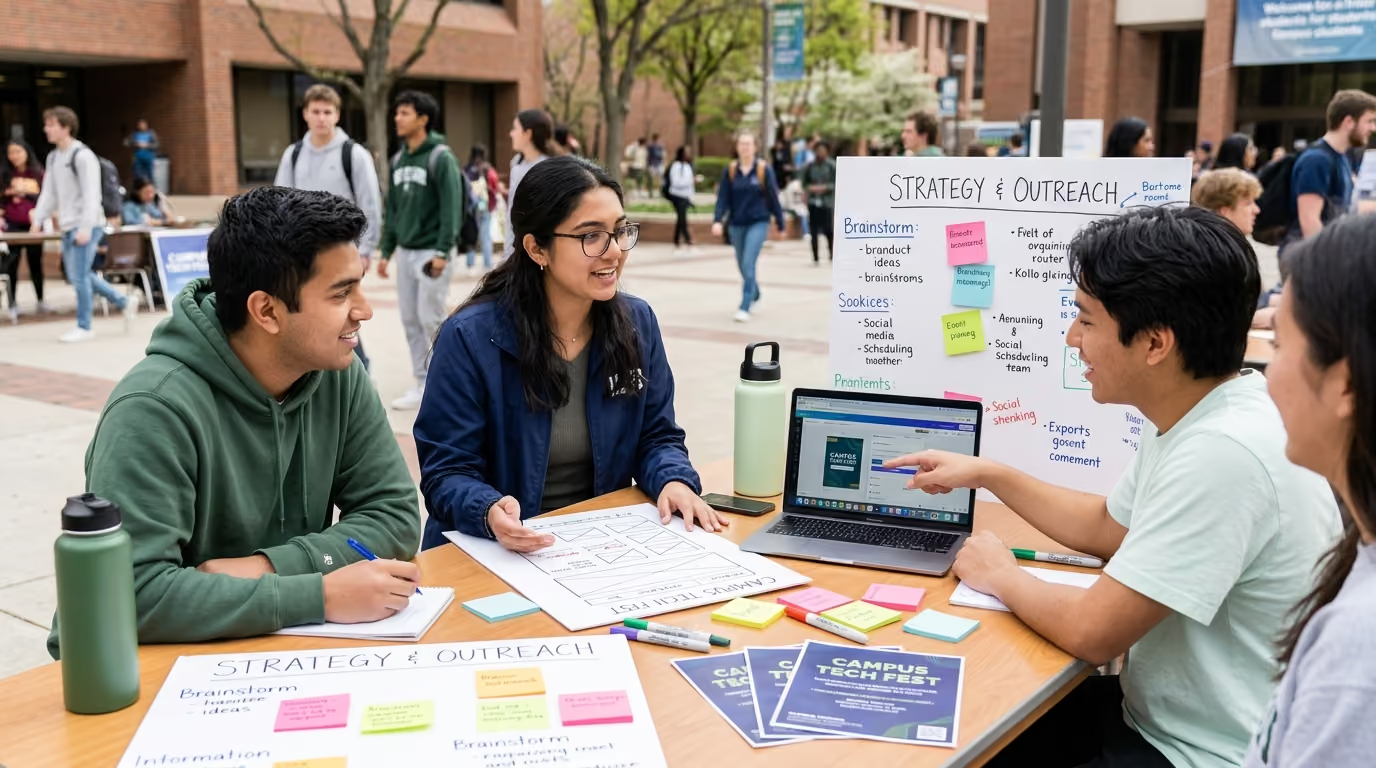
Campus marketing should never rely on vague vanity metrics. Counting the total number of students walking past a table reveals nothing about campaign effectiveness. Marketing leaders must evaluate programs using structured lead and lag metrics to measure genuine Return on Investment (ROI) and customer lifetime value.
To build rigorous measurement systems, teams can reference our guide on building a measurable student ambassador program.
Lead metrics evaluate the operational health and quality of the activation while it is actively running in the field.
Lag metrics track downstream consumer actions, measuring conversion, retail sell-through, and repeat purchase velocity.
Evaluating these data points side by side enables brands to distinguish between empty reach and sustainable business growth.
Analyzing structured field campaigns illustrates how peer-led education drives measurable adoption across different consumer product categories.
A premium dermatological skincare brand sought to drive adoption for its barrier-repair moisturizer among university students facing harsh winter climates. Instead of setting up basic sampling tables, the brand selected thirty ambassadors majoring in health sciences, chemistry, and nursing.
Ambassadors were trained on skin barrier function, ingredient interactions, and common hydration mistakes. Stationed outside campus wellness centers, ambassadors conducted short hydration assessments using digital skin-moisture meters. They explained the product's ceramide mechanism and provided a seven-day trial kit paired with a usage guide.
The campaign produced strong commercial results:
By pairing clinical education with personalized consultations, the brand established functional credibility and accelerated retail sell-through.
A clean-ingredient energy drink brand wanted to challenge incumbent market leaders during midterm exam weeks. The brand deployed mobile tasting stations staffed by student athletes and campus leaders trained to discuss caffeine metabolism and natural focus compounds.
Ambassadors engaged students studying in libraries and academic commons, asking how they managed mental fatigue during study marathons. Instead of handing out cold, unopened cans, ambassadors poured two-ounce chilled samples, explained how natural caffeine prevents energy crashes, and distributed educational study schedules.
The activation delivered clear business impact:
Focusing on functional education during high-stress study periods established immediate relevance and drove local retail velocity.
A consumer technology brand manufacturing compact charging hubs and mobile power banks targeted college students commuting between off-campus housing and university labs. The marketing team developed small pop-up charging stations across student lounges.
Ambassadors did not push product sales initially. Instead, they offered free high-speed device charging while asking students about their daily device setups, battery frustrations, and cable management challenges. Once a pain point was identified, the ambassador demonstrated how the brand's compact hub solved device clutter and overheating.
The campaign achieved high engagement and conversion:
Anchoring the activation in an immediate utility service created an environment where product demonstrations felt valuable rather than intrusive.
Building an effective peer education network requires avoiding several frequent operational traps.
Brands often recruit campus influencers with tens of thousands of followers, assuming online reach translates to real-world persuasion. High-reach accounts frequently lack credibility when speaking face-to-face with peers. Influencers with broad followings may prioritize vanity metrics over deep product knowledge, resulting in shallow interactions.
Focus recruitment on active, trusted campus contributors such as club treasurers, laboratory assistants, intramural captains, and department mentors. These individuals possess organic social capital, strong communication skills, and the academic discipline needed to master complex product specifications.
Forcing student ambassadors to memorize rigid corporate scripts turns engaging conversations into robotic presentations. College students quickly tune out memorized promotional language. When an ambassador recites a rigid script, they cannot adapt to individual questions or navigate nuanced objections.
Brands should provide structured message architectures rather than verbatim scripts. Give ambassadors core talking points, verified boundary guidelines, approved benefit explanations, and open-ended diagnostic questions. Train them to assemble conversations dynamically based on what the consumer says.
When an ambassador reports that students find a price point too high, a flavor unappealing, or packaging confusing, brand teams sometimes treat the report as poor ambassador performance. Suppressing critical feedback isolates the marketing team from field reality and preserves flawed assumptions.
Campus objections provide high-value market intelligence. Build structured weekly reporting systems where ambassadors log the top reasons students decline samples, specific product criticisms, and emerging competitor trends. Feeding field data back into packaging, pricing, and retail merchandising teams improves overall brand strategy.
Handing out thousands of loose product samples without clear instructions, retail directions, or digital tracking mechanisms generates waste. A student who tests a great product in a vacuum will rarely hunt down where to buy it.
Every sample must carry an integrated call to action. Print clear usage instructions and localized quick-response codes on trial packaging. Direct consumers to nearby campus-adjacent grocery stockists or exclusive student online checkout portals. Close the loop between physical trial and repeat purchasing through deliberate conversion design.
Ambassadors eager to hit sampling quotas sometimes pressure students who try to walk past. Pushing samples on hesitant individuals generates negative brand sentiment and creates an unwelcoming campus presence.
Train ambassadors to respect every refusal with professional courtesy. A student may decline due to dietary restrictions, budget constraints, sensory sensitivities, or a simple rush to class. A polite response preserves brand reputation, ensuring the door remains open for positive future interactions.
Field marketing strategies should evolve alongside changing retail environments, consumer habits, and academic calendars. Revisit this playbook whenever your brand encounters critical inflection points in its experiential growth strategy:
Building a sustainable, high-converting campus ambassador program requires treating student representatives as skilled product educators rather than temporary flyer distributors. By providing rigorous training, operational frameworks, and measurable conversion paths, brands can turn campus moments into lasting consumer loyalty.

30 Years Experiential & Retail Activation Partner for CPG & Beverage Brands | Multi-Market Demos, Roadshows & Costco/Club Programs That Actually Sell