Robbie Thain
Founder, CEO

Five operational execution steps guide beverage brands through regulatory compliance, station positioning, safe sampling interactions.
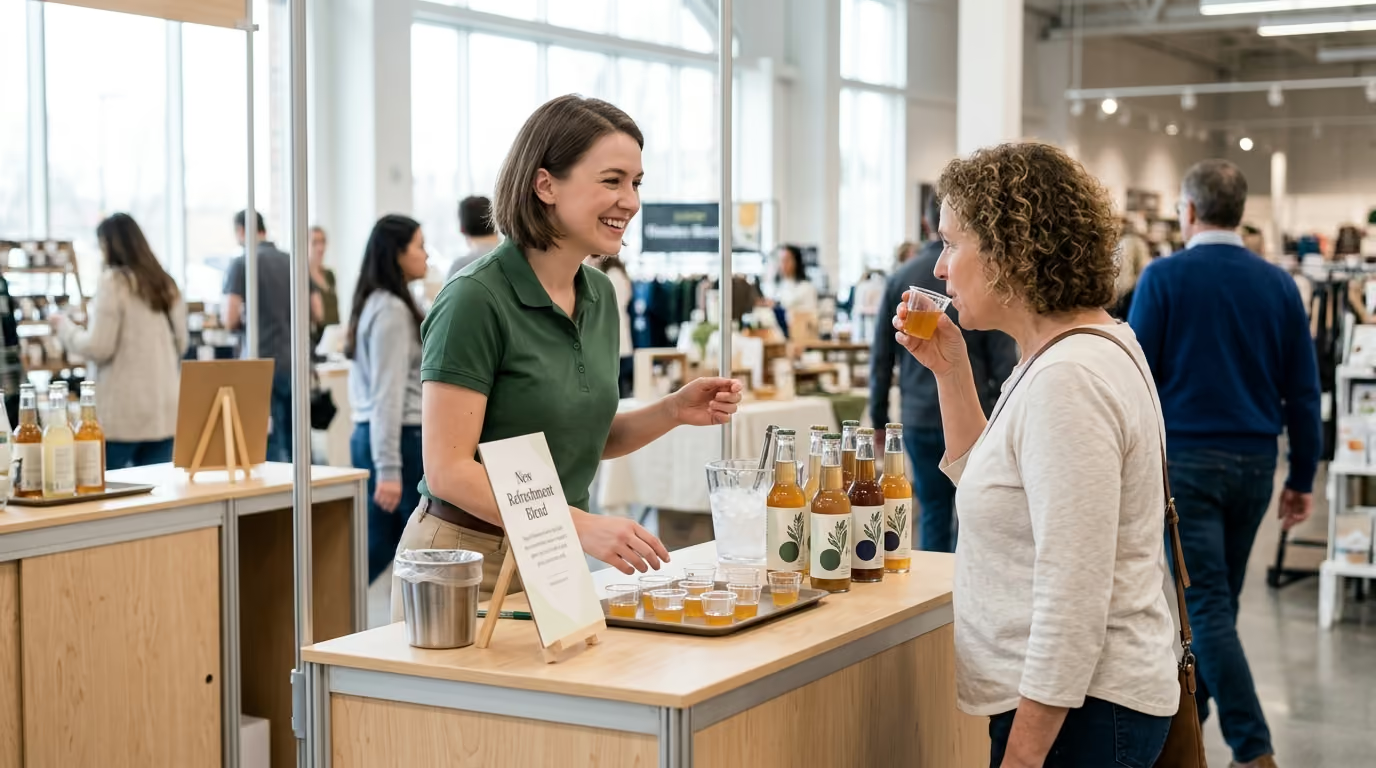
Executing retail beverage sampling in regulated environments requires balancing strict legal compliance with commercial conversion discipline. This definitive guide provides brand leaders with the operational frameworks, risk management protocols, and measurement models needed to turn liquid trial into repeatable retail sales.
The retail floor at 5:00 PM on a Friday is notoriously chaotic. Shoppers navigate crowded aisles with limited time, while store staff rush to restock depleted shelves and manage checkout lines. In the beverage aisle, dozens of competing labels fight for attention on crowded shelves. If a brand activation team arrives without a tight operational plan, the station quickly becomes a bottleneck of confused shoppers, wasted product, and compliance risks. When executed with operational discipline, that same retail floor turns into a controlled conversion engine that drives immediate basket attachment and sustained category growth.
Beverage sampling is a controlled retail activation where an eligible shopper receives a small quantity of a beverage to evaluate taste, aroma, temperature, or preparation. The primary commercial objective is reducing sensory uncertainty to accelerate purchase intent at the shelf. In liquor, beverage, and adult-use retail, sampling is an operational discipline that combines customer education, alcohol service controls, and shopper conversion.
We have been connecting brands with people through live experiences, retail programs, and national activations since 1995. In our experience, the most critical conceptual distinction is separating product evaluation from consumption promotion. A well-designed activation helps an adult shopper make an informed buying decision. It does not encourage excessive consumption, rapid drinking, or unsafe behavior.
Sampling addresses the central hesitation shoppers feel when encountering a new product or premium price point. A consumer might find a package design appealing but hesitate to spend twenty dollars on an unfamiliar spirit or functional beverage. Offering a precise, chilled pour removes that barrier immediately. Research indicates that direct product trial builds trust faster than passive marketing touchpoints.
To build a repeatable program, brands should view the interaction as a structured conversion funnel:
Academic studies examining scanner data across multiple product categories show that in-store sampling produces both immediate and sustained sales lifts. Unlike static displays that lose effectiveness after two weeks, the impact of physical product trial persists across multiple purchase cycles. Implementing a thoughtful beverage sampling strategy to drive repeat buys ensures that immediate tasting converts into lasting customer retention.
Alcohol sampling operates under a strict jurisdiction-first compliance framework. Federal, state, and local agencies each maintain distinct statutory requirements that govern product trial. A successful national campaign must adapt to local regulations rather than relying on a uniform national playbook.
Federal regulations under Title 27 of the Code of Federal Regulations establish commercial sample limits for trade practices. For instance, 27 CFR 27.49 limits commercial samples to eight ounces of beer, four ounces of wine, or two ounces of distilled spirits. However, these federal commercial thresholds do not grant permission to pour those volumes for consumers at retail. State consumer protection laws and alcohol beverage control rules take precedence and are often substantially more restrictive.
State-level statutory differences illustrate why operational compliance requires constant vigilance:
Before scheduling any retail activation, brands must establish written confirmation of retailer authorization. Verify the store license type, confirm whether third-party brand ambassadors may pour, and identify whether local law mandates advance agency notifications. Never assume that a store manager's verbal consent overrides state licensing restrictions.
Age verification is a mandatory service gate, not an informal visual check. The Texas Alcoholic Beverage Commission strictly penalizes licensed businesses for selling or serving alcohol to minors. Texas requires off-premises retailers in designated categories to visually inspect and electronically scan government identification to confirm the shopper is at least 21 years old.
Our teams implement a universal ID inspection policy across all alcohol and adult-use activations. Brand ambassadors must greet the shopper, request a valid government ID, verify the birth date, check expiration dates, and match the photo to the individual. If a shopper cannot provide valid identification, staff must politely refuse service regardless of apparent age. When an identification card appears altered or questionable, staff must immediately escalate the situation to store management.
Responsible beverage service protocols are equally vital for mitigating brand risk. The Centers for Disease Control and Prevention emphasizes that responsible beverage service training equips staff to identify early signs of intoxication, refuse service safely, and prevent impaired driving. Sampling staff must never act as casual bartenders. They must pace interactions, track individual sample counts, and decline additional pours when a patron exhibits rapid consumption behavior.
Responsible marketing rules established by the Federal Trade Commission mandate that alcohol promotions should focus on adult audiences. FTC self-regulatory standards require that at least 71.6% of the audience in promotional environments consists of legal-age adults. In retail settings, activations must avoid marketing elements that appeal to minors:
Adult-use cannabis retail requires a distinct regulatory approach that should never be conflated with alcohol standards. Maine adult-use cannabis regulations strictly prohibit offering consumer samples unless the product has passed mandatory state testing. In New York, state guidance requires display samples to remain securely protected and handled under strict sanitary standards. Operating within legal boundaries requires consulting jurisdiction-specific adult-use codes for every market.
Serving beverages in a retail environment introduces critical food safety and sanitation responsibilities. Even simple liquid pours involve touchpoints that can harbor contaminants if handled carelessly. Brand ambassadors must treat the sampling table with the operational hygiene of a commercial kitchen.
The Food and Drug Administration Food Code mandates that food handlers must wash their hands thoroughly and avoid bare-hand contact with ready-to-eat items. Sampling staff must utilize clean utensils, deli papers, single-use gloves, or dispensing equipment when preparing serves. Pouring spouts, ice scoops, garnishes, and beverage contact surfaces must remain protected from customer touch and airborne contaminants.
Cross-contact and allergen management require structured cleaning protocols. FDA research on retail food safety demonstrates that washing, rinsing, sanitizing, and air-drying surfaces effectively eliminates food allergens and prevents cross-contact. A quick wipe with a dry towel is entirely insufficient when switching between dairy-based liqueurs, nut-flavored syrups, and pure spirits.
A robust field sanitation checklist must include the following controls:
When consumers ask about ingredients, sweeteners, or gluten content, staff must reference approved product spec sheets. If a brand ambassador does not know an answer, they must direct the shopper to the product label rather than guessing. Clear information protects consumer health and builds genuine brand credibility.
Turning a retail floor into an effective sampling venue requires disciplined logistics, professional staging, and conversational precision. For additional operational detail, consult our field guide for retail sampling programs. The following step-by-step guide outlines how field teams execute a seamless retail activation.
Evaluating activation performance requires calculating Return on Investment (ROI) through verified retail sales data rather than relying on vanity metrics. Tracking physical impressions provides little insight into financial viability. Brand leaders must measure specific lead and lag metrics to understand the true incrementality of their field spend.
To evaluate campaign economics accurately, reference our retail sampling budgeting guide. A rigorous measurement architecture tracks metrics across the entire conversion cycle:
Sample Acceptance Rate:
Divide total samples served by total eligible shoppers invited. This calculation reveals how effectively your team hooks passing foot traffic.
Immediate Conversion Rate:
Divide total samplers who purchased an item by total samplers served. This metric evaluates the persuasive power of the sensory experience and closing pitch.
Incremental Unit Lift:
Subtract control-store units sold from activated-store units sold, then divide by control-store units sold. This calculation isolates the sales lift generated strictly by the activation.
Cost Per Incremental Unit:
Divide total activation cost by total incremental units sold. This number tells you the exact marketing spend required to move each additional product unit.
Sample Efficiency:
Divide total incremental units sold by total samples served. This ratio shows how many pours are required to generate one net-new product purchase.
Return on Activation Spend:
Divide incremental gross profit generated by total activation cost. This calculation indicates whether the field execution returned positive gross margin.
Calculating true incrementality requires comparing activated retail stores against matched control stores. Select control locations with similar historical sales volume, comparable demographic profiles, identical pricing structures, and matching shelf placements. If physical control stores are unavailable, use pre-event and post-event baseline comparisons over matched multi-week windows.
Consumer research from Knowledge Networks-PDI found that retail sampling generated an immediate 475% sales lift on the day of the event across sampled households compared to non-sampled households. The same study revealed that sampled shoppers were 11% more likely to make repeat purchases over the subsequent 20 weeks. Furthermore, line extensions sampled in-store experienced an immediate sales lift of 919%, illustrating the exceptional power of taste trial for new flavors.
Tracking broader portfolio effects is equally critical. A well-executed sampling program should lift the entire brand family rather than simply cannibalizing existing core sales. Monitor category sales, competitive response, and post-activation velocity for eight weeks to verify sustained incrementality. For an expanded breakdown of performance indicators, explore our definitive guide to sampling measurement KPIs.
Different beverage categories face unique purchase barriers in retail environments. A craft spirit requires an approach distinct from an energy drink or non-alcoholic aperitif. Field teams must tailor their operational design to solve the exact hesitation the consumer experiences at the shelf.
Reviewing how to optimize foot traffic begins with matching physical retail environments with shopper intent. The following case patterns outline tailored activation structures across five common retail scenarios.
Executing thousands of live retail activations uncovers numerous edge cases that can disrupt store operations if teams are unprepared. Managing these operational anomalies separates elite field marketing teams from amateur efforts.
Mixed-age family shopping groups present a frequent operational challenge. When parents approach a station with young children, brand ambassadors must maintain absolute control of the station. Samples must be handed directly to verified adults, never placed loosely on the table surface. Staff should never offer candy, games, or branded trinkets that might attract minors to an alcohol station.
Managing designated drivers requires thoughtful customer empathy. A consumer may decline an alcohol sample because they are driving, pregnant, or abstaining. Staff should have an approved sensory alternative prepared, such as an aromatic botanical mist or an alcohol-free portfolio variant. Treating non-drinking shoppers with respect creates positive brand sentiment that influences future household purchasing.
Field teams frequently encounter intoxicated or disruptive patrons on the retail floor. Staff must never argue with a customer or make subjective accusations regarding sobriety. Instead, staff should politely state that house rules limit service, offer a cup of water, and discreetly notify store management. The retail store staff maintains ultimate authority regarding premises safety and customer removal.
Managing mid-event stockouts is another critical contingency. If a promoted SKU sells out completely during the second hour of an activation, the team must adapt immediately. Brand ambassadors should pivot to pouring an available sibling SKU from the same portfolio rather than halting the event. Staff must never send frustrated shoppers hunting for phantom stock in the backroom.
Avoid unapproved health claims when marketing functional or non-alcoholic beverages. Brand ambassadors must never claim that a beverage cures hangovers, treats anxiety, aids weight loss, or provides medical relief. Stick strictly to approved packaging copy, focusing on flavor, hydration, and premium ingredient quality.
When crafting prepared cocktail serves, operational complexity multiplies. Cocktails require multiple liquid ingredients, precise measuring tools, ice management, and garnish handling. If recipes are not standardized, drink quality varies wildly across different shifts. Field leads must enforce standardized recipe cards and calibrated jiggers to ensure consistent flavor profiles.
Revisit this operational guide whenever your brand prepares to enter new retail markets, expand across state lines, launch major line extensions, or audit field compliance standards. Reviewing these verification protocols, sanitation checklists, and financial models ensures your field marketing programs consistently operate with legal integrity and measurable commercial impact.
Mastering retail beverage sampling requires treating every pour as a disciplined blend of regulatory compliance, sanitary execution, and focused customer conversion.

30 Years Experiential & Retail Activation Partner for CPG & Beverage Brands | Multi-Market Demos, Roadshows & Costco/Club Programs That Actually Sell