How do you execute a multi-campus brand activation without permits getting revoked, inventory disappearing, or ambassadors failing to show up?
This operations checklist establishes a standardized operating procedure for collegiate marketing campaigns across risk governance, ambassador management, inventory control, and field technology. Implementing this framework protects brand equity, prevents administrative shutdowns, and delivers verifiable Return on Investment (ROI) across every university market.
The Reality of the Campus Quad
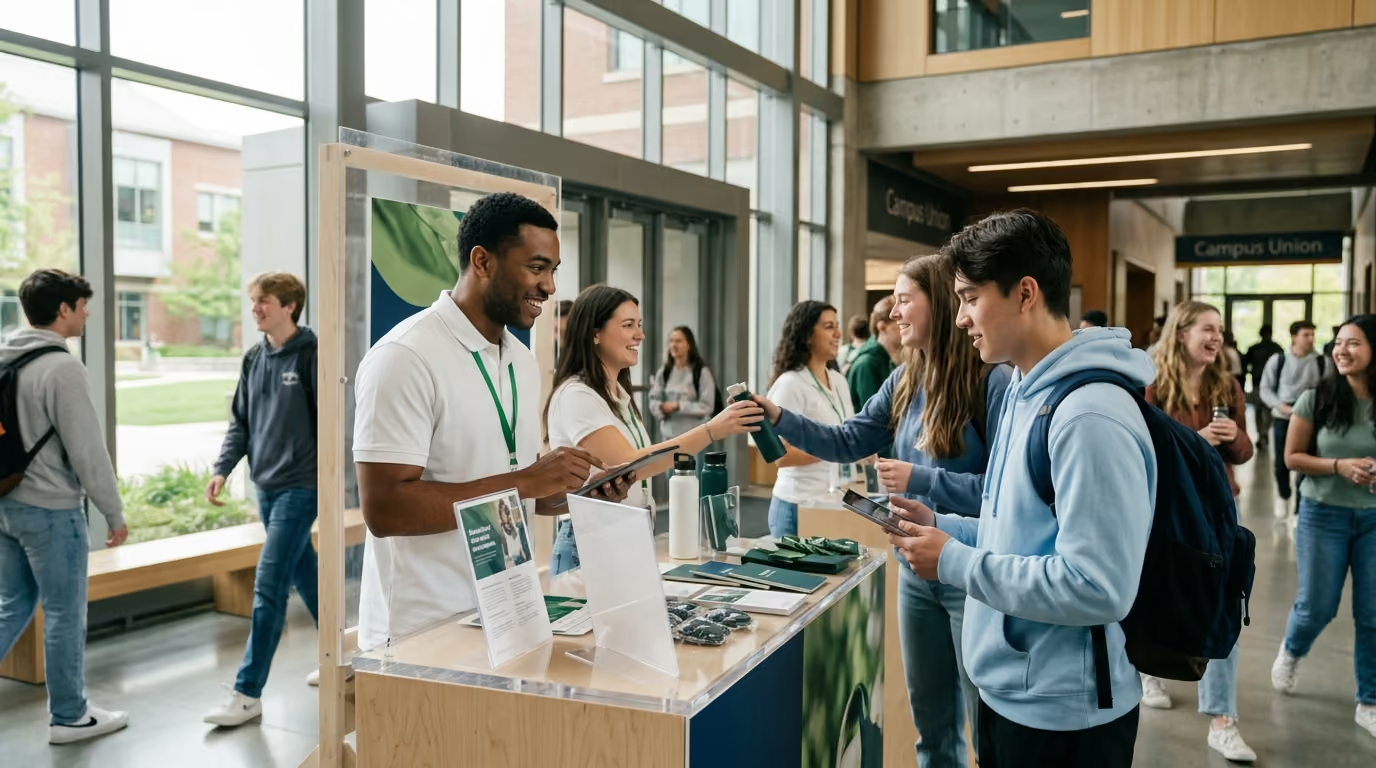
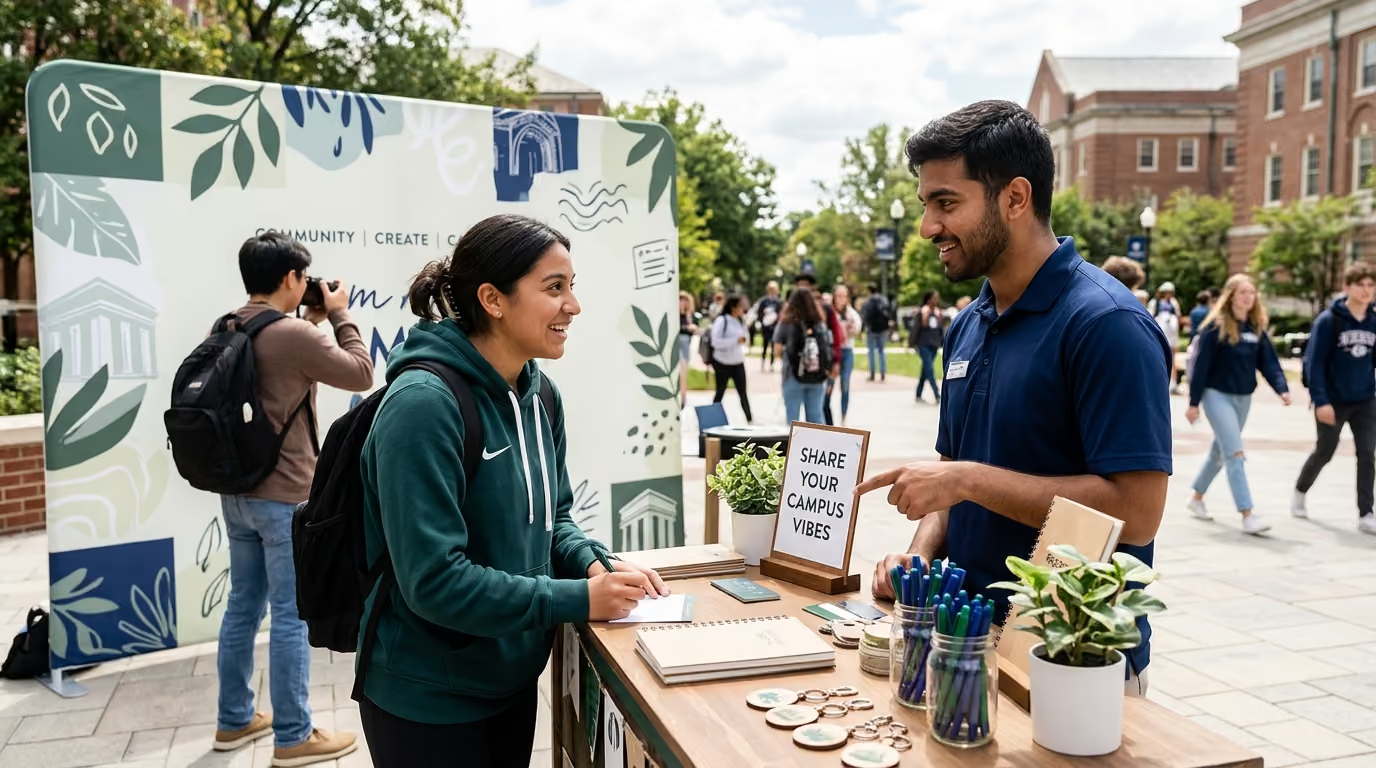
A collegiate activation looks straightforward on a marketing slide deck. A branded tent stands on the central lawn, enthusiastic student ambassadors distribute samples, and hundreds of undergraduates scan digital codes.
The live environment tells a different story. At 7:30 AM, your field manager arrives to find automatic lawn sprinklers soaking the reserved activation zone. Campus security stops your delivery van because commercial vehicles lack loading dock passes for pedestrian walkways. Two student ambassadors fail to appear due to an unannounced chemistry midterm. By 10:00 AM, cellular networks choke under heavy quad traffic, disabling your cloud-based lead capture forms.
When campus programs fail, they rarely fail because the creative concept was weak. They fail because field teams treat logistics as casual details rather than hard operational gates. Running a successful college tour requires the same rigorous control as a precision supply chain.
We have been connecting brands with people through live experiences, retail programs, and national activations since 1995. Over three decades, we have built a track record of creating meaningful brand moments across the country. That experience has proven that operational discipline is what separates high-converting activations from expensive campus chaos.
Institutional Governance and Risk Management Approval Gates
Every university campus is an independent municipality with distinct legal, safety, and logistical authorities. Treating college administration as a single point of contact leads to immediate operational failure. Institutional approval requires passing through specific administrative review gates weeks before equipment arrives on site.
- Approval Stage 1: Venue Reservation & Student Life Authorization
- Approval Stage 2: Third-Party COI & Risk Management Verification
- Approval Stage 3: Facilities, Grounds & Parking Operations Routing
- Approval Stage 4: Municipal Health & Public Safety Sign-Off
Campus Authorization and Venue Reservation
Securing space on a university campus requires navigating student life offices, registrar scheduling systems, and facilities management. Operators must confirm specific operational boundaries during the initial booking process:
- Verify the precise geographic boundaries of the reserved activation footprint.
- Identify whether sound amplification is permitted, including specific decibel ceilings and restricted class hours.
- Confirm whether commercial activity, data collection, or direct product sales require supplementary commercial permits.
- Check the university academic calendar for conflicting events, including homecoming, alumni weekends, construction projects, or reading days.
- Determine whether the host property is owned by the university, a student union auxiliary, or a private entity.
Contract Status and Liability Clauses
Corporate legal teams must review university facility use agreements well ahead of campaign launch. The University of California, Merced event risk checklist specifically mandates reviewing contract liability clauses and verifying institutional insurance limits.
- Complete signed agreements between brand, executing agency, campus departments, and third-party equipment suppliers.
- Review indemnification clauses to ensure liability is appropriately assigned rather than fully assumed by the visiting brand.
- Verify participant waiver requirements for any activation involving physical activity, sports, or motorized vehicle operations.
- Review guidelines regarding photo releases and data privacy when collecting information from college populations.
Certificate of Insurance Verification
Universities require strict Certificate of Insurance (COI) submissions before permitting external entities onto school grounds. The University of Colorado risk assessment protocol requires third parties to submit verified proof of insurance to institutional risk managers well before load-in.
- Confirm comprehensive general liability minimums, typically requiring two million to five million dollars per occurrence.
- Add the university board of regents, trustees, and administrative bodies as explicitly named additional insured entities.
- Secure commercial auto liability coverage for all production vehicles operating on university roadways.
- Ensure statutory workers compensation insurance is active for all agency staff and paid student ambassadors.
- Obtain signed COI verification documents from campus risk management at least fourteen days prior to event day.
Accessibility and Emergency Egress
Campus activations must remain fully accessible to all individuals while preserving clear emergency corridors. The University of Oregon campus event checklist instructs organizers to design activation footprints with universal accessibility in mind. Field teams should use centralized permit compliance processes to ensure every municipal and campus standard is satisfied.
- Map clear, accessible travel routes from campus walkways, transit stops, and parking structures to the activation footprint.
- Ensure all cable ramps, flooring transitions, and sampling counters comply with ADA standards.
- Confirm emergency vehicles maintain unobstructed access lanes measuring at least twenty feet wide.
- Verify clear line-of-sight and physical clearance to all nearby building exits, emergency call boxes, and fire hydrants.
- Walk the complete participant route to confirm zero tripping hazards, low-hanging overhead obstacles, or slippery turf conditions.
Facilities, Grounds, and Municipal Approvals
Outdoor activations place severe physical demands on campus grounds and utilities. The University of Missouri event planning checklist highlights the necessity of routing plans through campus facilities and grounds crews.
- Submit utility locate requests before driving any tent stakes or structural anchors into campus turf.
- Arrange for automatic irrigation systems to be shut off in the activation zone during the complete occupancy window.
- Obtain turf protection approvals if vehicles or heavy staging equipment must cross landscaped lawns.
- Secure temporary food distribution permits from the local county health department when sampling open, non-packaged consumables.
- Confirm whether campus police or university environmental health teams mandate on-site security or dedicated medical staff.
Transportation Logistics, Fleet Routing, and Parking Control
Moving production assets onto a dense pedestrian campus requires specialized transportation planning. The University of Texas event risk reduction framework evaluates off-campus transportation risks, requiring verified driver credentials and designated backup plans. Transporting heavy assets across campus walkways without prior authorization risks institutional fines and immediate vehicle impoundment.
Vehicle Fleet and Driver Compliance
Every vehicle entering a college campus must meet strict compliance standards. Pacific Lutheran University event guidelines distinguish between personal vehicles, rented fleet assets, and chartered transit, establishing distinct operational paths for each.
- Confirm active driver licenses and motor vehicle records for every production driver operating on campus property.
- Verify commercial vehicle insurance documentation is physically present in every tour vehicle glove compartment.
- Designate and verify backup drivers for long-distance routes between regional campus activations.
- Enforce mandatory rest cycles for drivers traveling between multi-campus tour stops.
Campus Ingress, Staging, and Parking Access
Pedestrian-heavy campus centers require precise vehicle routing and timed access windows.
- Secure formal loading dock permits and gate access codes from campus parking enforcement.
- Map specific vehicle ingress routes that completely avoid pedestrian thoroughfares during class change periods.
- Establish dedicated parking locations for transport vans, mobile trailers, and staff support vehicles once unloading finishes.
- Secure written permission for any activation that utilizes a branded vehicle as an active structural footprint element.
- Coordinate escort vehicles or spotters on foot whenever production vehicles must navigate active pedestrian plazas.
Ambassador Recruitment, Training, and Field Command
Student brand ambassadors represent the public voice of the campaign. Without rigorous oversight, student teams suffer from high attrition, inconsistent brand messaging, and unreliable attendance tracking. Successful programs integrate staffing mobile sampling teams with structured operational command.
Field Command Architecture
Every campus activation requires an unambiguous reporting structure. Southeastern Louisiana University event planning guidance emphasizes assigning distinct operational duties and maintaining clear leadership roles.
- Activation Lead: Holds ultimate operational authority, manages campus administrative relationships, and oversees budget execution.
- Campus Liaison: Navigates university contacts, handles real-time facility requests, and manages security interactions.
- Ambassador Captain: Manages student staff check-ins, oversees shift schedules, and maintains energy and engagement levels.
- Inventory Custodian: Tracks product counts, manages storage access, and records daily sampling distribution metrics.
- Technology Specialist: Maintains connectivity hardware, manages digital lead capture tools, and oversees offline data backups.
- Safety Officer: Monitors weather updates, enforces crowd safety protocols, and executes emergency incident plans.
The Student Ambassador Briefing Packet
Student ambassadors require explicit, concise operating parameters before setting foot in the field. Every ambassador should receive a digital and printed operational packet covering five critical areas:
- Shift Assignments: Precise call times, assigned zones, scheduled meal breaks, supervisor contact numbers, and checkout protocols.
- Core Talking Points: Three non-negotiable brand messages, approved product claims, clear legal disclaimers, and competitor differentiation points.
- Prohibited Behaviors: Strict bans on unauthorized product claims, high-pressure consumer engagement, mobile phone distraction, and unsupervised breaks.
- Escalation Protocols: Explicit instructions on handling disruptive attendees, safety hazards, campus security inquiries, or medical events.
- Operational Rehearsals: Step-by-step responses for missing stock, inclement weather shifts, tablet hardware crashes, and crowd surges.
Attendance Control and Labor Compliance
Managing collegiate labor requires structured check-in workflows to prevent understaffed activations. Southeastern Louisiana University recommends structured volunteer sign-in sheets, verified attendance logs, and predefined replacement rosters.
- Execute digital check-ins forty-five minutes prior to the public activation launch.
- Maintain an active standby roster of cross-trained backup ambassadors in each market to resolve last-minute absences.
- Enforce strict check-in and check-out logs to ensure compliant payroll tracking and break scheduling.
- Conduct mandatory fifteen-minute morning briefings covering safety updates, daily interaction goals, and live roleplay exercises.
Inventory Chain of Custody and Supply Chain Governance
Product sampling programs lose thousands of dollars annually through careless freight handling, unmonitored shrinkage, and improper food storage. Managing campus inventory requires an unbroken chain of custody from regional warehouse delivery to final consumer handoff. For multi-city tours, field directors should follow pre-activation operational readiness checks to ensure regional inventory stays reconciled.
- Warehouse Delivery Staging Inspection Active Field Zone Reconciled Log
- (Bill of Lading) (Damaged / Ambient) (Hourly Burn Rate) (Variance Report)
Material Ingress and Storage
Securing materials on a college campus requires coordinated delivery logistics.
- Schedule freight deliveries to university central receiving docks with confirmed lift-gate service.
- Verify secure, climate-controlled temporary storage space for palletized product, promotional premiums, and display assets.
- Inspect all incoming freight against the bill of lading to record damaged, missing, or compromised packaging immediately.
- Establish secure lockups for high-value electronic gear, premium giveaways, and branded apparel during multi-day activations.
Inventory Reconciliation Framework
Operators must implement strict inventory auditing at each stage of the event lifecycle. Southeastern Louisiana University event planning materials emphasize detailed tracking of supplies and gathering materials against budget parameters.
- Planned Inventory: Total stock allocated to the campus market based on historical foot traffic models.
- Received Inventory: Verified physical count delivered to the campus staging site.
- Issued Inventory: Product units formally transferred to individual ambassador stations throughout the shift.
- Distributed Inventory: Verified quantity handed directly to consumers during operating hours.
- Damaged or Expired Stock: Units removed from distribution due to heat exposure, packaging tears, or dropped product.
- Returned Stock: Unopened, undamaged inventory repacked and returned to regional inventory pools.
Food Safety and Sanitation Standards
Sampling food and beverage products on campus demands strict sanitation controls.
- Monitor and log internal temperatures of refrigerated cold-brew, dairy, or frozen samples every two hours.
- Implement commercial-grade food barriers, sneeze guards, and sanitization stations at all open-air tasting counters.
- Enforce mandatory glove changes every thirty minutes and immediately following any non-food handling task.
- Provide dedicated, heavy-duty trash receptacles within the footprint to collect discarded tasting cups, napkins, and wrappers.
- Coordinate active waste clearing runs across the immediate campus quad to prevent brand-associated litter.
Technology Infrastructure and Data Capture Redundancy
Modern campus campaigns rely heavily on digital touchpoints to capture student interest and measure downstream attribution. Yet campus networks are notoriously unstable during peak academic hours. Technology stacks must be built with complete offline redundancy to ensure continuous operation.
The Hardware Deployment Protocol
Field tech failures ruin consumer interactions and stall conversion tracking. Operators should deploy standardized field kits built for high-throughput environments.
- Provide dedicated, ruggedized tablets or mobile units pre-loaded with enterprise registration software.
- Deploy commercial power banks and high-capacity battery stations capable of sustaining all mobile devices for twelve hours.
- Supply heavy-duty, weather-resistant extension cords and commercial cable crossover guards for hardline electrical drops.
- Include backup physical lead collection materials, such as branded print cards, in the event of catastrophic hardware crashes.
Network Independence and Redundant Connectivity
A 2025 Forrester survey on event technology found that 28 percent of large organizations run six or more disparate event platforms, yet only 20 percent fully integrate primary platforms with their customer databases. Complex, fragile tech ecosystems fail quickly on high-density campus lawns.
- Configure private dual-carrier cellular hotspots (such as Verizon and AT&T) to isolate activation traffic from overloaded campus Wi-Fi.
- Ensure all registration applications, web forms, and gamification portals feature automatic local caching for offline operation.
- Test dynamic QR codes across multiple mobile platforms, operating systems, and camera resolutions prior to public opening.
- Establish local data backup schedules every sixty minutes to secure consumer records against cloud synchronization errors.
Data Security and Institutional Compliance
Capturing student information requires compliance with institutional, state, and federal privacy regulations.
- Ensure digital forms contain clear consent check-boxes regarding promotional communications and SMS marketing.
- Confirm encryption standards for all locally stored consumer data on field tablets.
- Designate a primary data custodian responsible for exporting encrypted lead files to central CRM repositories.
- Restrict ambassador access to sensitive consumer information collected on field hardware.
Severe Weather Thresholds and Campus Safety Contingencies
Outdoor campus marketing exposes staff, assets, and consumers to rapid weather shifts. Field teams must operate under written, rule-based weather protocols rather than ad-hoc subjective decisions.
- Severe Weather Decision Framework
- • Lightning within 8 Miles Suspend operations; seek indoor shelter for 30 min.
- • Sustained Winds 30 MPH Drop pop-up canopies; secure heavy structural frames.
- • Wet-Bulb Temp 85°F Enforce 20-min staff rotations; double water supply.
- • Wet-Bulb Temp 90°F Relocate activation indoors or pause operations.
Severe Weather Policy Standards
The University of South Florida maintains structured severe weather contingency templates for outdoor operations. Similarly, Middlebury College mandates written severe weather protocols featuring unambiguous operational interruption thresholds. Middlebury's policy defines concrete operational benchmarks:
- Lightning Hazards: Immediately halt all outdoor activity whenever cloud-to-ground lightning strikes within eight miles. Maintain complete operational suspension until thirty minutes have elapsed following the last detected lightning event.
- Wind Speed Restrictions: Secure or strike lightweight pop-up canopies when sustained winds reach twenty miles per hour. Completely suspend outdoor operations and dismantle overhead frames when sustained winds exceed thirty miles per hour or gusts surpass forty-five miles per hour.
- Thermal Stress Rules: Restructure physical activities and enforce mandatory hydration rotations when the wet-bulb globe temperature exceeds eighty-five degrees Fahrenheit. Relocate programming indoors or cancel outdoor activities when temperatures surpass ninety degrees Fahrenheit.
- Frozen Precipitation: Clear walking paths, install non-slip rubber matting, and insulate liquid storage containers during cold-weather activations.
The All-Hazards Emergency Response Matrix
The University of the Ozarks risk management guidance emphasizes an all-hazards planning approach that differentiates between gradual weather events and sudden structural or physical emergencies. Every field lead must carry an emergency reference card detailing critical contacts and procedures.
- Campus Police Dispatch: Direct emergency telephone line (bypassing generic municipal 911 queues).
- Campus Facilities Desk: Direct contact for water main leaks, power outages, and grounds issues.
- Local Medical Facility: Address and fastest driving route to the nearest urgent care or emergency room.
- Designated Evacuation Shelters: Primary and secondary indoor buildings identified to house staff and attendees during storms.
- Chain of Command: Clear hierarchy identifying the exact personnel authorized to alter, pause, or terminate the activation.
Step-by-Step Field Execution Playbook
Flawless execution requires disciplined time management across the entire event lifecycle. Southeastern Louisiana University recommends ordering supplies six to twelve weeks in advance, conducting thorough walkthroughs two days prior, and building a timed hour-by-hour day-of schedule.
Phase 1: Planning and Approvals (T-Minus 60 Days to T-Minus 14 Days)
- T-Minus 60 Days: Submit formal campus space requests, verify location availability, and review academic event calendars.
- T-Minus 45 Days: Submit commercial COI documentation, execute university facility contracts, and file municipal health permits.
- T-Minus 30 Days: Finalize expected inventory volumes, order promotional assets, and initiate student ambassador recruiting.
- T-Minus 21 Days: Secure loading dock passes, confirm electrical drops, and identify indoor inclement weather backup locations.
- T-Minus 14 Days: Receive written risk management approvals, confirm freight shipment tracking, and publish ambassador shift schedules.
Phase 2: Staging and Pre-Flight Checks (T-Minus 7 Days to T-Minus 24 Hours)
- T-Minus 7 Days: Audit received inventory at central storage, test digital registration tools, and review lead capture forms.
- T-Minus 72 Hours: Conduct remote briefing with all student ambassadors, testing product knowledge and confirming shift times.
- T-Minus 48 Hours: Execute a physical walkthrough of the activation zone. Inspect pathway accessibility, verify power drop voltage, and confirm emergency egress routes.
- T-Minus 24 Hours: Review final weather forecasts, re-confirm loading dock access with campus police, and pack field emergency kits.
Phase 3: Day-Of Live Operations (Hour-by-Hour Execution)
- 06:30 Arrival & Dock Check-in 07:00 Structural Load-In 08:30 Tech & Power Check
- 17:00 Strike & Turf Audit 16:30 Closing Inventory 09:00 Public Activation Launch
- 06:30: Field leads arrive on campus, check in with facilities security, and unlock vehicle gate access.
- 07:00: Position transport vehicles at loading docks; unload structural staging, branded tents, and heavy display assets.
- 07:45: Complete turf and tent anchoring; verify utility clearance and ballast weights (minimum forty pounds per canopy leg).
- 08:15: Stage product inventory, setup sanitation stations, and position queue management stanchions.
- 08:30: Ambassador team check-in; execute fifteen-minute operational briefing, distribute branded uniforms, and assign zone positions.
- 08:45: Verify tablet connectivity, test dynamic QR codes, inspect power levels, and complete pre-opening inventory count.
- 09:00: Public activation launch; commence product sampling, digital lead capture, and brand interactions.
- 12:00: Mid-day operational audit; execute mandatory ambassador lunch rotations, restock sampling stations, and log burn rates.
- 16:30: Public activation concludes; execute final digital lead synchronization and close public entry queues.
- 17:00: Initiate teardown protocol; repack remaining inventory, dismantle display structures, and audit grounds for litter.
- 18:30: Complete final departure walkthrough with campus facilities representative; secure signed facility release form.
Performance Measurement and Post-Event Closeout
A campus activation is incomplete until data is reconciled, leads are routed, and operational findings are formally documented. A 2025 ICE benchmark report revealed that 62 percent of event organizers manage ROI tracking in-house, with 90 percent tracking registration numbers and 76 percent tracking satisfaction scores. The same study noted that 75 percent of organizers still rely on spreadsheets, while 66 percent combine CRM tools with event platforms. Teams should adopt standard campus activation measurement frameworks to compare multi-campus results accurately.
The Five-Pillar Activation Scorecard
To evaluate performance objectively, marketing operators must track both operational delivery metrics and consumer conversion data.
1. Delivery Metrics
- Scheduled versus actual operational hours.
- Ambassador attendance rates, on-time arrivals, and shift completion percentages.
- Punctuality of setup, opening, teardown, and site departure.
2. Reach Metrics
- Total estimated pedestrian foot traffic within the activation perimeter.
- Verified consumer brand engagements lasting greater than thirty seconds.
- Total volume of product samples or promotional assets distributed.
3. Conversion Metrics
- Unique digital registrations, email sign-ups, or SMS opt-ins.
- Immediate on-site QR code scans, coupon redemptions, or digital wallet downloads.
- Direct app downloads, student loyalty account creations, or product trial sales.
4. Operational Health
- Discrepancy between planned, issued, and distributed inventory.
- Hardware failures, battery depletion incidents, or cellular connectivity drops.
- Safety incidents, medical interventions, near-miss hazards, or facility property damage.
5. Financial Efficiency
- Total cost per direct consumer interaction.
- Cost per validated lead acquisition.
- Product shrinkage percentage and scrap asset costs.
The 72-Hour Post-Event Closeout Sequence
Southeastern Louisiana University recommends rapid post-event assessments, comparing expected versus actual budgets, evaluating goal attainment, and issuing formal partner communications.
- Within 24 Hours: Reconcile all physical inventory counts, upload all offline lead captures to central CRM systems, and archive high-resolution photo assets.
- Within 48 Hours: Process student ambassador payroll hours, log vendor invoices, and compile incident or near-miss reports.
- Within 72 Hours: Issue formal thank-you letters to campus administrative contacts, deliver the final Return on Investment variance report to brand stakeholders, and log operational learnings into the master tour playbook.
Case Study: National RTD Beverage Campus Tour
A fast-growing ready-to-drink (RTD) organic tea brand planned a high-intensity, twelve-campus fall sampling tour across major public universities. The goal was to generate undergraduate trial, build campus retail sell-through, and collect verified digital student registrations for an upcoming campus ambassador recruitment drive. The campaign linked connecting student sampling to retail demand by pairing on-campus trial with off-campus grocer coupons.
The Operational Challenge
The campaign encountered severe logistical hurdles early in the planning phase:
- Three major universities prohibited single-use plastic sampling cups on campus grounds.
- High ambient temperatures threatened cold-chain integrity for the refrigerated tea inventory.
- Dense campus pedestrian traffic caused heavy cellular congestion, disabling standard web forms during pilot tests.
- University administrations mandated non-invasive ballast anchoring rather than traditional ground staking.
Strategic Adjustments and Execution
The field operations team deployed the structured checklist system to resolve these friction points:
- Materials and Compliance: Replaced single-use plastic cups with fully certified, commercially compostable paper sampling vessels. Secured written health department exemptions and placed dedicated composting stations across the footprint.
- Cold-Chain Management: Deployed commercial mobile refrigeration trailers at central staging locations. Implemented strict two-hour digital temperature logging, holding product strictly between 34°F and 38°F.
- Technology Redundancy: Replaced browser-dependent web forms with custom offline-first registration apps. Deployed dedicated enterprise cellular hotspots with local data caching, eliminating reliance on local campus networks.
- Structural Engineering: Replaced ground stakes with heavy-duty 150-pound steel water-ballast plates per leg, satisfying structural wind load requirements up to 35 miles per hour.
Campaign Outcomes
The standardized operational protocol yielded verifiable business results across all twelve markets:
- Distributed 148,500 chilled samples across twelve operating days with zero health code or temperature violations.
- Captured 34,200 verified student digital leads with a 99.8 percent data capture reliability rate via offline sync.
- Generated a 24 percent redemption rate for local campus-adjacent retail partner discount coupons.
- Achieved zero unexcused ambassador absences across 144 student shifts by maintaining a verified 20 percent regional backup roster.
Immediate Implementation Action Items
Use this implementation checklist to operationalize your collegiate field campaigns this week:
- Audit Campus Permissions: Identify every university department required for approval, including Student Life, Risk Management, Parking, Facilities, and Public Safety.
- Standardize the COI Workflow: Create an automated certificate-of-insurance submission tracking system with explicit additional insured language for every target school.
- Build an Offline Tech Kit: Equip field teams with private dual-carrier cellular routers, backup power banks, and offline-capable data collection applications.
- Draft Severe Weather Rules: Establish written operational thresholds for lightning proximity, sustained wind limits, and thermal stress conditions.
- Establish Cold-Chain and Inventory Controls: Implement an unbroken inventory custody sheet tracking received, issued, sampled, and damaged product units.
- Create Ambassador Operational Packets: Compile one-page digital and physical briefing cards containing shift times, core talking points, banned behaviors, and emergency contacts.
- Schedule Pre-Flight Walkthroughs: Mandate a physical site walkthrough forty-eight hours prior to event day to inspect accessible paths, power drops, and loading dock access.
Sources
- ucmerced.edu
- uoregon.edu
- uoregon.edu
- plu.edu
- illinois.edu