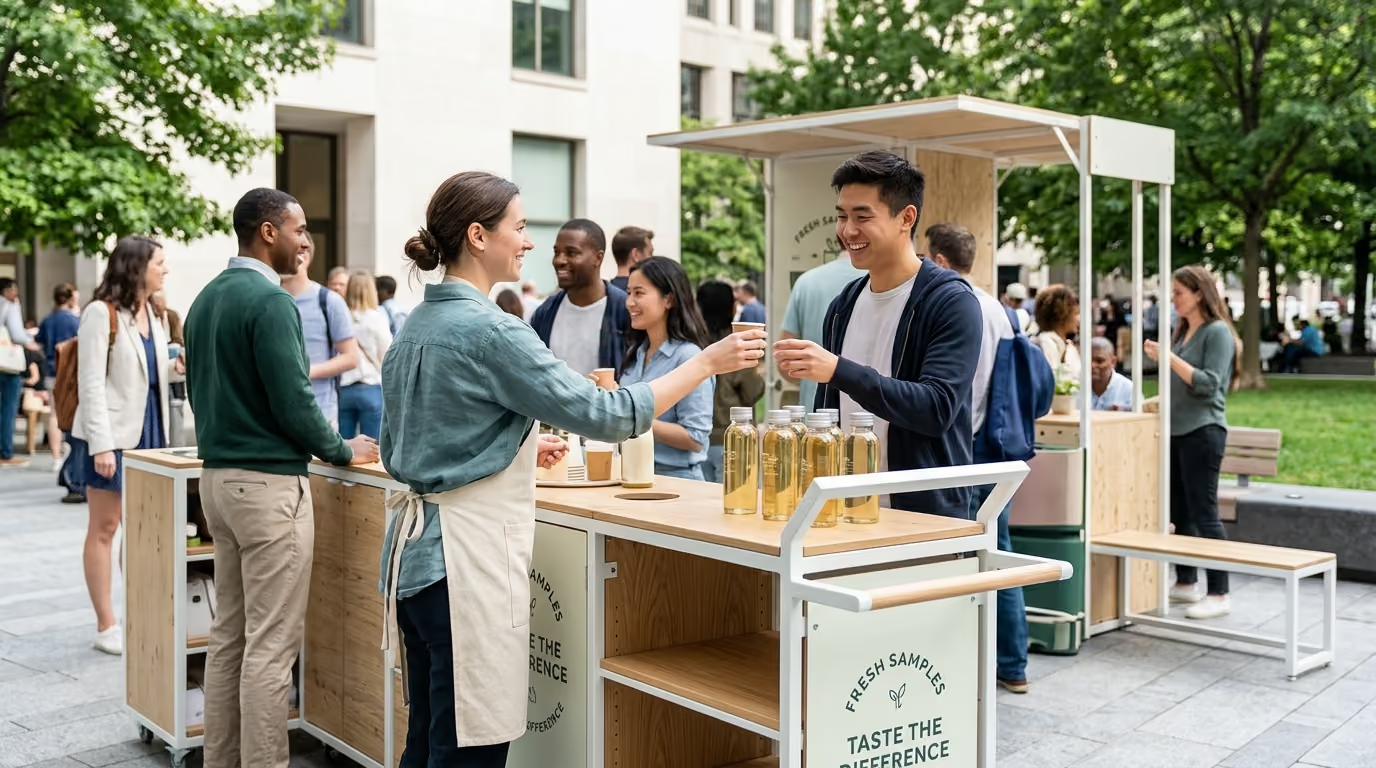
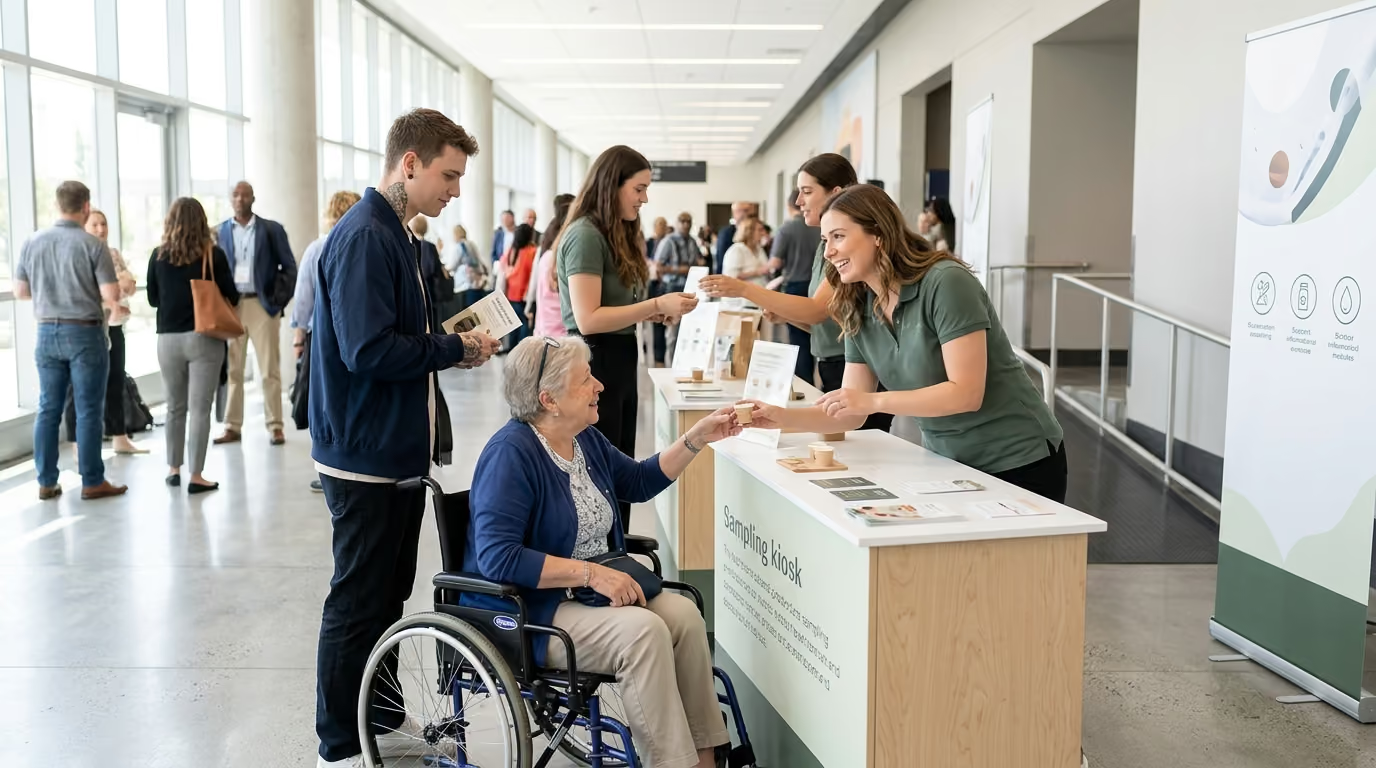
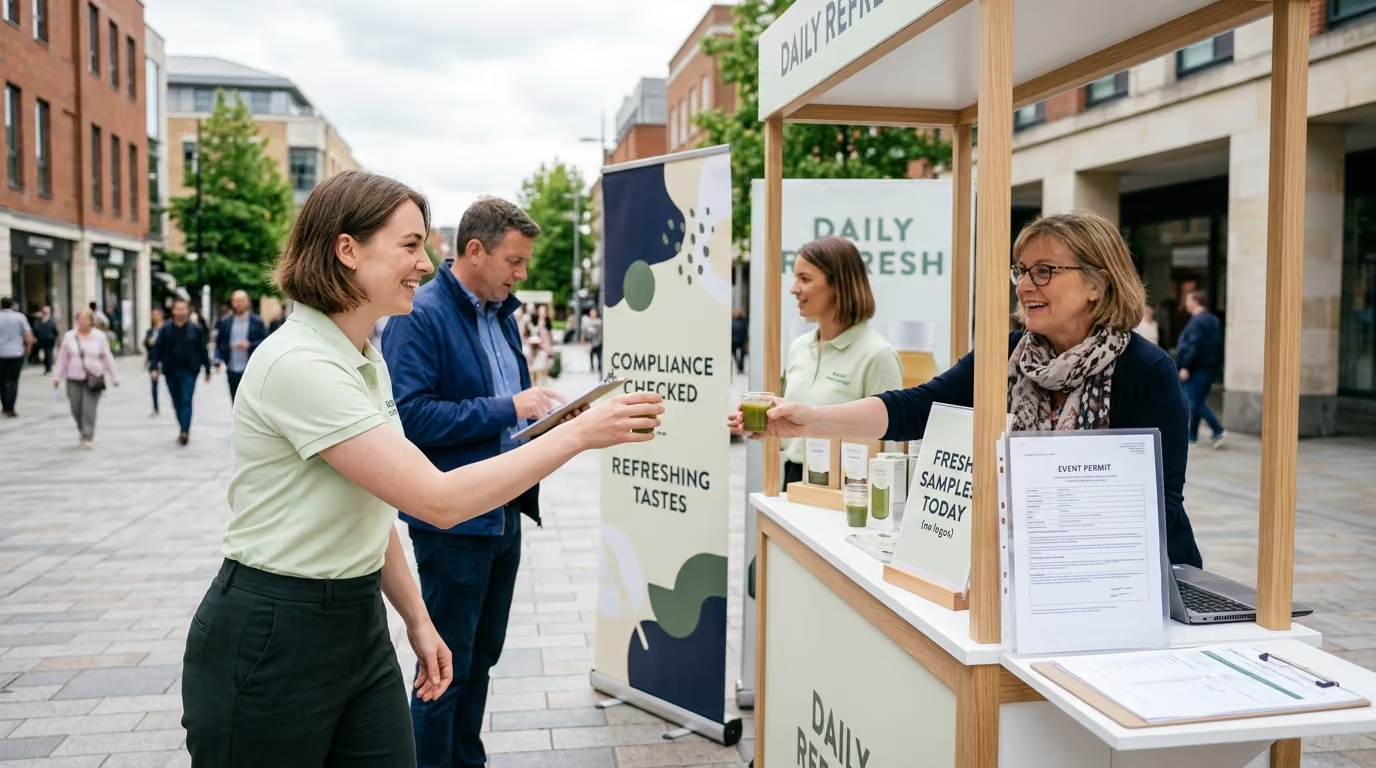
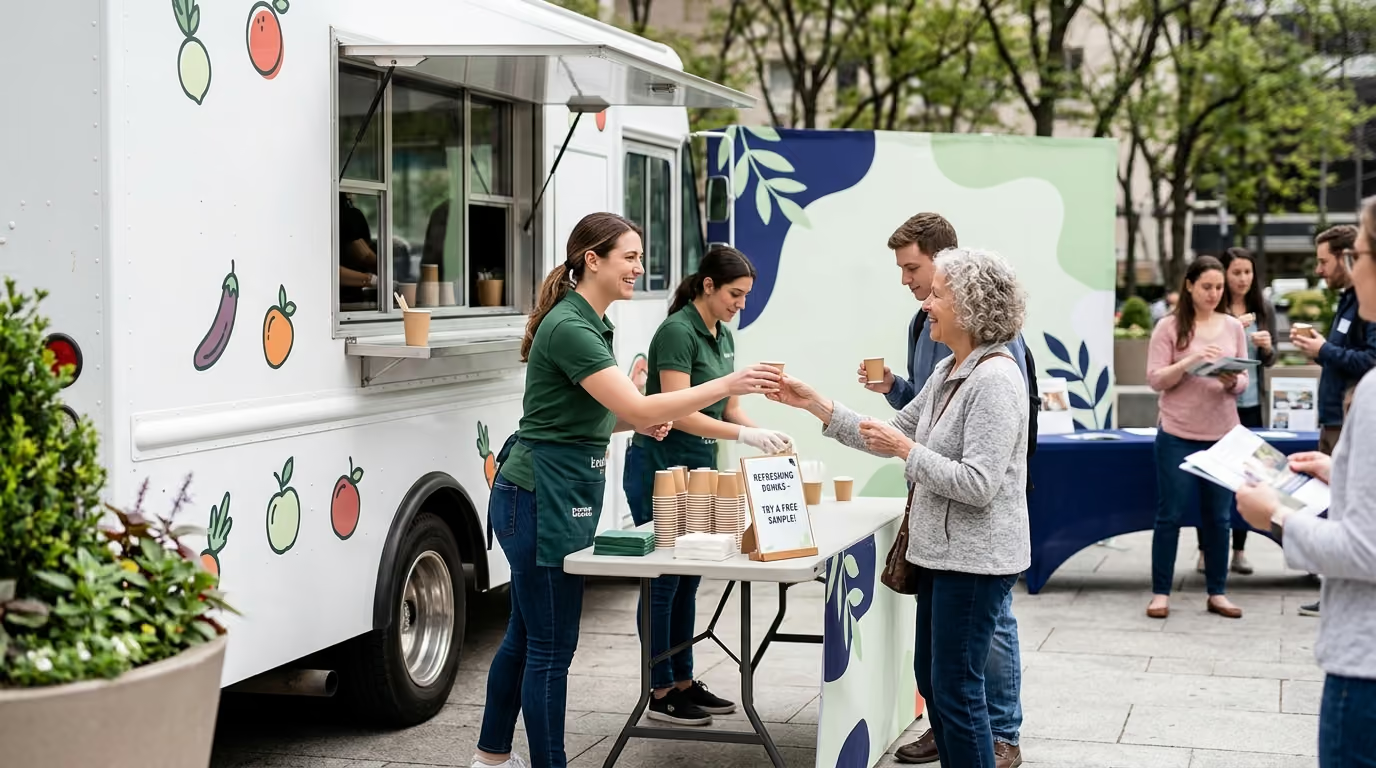
Brand marketers frequently search for ways to scale mobile sampling across dozens of cities without spending millions on custom builds or boring consumers with cookie-cutter footprints. Building a modular activation system solves this challenge by standardizing core operational infrastructure while giving field teams tactical flexibility to fit local markets.
Every marketing executive eventually faces the live event reality check. You invest half your annual experiential budget into a custom mobile sampling vehicle. It looks stunning in the 3D renders. The vehicle arrives in downtown Chicago on a Tuesday morning, only to find the designated footprint is fifteen feet shorter than the permit specified. The city denies street access, the generator violates local sound ordinances, and a sudden cold snap cuts pedestrian foot traffic in half. Two days later in Atlanta, the exact same vehicle bakes in ninety-degree heat while two understaffed brand ambassadors face a line of two hundred thirsty consumers. Half the queue abandons the wait before receiving a sample, while the staff runs out of chilled product within forty minutes.
These operational breakdowns happen when field programs rely on rigid, monolithic designs. Experiential leaders often believe they must choose between two flawed paths. The first is building fully bespoke activations for every individual stop, which drains budgets and creates logistical nightmares. The second is forcing an identical, inflexible footprint into every market, which alienates local audiences and breaks under variable field conditions.
Modular activation design eliminates this false choice. By breaking mobile sampling campaigns into standardized, interchangeable modules, brands achieve operational discipline while adapting to local context.
The Operational Reality of Multi-City Sampling
Field marketing takes place in unpredictable physical environments. When a brand moves an activation across ten, twenty, or fifty markets, every venue presents unique physical constraints. A transit plaza in Boston requires a tight footprint with rapid pedestrian flow. A weekend music festival in Austin demands shaded lounge areas, extended dwell times, and robust power systems. A supermarket parking lot activation in suburban Ohio requires direct integration with retail store managers and immediate purchase incentives.
When field teams encounter unexpected venue limits with a rigid activation footprint, execution suffers instantly:
- Fixed Rigidity
- Site Constraint
- Operational Bottleneck
- Lost Conversion
A rigid footprint forces field teams to improvise unsafely on site. Staff members squeeze oversized counters into narrow pedestrian pathways. They run extension cords across wet sidewalks when power drops are unavailable. They skip mandatory brand talking points because lines grow unmanageable. They abandon data collection because the digital capture stations are blocked by excess product inventory.
These operational compromises destroy campaign Return on Investment (ROI). When consumers experience long wait times, warm product samples, flustered staff, or irrelevant messaging, brand perception drops immediately. Research on retail sampling environments confirms that execution quality directly influences purchase conversion. If the sampling interaction feels disorganized or hurried, consumers walk away without absorbing the core value proposition.
Standardization should never mean forcing an identical physical build into every neighborhood. True operational excellence requires standardizing the underlying systems while allowing the customer-facing expression to flex. Marketing operators need an activation architecture that can expand, contract, and reconfigure based on site surveys, weather alerts, footfall velocity, and regional demographics.
To solve this, operators must rethink their deployment strategy by reviewing how to choose the right activation model for variable physical environments.
The Core Principles of Modular Activation Systems
A modular activation is a live marketing campaign built from discrete, interchangeable components governed by a unified operational system. Rather than fabricating a single monolithic asset, the brand engineers a toolkit of physical fixtures, staffing configurations, content elements, and logistics protocols. These pieces combine seamlessly across diverse environments.
- MODULAR ACTIVATION SYSTEM
- CORE (Fixed) CONFIGURABLE (Flex) LOCAL (Adapted)
- Food Safety - Footprint (10x10 / 20x20) - Regional Voice
- Brand Identity - Staffing Capacity Levels - Retail Pathways
- Data Capture - Weather Tiers (Rain/Heat) - Local Occasions
Academic research on product architecture published in industrial engineering journals highlights that modularity delivers clear structural advantages. By establishing standard components with defined interfaces, organizations increase variety while reducing manufacturing complexity, lead times, and maintenance costs.
In physical brand marketing, modularity operates across four fundamental interfaces:
Physical Interfaces
Every structural component must share standardized connection points, dimensions, and utility requirements. Sampling counters must function whether bolted inside a mobile trailer, secured under a ten-by-ten canopy, or wheeled into a retail vestibule on heavy-duty casters. Electrical systems should utilize universal plug-and-play connections compatible with standard commercial generators, shore power, or portable lithium battery banks. Display fixtures must pack into standardized road cases that fit through standard commercial doorways and freight elevators.
Operational Interfaces
Standard operating procedures govern how modules combine and transition during live field execution. Setup sequences, sanitation protocols, and restocking workflows must remain identical regardless of the overall footprint size. A brand ambassador trained in Dallas must execute the exact same product preparation, inventory tracking, and incident escalation protocols when deployed in Denver.
Brand Interfaces
Visual hierarchy, core positioning claims, typography rules, and trademark clear spaces remain non-negotiable. Standardizing brand assets protects visual integrity across markets. It prevents local fabrication vendors or regional field staff from altering logos or messaging.
Data Interfaces
Standardized reporting architectures ensure cross-market comparability. Every activation footprint, from a two-person street intercept team to a massive festival footprint, must feed data into the same reporting pipeline. Standard metrics include event identifiers, ambient weather conditions, exact inventory counts, sample acceptance rates, direct opt-ins, and retail redemption scans.
Developing these clear interfaces transforms field marketing from a series of stressful one-off events into a predictable distribution engine. To explore the mechanics of scaling multi-market campaigns, review our analysis on scaling experiential activations without losing local relevance.
The Fixed, Flexible, and Local Strategic Framework
To build a modular activation system, brand leaders must categorize every program element into one of three distinct layers: Fixed, Flexible, or Local.
- THE THREE-LAYER ACTIVATION MODEL
- FIXED
- FLEXIBLE
- LOCAL
The Fixed Layer
The Fixed Layer protects brand equity, legal compliance, consumer safety, and reporting integrity. These components are universal and non-negotiable across every market.
- Food Safety and Hygiene Standards: Compliance with the U.S. Food and Drug Administration (FDA) Food Code standards for temporary food establishments is mandatory. Requirements include commercial-grade sanitation equipment, certified holding temperatures, allergen disclosures, and handwashing stations.
- Approved Product Claims: Core functional benefits, regulatory disclaimers, and legal disclosures cannot be altered by local staff.
- Accessibility Requirements: Compliance with the Americans with Disabilities Act (ADA) guidelines for temporary structures. This includes accessible counter heights, clear turning radii, ramp access, and unobstructed pathways.
- Baseline Data Architecture: Standardized daily reporting fields, lead capture consent workflows, and privacy compliance processes.
- Staff Training Standards: Baseline operational certifications, product knowledge testing, and customer service standards required for all personnel.
The Flexible Layer
The Flexible Layer adapts the physical and operational footprint to match site constraints, expected throughput, and environmental factors.
- Footprint Configurations: Pre-engineered footprints ranging from compact pedestrian kits (table and umbrella) to mid-size pop-ups (10x10 or 10x20 canopies) to full mobile vehicle builds.
- Staffing Capacity Ladders: Dynamic team sizing that expands or contracts based on expected footfall without altering the core customer journey.
- Inventory and Temperature Systems: Interchangeable cooling, freezing, or warming setups adapted to expected volume and ambient temperatures.
- Weather Mitigation Equipment: Integrated shade canopies, commercial misting systems, weighted wind walls, and waterproof equipment covers.
The Local Layer
The Local Layer tailors the consumer experience to regional culture, consumer habits, and local retail realities.
- Occasion-Based Messaging: Framing the sampling trial around regional routines. For example, positioning a cold-brew coffee as a morning transit boost in New York City versus an afternoon outdoor refresh in San Diego.
- Retail Path-to-Purchase: Directing consumers to specific regional retail partners carrying the inventory, supported by geo-targeted digital coupons.
- Community Partnerships: Collaborating with local fitness studios, artists, or community organizations to build authentic trust.
- Regional Dialect and Tone: Training field staff to communicate in the natural conversational rhythm of the market without modifying core product facts.
Our team structures every campaign around this tripartite model. In our experience managing high-volume retail demos and product sampling tours, programs that define these boundaries clearly avoid operational bottlenecks.
- THE 7-LAYER SYSTEM STACK
- 1 Strategic Proposition Core Message & Objective
- 2 Experience Flow 8-Stage Consumer Journey
- 3 Physical Footprint Compact / Standard / Max
- 4 Inventory Ladder Multi-Tier Supply Plan
- 5 People Architecture Capacity-Based Roles
- 6 Content Library Modular Script Matrix
- 7 Measurement System Standardized KPI Engine
Adapting to Field Conditions and Venue Archetypes
A national sampling tour encounters drastically different operational environments. Rather than planning each venue from scratch, field leaders should group stops into distinct venue archetypes. Each archetype has a pre-determined modular configuration.
- VENUE ARCHETYPE PRIMARY CHALLENGE MODULAR CONFIGURATION
- Urban Pedestrian Tight space, high run Compact Rapid Transit
- Retail Parking Lot Conversion proximity Retail Velocity Hub
- Large Festival Long dwell, high line High-Capacity Compound
- College Campus Peer-to-peer flow Interactive Lounge
Urban Transit and Dense Pedestrian Corridors
Urban centers offer massive footfall but tight spatial footprints, strict permitting rules, and fast-moving consumers.
- Operational Priorities: Rapid throughput, minimal physical footprint, and zero queue obstruction.
- Modular Solution: Deploy compact mobile sampling carts with self-contained power and integrated refrigeration. Use a streamlined two-stage customer journey: a five-second greeting and trial offer, followed by a scannable retail redemption card.
- Staffing: Three-person team consisting of one staging lead and two roaming brand educators.
Retailer and Grocery Storefronts
Supermarket parking lot activations bridge the gap between initial product trial and immediate verified register checkout.
- Operational Priorities: Clear retail call-to-action, aisle-location education, and store manager coordination.
- Modular Solution: Deploy a ten-by-ten branded pop-up structure positioned along primary shopper entry paths. Display clear retail packaging visuals, hand out immediate-use register coupons, and track real-time shelf inventory.
- Staffing: Site lead coordinating stock replenishment inside the store, supported by two sampling specialists outside.
Music, Sports, and Cultural Festivals
Festivals offer high dwell times, high consumer enthusiasm, and intense peak footfall periods.
- Operational Priorities: Crowd management, heat mitigation, sustained line movement, and extended brand immersion.
- Modular Solution: Deploy a complete vehicle or expanded twenty-by-twenty compound. Include multi-head service counters, dedicated queue lanes, interactive social photo backdrops, and shaded lounge seating.
- Staffing: Six to eight specialists, including dedicated queue managers, product educators, stock runners, and a safety lead.
Weather Resilience Protocols
Weather should never be treated as an unexpected emergency. It must be built directly into the modular configuration matrix.
- DYNAMIC WEATHER PROTOCOLS
- GREEN MODE Normal outdoor operations across standard footprint
- AMBER MODE Deploy wind walls, misting fans, or pop-up canopies
- RED MODE Transition to indoor backup or pause for safety
- Green Mode (Standard Conditions): Standard outdoor footprint with baseline shade and display elements.
- Amber Mode (Moderate Rain, Wind, or Heat): Deploy heavy-duty canopy ballast weights (minimum 100 lbs per leg), drop waterproof clear sidewalls, activate commercial misting fans, and implement mandatory fifteen-minute staff cooling rotations.
- Red Mode (Severe Storms, High Heat Index, or Freezing Conditions): Transition immediately to pre-approved indoor fallback locations or close physical structures to protect consumer and staff safety.
For comprehensive operational safety frameworks, consult our field manual on weather-proofing mobile sampling activations.
Capacity Modeling and Field Staffing Architectures
Understaffing creates long lines, flustered workers, and poor hygiene. Overstaffing inflates labor budgets and leads to crowded, unengaged personnel. Modular staffing replaces static headcounts with a mathematical capacity model based on throughput goals.
- Throughput (Consumers / Hour) Active Stations x (3600 / Interaction Time in Seconds)
If an activation aims to distribute four hundred samples per hour and a high-touch trial interaction takes forty-five seconds, simple math defines the requirement:
- One station delivers eighty interactions per hour at maximum theoretical efficiency.
- Accounting for restocking, trash disposal, and queue transitions, practical efficiency sits near seventy-five percent (sixty samples per station per hour).
- Serving four hundred consumers per hour requires seven parallel service stations.
- MODULAR STAFF CAPACITY LADDERS
- TIER 1 (Lean) 1 Site Lead 1 Specialist (Combined roles)
- TIER 2 (Standard) 1 Lead 2 Specialists 1 Stock Runner
- TIER 3 (Peak) 1 Lead 4 Specialists 2 Runners 1 Queue Mgr
Role-Based Modular Architecture
Instead of hiring generic staff, assign distinct operational roles with explicit responsibilities:
- Site Operations Lead: Manages venue relations, enforces safety protocols, monitors throughput, tracks daily inventory, and logs operational metrics.
- Product Educator: Engages consumers, presents key claims naturally, answers dietary questions, and delivers clean product trials.
- Queue and Traffic Controller: Greets passing foot traffic, manages line formation, answers baseline questions, and maintains accessible pathways.
- Logistics and Restocking Runner: Monitors temperature logs, manages trash stations, sanitizes preparation surfaces, and restocks service counters.
- Conversion and Data Specialist: Assists consumers with QR code redemptions, guides digital lead capture, and distributes retail coupons.
In compact configurations, single operators combine related roles. In peak festival footprints, roles split to maintain operational flow. To refine your hiring and execution profiles, review the complete guide to staffing mobile sampling programs.
Execution Playbook for Field Operations
Deploying a modular activation program across multiple cities requires disciplined execution. Follow this step-by-step process to plan and run your tour.
- FIVE-PHASE DEPLOYMENT PLAYBOOK
- 1. Blueprint
- 2. Mapping
- 3. Training
- 4. Execution
- 5. Learning
Phase 1: Blueprint and Interface Engineering
- Establish universal dimensions and weight limits for all physical fixtures.
- Confirm all electrical components run on standard 120V 15A circuits or commercial lithium batteries.
- Specify standardized transport packing cases to protect assets during freight shipping.
- Design three official footprint layouts: Compact (under 100 sq ft), Standard (10x10 to 10x20), and Expanded (20x20+).
- Secure master legal approvals for all consumer-facing product claims and disclaimers.
Phase 2: Site Survey and Archetype Assignment
- Conduct rigorous digital and on-site surveys for every tour venue at least thirty days before arrival.
- Measure precise footprint dimensions, ground slope, surface material, and overhead clearances.
- Verify access to dedicated electrical drops, potable water connections, and secure waste disposal.
- Review local municipal permit requirements, park board rules, and health department temporary food rules.
- Map the nearest participating retail grocery stores within a three-mile radius.
Phase 3: Field Training and Certification
- Deploy digital training modules covering brand history, active ingredients, and customer service standards.
- Conduct mandatory hands-on sanitation and temperature management training.
- Train brand ambassadors to use dynamic scripting variations based on consumer context.
- Run simulated operational stress tests to practice switching between footprint tiers and weather modes.
- Implement strict incident escalation protocols for health, safety, and operational issues.
Phase 4: Live Event Run-of-Show and Dynamic Triage
- Complete pre-activation site checks two hours before public launch using digital checklists.
- Verify product holding temperatures with calibrated digital thermometers and log baseline numbers.
- Monitor queue dwell times continuously throughout operational hours.
- If queues exceed five minutes, immediately activate the fast-pass sampling lane.
- If inventory drops below twenty percent of target, switch to the priority single-SKU sampling mode.
Phase 5: Daily Reconciliation and Continuous Improvement
- Count remaining inventory and log total distributed units within one hour of site closure.
- Sanitize and pack all modular fixtures into designated road cases using standardized checklists.
- Upload lead capture records, consumer interaction counts, and weather logs to the central dashboard.
- Submit daily incident reports detailing any equipment failures, permit challenges, or safety issues.
- Conduct weekly operational reviews with field leads to refine modular fixtures and workflows.
For deeper operational planning tools, review our contingency planning frameworks for bulletproof field logistics.
Measurement Architectures and Conversion Verification
Evaluating a mobile sampling campaign solely by counting handed-out units is a major operational mistake. A high distribution number often masks poor consumer engagement, rushed messaging, or weak retail conversion.
A rigorous measurement architecture tracks four distinct performance tiers:
- FOUR-TIER MEASUREMENT MODEL
- OUTPUT Gross samples, interactions, operating hours
- EXPERIENCE Average dwell time, comprehension, queue drop-off
- OUTCOME Store register scan lift, digital coupon claims
- EFFICIENCY Cost per qualified lead, cost per verified trial
1. Output Metrics (Activity Volume)
- Total Samples Distributed: Gross count of physical product units delivered to qualified consumers.
- Consumer Engagements: Number of substantive, two-way verbal interactions completed by brand ambassadors.
- Operating Uptime: Total hours the activation operated in full compliance with brand standards.
2. Experience Metrics (Engagement Quality)
- Average Dwell Time: Duration of active consumer engagement inside the activation space.
- Message Recall Score: Percentage of surveyed consumers who correctly identify the product's primary functional benefit.
- Queue Abandonment Rate: Percentage of consumers who enter a line but leave before receiving a sample.
3. Outcome Metrics (Commercial Impact)
- Direct Retail Redemption: Verified scans of digital or physical coupons at local participating retailers.
- Geographic Sales Lift: Scanner data comparing sales volume in target activation zones against matched control markets. Academic research published in the Journal of Retailing analyzing store-level scanner datasets confirms that in-store and retail-adjacent sampling produces both immediate day-of-event sales lift and sustained repurchase volume over multiple weeks.
- Opt-in Lead Generation: Valid contact records collected with explicit consent for post-event digital nurturing.
4. Efficiency Metrics (Cost Optimization)
- Cost Per Completed Experience: Total activation budget divided by high-touch, qualified interactions.
- Cost Per Verified Trial: Total operational expense divided by confirmed product trials.
- Return on Investment: Incremental gross margin generated from sustained retail sales lift compared against total campaign cost. Industry benchmarking reports from EventTrack indicate that over ninety percent of brand marketers recognize experiential activations as a primary driver of sustained customer pipeline and brand loyalty.
- KEY LEAD AND LAG METRICS SCORECARD
- LEAD METRICS Queue velocity, interaction time, opt-in rate
- LAG METRICS 30-day retail scan lift, repeat purchases, ROI
Field Application: A National CPG Sampling Case Study
A fast-growing functional tea brand faced a critical scaling challenge. After securing national distribution across major grocery and natural food retailers, the marketing team needed to drive trial and retail velocity across twenty-four distinct metropolitan markets.
Their initial pilot campaign struggled. The brand deployed an identical, oversized mobile vehicle in every market. The heavy rig faced severe municipal parking restrictions in downtown Chicago and Boston. It was forced to set up in remote parking lots with low footfall, yielding a high cost per sample. Meanwhile, activations at suburban retail centers overwhelmed the two-person staff, causing forty-percent line abandonment.
- CASE STUDY: OPERATIONAL RECONFIGURATION
- METRIC PILOT (Rigid Rig) MODULAR SYSTEM
- Samples Delivered 42,000 168,000
- Cost Per Sample $8.40 $2.10
- Same-Day Retail Lift 12% 48%
- Abandonment Rate 38% Under 4%
The Modular Redesign
Our team transitioned the program to a flexible modular system built around three interchangeable footprint tiers:
- Urban Pedestrian Kit: A custom-fabricated electric cargo bike equipped with insulated storage, rapid-pour draft taps, and an integrated shade umbrella. This configuration operated smoothly on busy downtown sidewalks, transit hubs, and corporate office plazas.
- Retail Velocity Pop-Up: A branded ten-by-ten canopy kit with folding service bars, direct-swap refrigeration cases, and prominent retail signage indicating the exact grocery aisle location.
- Festival Immersion Compound: An expanded twenty-by-twenty footprint utilizing the mobile vehicle as a visual anchor, flanked by two rapid-service sampling counters, outdoor furniture, and a shade awning.
- Master Brand Core
- Urban Footprint: Cargo Trike (High Velocity / Transit Focus)
- Retail Footprint: 10x10 Canopy (Store Aisle Routing / Coupons)
- Festival Footprint: 20x20 Compound (Dwell Lounge / Full Line)
The Operational Results
The modular approach transformed the brand's field performance:
- Footprint Versatility: The field team activated ninety-six sites over twelve weeks without a single permitting cancellation.
- Throughput Efficiency: The fast-pour draft system dropped interaction times from seventy seconds to twenty seconds during peak hours. This cut line abandonment to under four percent.
- Commercial Conversion: Retail-adjacent pop-ups included geo-targeted coupons redeemable at nearby grocery stores. Scanner data revealed a forty-eight percent sales lift in participating retail accounts during activation weeks, with sustained repeat sales over the following quarter.
- Cost Reduction: Overall cost per delivered sample dropped by seventy-five percent compared to the pilot program.
We specialize in creating retail demos, product sampling programs, and roadshows that bring brands face to face with their audiences. Each program is designed to drive trial, build consumer relationships, and accelerate retail velocity across multiple locations.
Next Steps for Field Marketing Leaders
Transforming your mobile sampling tours into scalable, modular operations starts with disciplined planning. Apply this checklist this week to audit your field strategy:
- [ ] Audit Existing Field Hardware: Catalog all current trailers, canopies, counters, and digital gear. Identify which assets are rigid and which can be unbundled into modular components.
- [ ] Classify Program Elements into Three Layers: Document your brand's non-negotiable Fixed standards, your Flexible physical configurations, and your approved Local adaptation guidelines.
- [ ] Establish Defined Interface Standards: Set universal rules for maximum crate dimensions, standard electrical loads, and modular counter mounting points.
- [ ] Develop a Three-Tier Weather and Inventory Matrix: Draft explicit Green, Amber, and Red operational protocols for wind, heat, rain, and inventory changes.
- [ ] Build a Capacity-Based Staffing Model: Calculate required service stations and role descriptions based on realistic interaction times and target hourly throughput.
- [ ] Align Reporting Across All Configurations: Create a unified reporting scorecard tracking output, experience quality, retail outcomes, and cost efficiency.
Building a scalable sampling tour is like designing an operating system. The core interfaces, safeguards, and measurement rules remain rock-solid. At the same time, the physical expression flexes effortlessly to meet consumers in their everyday environments. Modularity delivers the speed, quality, and economic efficiency required to turn live brand experiences into measurable business growth.
Sources
- Modular Mechanism Design Optimization in Large-Scale Systems with Manufacturing Cost Considerations | International Journal of Precision Engineering and Manufacturing-Green Technology | Springer Nature Link
- Mobile Marketing Tours: Planning, Routing & Staffing a Multi-City Brand Tour | Street Teams Co
- Modular Product Design For Mass Customization