Robbie Thain
Founder, CEO

Six strategic feedback stages help CPG brands transform live shopper interactions and sensory objections into actionable product, packaging.

Most Consumer Packaged Goods (CPG) brands treat retail sampling as a temporary sales accelerator designed to clear inventory off the shelf. Treating sampling solely as a distribution tactic wastes the most cost-effective live research environment a brand will ever run. When a consumer tastes a product in an aisle, they provide immediate proof of how your formulation, packaging hierarchy, pricing, and messaging perform under real market pressure. This resource provides a systematic framework for capturing shopper conversations, objections, and behaviors to refine product positioning, guide formulation decisions, and increase retail sell-through.
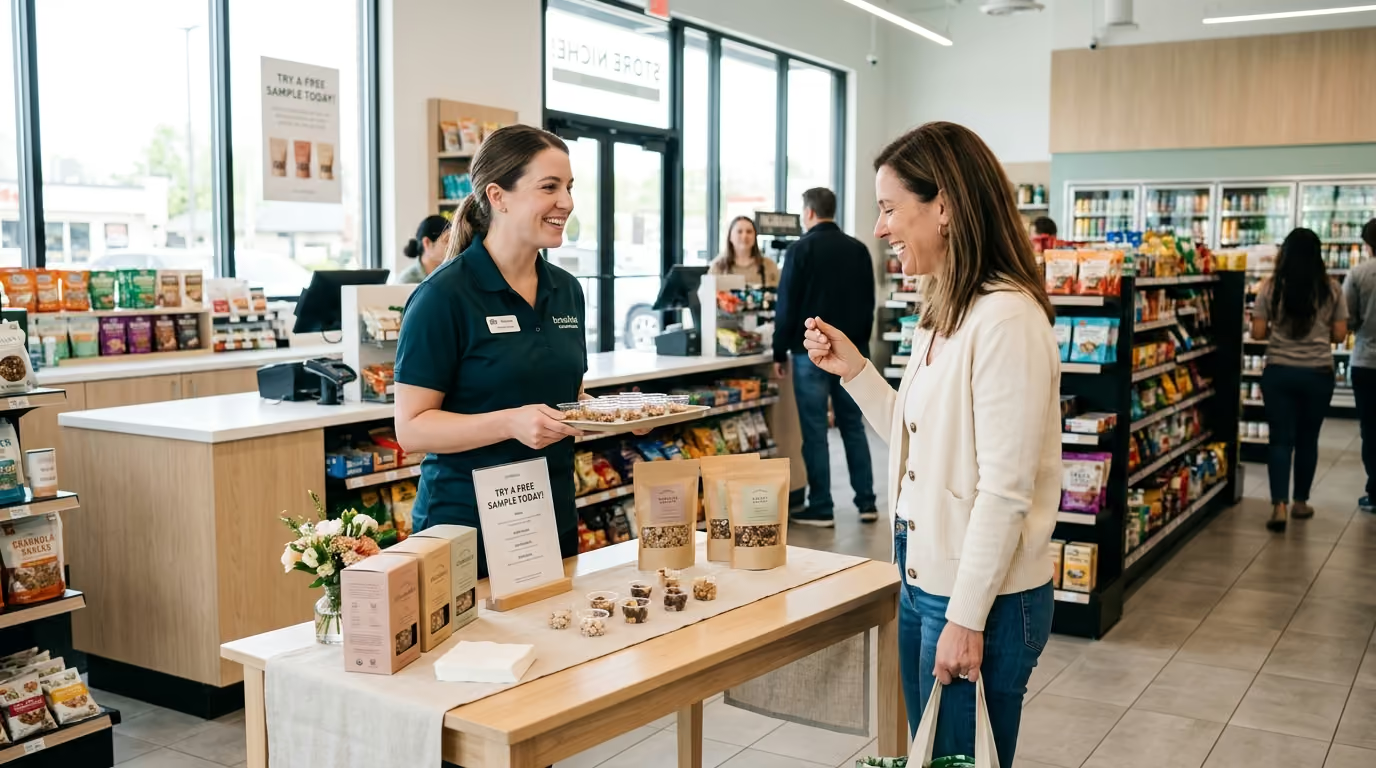
Live sampling environments are messy, fast-moving, and full of distraction. On a crowded trade floor or in a packed grocery aisle, shoppers make split-second choices amid screaming children, rolling carts, competing displays, and sensory overload. Brand ambassadors frequently stand behind folding tables handing out bite-sized cups while tallying simple hash marks on paper clipboards. At the end of a six-hour shift, brand managers receive generic summaries stating that hundreds of people loved the flavor.
That superficial feedback hides the real operational truth. A consumer might smile, accept a sample cup, say the product tastes amazing, and then walk directly past the retail endcap without picking up a package. Field teams often mistake polite social behavior for actual commercial demand. Research into consumer response bias shows that survey subjects regularly over-report positive sentiment due to social desirability pressures. When brand teams accept politeness as commercial validation, they make expensive errors in production, packaging, and media spend.
The trade show floor presents an identical challenge with higher financial stakes. Industry buyers and retail category managers will taste a sample at an expo booth, offer casual praise, and never submit a purchase order. Without an objective framework to decode why someone stops, what they ask, and where their hesitation lies, brands leave the venue with empty compliments instead of actionable intelligence. Field teams must transform these noisy interactions into structured, repeatable data points that expose friction across the entire path to purchase.
Extracting actionable product and marketing intelligence requires a structured framework that separates casual sentiment from commercial intent. When brands deploy disciplined field protocols, live sampling functions like an agile sensory and marketing laboratory. A complete feedback architecture contains six distinct operational stages.
Field research fails when teams collect vague commentary without knowing which internal decision that data must inform. Before deploying ambassadors to grocery aisles or trade events, brand managers must establish the primary hypothesis under review.
Clarify the specific operational question before designing your field survey:
When your team establishes clear decision criteria, ambassadors know exactly which behavioral signals to track. If the business decision centers on packaging clarity, staff will monitor whether shoppers read the front panel before tasting. If the priority is flavor acceptance, staff will record spontaneous reactions to acidity, sweetness, and aftertaste.
A consumer can thoroughly enjoy the taste of a sample yet refuse to buy the product because they do not understand what it does or why it costs more than legacy alternatives. Field teams must separate consumer reactions into four distinct analytical layers.
Sensory studies in food science confirm that overall product liking and purchase intent stem from specific ingredient interactions rather than generalized satisfaction. A customer might object to a chalky finish in a high-protein beverage while loving the chocolate flavor profile. If your field reporting groups those reactions into a single score, your research and development team will not know whether to change the sweetener system, adjust the emulsifier, or alter the base protein isolate.
The order of questions during a live interaction changes the integrity of your data. Brand ambassadors frequently commit the error of leading the witness by reciting marketing claims before the consumer has even taken a bite. When an ambassador opens with a detailed speech about cold-pressed organic ingredients, the consumer feels pressured to confirm those benefits.
Field teams must capture spontaneous reactions before introducing structured prompts. The ambassador should hand over the sample with a neutral invitation. Once the shopper tastes the product, the ambassador asks an open question such as: "What do you notice first?"
After capturing the shopper's unassisted words, the ambassador introduces structured prompts regarding claims, price, and usage occasions. A wide disparity between spontaneous feedback and prompted feedback reveals critical positioning gaps. If shoppers praise the refreshing taste unassisted but only recognize the high-fiber benefit after the ambassador points to the badge, your packaging hierarchy is failing to do its job on the shelf.
Raw conversational notes are difficult to aggregate across dozens of retail markets without a standardized taxonomy. Field teams must translate verbal remarks into structured codes during post-shift logging.
Standardize field feedback across these specific analytical buckets:
Assigning primary and secondary category tags to every comment allows marketing teams to filter data by region, retail chain, and product variant. You can rapidly identify whether a texture objection is isolated to a single distribution lot or represents a universal consumer barrier.
Verbal sentiment must always be verified against physical actions. A shopper who claims they will definitely buy the product might walk away empty-handed when they see the shelf price. To establish true commercial validation, link conversational responses to observable retail behaviors.
In our experience across national activations, linking qualitative feedback directly to scan data separates high-performing brands from those burning capital on vanity metrics. A VP of Marketing in the CPG beverage category told us: "Robbie, your leadership and vision turned our campaign into something truly special. The Makai team brought our new drink to life with energy, creativity, and flawless execution. Thanks to you, our brand isn't just tasted, it's remembered." Our team's approach transformed their product launch into a memorable brand experience by tying immediate trial feedback directly to register velocity.
Look at how field teams bridge retail demonstrations to sales lift by tracking the ratio of samples distributed to units placed in the cart. Research published in the Journal of Retailing demonstrates that in-store sampling produces both immediate baseline lift and sustained long-term sales effects. However, these effects vary based on store footprint and repeat exposure. Tracking immediate purchase conversion alongside conversational objections helps you determine whether non-buyers walked away due to flavor rejection, price shock, or poor shelf placement.
Data collection provides zero commercial value unless it leads directly to business decisions. Every qualitative trend identified on the retail floor must culminate in an action statement assigned to a specific department head.
Format internal recommendations using a strict logic model:
Because [observed shopper evidence], we will [operational intervention] for [target audience or retail channel], measured by [performance metric].
If shoppers repeatedly describe a clean energy drink as a refreshing afternoon treat rather than a morning coffee replacement, marketing should pivot retail messaging toward the 2:00 PM slump. If consumers love the flavor but cannot locate the product in the natural snack aisle, shopper marketing must negotiate secondary placement near checkout coolers.
Gathering high-fidelity shopper feedback during active retail demonstrations requires operational discipline and seamless staff execution. Ambassadors must balance high-volume distribution with precise data capture. Use this step-by-step execution playbook to standardize data collection across all field teams.
Consumer objections on the retail floor are frequently misunderstood. When a shopper says a product is too expensive, brand managers often assume they must lower their wholesale price. In reality, price resistance often signals that the packaging failed to communicate the product's premium value proposition. Field teams must diagnose the root cause behind every major objection category.
Sensory objections require careful investigation before initiating expensive product reformulations. When consumers report that a snack is too dry or a beverage has a bitter finish, analyze the preparation and serving variables.
Ask diagnostic questions to isolate formulation issues from execution errors:
In functional foods, unfamiliar textures like plant-protein graininess or mushroom-extract earthiness can cause initial hesitation. If consumer liking improves significantly on the second taste, the brand does not need to reformulate. Instead, the brand needs an educational message that sets accurate flavor expectations before the first bite.
Shoppers spend an average of only nineteen seconds making a brand selection in a grocery aisle, according to retail research from NIQ. If your packaging design requires a lengthy explanation from a brand ambassador to be understood, it will fail on an unassisted retail shelf.
Evaluating packaging comprehension on the retail floor reveals whether visual hierarchies work under pressure. Studies from the Food Marketing Institute show that while 93% of consumers value transparency in food production and ingredients, nearly two-thirds feel confused by complex package labels.
Watch how consumers interact with the box or bottle during a demo. If they rotate the container repeatedly looking for sugar content or protein levels, your front-of-pack layout is cluttered. Successful package redesigns deliver an average 4% volume lift across competitive grocery categories. Use retail sampling activations to test whether shoppers can identify your brand name, core benefit, and product flavor from three feet away in under five seconds.
A price objection is rarely a simple mathematical complaint. It indicates an imbalance between the perceived value of the experience and the number on the price tag. When a consumer declines a $4.99 functional beverage after stating they loved the taste, probe deeper into their spending habits.
Identify the underlying driver of price resistance:
If consumers compare your cold-pressed juice to shelf-stable concentrate, your messaging has failed to establish the quality of your processing methods. Adjusting your retail communication to highlight high-pressure processing or raw ingredient sourcing can restore value parity without cutting your margin.
Internal marketing teams often write packaging copy using corporate jargon that fails to resonate with everyday shoppers. Brands use clinical descriptions like "adaptogenic botanical infusion" while real consumers simply say "a healthy drink that helps me unwind." Listening to unassisted shopper conversations during sampling activations bridges the gap between brand positioning and consumer reality.
Spontaneous shopper commentary provides the exact vocabulary brands should use in their digital advertising, retail point-of-sale displays, and packaging headlines. When brand teams analyze hundreds of live conversations, clear linguistic patterns emerge.
Notice how consumers describe the functional outcome of your product:
Adopting the consumer's natural vocabulary removes cognitive friction across all marketing touchpoints. When your social media ads and retail shelf talkers mirror the exact phrasing real people use at the demo table, message comprehension and conversion rates rise immediately.
A message ladder connects physical ingredients to emotional payoffs. Sampling conversations reveal exactly where a consumer's logic breaks down as they evaluate your product claims.
Build your message hierarchy using five interconnected steps:
If consumers understand that your protein bar has twenty grams of protein (Feature) and keeps them full (Functional Benefit) during the afternoon slump (Commercial Context), but still hesitate to buy, your Proof Point is missing. Adding a visible third-party certification or highlighting real food ingredients provides the credibility required to close the sale.
Understanding these communication layers is foundational to the science of better product sampling. Testing different conversational scripts in the aisle shows your marketing team which message ladder delivers the highest conversion before committing to expensive retail packaging updates.
Executing a high-performing retail sampling campaign requires tracking rigorous quantitative indicators alongside qualitative feedback. Brands must measure both lead indicators during the activation and lag metrics across multi-week sales cycles to demonstrate true Return on Investment (ROI).
Lead metrics capture the immediate efficiency of your field staff and the real-time engagement of the retail audience. These numbers identify operational bottlenecks during the activation.
A low stop rate points to weak visual merchandising or poor table placement. A high acceptance rate paired with a low conversion rate points to sensory disappointment, price resistance, or a failure to navigate to the home shelf.
Lag metrics quantify the durable financial impact of the sampling program over weeks and months. High-impact sampling expands the overall category and drives repeat purchase cycles rather than simply creating a one-day spike in volume.
Comprehensive retail studies tracking in-store activations across major grocery networks reveal that sampled products generate substantial baseline lifts. Historic multi-category research from Knowledge Networks and PDI documented an average 475% sales lift on the day of sampling. More importantly, sampled households were 11% more likely to make repeat purchases over the subsequent 20 weeks. Furthermore, the overall brand franchise experienced a 23% increase in cumulative new buyers.
Evaluate long-term campaign health across four key performance indicators:
Tracking these metrics requires setting clear baseline periods. Industry best practice establishes a four-week pre-event baseline, monitors scan data during the activation weekend, and analyzes scanner trends across four-week and twenty-week post-event windows. Discover how leading brands are turning CPG sampling data into retail growth by comparing test stores against matched control stores that received no sampling support.
Examining how high-growth brands use live feedback loops demonstrates the practical power of this methodology. Real-world applications show how early qualitative data prevents catastrophic retail failures and unlocks hidden velocity.
Consider an illustrative example, not a client result. A snack brand launches a functional cracker baked with sprouted grains, cricket flour, and nutritional yeast, and builds the whole campaign around alternative protein sustainability. Retail velocity at a natural grocery chain lands well under plan.
The brand deployed trained field teams across twenty high-volume retail locations to execute a structured feedback protocol. Within two weekends of sampling, the field data revealed a glaring disconnect between marketing strategy and consumer perception.
Ambassadors recorded three clear behavioral patterns:
The brand immediately acted on this field intelligence. They shifted their primary messaging from sustainability and insect protein toward "artisan savory crunch baked with ancient grains." The company updated its retail shelf talkers, redesigned the front-of-pack hierarchy for subsequent production runs, and relocated secondary displays adjacent to the specialty cheese counter.
Within eight weeks of implementing these messaging and merchandising changes, baseline retail sales velocity increased by 85% across all retail doors. Review our guide on grocery store sampling best practices to learn how to design retail activations that reveal these hidden consumer insights.
Field research in retail environments is susceptible to several cognitive and operational biases. Marketing directors must recognize these pitfalls to prevent false assumptions from corrupting brand strategy.
Human beings are wired to avoid interpersonal awkwardness. When an enthusiastic brand ambassador hands a consumer a free food sample, the consumer's natural social reaction is to smile, nod, and offer positive feedback.
Relying on raw verbal enthusiasm without measuring follow-through creates false confidence. Field teams must track actual physical behavior, such as whether the shopper asks where the product is stocked, picks up a package to read the ingredients, or utilizes an immediate purchase incentive. Stated intent must always be discounted unless verified by observable action.
A passionate consumer who complains loudly about an ingredient can easily dominate an ambassador's post-shift debrief. Brand teams often overreact to these intense individual interactions by demanding immediate formulation adjustments from their food scientists.
Qualitative commentary must be evaluated against sample size and demographic segments. A single complaint regarding sweetness is irrelevant if ninety-nine other shoppers completed purchases without objection. Analyze feedback across hundreds of interactions before making structural changes to your recipe or packaging.
Retail sampling provides exceptional data on consumer behavior in a natural shopping environment, but it cannot match the precision of a blinded, temperature-controlled sensory laboratory. A retail aisle introduces uncontrollable environmental variables, including ambient noise, food odors, shopper fatigue, and rushed schedules.
Use retail sampling to evaluate commercial comprehension, shelf visibility, objection patterns, and positioning appeal. Use controlled laboratory panels to isolate exact chemical thresholds for sweetness, aroma volatiles, acidity, and shelf-life degradation. These two research environments complement one another when applied to their proper operational domains.
When field reports show low conversion rates despite high taste acceptance, brand managers often conclude that the pricing is broken. However, field investigations frequently reveal that the retail shelf was simply empty, blocked by vendor carts, or mislabeled by store staff.
Field teams must log on-shelf inventory levels, physical aisle conditions, and retail price tags before starting their demo shifts. If a consumer accepts a sample and walks to the aisle only to find an empty shelf, that interaction must be coded as lost revenue due to stockouts rather than a consumer rejection. For a complete operational framework, consult the field guide to turning product sampling into purchase.
Retail sampling bridges the critical gap between marketing promises and actual consumer experiences, transforming quick interactions in the aisle into durable product and brand growth.

30 Years Experiential & Retail Activation Partner for CPG & Beverage Brands | Multi-Market Demos, Roadshows & Costco/Club Programs That Actually Sell