Robbie Thain
Founder, CEO

Campus activations convert transient student foot traffic into lasting customer relationships through structured progression models and post-event retention.
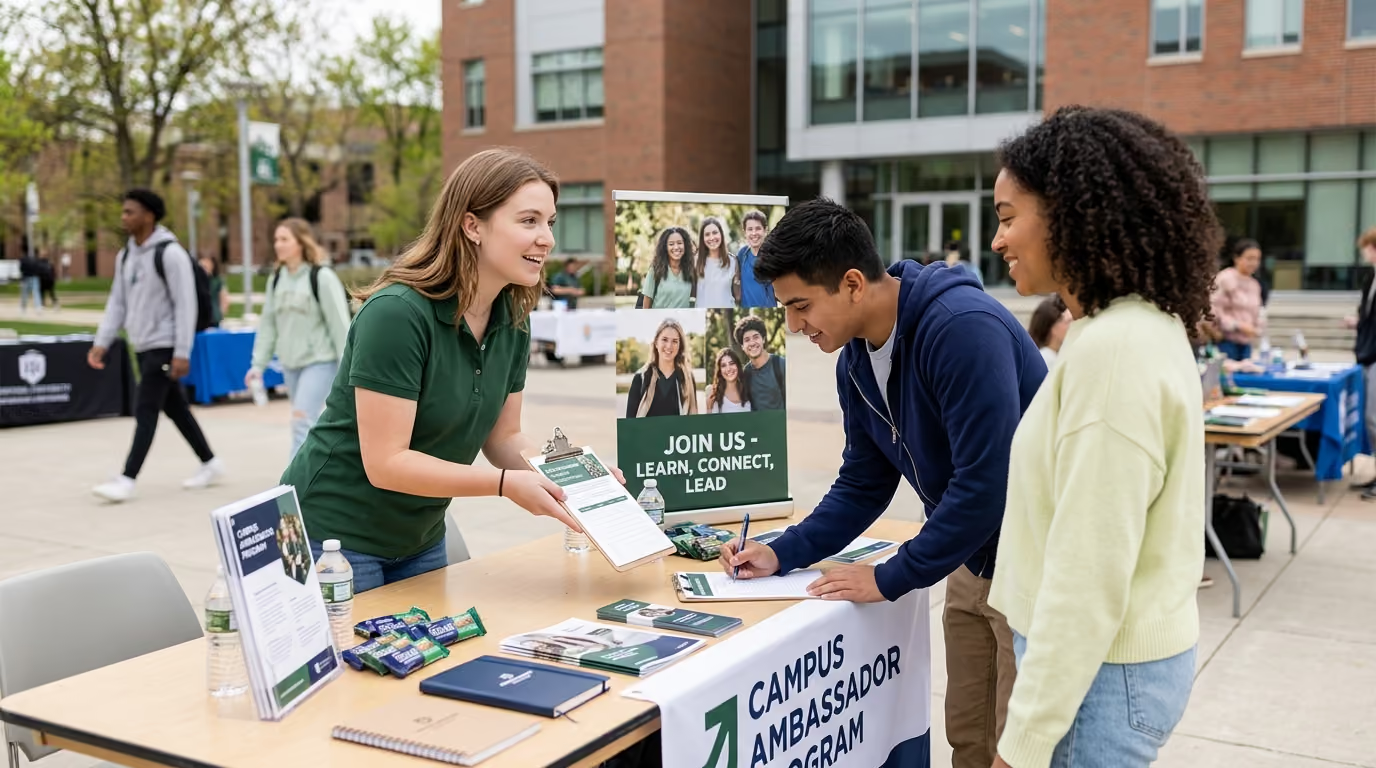
A campus activation is not a single promotional event. It is the entry point to a structured relationship system that converts student foot traffic into verified first-party data, repeat retail transactions, and lasting brand loyalty. Converting one-off college interactions into measurable customer retention requires an intentional post-event journey built on transparent value exchanges, channel-specific messaging, and rigorous attribution modeling.
This guide defines the strategic frameworks, legal compliance standards, multi-channel cadences, and field execution tactics required to sustain student engagement long after the event breakdown. Marketing leaders will learn how to turn transient campus crowds into high-converting consumer cohorts across email, SMS, loyalty programs, and local retail touchpoints.
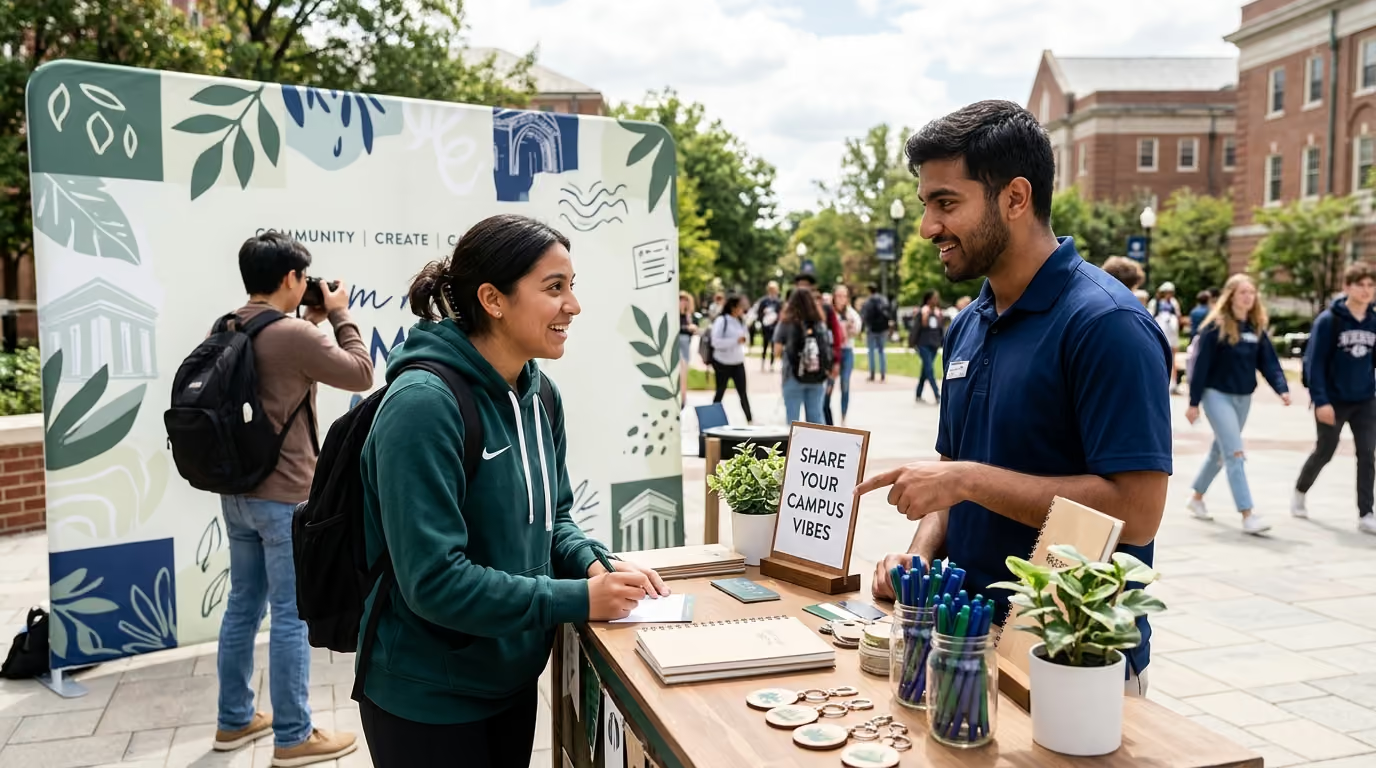
The campus quad during midterms or orientation week is noisy, unpredictable, and crowded. Hundreds of students move quickly between academic buildings, dining halls, and student unions. Field teams set up tents, hand out full-size beverage cans or premium skincare samples, and distribute branded stickers. Students take the free product, shout a quick word of thanks, and walk away to their next lecture.
By late afternoon, thousands of product units have left the tables. The field staffing agency reports massive foot traffic, high energy, and heavy sample distribution. Yet, when senior leadership asks how many of those students will buy the product at a local grocery store next week, the marketing team faces a total void. Without a structured capture mechanism, the brand has merely sponsored an expensive afternoon snack for the student body.
This breakdown occurs when field teams treat an activation as an isolated media placement rather than the top of an integrated consumer pipeline. Live engagement creates high emotional receptivity, but that attention decays within hours if there is no immediate reason to stay connected. When brands fail to capture consented digital identifiers on the spot, they lose the ability to guide students from initial trial to retail adoption.
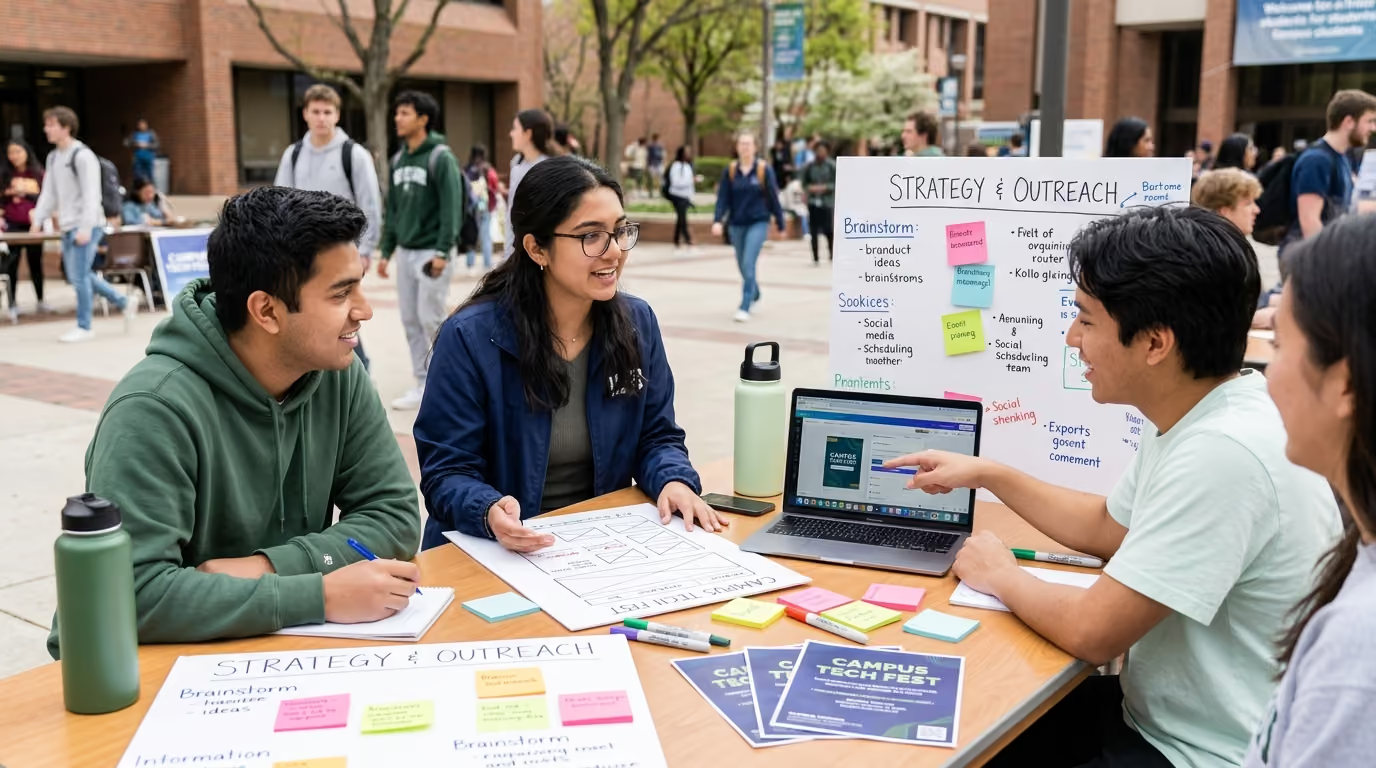
A successful campus campaign requires operational discipline before the first tent stake enters the ground. Brands must look beyond raw sample volume and focus on building a sustainable bridge between the physical interaction and the digital lifecycle. Every interaction on campus must serve a clear purpose in moving the student toward an ongoing commercial relationship.
Moving a college student from a casual passerby to an active brand advocate requires a deliberate progression model. The goal is not to force every student into an aggressive sales funnel immediately. Instead, marketing operators must guide consumers through seven progressive relationship stages.
The relationship begins at the Aware stage, where the student simply recognizes the brand name or visual identity. When they step toward an activation booth, participate in an activity, or speak with an ambassador, they enter the Engaged stage. The transition to the Known stage happens when the student provides verified, consented contact details in exchange for tangible value.
Once the student tests the product sample, they enter the Trialing stage. The post-activation journey then takes over to drive the Repeating stage through replenishment prompts, retail offers, and loyalty incentives. Over time, satisfied students reach the Advocating stage by referring friends and posting content, eventually reaching Belonging as active participants in the brand community.
To support this progression, field teams execute the nine-part Activation-to-Relationship Loop:
Design an experiential physical presence tailored to campus culture, academic timing, and student needs.
Provide an active reason to participate through sensory trials, challenges, or useful campus services.
Offer a transparent, friction-free mechanism for students to share their contact preferences and interests.
Deliver the promised digital incentive, coupon, or educational guide immediately through their chosen channel.
Provide concise usage tips, styling ideas, or routine pairings that help students get maximum value from the sample.
Direct students to nearby campus bookstores, local retailers, or digital storefronts with a clear purchase incentive.
Introduce structured loyalty rewards, subscription options, and replenishment reminders based on product lifecycle timing.
Invite happy consumers to share referral codes with roommates, write product reviews, or join brand ambassador initiatives.
Analyze campaign engagement data, survey responses, and retail redemption rates to refine future field marketing playbooks.
This closed loop prevents marketing teams from treating post-event follow-up as a generic email blast. Every digital touchpoint earns the right to deliver the next interaction.
Sustaining post-activation momentum requires an automated, segmented communication cadence tied directly to the calendar. Brands must deliver relevant content while event recall remains high.
The initial touchpoint must arrive while the physical memory of the activation is fresh. The message must confirm why the student opted in, deliver the promised digital incentive, and provide immediate utility.
During the first week, communication focuses on utility rather than hard selling. The brand helps the student integrate the product into their college routine.
The second phase drives the transition from initial trial to first paid retail purchase. Marketing teams introduce time-sensitive offers and structured loyalty invitations.
The final phase focuses on long-term customer retention and advocacy. Communications align with the broader academic calendar, including midterms, finals, and seasonal breaks.
By structuring campaigns around this timeline, field marketers protect their Return on Investment (ROI) and maintain continuous consumer connections throughout the academic semester.
Collecting personal data from college students requires transparency, speed, and strict regulatory compliance. Modern students are protective of their personal information and will abandon long, complex signup forms. To capture high-quality first-party data, brands must offer a fair value exchange while minimizing friction at the booth.
A high-converting value exchange provides immediate utility. High-value exchanges include instant digital coupons redeemable at nearby stores, entries into exclusive campus experiences, access to professional networking events, or functional product accessories. When designing digital intake forms, limit initial required fields to an email address or mobile phone number, first name, and one preference indicator.
Data capture strategies must adhere strictly to federal privacy and marketing regulations. Under the Federal Trade Commission (FTC) CAN-SPAM Act guidelines, commercial emails must clearly identify the sender, include a valid physical postal address, feature non-deceptive subject lines, and honor opt-out requests within ten business days.
SMS marketing requires even stricter adherence to Federal Communications Commission (FCC) standards. Marketing text messages sent to mobile devices require prior express written consent. The FCC one-to-one consent rule mandates that consumers must give explicit consent for each specific seller rather than agreeing to broad partner networks.
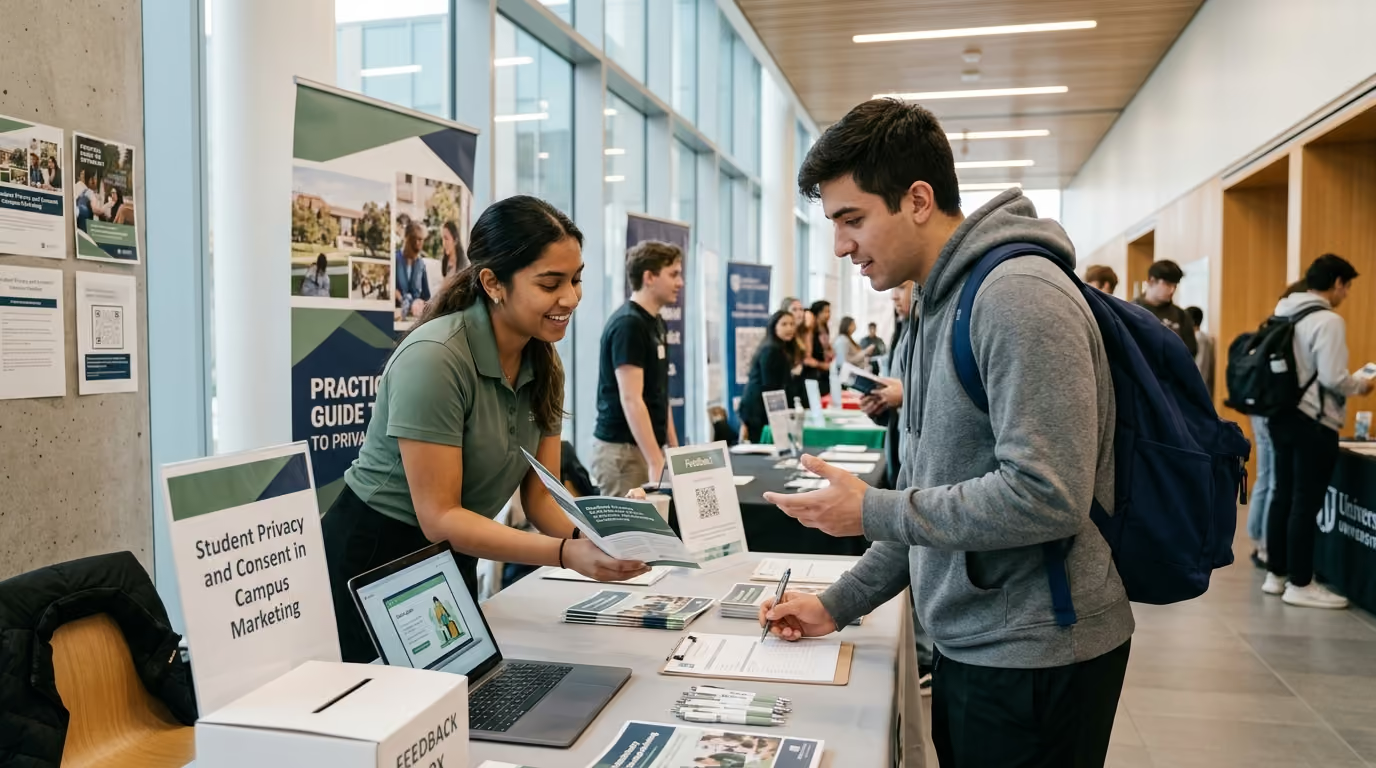
Field teams must never hide marketing consent checkboxes inside sweepstakes terms or bundle SMS marketing consent with event check-in waivers. Using an integrated platform designed for privacy-first consumer data capture ensures that every captured lead contains a clean timestamp, clear disclosure record, and auditable consent trail.
Beyond contact details, campus activations offer a prime opportunity to collect zero-party data. Zero-party data is information that a student intentionally and proactively shares with a brand. This includes dietary preferences, fitness routines, styling choices, or specific campus challenges. Capturing these insights through quick digital preference cards allows marketing teams to segment follow-up communications with high precision.
A common mistake in campus marketing is treating every digital communication channel as an interchangeable broadcast tool. Each channel serves a distinct tactical function within the post-activation ecosystem.
Email is the foundation for long-form brand storytelling, product education, and detailed lifecycle workflows. It allows brands to explain product science, share student recipes or styling guides, and outline full loyalty program mechanics.
Email also handles formal transactional receipts, order updates, and seasonal newsletters tied to the college calendar. Because email allows for rich layout design, it serves as the best environment for comprehensive educational sequences following an initial product trial.
SMS delivers immediate, high-visibility messaging that demands immediate consumer attention. It should be reserved for urgent logistics, same-day campus pop-up announcements, flash retail discounts, and back-in-stock alerts.
Text messages must remain concise, highly actionable, and infrequent. Overusing SMS for generic marketing updates leads to high unsubscribe rates and damages consumer goodwill. Always include the brand name, a single direct link, and standard opt-out instructions in every mobile dispatch.
Loyalty programs give students a compelling commercial reason to choose a brand repeatedly throughout their college years. Effective campus loyalty mechanics award points for retail purchases, event check-ins, product reviews, and friend referrals.
According to an extensive Journal of Marketing meta-analysis covering 429 effect sizes, loyalty programs strongly enhance customer loyalty, particularly behavioral loyalty, though attitudinal loyalty requires deeper engagement. This finding highlights the need to reward actual repeat purchase behaviors rather than assuming brand affinity will develop on its own.
Word-of-mouth recommendations carry immense weight across college social networks, Greek life, student clubs, and athletic teams. Nielsen research on advertising trust indicates that 88% of global consumers trust recommendations from people they know above any other marketing channel.
Referral programs formalize natural peer conversations by offering two-sided rewards. For example, giving current students five dollars in retail credit when a friend redeems their first trial discount creates a viral acquisition engine. To maintain integrity, brands must ensure referral systems track verified purchases rather than incentivizing unvetted code sharing across public discount forums.
Orchestrating these channels into a unified post-event journey ensures that students receive the right message on the right platform at the right time.
A campus activation should never exist in a retail vacuum. If a student tries a product on campus but cannot easily buy it within walking distance, the commercial momentum stalls. Successful experiential campaigns directly connect product sampling to retail sales by directing students to local grocery stores, convenience locations, campus bookstores, and rapid delivery apps.
Executing this physical-to-retail bridge requires coordination with local retail store managers well before the event launches:
Several leading consumer brands have demonstrated the financial power of this approach. Aerie built an ambassador program distributing targeted coupons during campus events, achieving an 11% coupon redemption rate, five times higher than their baseline brand average.
Ralph Lauren deployed a campus ambassador model using unique collegiate discount codes, generating over $15,200 in direct collegiate sales through targeted student advocacy. When brand activations connect immediate physical sampling to nearby retail availability, conversion rates rise significantly.
Executing multi-market campus campaigns requires substantial operational discipline. From managing street teams to handling city and university permits, working with specialized partners simplifies the workload. Brands often rely on experienced field teams to build centralized staffing and compliance plans that protect execution quality across multiple universities simultaneously.
Demonstrating the economic return of campus activations requires moving beyond vanity metrics like total foot traffic and gross impressions. Marketing leaders must evaluate both leading engagement indicators and lagging financial metrics across the consumer lifecycle.
Bain research published in Harvard Business Review demonstrated that increasing customer retention rates by just 5% can increase overall company profits by 25% to 95%. This finding underscores why tracking long-term student retention metrics delivers far more strategic insight than counting one-day sample distributions.
A comprehensive campus relationship scorecard tracks performance across seven distinct dimensions:
To measure these metrics accurately, field marketers implement clean attribution tracking models:
Using unique coupon codes for each campus, dedicated landing pages for each student ambassador, and geo-targeted digital holdout groups allows analysts to separate organic sales from activation-driven revenue lift. Comparing campuses with active activations against similar non-activated campuses establishes clear causality and proves the incremental revenue generated by the campaign.
Analyzing successful campus campaigns reveals clear operating patterns that bridge physical engagement with measurable long-term sales pipeline.
Haircare brand OUAI executed a multi-campus ambassador initiative focused on targeted product sampling and post-event feedback. The brand distributed over 9,600 product samples across 45 activations and partnered with more than 70 student campus organizations. Rather than executing isolated sampling drops, the field teams collected detailed feedback through post-event digital surveys, capturing over 730 detailed responses.
The campaign delivered strong retention signals: 61% of surveyed students stated they planned to continue purchasing OUAI products, and 79% indicated they were likely or very likely to recommend the brand to a peer. Pairing physical sampling with organized student groups and structured digital feedback loops created high retention intent.
Apparel retailer Express deployed a campus ambassador program that turned student brand representatives into a scalable social content and sales engine. The campaign generated over 103.2 million program impressions and inspired 53,000 pieces of user-generated content created natively by college ambassadors.
More importantly, the program tied social content directly to commercial transactions by assigning unique promotional tracking codes to each student representative. This direct attribution infrastructure generated $2.2 million in tracked retail sales, demonstrating how peer advocacy drives measurable commercial outcomes.
Skincare leader La Roche-Posay implemented a national collegiate strategy that blended large experiential footprints with ongoing peer-to-peer product distribution. The brand distributed over 17,500 physical samples and deployed 19,500 college mailers, achieving an 18% average engagement rate across digital and physical touchpoints.
By integrating scannable educational content and clear retail purchase paths into every product sample, the brand generated over $85,000 in directly attributed retail sales. The campaign proved that skincare brands can successfully use campus sampling to acquire loyal, long-term consumers.
Under Armour executed 350 live campus activations across a 15-week campaign window, driving over 209,000 direct interactions with potential and existing student athletes. The brand supported these live events with student-generated digital content, producing 1.8 million digital impressions that extended the reach of the physical events far beyond the quad.
A Brand Manager in the CPG space shared: "Makai transformed our test-drive activation into an emotional brand journey. They connected technology, lifestyle, and experience seamlessly, and turned casual visitors into loyal fans." We successfully integrated multiple experience layers to convert casual participants into committed brand advocates.
These multi-layered programs demonstrate that pairing physical trial with structured digital follow-up consistently beats traditional standalone advertising.
A post-activation journey cannot follow a rigid corporate marketing schedule. Student availability, stress levels, disposable income, and living situations shift dramatically throughout the academic year. To maintain relevance, brands must align communication cadences and offer types with the distinct phases of the college calendar.
Students are setting up new living spaces, establishing daily routines, and forming social groups. They are open to discovering new brands for their pantry, closet, and daily wellness regimens.
Academic stress peaks, schedules become erratic, and students look for convenient snacks, quick meals, study aids, and wellness support.
Students are focused on exams, packing up dorm rooms, and preparing to travel home or transition to summer internships.
Students leave campus for summer jobs, family homes, study abroad programs, or post-graduation careers. Brands that fail to plan for this mobility often lose their acquired audience entirely.
Adapting communication schedules to these seasonal realities ensures your brand remains a welcome, relevant part of the student journey rather than an annoying inbox distraction.
While most college students are 18 or older, high school dual-enrollment students and early-admit minors are present on campus. Brand intake forms should include an age gate requiring users to confirm they are 18 or older before consenting to SMS marketing lists.
If a brand collects information from minors during an all-ages campus event, the data must be segmented immediately. Marketing teams must ensure compliance with the Children's Online Privacy Protection Act (COPPA) and state-specific youth privacy regulations, avoiding commercial SMS communications with underage participants without verified parental consent.
Giveaways and high-value prizes attract opportunists who want free items but have zero genuine interest in the product. To keep retention data clean, marketing teams should separate campaign tracking databases into two distinct buckets: general sweepstakes leads and verified product trial leads.
Verified trial leads are students who participated in a demonstration, completed a taste test, or answered a product preference quiz before opting in. Restrict your automated post-activation nurture sequences and retail discount campaigns to this verified cohort while routing generic sweepstakes entrants into a lower-cost, standard digital email track.
A retail stockout during an active campus campaign breaks consumer trust and wastes marketing budget. If local store shelves run empty, field managers must quickly pivot their post-event messaging to digital fulfillment channels.
Update automated SMS and email follow-up workflows to offer free direct-to-dorm shipping or direct students to delivery platforms with zero delivery fee vouchers. Ensure field brand ambassadors monitor local retail inventory daily throughout the campaign window so regional distribution teams can restock shelves before promotional redemptions peak.
Graduation represents a major lifecycle transition where students change physical addresses, drop college email accounts, and adjust their lifestyle budgets. Six weeks prior to spring graduation, send a dedicated preference update campaign inviting seniors to update their contact details from their .edu email address to a personal email.
Offer a graduating senior reward, such as a special alumni discount or an upgraded loyalty tier status, in exchange for updated contact details. Shifting their profile segment from campus consumer to young professional allows you to evolve your messaging, introduce higher-tier product lines, and retain them as loyal brand advocates into adulthood.

30 Years Experiential & Retail Activation Partner for CPG & Beverage Brands | Multi-Market Demos, Roadshows & Costco/Club Programs That Actually Sell