Robbie Thain
Founder, CEO

Crowded festival plazas present complex safety risks during product giveaways, requiring structured consent architecture, tiered risk controls.

Most brand teams assume family sampling is just standard product distribution with smaller bite sizes. That assumption creates massive legal, physical, and brand liabilities when deployed on live footprints. True family activation requires an operational system that separates the child participant from the adult decision-maker across every physical and digital touchpoint.
Building a compliant, high-converting mobile sampling tour demands rigorous controls for allergens, crowd dynamics, data collection, and physical safety. This playbook outlines the structural framework required to turn chaotic field engagements into controlled, high-performing brand moments that protect children and earn caregiver trust.
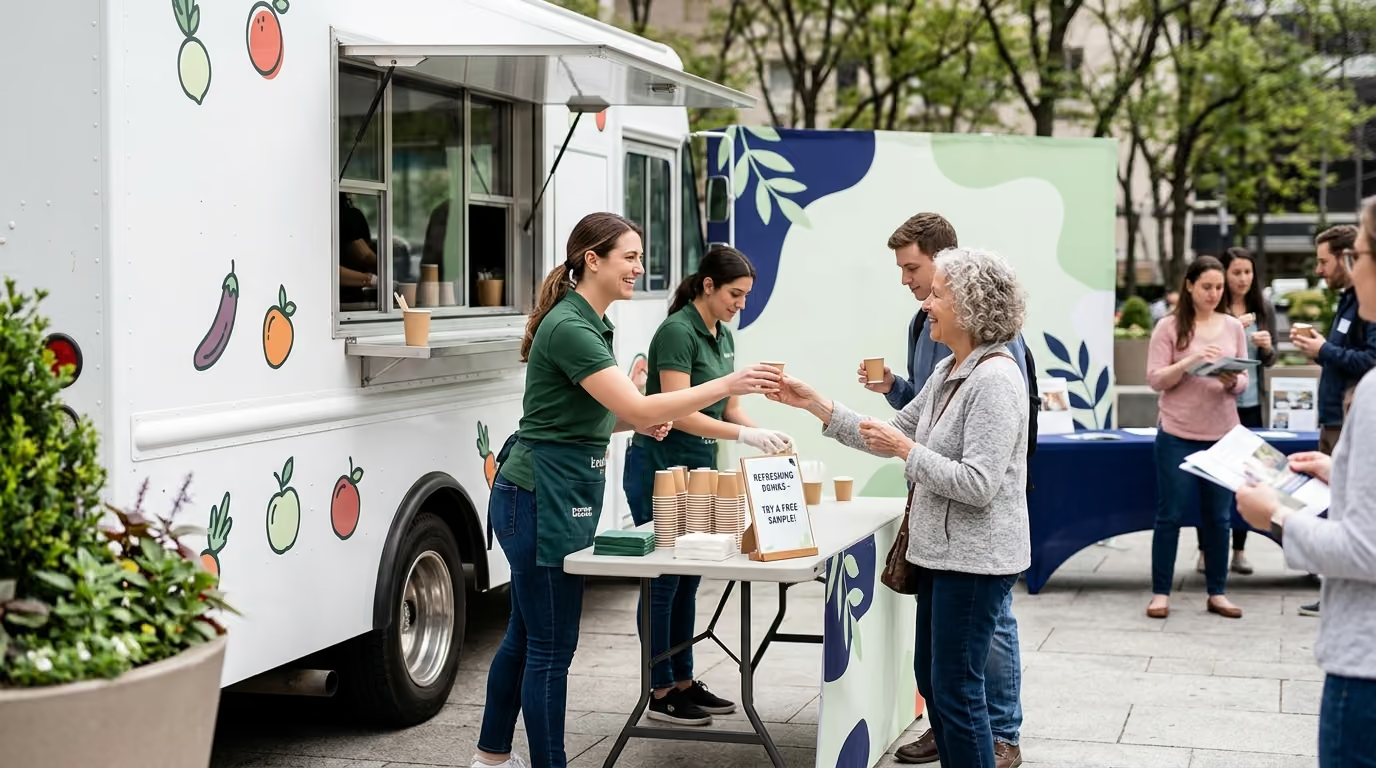
Picture an open plaza during a Saturday community festival. A branded sampling truck is parked along a pedestrian lane, blaring upbeat audio while brand ambassadors pass out snack samples to a gathering crowd. Within ten minutes, three strollers block the primary intake line. Toddlers dash toward colorful floor decals near the vehicle bumper. A distracted parent looks down at a phone while an ambassador hands a dairy-based snack cup directly to an unsupervised four-year-old.
Moments later, the parent realizes the child has a severe milk protein allergy. Panic sets in, the line grinds to a halt, and crowd pressure pushes waiting families into the vehicle access lane. Meanwhile, staff members at the registration podium ask an eight-year-old to enter a tablet sweepstakes using their parent email address. This triggers immediate regulatory violations under federal privacy statutes.
This scenario plays out across outdoor events, festivals, and retail parking lots nationwide every weekend. When field teams treat children as standalone consumers, operational integrity collapses. Strollers create trip hazards, ingredient disclosures get skipped during high-volume rushes, and staff improvise answers to safety-critical questions.
Solving this chaos requires moving away from informal hospitality. Successful activations operate with military precision, clear zoning, and uncompromised risk protocols. Brand leaders must design experiences that welcome families while maintaining strict operational guardrails.
Family-friendly sampling is never a single-user transaction. It is a multi-user ecosystem consisting of the child, the caregiver, field staff, adjacent pedestrians, and property operators. Every touchpoint must reflect clear boundaries between experience and authority.
The caregiver is the sole consent, safety, and information gatekeeper. The child is the experiential participant. The brand is strictly responsible for maintaining that operational line across every interaction.
To plan correctly, teams must distinguish between three distinct activation models:
The caregiver is the primary audience and target consumer. Children may accompany the adult, but creative assets, messaging, and product handoffs focus on the parent.
This model minimizes regulatory exposure while allowing accompanied children to observe or share product under direct parental control. It works best for household goods, functional beverages, and premium grocery items.
The physical footprint is intentionally engineered for caregivers and children to experience together. Activities require dual participation, such as collaborative games or joint product evaluations.
In this structure, staff address the caregiver first to establish consent before welcoming the child into the space. This approach builds strong brand affinity while maintaining clear adult supervision.
The creative presentation, games, giveaways, and character interactions target children directly. This model carries the highest regulatory and physical risk profile.
The Federal Trade Commission applies rigorous truth-in-advertising standards when commercial messages target young audiences. If an activation appeals primarily to children, every physical asset, game rule, and digital asset must undergo strict regulatory review.
Field teams must never rely on broad labels like kid-friendly to guide field operations. Instead, audit the physical footprint by asking operational questions:
Staff must never act as substitute supervisors. An accompanying adult must remain physically present, attentive, and engaged throughout the interaction.
Consent in physical brand marketing is not a single, catch-all verbal agreement. Treating consent as a blanket transaction exposes brands to severe regulatory penalties and customer backlash.
Field teams must break consent down into five distinct categories. Each category requires its own protocol and verification method.
Participation consent represents permission for a family group to enter the activation perimeter and engage with non-consumable elements. This includes branded photo sets, interactive displays, or structured play stations.
Caregivers provide this consent through physical presence and verbal acknowledgment after reviewing entry signage. Staff must confirm that an adult is actively accompanying every child before allowing access to interactive zones. Unaccompanied minors must be politely directed to wait outside the perimeter until their supervising adult arrives.
Product consumption carries inherent medical and physical risks. Ingestion consent requires an explicit, affirmative confirmation from the caregiver after full disclosure of ingredients and potential cross-contact risks.
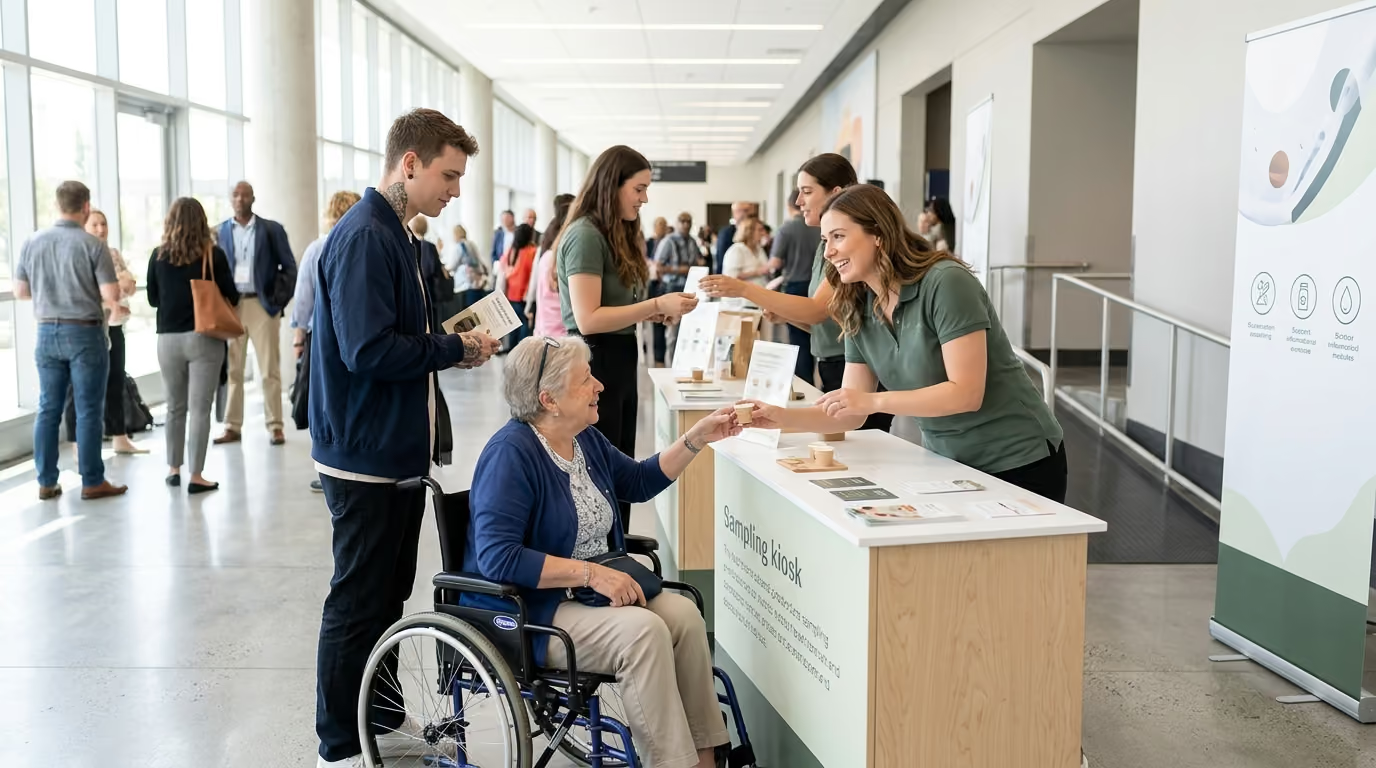
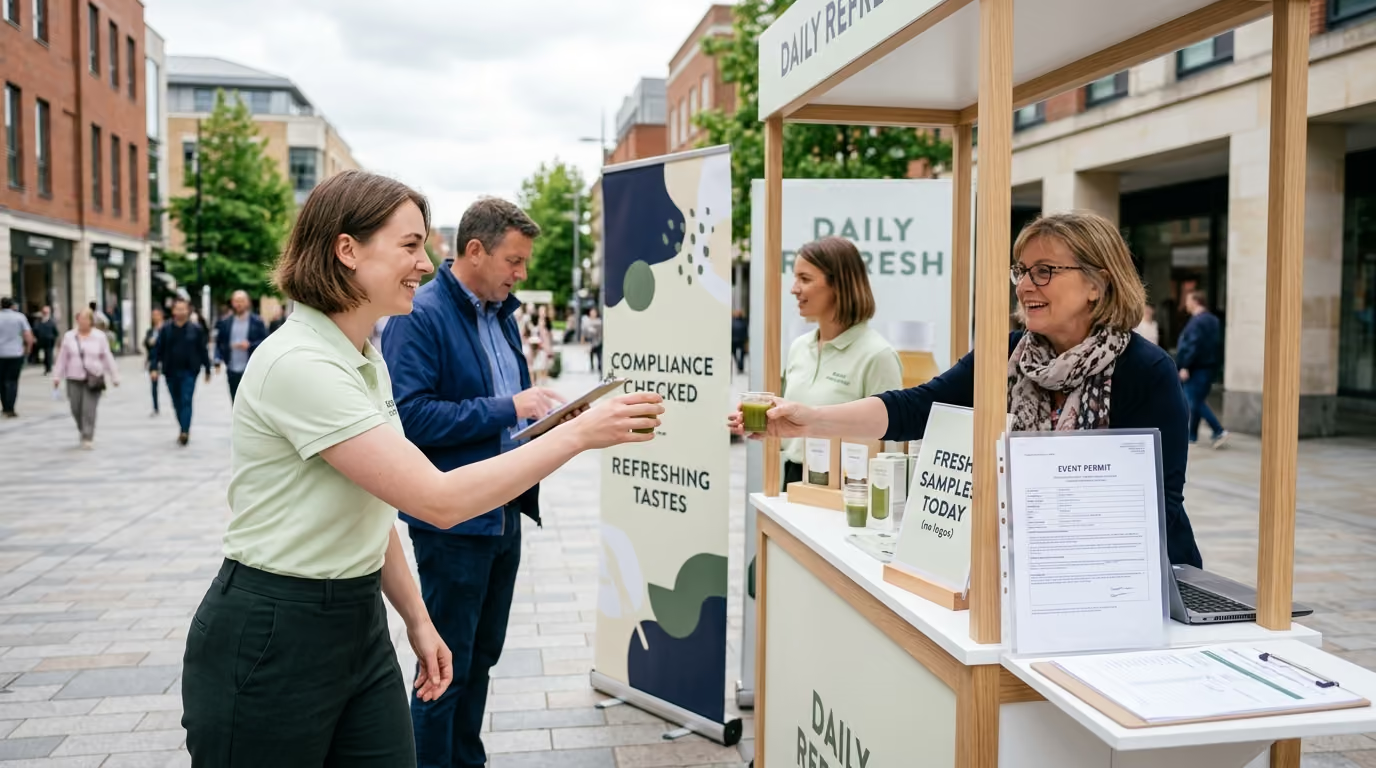
Brand ambassadors must never hand food, beverage, or personal care samples directly to a child. The product must be handed to the caregiver, who then chooses whether to pass the item to the child. This operational checkpoint guarantees that the adult evaluates the product format and ingredient deck before the child consumes it.
Capturing photos or video in public spaces becomes complex when minors are present. Visual assets featuring identifiable children cannot be captured or repurposed for marketing without documented, verifiable parental consent.
The footprint must feature dedicated, clearly marked photo areas rather than roving photographers capturing ambient crowd shots. Staff should use explicit physical release forms or digital click-through waivers executed exclusively by the caregiver. Staff must never capture images of children using personal smartphones or unapproved devices.
Collecting email addresses, phone numbers, or mailing data on the field footprint requires separate adult opt-in mechanisms. Under the Children's Online Privacy Protection Act, operators cannot collect personal information from children under 13 without verifiable parental consent.
All sweepstakes entries, newsletter sign-ups, and coupon deliveries must be completed directly by the adult on caregiver-facing interfaces. Registration screens should clearly state that individuals under the age of majority are ineligible to register. Default pre-checked marketing boxes must be strictly prohibited on all field capture devices.
Recent regulatory updates from the Federal Trade Commission mandate clear parental consent for disclosing children's personal data to third parties, including targeted advertising networks. Brands cannot bundle data-sharing permissions into a single terms-of-service agreement.
Keep physical data collection minimal. If a promotion involves a digital registration flow, collect only the adult data required to deliver the core incentive. If a child participates in a high-score game or digital quiz, do not log or store the child's name, age, or likeness.
Effective risk management requires categorizing activation elements by their hazard level. Grouping elements into structured tiers allows field directors to assign appropriate staff ratios, physical buffers, and safety controls.
Tier 1 includes static vehicle graphics, product display cases, educational signage, and overhead scenic structures. These components present minimal physical risk if properly weighted and anchored.
Primary controls require maintaining stable ballast on all temporary walls, keeping display glass shatterproof, and ensuring overhead banners withstand local wind loads. All educational copy must feature high-contrast, legible typography positioned at adult eye level.
Tier 2 encompasses sealed sample distribution, portioned food tastings, tactile product demonstrations, and disposable applicator trials. These interactions introduce allergen and food safety hazards that require sanitary handling.
Primary controls require certified food handlers, temperature logging equipment, single-use sanitary serving supplies, and prominent allergen display boards. Declined or dropped samples must be discarded immediately in closed waste receptacles out of reach of children.
Tier 3 includes low-height tabletop puzzles, branded matching boards, digital touchscreen kiosks, and guided drawing activities. Hazards involve germ transmission, surface pinch points, and small-part choking risks.
Primary controls mandate non-toxic, washable materials, smooth rounded edges, and regular sanitization schedules between participants. Components must exceed standard safety dimensions to prevent ingestion by toddlers. For detailed staffing standards on running high-touch footprints, review the field execution playbook for consistent experiences.
Tier 4 features inflatables, low-level balance challenges, spinning prize wheels, moving mechanical props, and kinetic sports simulations. These elements create slip, trip, fall, and collision hazards.
Primary controls require certified equipment operators, physical perimeter barricades, manufacturer-specified anchoring systems, and mandatory age/height gates. Documented daily mechanical inspections and emergency stop procedures must be logged before public opening.
Tier 5 covers on-site thermal cooking, sharp kitchen prep tools, pressurized dispensers, open flame, and dual-purpose events that include alcohol sampling zones. These footprints present severe liability risks.
Primary controls demand strict physical segregation between adult sampling areas and family zones. Food prep stations must use transparent sneeze guards and physical safety barriers to keep heat sources and cutting tools out of reach of curious children.
Crowd management for family activations is fundamentally different from standard consumer activations. Families move slower, occupy broader footprints, and carry ancillary equipment like strollers, wagons, and diaper bags.
The Health and Safety Executive outlines clear crowd management principles emphasizing arrival, onsite circulation, and dispersal as independent operational phases. A safe footprint must prevent bottlenecks, eliminate trip hazards, and maintain open egress routes at all times.
Dividing the mobile footprint into three operational zones prevents crowd crush and gives parents time to review product information.
Strollers are the primary source of footprint congestion. When lines back up, strollers quickly block pedestrian corridors and create severe fire exit obstructions.
Design queues with a minimum width of 48 inches to accommodate double strollers and mobility devices comfortably. Incorporate a designated, staff-monitored stroller parking corral adjacent to Zone A for families entering interactive game zones. Never allow queues to snake backward across sidewalk curb cuts or active parking lot lanes.
Children perceive the entire activation footprint as a playground. They will pull on loose cables, climb vehicle steps, and lean against temporary counter barriers.
The Consumer Product Safety Commission enforces strict regulations regarding small parts in items intended for children under three years of age. A small part is legally defined as any object that fits entirely within a standard testing cylinder measuring 1.25 inches in diameter and 2.25 inches in depth.
Review every promotional giveaway, toy, badge, mini-container, and packaging tear-off. If an item can shatter into small fragments or detach under tension, it must never be distributed near infants or toddlers. Packaging tear-offs from sample pouches must be immediately captured and discarded by staff rather than handed to participants.
Serving food or beverages to children requires sanitary and allergen controls that go far beyond standard retail sampling. A minor allergen exposure can quickly trigger life-threatening anaphylaxis.
Field operations must establish absolute control over cross-contact, product temperatures, and ingredient communication.
The FDA Food Code strictly prohibits bare-hand contact with exposed, ready-to-eat foods. Brand ambassadors serving unpackaged samples must wear approved food-grade gloves or use sanitary utensils, deli paper, or mechanical dispensers.
Gloves do not replace handwashing. Staff must wash hands thoroughly with clean, running water and soap at a dedicated mobile handwashing station before putting on gloves. Gloves must be changed every two hours, whenever torn or contaminated, and immediately after touching trash, mobile devices, cash, or cleaning chemicals.
Mobile environments lack the electrical stability of permanent commercial kitchens. Heat buildup inside vehicles, direct sunlight on serving counters, and frequent cooler openings threaten food integrity.
For teams managing multi-stop seasonal activations, implementing these controls early protects brand reputation. Learn more about operational safety standards in our cost control and efficiency playbook.
Food Allergy Research and Education reports that food allergies affect approximately one in thirteen children across the United States. The Food Allergen Labeling and Consumer Protection Act, along with the FASTER Act, identifies nine major food allergens: milk, eggs, peanuts, tree nuts, wheat, soy, fish, crustacean shellfish, and sesame.
Field teams must display complete ingredient panels and bold "CONTAINS" statements at the approach point in Zone A and directly on the serving counter in Zone B.
Staff must never improvise answers regarding ingredients. If a parent asks whether an item contains traces of an allergen, the brand ambassador must show the physical packaging panel directly to the parent. If any doubt remains, the ambassador must decline to serve the sample and offer a non-food branded item instead.
The Centers for Disease Control and Prevention lists specific food textures and formats as high-risk choking hazards for young children. These include whole grapes, hard candies, raw carrot rounds, hot dog slices, whole nuts, large globs of nut butter, and tough meat chunks.
Turning strategic safety policies into reliable field execution requires structured processes. Every brand ambassador must understand their role, their positioning, and their specific talking points.
Follow this step-by-step operational sequence across the live footprint:
Staff must never debate safety rules with frustrated attendees. Providing clear, tested scripts gives field teams the authority to maintain safety without creating negative brand impressions.
For deeper guidance on training field teams to execute complex scripts under pressure, review our guide to training brand ambassadors for consistent experiences.
Temporary brand activations are public accommodations subject to Title III of the Americans with Disabilities Act. Activations must provide equal enjoyment, accessible routes, and non-discriminatory service to all participants.
True family inclusion extends beyond physical wheelchair ramps. It accommodates children with sensory processing differences, neurodivergent needs, dietary restrictions, and mobility challenges.
Temporary staging, display trailers, and raised flooring must incorporate secure, slip-resistant ramps with a slope ratio no steeper than 1:12. Ramp runs must feature edge protection, handrails where required by local code, and level resting landings.
Service counters must feature an accessible section no higher than 36 inches above the ground plane, with sufficient knee clearance underneath. Maintain clear ground paths with a minimum width of 36 inches throughout the entire activation perimeter. Secure all temporary floor mats to eliminate edge-curling trip hazards for guests using wheelchairs, crutches, or strollers.
Crowded, noisy festival footprints can quickly overwhelm children with sensory sensitivities or autism spectrum profiles. Designing thoughtful sensory adaptations keeps your activation welcoming and accessible to every family.
To explore physical and cognitive accommodation frameworks in depth, read our resource on designing accessible and inclusive mobile sampling experiences.
Collecting consumer data and running sweepstakes at live events requires navigating strict state and federal promotional regulations. When children are present, marketing compliance requires extreme precision.
Caregivers must remain the exclusive target and operator of all digital registration systems.
Under Federal Trade Commission guidelines and state promotional laws, a legal sweepstakes must eliminate one of three elements: prize, chance, or consideration. Because a brand promotion involves prizes and random chance, it must never require monetary payment or substantial consideration to enter.
Every contest or giveaway hosted on the footprint must feature official rules accessible before entry. Rules must clearly disclose:
Staff must never encourage children to enter drawings on behalf of their parents. All promotional entry interfaces must verify adult age through date-of-birth confirmation gates before capturing contact details.
The safest legal practice on a family footprint is collecting zero personal data from minors. Never ask for a child's name, birthdate, school, social media handle, or contact information.
When designing registration forms for caregivers, collect only the minimum data required to deliver the core marketing incentive. If delivering a digital retail coupon, request an adult email address or mobile phone number. Do not require unnecessary profile fields like household income, number of children, or marital status.
Ensure all cloud-connected field hardware, such as registration tablets, operates on private, encrypted virtual private networks. Never store consumer data in unencrypted local spreadsheets on field iPads that could be lost or stolen during tour transit.
To understand how high-performing mobile activations drive conversion while protecting consumer trust, explore our analysis of mobile activations versus digital campaigns.
Proving the business impact of a mobile sampling tour requires evaluating quantitative engagement, consumer safety, operational compliance, and financial pipeline. Marketers must report lead and lag metrics to validate their Return on Investment while proving zero safety compromises occurred.
Track these real-time operational indicators during live tour activations to catch issues before they escalate:
Evaluate these post-event performance indicators to measure true business impact:
To understand how high-converting mobile activations drive sustained retail velocity, read our guide on how mobile roadshows prove sales lift.
Reviewing proven structural patterns helps brand leaders select the right operational footprint for their specific product profile.
A growing plant-based snack brand activated a 12-city mobile tour across major suburban lifestyle centers. The brand needed to drive product trial among skeptical parents while accommodating severe nut and dairy allergies.
The brand constructed a three-zone footprint. Zone A featured an eye-level allergen board outlining the certified nut-free facility standards. In Zone B, brand ambassadors distributed factory-sealed, single-serve pouches directly into parents' hands. Children under three were offered a soft, pureed fruit pouch alternative.
In Zone C, parents used their smartphones to scan a digital rebate code for local grocery redemption while children engaged with a magnetic wall puzzle. Over a six-week tour, the activation achieved zero safety or allergen incidents, distributed 45,000 samples, and drove a 24 percent retail sales lift across regional grocery partners.
A family functional beverage brand deployed an interactive mobile tour at community soccer tournaments. The footprint integrated an active soccer kick challenge with a chilled beverage sampling counter.
To balance energetic play with controlled product sampling, the team established a two-lane layout. Lane One housed the active soccer kick cage, complete with safety netting, padded side bumpers, and a strict minimum age requirement of six years old. Lane Two featured a low-sensory, shaded sampling bar where accompanied children of all ages could relax with caregivers.
The queue host screened approaching families and directed siblings of varying ages to appropriate stations. This bifurcated design prevented physical collisions between older children and toddlers, reduced queue wait times by 35 percent, and generated high caregiver satisfaction ratings across 18 tour stops.
Before admitting the public onto your mobile sampling footprint, verify every operational checkpoint against this safety audit:
Executing safe, family-friendly mobile sampling requires shifting from casual field giveaways to disciplined operational systems that protect children, respect caregivers, and deliver measurable retail sales lift.

30 Years Experiential & Retail Activation Partner for CPG & Beverage Brands | Multi-Market Demos, Roadshows & Costco/Club Programs That Actually Sell